Proactive AI

Search documents
龙虾之后,为什么说「主动式智能」才是Agent的终极形态?
机器之心· 2026-03-24 01:31
机器之心发布 一、当 AI 的进化被止于屏幕 OpenClaw 的爆火,不只是因为它能替你干活。 如果仅仅是自动化,市面上的 RPA 工具早就能做到。OpenClaw 真正让人兴奋的,是它展现出的主动性:基于对邮件、日程、聊天记录的持续理解,主动帮你处理 事务、主动推送你可能需要的信息。从 Reactive 到 Proactive 的跨越,让整个行业第一次感受到:AI Agent 不只能「 被使唤」,更能「 替你想」。 但这种主动性有一个边界,它止步于屏幕。 OpenClaw 的感知器是截屏和文件系统,记忆是聊天记录和邮件归档。合上电脑走进真实生活,上下文链路就此中断。会议室里一小时的讨论、通勤路上偶然看到 的书、午餐时的闲聊,对所有数字 Agent 都是感知盲区。 这不是 OpenClaw 的缺陷,而是所有数字 Agent 的结构性边界。当视线从屏幕转向现实,上下文的介质就从文本流变成了视听流,这不是数据量的叠加,而是维度 的跨越。 当现实世界本身成为 AI 的上下文,Agent 才有机会从数字世界的「 主动帮你干活」,进化为现实生活里的「 主动替你留心」,这就是 Proactive AI 从线上走向线 下 ...


AI硬件闭门探讨:未来硬件只是数据的入口,接下来是「软件定义硬件」的时代
Founder Park· 2026-02-10 11:30
Core Insights - The AI hardware market is still in its early stages, with a majority of users expressing dissatisfaction with current products [2] - The focus of discussions at the AI Product Marketplace Meetup was on the unique value proposition of AI hardware in comparison to smartphones [2] Group 1: AI Hardware Market Dynamics - The current AI hardware landscape features a variety of products, but user satisfaction remains low, indicating a need for improvement [2] - A significant portion of the market consists of early adopters, with only 2% being technology enthusiasts and 10% early adopters [2] - The Meetup aimed to explore the irreplaceability of AI hardware and its ability to justify additional costs for users [2] Group 2: Case Study of Plaud - Plaud, an AI recording card, has emerged as the most frequently used AI hardware, addressing a specific need for call recording among Apple users [5][6] - The product's success is attributed to its focus on a critical pain point within the Apple ecosystem, where traditional call recording is restricted [6] - Plaud's pricing strategy allows it to charge 6 to 7 times its BOM cost, targeting professionals who value efficiency and are willing to pay a premium [8] Group 3: Competitive Landscape - Major companies like DingTalk and Feishu are entering the recording hardware market, but Plaud maintains a leading position due to its early market entry [10][12] - The competition is expected to intensify, with new entrants offering lower-cost recording devices, potentially leading to a price war in the hardware segment [12] Group 4: Smart Glasses Market - The smart glasses market is highly competitive, dominated by tech giants like Meta, Google, and Apple, which aim to create a new computing platform [14][15] - Startups are focusing on niche markets to achieve product-market fit, often by creating specialized products that cater to specific user needs [17] - Successful products in this space, such as the collaboration between Meta and Ray-Ban, have effectively reduced market education costs and appealed to consumer preferences [18] Group 5: Emotional AI Hardware - Purely emotional AI hardware products face challenges in establishing sustainable business models, as they often lack practical functionality [25][26] - Emotional value can be integrated into products that already serve a primary function, such as caregiving or education, rather than standalone "companionship" devices [27] Group 6: Software-Defined Hardware - The future of AI hardware is shifting towards a model where software and AI services define the value of the hardware, rather than the hardware itself [31][33] - The concept of "software-defined hardware" emphasizes designing hardware around specific software needs, leading to more flexible and targeted product development [35] - Companies must recognize the importance of both hardware differentiation and software capabilities to succeed in the evolving market [37][40] Group 7: Business Models and Product Design - The commercial viability of AI hardware is closely tied to its business model, which can dictate whether the focus is on low-cost hardware or premium pricing [43][46] - A subscription-based model may emerge, where hardware is offered at minimal cost while revenue is generated through AI services [44]

从全网吹爆到集体沉默:第一批花 200 美金使用 ChatGPT Pulse 的人,后悔了吗?|锦秋AI实验室
锦秋集· 2025-12-22 10:47
Core Insights - The article discusses the evolution and user experiences of the ChatGPT Pulse feature, highlighting its initial promise and subsequent user feedback regarding its effectiveness and limitations [2][5][45]. User Experience and Feedback - Initial user experiences with Pulse were marked by a sense of novelty and surprise, as it provided proactive suggestions based on past interactions, creating a feeling of being "cared for" [10][12][18]. - Users reported that while Pulse initially offered valuable insights, its practical utility diminished over time, leading to feelings of information overload and delayed responses that did not align with their immediate needs [18][19][46]. - The feedback indicated that Pulse often operated within a limited context, failing to provide insights beyond users' known interests, which restricted its effectiveness as a proactive AI tool [17][21][34]. Limitations and Challenges - Users identified several core pain points, including information overload, delayed responses to urgent queries, and a lack of depth in the insights provided, which often felt redundant or irrelevant [18][19][20][46]. - The article emphasizes that Pulse's design primarily functions as an extension of a recommendation system, lacking a deeper understanding of users' long-term goals and intentions, which hinders its ability to provide truly valuable insights [33][34][49]. - The current pricing model of $200 per month has raised concerns about the perceived value of the service, with users expressing reluctance to pay for a product that does not significantly enhance productivity or provide unique insights [5][41][46]. Future Directions and Recommendations - The article suggests that for Pulse to evolve into a more effective tool, it must transition from a time-driven model to an event-driven approach, focusing on key moments that require user attention [49]. - There is a call for the AI to develop a better understanding of users' long-term intentions, which would allow it to provide more relevant and timely insights, thereby enhancing its value proposition [34][49]. - The potential for a more integrated approach that connects with private data sources, such as internal company tools, is highlighted as a way to break down information silos and improve the overall utility of the AI [26][49].

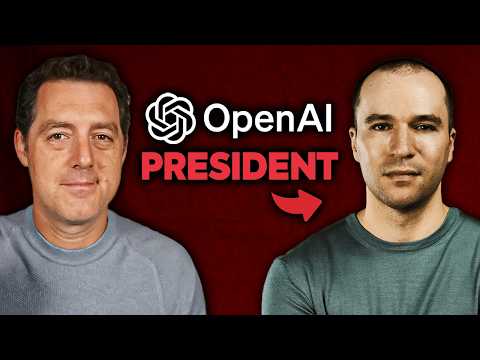
Greg Brockman: AGI, Sora 2, Bottlenecks, White Collar, Proactive AI, and more!
Matthew Berman· 2025-10-08 18:48
AI Trends & Future Predictions - Discussion on scaling Sora, indicating the industry's focus on improving AI model capabilities [1] - Exploration of transformer models' future relevance in AI development [1] - Consideration of proactive AI and compressing intelligence as key areas of advancement [1] - Speculation on the potential of fully generated software and its implications [1] - Examination of Agentic Commerce Protocol, suggesting a move towards AI-driven commercial interactions [1] - Predictions for 2026, including the possibility of Artificial General Intelligence (AGI) [1] Technology & Infrastructure - Analysis of building with AMD and other kinds of compute, highlighting the importance of hardware infrastructure [1] - Identification of bottlenecks in AI development, suggesting areas needing improvement [1] - Discussion on decoupling of the internet, potentially related to data sovereignty or decentralized technologies [1] Job Market & Industry Impact - Addressing concerns about job security in the face of AI advancements [1] - Exploration of building on top of OpenAI, indicating the platform's significance in the AI ecosystem [1] - Consideration of the role of humans in the loop, emphasizing the importance of human-AI collaboration [1]