Quality Stocks

Search documents
Intuitive Surgical - Strong Moat But Valuation Remains Elevated, Hold (NASDAQ:ISRG)
Seeking Alpha· 2026-03-11 15:57
Group 1 - Intuitive Surgical (ISRG) is recognized as a leader in its niche market, appealing to quality stock investors due to its strong business model characterized by recurring revenue streams [1] - The company has established itself as a genuine quality stock, attracting attention from investors who prioritize high-quality companies [1] Group 2 - The article does not provide any specific financial data or performance metrics related to Intuitive Surgical or the broader industry [2][3]



Could Quality Stocks Be Key to Unlocking 2026 Equities Outlook?
Etftrends· 2026-02-21 00:01
Core Viewpoint - The article discusses the potential of quality stocks as a strategy to navigate the uncertain equities outlook for 2026, emphasizing the need for diversification beyond technology-focused investments [1]. Group 1: Market Context - The investment landscape for 2026 is characterized by geopolitical and policy uncertainties, alongside concentration risk in the market [1]. - Investors are encouraged to consider quality stocks to gain exposure to a broader range of sectors, moving away from a heavy reliance on technology [1]. Group 2: Quality Stocks Strategy - Quality stocks focus on individual firm metrics rather than market cap-weighted indices, allowing for the construction of a diversified portfolio of high-potential stocks [1]. - The American Century U.S. Quality Growth ETF (QGRO) exemplifies a quality strategy, charging a fee of 29 basis points and targeting companies with strong financial fundamentals and growth potential [1]. Group 3: Performance Metrics - QGRO tracks the American Century U.S. Quality Growth Index, which screens stocks based on income, quality, and growth metrics such as cash flow, profitability, sales, and return on assets [1]. - Over the last three years, QGRO has achieved a return of 20.6%, outperforming the Large Cap Growth Equities Category Average during the same period [1].

Worried About the Economy? Invest In These Quality Stocks
Yahoo Finance· 2026-01-20 14:11
Group 1 - The article discusses the concept of "quality stocks" as a safer investment option during economic uncertainty, highlighting that the definition of quality can vary among experts [1][2] - Fidelity has identified several quality stocks that are considered good investment options, emphasizing the importance of understanding what constitutes a quality stock [2][4] - Financial experts suggest that quality stocks typically exhibit strong fundamentals, consistent performance, and solid management teams, which may not always be quantifiable [3] Group 2 - Fidelity's quality stock picks include Costco Wholesale (COST), Verisk Analytics (VRSK), Amazon (AMZN), Alphabet (GOOGL), Meta (META), Netflix (NFLX), and Roblox (RBLX), each noted for their strong market positions and customer trust [4] - Costco is recognized for its great prices and low market volatility, while Verisk Analytics is noted for high revenue and low volatility in the insurance sector [4] - Amazon's competitive edge comes from its subscription services and cloud division, while Alphabet and Meta leverage their extensive user bases and self-reinforcing business models [4]
10 Undervalued Cyclical Stocks to Invest In
Insider Monkey· 2026-01-13 13:40
Core Viewpoint - The article discusses the identification of 10 undervalued cyclical stocks for investment, emphasizing the potential for growth in the consumer cyclical sector and the importance of hedge fund interest in these stocks [1][5][6]. Market and Economic Outlook - Alan McKnight from Regions Wealth Management indicates that the consumer sector remains strong, with earnings performing well, suggesting a healthy market and economy [2]. - Richard Bernstein highlights that 2026 may present different investment opportunities, recommending dividend-paying stocks and international diversification due to the outperformance of international markets compared to the US market in 2025 [2][3]. Stock Selection Methodology - The list of 10 undervalued cyclical stocks was curated using the Finviz stock screener, Seeking Alpha, and Insider Monkey's Q3 2025 database, focusing on consumer cyclical stocks with a forward P/E ratio under 15 [5]. - Stocks were ranked based on the number of hedge fund holders, as research indicates that mimicking top hedge fund picks can lead to market outperformance [6]. Individual Stock Analysis - **Trip.com Group Limited (NASDAQ:TCOM)** - Forward P/E Ratio: 11.77, with 37 hedge fund holders - The stock has gained over 22% in the past 6 months, with Wall Street projecting a 16% upside [7]. - Recently partnered with Galaxy Asia Car Rental to enhance visibility in Malaysia, a market experiencing triple-digit growth year-over-year [8][9]. - The partnership aims to integrate global planning with local execution, capitalizing on rising regional demand [9][10]. - **PulteGroup, Inc. (NYSE:PHM)** - Forward P/E Ratio: 10.84, with 42 hedge fund holders - Wall Street has mixed opinions, with RBC Capital maintaining a Hold rating and lowering the price target from $112 to $111, while Citizens maintains a Buy rating with a $145 price target [11][12]. - RBC Capital expresses caution regarding the housing sector due to affordability challenges, while Citizens highlights the company's focus on move-up and adult buyers, which may mitigate the impact of mortgage rate volatility [12][13]. - PulteGroup generates approximately two-thirds of its annual sales from these buyer segments, providing a competitive edge [13][14].


Top 3 Fidelity Stock ETF Picks for 2026
The Motley Fool· 2025-12-12 16:45
Core Insights - Fidelity offers three ETFs that focus on quality, dividends, and emerging markets, which are expected to perform well in 2026 [1][4]. Group 1: Market Trends - As 2025 concludes, equities remain dominant, led primarily by a narrow group of technology and communication services stocks, particularly the "Magnificent Seven" [2]. - The AI boom has significantly contributed to market gains, but signs indicate a potential rotation in market leadership [2][3]. - Various sectors, including cyclicals, healthcare, and international stocks, have shown strength over the past six to twelve months, suggesting a broader investment opportunity [3]. Group 2: Fidelity Quality Factor ETF - The Fidelity Quality Factor ETF (FQAL) targets large, financially healthy companies based on free cash flow margin, cash flow stability, and return on invested capital [6]. - The ETF's top five holdings include Nvidia, Apple, Microsoft, Alphabet, and Broadcom, indicating a strong tech focus [6]. - FQAL is positioned to perform well regardless of market conditions, providing exposure to tech while maintaining a high-quality portfolio [8]. Group 3: Fidelity High Dividend ETF - The Fidelity High Dividend ETF (FDVV) has performed well due to its significant tech holdings, despite its name suggesting a pure high-yield focus [9]. - The ETF employs a strategy that scores stocks based on dividend yield and market value, leading to top holdings in major tech companies [9][10]. - Similar to FQAL, FDVV's tech exposure can benefit from continued market momentum, while its allocations to cyclicals and defensive sectors offer protection against downturns [11]. Group 4: Fidelity Emerging Markets Multifactor ETF - The Fidelity Emerging Markets Multifactor ETF (FDEM) focuses on companies with attractive valuations, strong quality profiles, positive momentum, and low volatility, addressing concerns about investing in emerging markets [13][14]. - The IMF projects a 4% growth for emerging markets in 2026, compared to 2.1% for the U.S. economy, indicating a favorable outlook for FDEM [16]. - FDEM's price/earnings (P/E) ratio of 13 is significantly lower than that of the S&P 500, suggesting that emerging markets are currently undervalued [16].

Morganlander: Quality has underperformed this year, but that's where you want to be long-term
CNBC Television· 2025-11-28 12:42
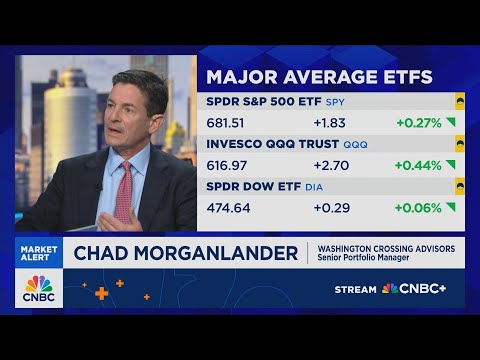
Market Outlook - Modest market strength is expected for the remainder of 2025, but caution is advised for 2026 regarding portfolio risk [1] - ETFs are pointing towards fractional gains at the opening bell [1] Investment Strategy - Focus on quality stocks, particularly those in consumer staples, healthcare, and select industrials, as lower quality companies have outperformed this year [2] - Companies with increasing dividends over the long run are considered a good investment [4] - Quality companies are defined as growing, profitable, and well-capitalized with reasonable multiples [3] Stock Recommendation - IBM is suggested as a potentially cheaper alternative to data center companies with a rising dividend and strong balance sheet [5] - IBM's server side of the business is expected to grow at 6% to 7%, with accelerating software growth and expanding margins [6]

Quality Stocks Trail Like It's 1999—Will The Snapback Be Just As Violent? - Apple (NASDAQ:AAPL), BYD (OTC:BYDDY)
Benzinga· 2025-11-19 20:09
Core Viewpoint - The performance gap between high-quality U.S. equities and the broader market has widened significantly, reminiscent of the dot-com boom era, with the S&P 500 Quality Index lagging the S&P 500 by over 11% in the past six months [1][2]. Group 1: Market Dynamics - The last time such a divergence occurred was in April 1999, which subsequently led to a rally of 20.6% by December 2000 [2]. - Investors are currently favoring fast-growing, momentum-driven technology stocks, leaving stable companies behind, with AI being a unique catalyst for this cycle [3][4]. - The concentration of returns among a few mega-cap tech companies, such as Nvidia, has amplified the performance gap, as quality-focused ETFs own little to none of these companies [3][4]. Group 2: Historical Context - The current market dynamics echo the late 1990s, where a narrow group of high-growth technology stocks drove market gains, contrasting with the more profitable and entrenched tech giants of today [4][5]. - Historical patterns suggest that when speculative rallies cool, quality stocks tend to outperform, indicating that the current divergence may not be sustainable [5][9]. Group 3: Company-Specific Insights - Berkshire Hathaway, a proxy for durable, cash-generating blue chips, has underperformed the tech-heavy benchmark, with a yearly gain of around 10% [6]. - Warren Buffett's strategy of maintaining a cash-heavy position and minimal exposure to AI-driven tech leaders has limited Berkshire's performance during the tech rally [7][8]. - Recent moves, such as reducing stakes in Apple and exiting BYD, may have constrained upside potential for Berkshire during a strong tech rally [8].


Quality Stocks Trail Like It's 1999—Will The Snapback Be Just As Violent?
Benzinga· 2025-11-19 20:09
Core Viewpoint - The performance gap between high-quality U.S. equities and the broader market has widened significantly, reminiscent of the dot-com boom era, with the S&P 500 Quality Index lagging the S&P 500 by over 11% in the past six months [1][2]. Group 1: Market Dynamics - The last time such a divergence occurred was in April 1999, which subsequently led to a rally of 20.6% by December 2000 [2]. - Investors are currently favoring fast-growing, momentum-driven technology stocks, leaving stable companies behind, with AI being a unique catalyst for this cycle [3][4]. - The concentration of returns among a few mega-cap tech companies, such as Nvidia, has amplified the performance gap, as quality-focused ETFs own little to none of these companies [3][4]. Group 2: Historical Context - The current market dynamics echo the late 1990s, where a narrow group of high-growth technology stocks drove market gains, contrasting with the more profitable and entrenched tech giants of today [4][5]. - Historical patterns suggest that when speculative rallies cool, quality stocks tend to outperform, indicating that the current divergence may not be sustainable [5][9]. Group 3: Company-Specific Insights - Berkshire Hathaway, a proxy for durable, cash-generating blue chips, has underperformed the tech-heavy benchmark, with a yearly gain of around 10% [6]. - Warren Buffett's strategy of maintaining a cash-heavy position and minimal exposure to AI-driven tech leaders has limited Berkshire's performance during the tech rally [7][8]. - Despite recent underperformance, historical trends indicate that quality stocks like Berkshire may regain strength once the speculative rally subsides [9].

Fed probably doesn't need to cut rates, says Richard Bernstein
CNBC Television· 2025-11-14 19:02
Market Analysis & Fed's Role - The Fed lowers rates hoping to spur more lending, which they hope will get more economic growth [2] - The financial sector currently shows no significant hiccup prohibiting lending or slowing GDP growth; financial conditions are remarkably easy [3] - Pre-shutdown GDP was tracking around 35%-4% [4] - Current market volatility may stem from the realization that the Fed's rate cuts were potentially unnecessary [4] Investment Opportunities - High participation in options and levered ETFs, along with low stock prices, indicates significant risk-taking, presenting potential opportunities [5] - Opportunities exist outside the speculative sphere, such as basic dividends and quality stocks outside the tech sector [5][6] - Non-US quality stocks, especially in Europe and Asia ex-China, offer faster growth and cheaper valuations [6][8] - Increasing non-US exposure, particularly in quality large-cap stocks in Europe and Asia ex-China, is advisable [8] Portfolio Strategy - Diversifying portfolios is crucial, especially taking profits from gains in areas like AI and reallocating [9][10] - The firm was never invested in crypto [9] - Investors should "play with the house's money" by taking some gains off the table and diversifying [10]
AI Is Punishing Quality Stocks. They're About to Fight Back.
Barrons· 2025-10-16 18:30
Core Insights - Investors are currently focused on AI, but companies with robust earnings and strong balance sheets are also expected to perform well [1] Group 1 - The enthusiasm for AI among investors is significant, indicating a trend towards technology-driven investments [1] - Companies that demonstrate strong financial health, including solid earnings and balance sheets, are likely to attract investor interest [1]