
RTK技术

Search documents
远航者|工程师掌舵的出海 “独角兽”:未岚大陆以技术重构智能割草机器人使用体验,实现“开箱即用”
Huan Qiu Wang· 2026-01-08 03:47
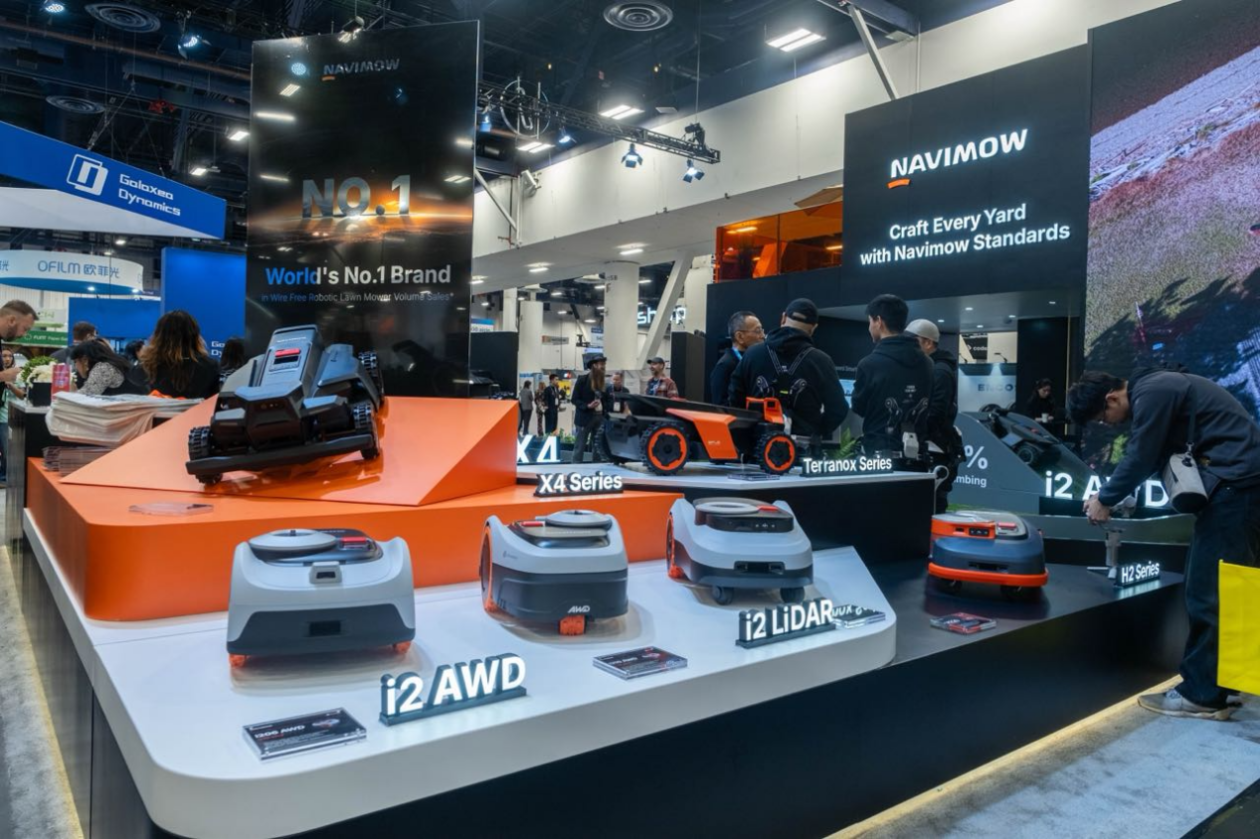
Core Viewpoint - The company, Weilan Dalu, is positioning itself as a leading player in the global smart lawn mower market, leveraging advanced technology and strategic market insights to capture growth opportunities in both European and American markets [1][3][5]. Group 1: Market Position and Growth - Weilan Dalu has established itself as a leading brand in the global boundary-less lawn mower market, with a distribution network covering over 30 countries and regions, particularly strong in Europe with approximately 5,000 dealer stores [3]. - The company has successfully capitalized on the transition from functional to intelligent lawn mowers, with a reported shipment of 2.343 million lawn mowers in the first half of 2025, marking a year-on-year increase of 327.2% [3][7]. - The application of RTK technology has been pivotal in driving explosive growth in the global lawn mower market, enabling centimeter-level navigation precision and the emergence of "boundary-less" smart products [3][4]. Group 2: Technological Advancements - Weilan Dalu has upgraded its RTK technology to Network RTK, enhancing signal stability and system reliability, and has introduced the latest solid-state LiDAR to address navigation challenges in complex environments [4]. - The company aims to provide a seamless user experience through continuous technological iterations, achieving a new level of "full scene, no deployment, high reliability" [4]. Group 3: Strategic Market Insights - The company recognizes that the global market for lawn mowers is still in a long-term penetration phase, with approximately 120 million suitable lawns worldwide, indicating significant growth potential [7]. - In preparation for CES 2026, Weilan Dalu is focusing on understanding American consumer preferences and adapting its product offerings, such as the X4 series designed for larger gardens [7][9]. - The company is also adjusting its marketing strategies to better fit the American market, including expanding retail and online channels while participating in industry events like CES [7][9]. Group 4: Product Launches and Recognition - At CES 2026, Weilan Dalu launched several new products tailored for various market needs, including the X4 flagship series for large terrains and the H2 series for complex gardens, all featuring "no deployment, automatic mapping" capabilities [9]. - The new product line received multiple international awards, including the Best of CES Honoree, highlighting the company's commitment to innovation and user-centric design [9].


收割欧美后花园,中国智能清洁巨头盯上了“割草”新肥肉
3 6 Ke· 2025-11-28 11:06
Market Overview - The global smart home cleaning robot market saw a shipment of 15.352 million units in the first half of this year, a year-on-year increase of 33%, with lawn mower robots experiencing a staggering growth of 327.2% to 2.343 million units [1][3] - The global lawn mower robot market remains a "blue ocean" compared to the increasingly competitive vacuum cleaner market, with approximately 250 million private gardens worldwide, 100 million in the U.S. and over 80 million in Europe, accounting for 72% of the total [1][3] Technology Advancements - The introduction of Real-Time Kinematic (RTK) technology has significantly improved navigation precision for lawn mower robots, allowing them to operate without physical boundary lines, thus reducing installation and maintenance costs [5][10] - The market is witnessing a shift from traditional "wired" lawn mowers to "boundary-less" models, which now account for approximately 65% of the market share, up from 35% last year [10] Competitive Landscape - Early entrants like Ninebot's subsidiary, Weilan Dalu, and Kuka Technology are leading the market, with Weilan Dalu holding the largest share in the boundary-less lawn mower segment [10] - Major smart cleaning brands such as MOVA, Ecovacs, and Roborock are expanding into the lawn mower market, leveraging core technologies from their vacuum cleaner products [11] Market Challenges - Despite the growing market, no single company has achieved a dominant market share, and the complexity of the U.S. and European markets poses challenges for new entrants [21][26] - The North American market has a lower penetration rate for lawn mower robots, with less than 10% in the U.S., presenting an opportunity for growth but also requiring significant effort in channel development [3][25] Future Prospects - Companies like Laimu Technology are targeting the North American suburban market, aiming to sell 100,000 units next year and capture over 10% market share [24][25] - The European Union has initiated an anti-dumping investigation into electric lawn mower robots from China, which could impact the market dynamics for domestic manufacturers [30]

长曜创新创始人胡岳:创业公司想量产割草机器人,先准备1个亿|硬氪专访
3 6 Ke· 2025-04-18 01:05
Industry Overview - The lawn mower robot market has rapidly evolved, experiencing significant financing, entry, and exit of major players within just three years, with a market size of billions [2] - The global market for lawn mower robots is still in its infancy, with only about one million units sold compared to traditional lawn mowers [1][2] - Major companies like Ninebot, Ecovacs, and others have seen substantial increases in overseas sales, with Ninebot's Navimow generating nearly 600 million RMB in revenue in the first three quarters of 2024 [2] Challenges for Startups - Startups face significant challenges, including tight funding and the inability to achieve scale production, which deters investors due to lack of revenue visibility [4][5] - The average cost for a startup to reach a production scale is estimated to be around 100 million RMB, with initial stages requiring 30-40 million RMB for development and testing [6][7] - Recruitment is difficult for startups due to the industry's novelty and the limited pool of experienced talent, leading to challenges in building effective teams [5][7] Competitive Landscape - The industry is characterized by a fierce competition for funding, with hardware startups needing substantial capital to survive and grow [3][8] - Price wars are emerging, but quality and brand value are also critical factors influencing consumer choices, especially in overseas markets [10][11] - Major players are focusing on product quality and long-term planning rather than rushing to market, which reflects a more cautious investment approach [11] Technological Developments - The industry is exploring various technological solutions, with many companies opting for RTK (Real-Time Kinematic) positioning due to its maturity and accuracy in most scenarios [14][16] - However, some startups are focusing on visual solutions to reduce costs and improve adaptability in various environments, believing this approach can yield better long-term results [16][17] - Current visual solutions can effectively handle about 80% of tasks, utilizing multiple cameras for comprehensive coverage, which enhances performance in diverse conditions [18]
