
Supply Chain Diversification

Search documents
Iran War: supply chain risks and outlook for mining industry
Yahoo Finance· 2026-03-27 15:02
Core Insights - The ongoing conflict in the region is significantly impacting the refining and processing sectors more than mine production, leading to potential supply disruptions in processed metals which can quickly affect pricing and manufacturing activities [1][5] Group 1: Impact on Mining and Metals Sector - Iran's mining and metals sector is under pressure due to infrastructure disruptions, power constraints, and export bottlenecks, which could lower utilization rates in energy-intensive activities like copper smelting and steelmaking [2] - The conflict is exacerbating existing structural challenges in mining supply chains, prompting a strategic shift towards supply diversification and renewable energy integration [3] - The Strait of Hormuz is a critical chokepoint for global trade, and disruptions here are increasing operational costs for mining companies due to higher fuel bills and shipping delays [4][8] Group 2: Specific Metal Impacts - The war's effect on iron ore markets is primarily driven by cost inflation rather than direct supply loss, with Iran producing 61 million tonnes in 2025, representing a 3.8% share of global production [6] - Aluminium production in Iran has decreased by 5.2% year-on-year due to electricity shortages and financial constraints, with the country producing 552,200 tonnes in the first 11 months of the 2025 financial year [11] - Nickel, lead, and zinc markets are facing supply risks due to potential disruptions in the sulphur market, which is essential for processing these metals [13][14] Group 3: Commodity Price Volatility and Strategic Shifts - The conflict is contributing to commodity price volatility, particularly affecting metals like copper and nickel that rely on stable energy and refining inputs [16] - The geopolitical situation is highlighting the vulnerability of interconnected mineral supply chains, making them more sensitive to disruptions [17] - The conflict may increase the strategic importance of China in global mineral supply chains as Western economies seek to reduce reliance on Middle Eastern resources [18] Group 4: Broader Industrial Implications - The oil and gas disruptions are forcing Asian countries to adjust energy consumption patterns, which could impact mining operations and metal processing costs [19]
Castlery just spent 7 figs to open its first US store. Here’s the bet they’re making.
Vulcan Post· 2026-03-25 06:53
Core Insights - Castlery, a Singaporean furniture retailer, is opening a showroom in New York on May 15, marking its first physical retail presence in the US after six years of online-only operations [1][2][3] - The company aims to break even on the New York store within 1.5 to 2 years, or potentially within a year if sales are strong [3] Company Expansion - The New York showroom is Castlery's fourth worldwide, following openings in Brisbane, Sydney, and Singapore [4] - The showroom spans 3,000 square feet and represents a seven-figure investment on a 10-year lease [2] Market Presence - Castlery operates in five markets, with the US contributing 65% of overall sales, followed by Australia at 17% and Singapore at 15% [5][11] - The brand has sold over 1 million pieces of furniture and offers more than 7,000 products [8] Supply Chain and Tariffs - Castlery has diversified its supply chain to reduce exposure to tariffs, moving production from China to Vietnam, Thailand, and India, with only 20% of production remaining in China [15] - The company has faced challenges from tariffs and geopolitical tensions, leading to a profit margin decline of 1% to 3% [16][17] Future Growth Plans - By 2029, Castlery aims to have 8 to 12 showrooms in key cities worldwide, including Washington, D.C., Los Angeles, and London [21] - The company is cautiously optimistic about growth prospects despite current market challenges, focusing on customer needs and product offerings [20]



POSCO Holdings Inc. (PKX) Strengthens Supply Chain Amid Global Trade Shifts
Yahoo Finance· 2026-03-20 19:33
Core Viewpoint - POSCO Holdings Inc. is making a significant investment in battery materials by establishing its first overseas artificial graphite anode material plant in Vietnam, responding to global trade regulations and aiming to diversify supply chains [1][4]. Group 1: Investment and Expansion - The board of directors of POSCO Future M approved a KRW 357 billion investment for the new plant in Thai Nguyen, Vietnam [1]. - Construction is set to begin in the second half of this year, with mass production targeted to start in 2028 [3]. - The plant will have an initial production capacity of 55,000 metric tons annually, with plans for phased expansion based on demand [3]. Group 2: Strategic Rationale - The investment is a direct response to increasing global trade regulations, including the US Inflation Reduction Act and Europe's Critical Raw Materials Act, which encourage reducing reliance on Chinese suppliers [4]. - Vietnam was chosen for its lower labor and logistics costs, as well as its export-friendly trade policies and access to the US market, providing a competitive advantage over Chinese competitors [5]. Group 3: Company Overview - POSCO Holdings Inc. is a South Korean company involved in steelmaking and industrial sectors, producing various steel products for automotive, construction, shipbuilding, and machinery industries [6]. - The company also operates in energy, chemicals, and materials, including lithium and nickel for battery production [6].

Asia Should Buy More Oil From the US, Says Zeldin
Bloomberg Television· 2026-03-15 12:38
Well, one of the points is that you see these Asian countries, these Asian countries that have relied so heavily on the Middle East for their crude oil and the time that it takes and the reliance on a route that in many respects a terrorist regime has been able to frequently disrupt or at the very least threaten to disrupt over the course of years and decades. Now they start looking east to the United States, where we have been unleashing energy dominance here at home with new projects that are now on the h ...
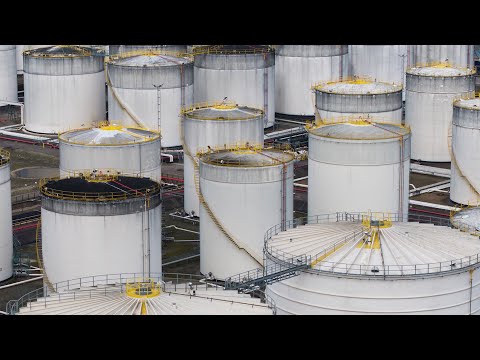
How a Texas Oil Belt Became America's Next Lithium Frontier
Yahoo Finance· 2026-03-13 21:00
Core Insights - 2026 is anticipated to be a significant year for lithium due to increasing demand for technology and clean energy manufacturing [1] - Rising lithium prices are expected to drive a resurgence in global extraction efforts, impacting mining and battery technology [2] Industry Overview - China currently dominates the global lithium supply chain, controlling approximately 72% of the lithium-ion market and a quarter of the world's lithium mining capacity [3] - In 2024, over 80% of battery cells were produced in China, raising concerns about geopolitical risks and market resilience in technology supply chains [3] U.S. Market Dynamics - The United States aims to reduce its dependence on Chinese lithium and is working to establish trade relationships with South American lithium producers, although challenges remain [4] - Rising lithium prices may incentivize companies outside of China to initiate their own extraction operations, potentially leading to a North American lithium boom [4] Domestic Industry Development - The U.S. has significant lithium resources, but currently has only one operational lithium mine, the Silver Peak mine in Nevada [5] - The U.S. domestic sector is rapidly moving to develop a lithium industry, particularly in regions like Northeast Texas, which is believed to contain some of the purest lithium brine globally [6]
Apple Smashes India Production Records As Tim Cook Races To Dodge Trillion-Dollar China Tariffs
Yahoo Finance· 2026-03-11 12:30
Core Viewpoint - Apple Inc is significantly increasing its operations in India, focusing on iPhone production, local chip partnerships, and the launch of Apple Pay in a rapidly growing technology market [1] Group 1: iPhone Production in India - Apple increased iPhone production in India by approximately 53% last year, assembling around 55 million devices in 2025, up from 36 million in 2024 [2] - Currently, India accounts for about one-quarter of Apple's total iPhone production, which is part of a strategy to reduce reliance on China and mitigate U.S. tariffs related to trade disputes [2][3] - Apple manufactures around 220-230 million iPhones globally each year, with India's share rapidly increasing [3] Group 2: Local Manufacturing and Supplier Partnerships - All models of the latest iPhone 17 lineup, including Pro and Pro Max versions, are assembled in India, while earlier models like iPhone 15 and iPhone 16 are also produced for domestic sales and exports [4] - Apple is expanding local supplier partnerships in India to produce components such as lithium-ion cells, device enclosures, and accessories like AirPods [4] Group 3: Semiconductor and Supply Chain Strategy - Apple is enhancing its supply chain strategy in India amid trade and tariff pressures, initiating talks with Indian chipmakers to assemble and package iPhone components [5] - CG Semi, part of the Murugappa Group, is involved in discussions and is building an outsourced semiconductor assembly and test (OSAT) facility in Sanand, Gujarat [6] - Analysts suggest that a potential U.S.–India trade deal could significantly bolster Apple's supply chain, with India emerging as a serious competitor to China in tech manufacturing due to its engineering talent and growing infrastructure [6][7]

Will Calavo Deal Transform Mission Produce's Growth Trajectory?
ZACKS· 2026-03-05 18:35
Core Insights - Mission Produce, Inc. (AVO) is acquiring Calavo Growers to diversify its fresh-produce platform beyond avocados, aiming for long-term growth and a stronger supply chain [2][4] Group 1: Acquisition Details - The acquisition will enhance AVO's scale in the North American avocado market and improve sourcing capabilities by integrating Calavo's packinghouses, grower relationships, and distribution channels [3][9] - AVO will gain access to fruit from key regions like Mexico and California, which could stabilize supply and improve operational efficiency [3][4] Group 2: Diversification and Growth Potential - The deal allows AVO to enter faster-growing segments such as tomatoes, papayas, and prepared foods like guacamole, aligning with consumer demand for convenience and healthy eating [4][9] - If executed effectively, the acquisition could strengthen AVO's vertically integrated model and unlock cost synergies, transitioning it into a broader global fresh-produce player [4] Group 3: Financial Performance and Valuation - AVO's shares have increased by 19.9% over the last three months, outperforming the industry growth of 11.6% [8] - AVO trades at a forward price-to-earnings ratio of 22.33X, which is above the industry average of 17.83X [10] - The Zacks Consensus Estimate indicates a year-over-year decline of 10.13% in AVO's fiscal 2026 earnings, with a projected growth of 4.23% for fiscal 2027 [11]


Rare earth supply crunch triggers global power shift
MINING.COM· 2026-03-02 12:03
Core Insights - Chinese export quotas could potentially displace up to 13,000 metric tons of demand in 2026, impacting pricing dynamics in the rare earths market [9] - The dominance of China in the rare earth sector is projected to decrease from approximately 90% market value in 2024 to 69% by 2030, yet supply gaps will persist, leading to regional pricing benchmarks [3] - NdPr demand is expected to grow at an annual rate of 7% through 2030, driven by technology and industrial growth, with major companies relying on about 97,000 metric tons annually [8] Industry Dynamics - Geopolitical tensions and export threats are accelerating efforts to diversify supply chains for critical minerals, with an estimated $10 billion in funding anticipated in 2026 for new projects [2] - The production of NdPr outside China is forecasted to increase 4.4 times from 2024 to 2030, primarily from North American and Australian mines, but much of this supply is already committed [5] - Rare-earth equities have seen significant re-rating since 2025, with performance varying by region and exposure, as governments pursue strategies to reduce reliance on Chinese supply [10] Company Insights - US-based MP Materials and Australia's Lynas Rare Earths are positioned as leading producers of neodymium-praseodymium outside China, likely benefiting from the search for secure sources of magnet-critical material [4] - Capital is increasingly concentrated in established players like MP Materials and Lynas, supported by government partnerships that mitigate project and earnings risks [13] - The expansion of magnet manufacturing in the US, Europe, and Japan is largely driven by mid-cap and private firms, backed by concessional debt and policy incentives [13]

FS.COM Limited(H0210) - PHIP (1st submission)
2026-03-01 16:00
The Stock Exchange of Hong Kong Limited and the Securities and Futures Commission take no responsibility for the contents of this Post Hearing Information Pack, make no representation as to its accuracy or completeness and expressly disclaim any liability whatsoever for any loss howsoever arising from or in reliance upon the whole or any part of the contents of this Post Hearing Information Pack. Post Hearing Information Pack of FS.COM Limited 深圳市飛速創新技術股份有限公司 (A joint stock company incorporated in the Peopl ...
Dorman(DORM) - 2025 Q4 - Earnings Call Transcript
2026-02-26 14:02
Financial Data and Key Metrics Changes - Net sales for 2025 reached $2.13 billion, an increase of 6% year-over-year, driven by strong demand in the light-duty segment and successful tariff-related pricing initiatives [9][27] - Consolidated net sales for Q4 2025 were $538 million, up slightly from Q4 2024, but below internal expectations due to a larger customer adjusting their ordering patterns [11][24] - Adjusted diluted EPS for Q4 was $2.17, down 1% year-over-year, but at the high end of guidance [12][26] - Adjusted operating income was $93 million, flat compared to the previous year, with adjusted operating margin at 17.4%, slightly down year-over-year [25][26] Business Line Data and Key Metrics Changes - Light-duty business net sales in Q4 were $429 million, up slightly year-over-year, with POS at large customers up mid-single digits [14][15] - Heavy-duty business net sales grew 6% year-over-year in Q4, with operating margin expanding 130 basis points [18] - Specialty vehicle segment saw flat top-line growth in Q4, with operating margin down year-over-year due to increased wage and benefit expenses [21][22] Market Data and Key Metrics Changes - The light-duty market remains positive, with vehicle miles traveled increasing year-over-year and opportunities in complex electronics due to OEM platform changes [16][17] - The heavy-duty segment faces pressure from the trucking and freight industry, with ongoing uncertainty affecting predictions for market recovery [19] - Specialty vehicle market shows strong UTV and ATV ridership, with expectations for demand to resume as economic conditions improve [22][23] Company Strategy and Development Direction - The company emphasized innovation as a key priority, launching thousands of new SKUs and focusing on complex electronic solutions [6][7] - Operational excellence initiatives included deploying new automation technologies and diversifying the global sourcing footprint to reduce reliance on China [7][8] - The company aims for strategic growth through organic opportunities and is hopeful for increased M&A activity in the coming quarters [8][9] Management's Comments on Operating Environment and Future Outlook - Management expressed confidence in the foundation built for continued growth and value creation, despite challenges from tariffs and market conditions [10][39] - The company expects total net sales growth of 7%-9% for 2026, with a focus on mid-single-digit POS growth and the impact of pricing initiatives [33][36] - Management acknowledged the uncertainty in tariffs and global trade dynamics but remains optimistic about navigating these challenges [38][39] Other Important Information - The company recorded a non-cash goodwill impairment charge of approximately $51 million in Q4, which was adjusted out in the diluted EPS [25][26] - The new CFO, Charles Rayfield, will officially take over following the filing of the 2025 10-K [10][11] Q&A Session Summary Question: How is the light-duty business performing? - Management noted that the light-duty business remains strong, with mid-single-digit POS growth, despite a larger customer adjusting their ordering patterns [46][48] Question: Can you provide clarity on inventory growth and tariff impacts? - The majority of inventory growth is attributed to higher tariff costs, with some additional lift due to volume increases [56] Question: What gives confidence in the 7%-9% growth guidance? - Management indicated that order patterns from a large customer, which were down nearly 40% in Q4, are expected to normalize, contributing to growth alongside new product sales [66][67] Question: How will gross margins be affected by pricing strategies? - Management clarified that while pricing increases may impact margin percentages, they expect operating margins to improve in the latter half of 2026 due to cost reductions and productivity initiatives [68][70] Question: What is the outlook for M&A and capital deployment? - The company plans to focus on debt levels, organic growth investments, and opportunistic share repurchases, with expectations for increased M&A activity in 2026 [90][93]
