
Supply Side Economics

Search documents
Why the S&P 500 could hit 8,500, plus Apple's year-in-review
Youtube· 2025-12-23 22:04
Economic Growth - The US economy expanded at a rate of 4.3% in the third quarter, driven primarily by consumer spending, which increased by 3.5% [2][3][5] - The growth rate exceeded expectations by a full percentage point, with significant contributions from healthcare spending and trade [3][5] - Business investment grew by over 5%, while exports rose nearly 8%, indicating a robust economic environment [5][6] Consumer Spending - Consumer goods spending in real terms increased by over 3%, with recreation and transportation spending both up around 7% [4][5] - Anecdotal evidence from the holiday shopping season suggests strong consumer spending trends [4] Business Investment - Capital expenditures (capex) grew over 5%, although investment in non-residential structures contracted at a pace of 6.3% [5][6] - The slowdown in business investment is attributed to high interest rates, which are impacting both residential and non-residential investments [9][10] Federal Reserve and Interest Rates - The Federal Reserve may have the capacity to lower interest rates if the economy sustains a growth rate of around 3%, as this would indicate lower inflation [12][13] - The current yield curve is flat, suggesting that monetary policy remains somewhat restrictive despite strong economic growth [13][14] Labor Market - There is a noted decoupling between GDP growth and job growth, with some analysts suggesting that the labor market may take time to catch up with economic recovery [14][16] - The private sector is expected to see job growth as the economy continues to expand, with a three-month moving average of private employment trending upward [17][18] Consumer Sentiment - Despite strong GDP growth, consumer sentiment has declined to levels not seen since April, indicating concerns over affordability and living standards [20][21] - Policies aimed at increasing after-tax wages are expected to improve consumer sentiment over time [19][20] Market Outlook - The stock market is anticipated to continue its upward trajectory, with a target of 8,500 for the S&P 500 in 2026, supported by earnings growth [24][25] - Investors are advised to prepare for potential volatility and consider opportunities in sectors that may be undervalued [26][27] International Relations and Trade - The US-China relationship is expected to evolve, with potential for improved relations and targeted stimulus measures in China to support domestic consumption [50][51] - Chinese technology companies listed in Hong Kong are viewed as undervalued compared to their US counterparts, presenting investment opportunities [45][46] Manufacturing Sector - The manufacturing sector is projected to improve in 2026, driven by increased certainty and advancements in smart manufacturing technologies [102][103] - Smart manufacturing is characterized by the integration of AI, automation, and improved operational efficiencies, which are expected to enhance product quality and reduce costs for consumers [107][110]



Former Cleveland Fed Pres. Mester on the next Fed Chair: We need a thoughtful leader
Youtube· 2025-12-01 13:20
Core Viewpoint - The next Federal Reserve chair should be a thoughtful leader focused on economic policy and the dual mandate goals, prioritizing analysis and clear communication to the public [2][3]. Group 1: Attributes of the Next Fed Chair - The ideal candidate should be able to lead the committee in considering the best path for policy to achieve economic goals, setting aside external pressures [2]. - Attributes of potential candidates include strong analytical skills, effective modeling, and forecasting capabilities [3]. Group 2: Criticism and Reform of the Fed - There is a growing mainstream criticism of the Federal Reserve, with calls for reform from some leading candidates [4]. - While acknowledging past mistakes, such as the delay in addressing inflation, there is a belief that improvements can be made without undermining the institution [5][8]. Group 3: Monetary Policy Considerations - The Fed should consider various scenarios and not rely solely on one approach, particularly in light of recent high inflation [6]. - There is a need for a balanced approach to monetary policy that considers the implications of lowering interest rates on inflation and small businesses [10]. Group 4: Transparency and Communication - A framework for how the Fed reacts to economic data should be established to improve transparency and predictability in policy decisions [11][12]. - Better communication regarding the Fed's reaction function is necessary to enhance understanding of its policy setting [13].

We've 'been down this road before': Economist on Trump's tariff 'dividends' proposal
Youtube· 2025-11-27 10:01
Economic Policy and Tariffs - The government is experiencing large monthly deficits that exceed tariff revenue, raising concerns about fiscal sustainability [1][3] - Instead of issuing rebate checks, the government should focus on using tariff revenue to reduce the deficit, which would lower borrowing needs and interest rates, providing real economic relief [4][5] - A tax cut that reduces marginal rates could incentivize work and increase production, leading to lower prices and economic growth [5] Job Market Trends - Claims that blue-collar jobs are plunging for the first time since the pandemic are misleading; manufacturing has been in contraction since early 2023, with ongoing job losses [9][10] - The trend of job losses in blue-collar sectors has persisted for nearly three years, contradicting assertions of a sudden downturn [10][12] - Future job recovery in blue-collar sectors is anticipated due to pro-growth measures in the new tax bill and adjustments in tariff strategies, regardless of Supreme Court decisions [13]
We will see a lot more economic growth coming, Art Laffer predicts
Youtube· 2025-11-18 11:02
Economic Growth and Tax Cuts - Wages are rising faster than prices, with real income increasing and grocery prices only rising by 2.1% [2][17] - Economic growth is expected to continue, with potential growth rates reaching 4% to 5% in the near future, positively impacting real wages and the economy [5][14] - The tax cuts enacted in July are anticipated to show significant refunds in the first quarter of the following year, contributing to economic strength [9][27] Inflation and Affordability - The current inflation rate, particularly in grocery prices, is being misrepresented by the media, as prices are barely rising [7][8] - The affordability crisis is being challenged by the increase in real income, which has risen by $1,200 since Trump took office [17][18] - Housing prices are expected to decrease as new housing units come online, which will positively affect the Consumer Price Index (CPI) [10][12] Federal Reserve and Monetary Policy - The Federal Reserve's current policies are criticized for not aligning with economic growth, leading to higher inflation instead of lower prices [4][23] - There is a call for the Federal Reserve to reduce its balance sheet to allow for lower interest rates, which would benefit small and medium-sized businesses [20][21] - Ethical concerns regarding insider trading among Federal Reserve officials have been raised, indicating a need for better compliance and management within the institution [29][34]

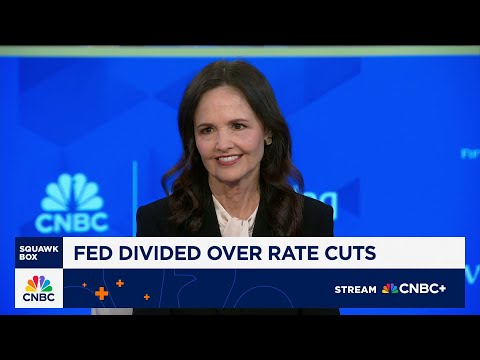
Judy Shelton: It's a mistake for the Fed to deliberately restrict capital access through high rates
Youtube· 2025-11-11 14:22
Core Viewpoint - The Federal Reserve's policy makers are divided on the necessity for further rate cuts this year, with discussions highlighting the implications of the current inflation target and its alignment with the Fed's dual mandate [1][10]. Group 1: Inflation and Monetary Policy - The Fed's target of 2% inflation is viewed as a deviation from the original goal of price stability, which some argue should be zero [2][3]. - There is skepticism regarding the Fed's ability to accurately measure inflation, with different indices leading to confusion about the real impact on average American families [8][9]. - The current inflation rate is estimated to be around 3%, but there is doubt about the reliability of various measures used by the Fed [7][10]. Group 2: Economic Growth and Interest Rates - The argument is made that the Fed's approach to managing inflation through high interest rates restricts access to capital, which is detrimental to small and medium-sized businesses that drive job creation [14][21]. - There is a belief that increasing output, rather than restricting growth, is a more effective way to combat inflation [22]. - The Fed's current methods are criticized as being overly reliant on Keynesian models, which may not account for the benefits of lower taxes and deregulation [13][14]. Group 3: Trust in Government and Financial Instruments - A proposal is made for the Treasury to issue gold-backed long-term bonds to restore trust in government and provide a reliable store of value for investors [17][19]. - The discussion emphasizes the need for honest government and sound money, criticizing perpetual deficit spending as immoral and corrupt [16][19]. - The potential for gold-linked Treasury bonds to create demand and signal a move towards sound financial practices is highlighted [19][20].

Judy Shelton: It's a mistake for the Fed to deliberately restrict capital access through high rates
CNBC Television· 2025-11-11 14:22
Monetary Policy & Inflation - The Fed's 2% inflation target is considered by some to be above the original dual mandate, with a zero percent target preferred for pure price stability [2] - The Fed aims for stable inflation, but its track record in achieving this is questionable [3] - A little bit of deflation is considered a natural part of economic development due to technological and productivity improvements [6] - Current inflation measures, such as the Consumer Price Index (CPI) and the Personal Consumption Expenditures (PCE) indicator, may not accurately reflect the price inflation experienced by average American families [8] - The Fed's deliberate debasement of purchasing power necessitates inflation adjustments, creating confusion [9] Interest Rates & Economic Impact - The Fed's method of curbing inflation by restricting growth is questioned, particularly its reliance on Keynesian models that ignore the impact of lower taxes and less regulation on increasing supply [12][13] - High interest rates restrict access to capital, hindering real prosperity gained through the production of goods and services [15][21] - The Fed's actions empower the government at the expense of the private sector, especially small and medium-sized businesses [14] - Lowering rates is suggested to stimulate small business hiring by improving access to capital [21] Fiscal Policy & Government - Perpetual deficit spending is viewed as immoral and corrupt, creating purchasing power based on future, unproduced goods and services [16] - A balanced budget is crucial, and the inability to manage government finances is demoralizing [22][23] Alternative Monetary Solutions - A proposal suggests Treasury should issue a gold-backed long-term bond to compensate for losses in purchasing power, potentially competing with assets like Bitcoin [17] - Relinking the dollar to gold could be a cost-effective way for the government to borrow and signal a move towards sound finances [19][20]
This is why the US needs tariffs in place
Youtube· 2025-11-05 21:30
Core Viewpoint - The Supreme Court is hearing a case regarding the constitutionality of President Trump's tariffs, which are deemed critical for the U.S. economy and national security [1] Tariffs and Economic Impact - The tariffs have significantly reduced imports from China and raised hundreds of billions of dollars for the U.S. government [2][3] - The administration has alternative measures available if the Supreme Court rules against the tariffs, ensuring continued revenue generation and support for reindustrialization [3] Economic Weakness and Monetary Policy - There are acknowledged weaknesses in the economy, particularly in the housing sector, attributed to high mortgage rates and low affordability [5][6] - The Federal Reserve's restrictive monetary policy is seen as a barrier to economic growth, particularly in manufacturing [7][8] Inflation and Energy Prices - The tariffs have not led to the expected inflationary pressures, which has affected the credibility of the Federal Reserve [10][11] - Energy prices have decreased under the current administration, contributing to lower inflation expectations and potentially aiding affordability [12][13] Wage Growth and Tax Benefits - The economy is projected to experience a "blue-collar boom," with wages rising faster than inflation, contrasting with previous administrations [14] - Significant tax refunds are anticipated due to changes in tax policy, which will benefit American workers, particularly in the blue-collar sector [15]

"Be Cautious:" Weakening Economy Poses Market Challenge, Metal Bull Run to Continue
Youtube· 2025-09-10 19:30
Group 1: Gold and Metal Miners - Gold prices have reached new record highs, with metal miners showing significant performance, up about 100% year-to-date compared to gold's 37% increase [3][4]. - Metal miners are considered undervalued, with expectations of another 100% increase in the next 3 to 4 months, particularly for indexes like GDX and SIL [5]. - The intrinsic value of metal miners is strong due to stable production costs, suggesting they will lead profitability in the coming years [4][20]. Group 2: Economic Health and Job Market - There were significant discrepancies in job data, with nearly 911,000 jobs reported that were not actually there, indicating potential market adjustments [7][10]. - Bankruptcies have increased by 11-12% this year, particularly affecting corporations, which could lead to broader economic challenges [10][11]. Group 3: Real Estate Market - The real estate market is experiencing a surplus of homes for sale, with 500,000 more homes available than buyers, leading to expectations of price declines as the market shifts to a buyer's market [15][16]. - Rising interest rates are impacting affordability, making it difficult for potential buyers to commit to mortgages [16]. Group 4: Investment Strategies - In light of potential market pullbacks, there are opportunities to buy on sale, particularly in technology stocks, which are seen as strong long-term investments [19]. - The focus on metals and metal miners is emphasized as they are expected to be critical for future technologies, including AI and electrification [20][21].