
U.S.-China trade tensions

Search documents
RWC Asset Advisors Exits Its Entire Li Auto Stake -- Selling $33 Million Worth of Shares
Yahoo Finance· 2026-03-20 20:51
Company Overview - Li Auto has a market capitalization of $17.1 billion, with a trailing twelve months (TTM) revenue of $16.3 billion and a net income of $163.2 million [3]. Recent Developments - RWC Asset Advisors completely exited its stake in Li Auto, selling 1,638,544 shares in Q4 2025 for an estimated transaction value of approximately $33 million, down from a position valued at $41.5 million in the previous quarter [1][5]. - This exit represented a significant shift, as Li Auto had constituted about 6.8% of RWC's assets just one quarter prior [5][7]. Performance Metrics - Li Auto's shares have declined by 38% over the past year and have underperformed the S&P 500 by 56 percentage points, with the stock priced at $17.10 as of March 19, 2026 [7]. - The company's recent earnings report showed a 35% year-over-year decline in revenue and a 31% drop in vehicle deliveries, indicating ongoing challenges [6]. Industry Context - The Chinese electric vehicle (EV) sector is facing significant challenges, including intense domestic price competition, slower-than-expected consumer demand in the premium segment, and ongoing uncertainties related to U.S.-China trade tensions [9]. - RWC's decision to exit Li Auto may reflect a strategic shift towards commodity exposure, as evidenced by its larger holdings in companies like Sociedad Química y Minera de Chile and Vale [9].

Airbus CEO issues a warning that investors can’t ignore
Yahoo Finance· 2026-01-27 18:11
Core Insights - Airbus is facing an "unprecedented number of crises" and "unsettling geopolitical developments," particularly due to U.S. protectionism and U.S.-China trade tensions, which are impacting its global supply chain operations [1] - Despite strong demand for its aircraft, Airbus is struggling with managing deliveries, margins, and cash flow as it moves forward [2] Group 1: Demand and Performance - In 2025, Airbus delivered 793 commercial aircraft and recorded 1,000 gross orders (889 net), resulting in a record backlog of 8,754 aircraft, including a widebody backlog of 1,124 [3] - The strong demand allows Airbus to maintain a long-term perspective, even as the CEO warns about near-term challenges [4] Group 2: Execution Risks - Airbus lowered its delivery goal for 2025 from around 820 to about 790 due to issues with A320 Family fuselage panels from a supplier, although its financial goals remained unchanged [5] - The delivery system's vulnerability is highlighted by the fact that even minor supply chain issues can lead to significant breakdowns, as evidenced by the engine supply problems with Pratt & Whitney and CFM (GE/Safran) [6]
China’s Rare-Earth Magnet Exports to US Decline in November Amid Persistent Supply Concerns
Stock Market News· 2025-12-20 11:38
Core Insights - China's rare-earth magnet exports to the U.S. fell by 11% in November 2025, totaling 582 metric tons, despite an overall increase in China's rare-earth magnet exports [2][9] - Overall rare-earth magnet exports from China surged to 6,150 metric tons in November, a 12% increase from October, marking the second-highest level on record [3] - China's stringent export restrictions on rare earth elements and magnets have been a significant factor in U.S.-China trade tensions, requiring licenses for exports and affecting foreign-manufactured products [4] Industry Dynamics - Rare-earth magnets are crucial for advanced technologies, including defense systems, electric vehicles, wind turbines, and consumer electronics, with China controlling a significant portion of the global supply chain [5] - The U.S. is actively working to establish a resilient "mine-to-magnet" supply chain, with companies like MP Materials and USA Rare Earth making strides to reduce reliance on Chinese supplies [6][9] - Global demand for rare-earth magnets is expected to grow robustly, particularly driven by the electric vehicle and wind power sectors, with forecasts suggesting a tripling of demand by 2035 [7]




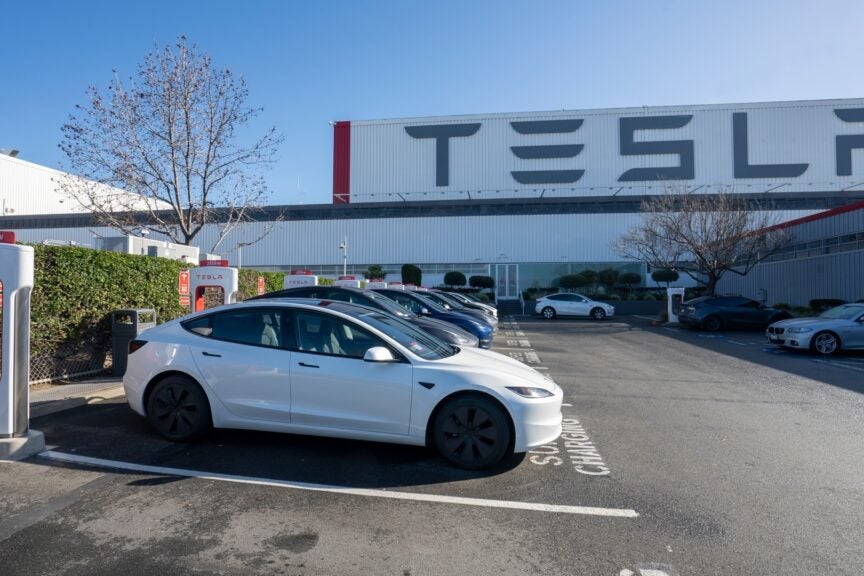
Tesla Wants To Shift Away From China-Made Components For US Cars: Report - Tesla (NASDAQ:TSLA)
Benzinga· 2025-11-16 04:55
Core Insights - Tesla Inc. has requested its suppliers to eliminate China-made parts in the production of U.S. cars due to rising geopolitical tensions between the U.S. and China [1] - The company has initiated a strategy to replace Chinese components with parts sourced from other countries, aiming to complete this transition within the next one to two years [2][3] Supply Chain Strategy - The decision to reduce reliance on Chinese components is part of a broader strategy influenced by tariffs imposed on Chinese imports, which has accelerated the shift [3] - Tesla is actively working to secure additional non-China-based suppliers, although challenges persist, particularly concerning lithium-iron phosphate batteries [5] Market Context - The ongoing U.S.-China trade tensions have affected China's role as a major producer and exporter of auto parts, including critical components like chips and batteries [4] - Recent supply disruptions, particularly in automotive chips due to disputes between China and the Netherlands, have further motivated Tesla to diversify its supply chain [4] Sales Performance - Tesla's decision to move away from China-made components coincides with a significant decline in sales in China, with a reported 36% year-over-year drop in October [5] Rare Earth Concerns - China's control over rare earth exports, essential for various tech industries, adds complexity to the situation, impacting global supply chains, including those of major companies like Apple Inc. [6]


CNBC's The China Connection newsletter: Losing the Chinese shopper could soon have global consequences
CNBC· 2025-10-22 07:12
Core Insights - The article discusses the ongoing interest of U.S. brands in the Chinese consumer market, particularly through cross-border e-commerce initiatives, despite existing trade tensions [2][3]. Group 1: U.S. Brands and Chinese Market - A joint event hosted by Tmall Global and WPIC Marketing + Technologies in Los Angeles attracted 50 representatives from U.S. consumer brands, highlighting their desire to tap into the Chinese market [2]. - Jacob Cooke, co-founder and CEO of WPIC, emphasized that cross-border e-commerce is the most effective way to enter the Chinese market, noting resilient demand for high-quality U.S. products [3]. Group 2: Alibaba's AI Integration - Alibaba introduced new AI tools during its Singles Day launch in Shanghai, which can enhance product targeting by 25% and allow for more complex shopper profiles [4]. - The company has reportedly recouped its AI investments in the online shopping sector, indicating successful integration of AI into its business model [5]. Group 3: Retail Trends in China - China's retail sales grew by only 3% in September year-over-year, indicating a slowdown compared to pre-pandemic levels [7]. - LVMH's flagship store "The Louis" in Shanghai has attracted significant foot traffic, with about 2,500 daily visitors, suggesting a successful strategy to engage consumers in a challenging market [8]. Group 4: Market Dynamics - LVMH reported an improvement in domestic consumer spending in China, with growth in the mid-to-high single digits, reinforcing Asia as its largest market by revenue [9]. - The competitive landscape indicates that brands are reluctant to exit the Chinese market, as losing market share there could have global repercussions [10].


Steelmaker Cleveland-Cliffs Says It Wants to Get Into Rare Earths. Its Stock Is Soaring
Investopedia· 2025-10-20 18:10
Core Insights - Cleveland-Cliffs announced its intention to enter the rare earths mining sector, which led to a 20% increase in its shares following the third-quarter earnings report [1][5]. Group 1: Company Developments - CEO Lourenco Goncalves highlighted the renewed importance of rare earths and identified promising mining sites in Michigan and Minnesota [2]. - The company reported a narrower-than-expected loss of $0.45 per share for the third quarter, which was better than analysts' expectations, while revenue increased by 3.6% to $4.73 billion, although it fell short of forecasts [3][5]. - Cleveland-Cliffs reduced its full-year capital expenditure estimate to $525 million from $600 million and lowered selling, general, and administrative costs by $25 million to $550 million [6]. Group 2: Industry Context - The move into rare earths comes amid China's efforts to curb exports and the U.S. government's strategy to reduce reliance on Chinese minerals [3]. - The demand for rare earths has surged due to their critical role in high-tech products, which has been exacerbated by U.S.-China trade tensions [2].


Asian shares advance, with Japan's benchmark surging after new coalition
ABC News· 2025-10-20 05:52
Market Overview - Asian markets experienced a surge following a positive week on Wall Street, alleviating concerns over bank lending and the U.S.-China trade war [1] - U.S. futures showed slight increases while oil prices declined [1] Japan - Japan's Nikkei 225 index rose by 2.9% to 48,970.40, reaching a new record after the Liberal Democrats secured a coalition partner, supporting Sanae Takaichi's bid to become the first female prime minister [2] - Takaichi is anticipated to advocate for market-friendly policies, including low interest rates and increased government spending [2] China - China's economy grew at an annual rate of 4.8% in the last quarter, driven by strong exports to markets outside the U.S., although this was the slowest growth in a year [3] - The Chinese Communist Party held a meeting to set policy goals for the next five years, with outcomes expected to be revealed gradually [4] - Hong Kong's Hang Seng index increased by 2.5% to 25,884.81, while the Shanghai Composite index rose by 0.7% to 3,866.77 [4] South Korea - The Kospi index in South Korea surged by 1.3% to 3,796.64, driven by optimism for a trade deal with the U.S. and strong semiconductor demand [5] - Notable stock performances included SK Hynix, which gained 3.3%, and automakers Kia Corp. and Hyundai Motor Co., which rose by 2.7% and 2.5%, respectively [5] U.S. Banking Sector - The S&P 500, Dow Jones Industrial Average, and Nasdaq composite all rose by 0.5%, marking the best week for the S&P 500 since early August [6] - Bank stocks stabilized after several institutions reported stronger-than-expected quarterly profits, including Truist Financial and Fifth Third Bancorp [7] - Zions Bancorp's stock increased by 5.8% after a previous loss, as it wrote off $50 million in loans due to borrower misrepresentations [8] - Western Alliance Bancorp's stock rose by 3.1% following a lawsuit against a borrower for fraud allegations [9] Industry Concerns - There are concerns regarding the quality of loans made by banks, especially after the Chapter 11 bankruptcy filing of First Brands Group [10] - JPMorgan CEO Jamie Dimon highlighted the potential for broader issues within the lending industry, suggesting that isolated problems may indicate larger systemic risks [10][11]


Apple’s rally pulls Wall Street to the cusp of its record
Yahoo Finance· 2025-10-20 03:45
Market Overview - Asian markets experienced significant gains, with Japan's Nikkei 225 rising 2.9% to 48,970.40, marking a new record [1] - Hong Kong's Hang Seng increased by 2.5% to 25,884.81, while the Shanghai Composite index rose 0.7% to 3,866.77 [3] - South Korea's Kospi surged 1.3% to 3,796.64, also setting a record, driven by hopes for a trade deal with the U.S. and strong semiconductor demand [4] Economic Indicators - China's economy grew at an annual rate of 4.8% in the last quarter, the slowest pace in a year, indicating ongoing struggles in the property market and consumer spending [2] - The U.S. stock market saw positive movement, with the S&P 500 rising 0.5% to 6,664.01, marking the best week since early August [5] Policy Developments - Japan's new coalition government is expected to implement market-supporting policies, including low interest rates and increased government spending under the leadership of Sanae Takaichi [2] - China's Communist Party is convening to set policy goals for the next five years, with outcomes expected to be formally endorsed in early March [3] Corporate Performance - U.S. bank stocks stabilized after reporting stronger-than-expected profits, including Truist Financial, Fifth Third Bancorp, and Huntington Bancshares [6] - SK Hynix saw a gain of 3.3%, while Kia Corp. and Hyundai Motor Co. rose by 2.7% and 2.5%, respectively, reflecting strong demand in the automotive sector [4]
Global equity funds draw fourth weekly inflow on hopes of Fed rate cut
Yahoo Finance· 2025-10-17 12:59
Group 1 - Global equity funds experienced inflows for the fourth consecutive week, driven by dovish comments from U.S. Federal Reserve Chair Jerome Powell, which bolstered expectations for interest rate cuts [1][2] - Investors purchased a net $2.17 billion in global equity funds, consistent with nearly $2 billion in net purchases from the previous week, with U.S. and Asian equity funds attracting nearly $1 billion each, while European funds saw a net outflow of $1.62 billion, ending a 10-week trend of net purchases [2][3] - Sectoral equity funds saw a significant increase in demand, receiving $6.61 billion, nearly a 50% rise from the previous week's $4.39 billion, with tech and healthcare sectors leading the inflows at approximately $1.91 billion and $1.38 billion, respectively [3] Group 2 - Demand for government bond funds surged to the highest level in five months, with net inflows of $3.22 billion, while short-term bond funds attracted $2 billion, despite a net outflow of $1.08 billion from loan participation funds [4] - Investors divested $6.72 billion from money market funds, partially liquidating the previous week's $64.46 billion net investments [4] - Gold and precious metals commodity funds continued to attract interest, drawing $2.83 billion, marking the 20th weekly inflow in 21 weeks [4] Group 3 - In emerging markets, investors ended an eight-week buying streak with a net divestment of $1.04 billion, while bond funds in this sector saw a net inflow of $2.38 billion [5]
Wall Street rises to finish its best week in 2 months after bank stocks stabilize
Yahoo Finance· 2025-10-17 04:53
Market Performance - Wall Street experienced a positive end to the week, with the S&P 500 rising by 0.5%, the Dow Jones Industrial Average increasing by 238 points (0.5%), and the Nasdaq composite climbing by 0.5% [1] - The S&P 500 capped its best week since early August, despite experiencing significant volatility due to concerns about the financial health of small and midsized banks and U.S.-China trade relations [2] Banking Sector - Bank stocks stabilized after several institutions reported stronger-than-expected quarterly profits, including Truist Financial, Fifth Third Bancorp, and Huntington Bancshares, which helped to mitigate previous losses [4] - Zions Bancorp saw a 5.8% increase after a 13.1% loss, following the write-off of $50 million in loans due to borrower misrepresentations [5] - Western Alliance Bancorp rose by 3.1% after a 10.8% decline, as it is involved in a lawsuit against a borrower for fraud allegations [5] Loan Quality Concerns - There is increasing scrutiny on the quality of loans made by banks and lenders, particularly following the Chapter 11 bankruptcy filing of First Brands Group, which may impact financial firms like Jefferies Financial Group, which rose by 5.9% after a significant loss since mid-September [6] - The industry faces uncertainty regarding whether current lender issues are isolated incidents or indicative of broader systemic risks, especially in the context of rising interest rates and high investment prices [7]