YCC(利率曲线控制)

Search documents
中金:美国“金融抑制”,海外泡沫加速
Sou Hu Cai Jing· 2026-01-15 00:09
Core Viewpoint - The acceleration of "financial repression" in the U.S. is driven by the Trump administration's policies aimed at lowering financing costs and addressing debt pressures ahead of the 2026 midterm elections [1][2][4]. Group 1: Financial Repression Measures - The Trump administration has directed Fannie Mae and Freddie Mac to purchase $200 billion in MBS to suppress housing costs and announced a 10% cap on credit card interest rates starting January 20 [1]. - The Federal Reserve, under pressure from the Trump administration, is expected to implement a 150 basis point rate cut in 2026, with investigations into Powell's actions intensifying [1][2]. - The administration is likely to introduce more policies to lower financing costs, including limiting interest rates on consumer and small business loans and increasing the pace of balance sheet expansion to $90 billion per month [2][4]. Group 2: Economic Context and Implications - The concept of "financial repression" involves government policies that direct funds to itself by artificially lowering interest rates, which can be effective in managing high debt levels [3]. - The current policy goals of the Trump administration focus on addressing long-term debt pressures and short-term economic stimulation to win the 2026 elections, which may lead to a shift towards "financial repression" [4]. - The anticipated measures include implementing yield curve control (YCC) to stimulate the economy and reduce debt servicing costs, alongside administrative actions to stabilize inflation [5]. Group 3: Market Impact and Outlook - The environment of fiscal and monetary easing is expected to shift the dollar liquidity cycle from tight to loose, benefiting corporate valuations and accelerating market bubbles [6]. - Sectors such as resources, technology, and heavy industry are projected to perform well in 2026, while consumer and real estate sectors may see a rebound as the nominal economic cycle improves [6]. - A weaker dollar cycle is likely to support emerging markets, particularly the Chinese stock market, as well as precious metals like gold and copper [6].

中金:美国“金融抑制”,海外泡沫加速
中金点睛· 2026-01-14 23:52
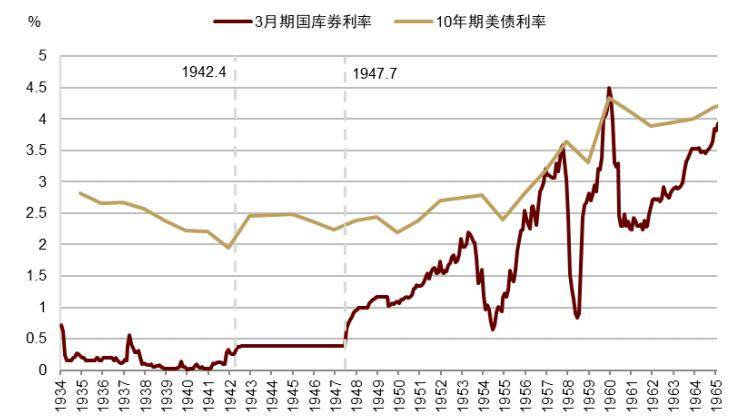
Core Viewpoint - The article discusses the acceleration of "financial repression" in the U.S. under the Trump administration, focusing on measures to lower financing costs and stimulate the economy ahead of the 2026 midterm elections [2][3][5]. Group 1: Financial Repression - "Financial repression" refers to government policies that direct funds to itself by artificially lowering interest rates for public policy goals [4]. - Historical examples include the U.S. in the 1940s, where the Federal Reserve controlled Treasury bill rates to finance government spending [4][5]. Group 2: Policy Measures - The Trump administration is expected to implement policies to address debt pressure and industrial hollowing, including capping credit card interest rates at 10% and increasing the purchase of mortgage-backed securities (MBS) [2][3]. - Proposed measures include limiting interest rates on consumer loans and small business loans, increasing supply control over key energy resources, and accelerating the Federal Reserve's balance sheet expansion [3][5]. Group 3: Economic Implications - The anticipated environment of fiscal and monetary easing is expected to shift the dollar liquidity cycle from tight to loose, benefiting corporate valuations and accelerating asset bubbles [7][8]. - The article suggests that sectors such as resources, technology, and heavy industry may continue to lead in performance, while consumer and real estate sectors may catch up as the nominal economic cycle improves [7][8].