
MBS(抵押支持债券)

Search documents
中金:美国“金融抑制”,海外泡沫加速
Sou Hu Cai Jing· 2026-01-15 00:09
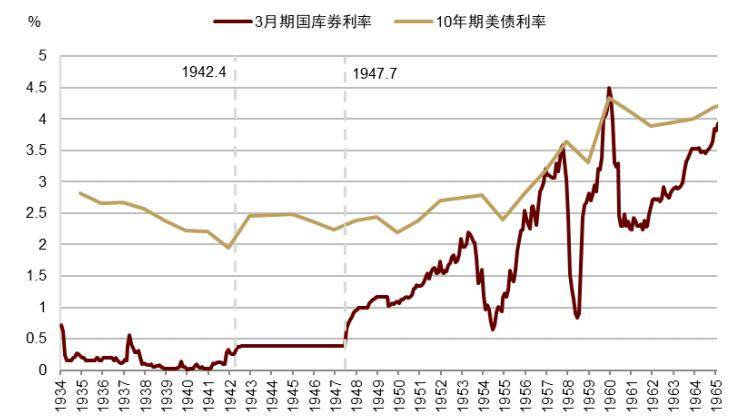
Core Viewpoint - The acceleration of "financial repression" in the U.S. is driven by the Trump administration's policies aimed at lowering financing costs and addressing debt pressures ahead of the 2026 midterm elections [1][2][4]. Group 1: Financial Repression Measures - The Trump administration has directed Fannie Mae and Freddie Mac to purchase $200 billion in MBS to suppress housing costs and announced a 10% cap on credit card interest rates starting January 20 [1]. - The Federal Reserve, under pressure from the Trump administration, is expected to implement a 150 basis point rate cut in 2026, with investigations into Powell's actions intensifying [1][2]. - The administration is likely to introduce more policies to lower financing costs, including limiting interest rates on consumer and small business loans and increasing the pace of balance sheet expansion to $90 billion per month [2][4]. Group 2: Economic Context and Implications - The concept of "financial repression" involves government policies that direct funds to itself by artificially lowering interest rates, which can be effective in managing high debt levels [3]. - The current policy goals of the Trump administration focus on addressing long-term debt pressures and short-term economic stimulation to win the 2026 elections, which may lead to a shift towards "financial repression" [4]. - The anticipated measures include implementing yield curve control (YCC) to stimulate the economy and reduce debt servicing costs, alongside administrative actions to stabilize inflation [5]. Group 3: Market Impact and Outlook - The environment of fiscal and monetary easing is expected to shift the dollar liquidity cycle from tight to loose, benefiting corporate valuations and accelerating market bubbles [6]. - Sectors such as resources, technology, and heavy industry are projected to perform well in 2026, while consumer and real estate sectors may see a rebound as the nominal economic cycle improves [6]. - A weaker dollar cycle is likely to support emerging markets, particularly the Chinese stock market, as well as precious metals like gold and copper [6].

“特朗普变量”搅局财报季! 白宫施压信用卡利率 华尔街金融巨头们或将掀发债狂潮抽走流动性
Zhi Tong Cai Jing· 2026-01-13 00:20
Core Viewpoint - The upcoming bond issuance by Wall Street's financial giants is expected to be larger than usual due to pressures from the Trump administration, potentially draining market liquidity and leading to a correction in the currently high-performing corporate bond and stock markets [1][2]. Group 1: Bond Issuance and Market Impact - Wall Street's six major financial institutions are anticipated to lead a significant bond issuance, with estimates of around $60 billion this week, driven by the need to respond to operational pressures from the Trump administration [1][2]. - Barclays predicts that approximately $35 billion of bond issuance will come from these six financial giants this month, with the total potentially rising to $55 billion by the end of the quarter [1]. - The large-scale bond issuance may create short-term "supply pressure," tightening financial conditions and impacting credit spreads and liquidity premiums in the bond market [2]. Group 2: Financial Performance and Earnings Season - The earnings season for major Wall Street banks is set to begin, with analysts expecting a strong performance that could validate the bullish outlook for the S&P 500 index, projected to reach 8,000 points in 2026 [3]. - The financial giants are expected to report robust earnings, driven by a recovery in investment banking and increased trading volumes, which have pushed their stock prices to historical highs [3]. Group 3: Regulatory Pressures and Credit Card Rates - President Trump has called for a cap on credit card interest rates at 10%, which could significantly impact the profitability of Wall Street's financial giants, particularly in their credit card businesses [4][5]. - The proposed cap is seen as a direct threat to the high-margin credit card business, which typically has interest rates around 21%, and could lead banks to tighten credit and reduce customer benefits [5][6]. Group 4: Future Outlook and Investment Opportunities - Analysts expect that the demand for bank credit assets will remain strong, offsetting any supply reductions due to regulatory changes, with a projected issuance of approximately $188 billion in high-rated bonds by the six major banks in 2026, a 7% increase from the previous year [7][8]. - The outlook for the banking sector is constructive, with expectations of a recovery in net interest income (NII) and stable growth in capital markets and wealth management fees, which could support a positive operating leverage [9][10].


美联储9月议息会议点评:点阵图的重大分歧或值得关注
Guolian Minsheng Securities· 2025-09-19 12:41
Group 1: Federal Reserve Actions - The Federal Reserve lowered the policy interest rate by 25 basis points in September 2025, bringing the target range to 4%-4.25%[4] - The market had anticipated a 25 basis point cut with a probability of 96.1% prior to the meeting[7] - This marks a total of 125 basis points cut in the current cycle, with four reductions since the beginning of the cycle[16] Group 2: Divergence in Dot Plot - The dot plot indicates a widening divergence among committee members regarding future rate cuts, with 9 members supporting 2 more cuts this year, while 6 members believe there should be no further cuts[8] - One member suggested a reduction to below 3%, implying a need for cuts exceeding 50 basis points in the next two meetings[8] - The voting showed one dissenting vote, with Stephen I. Miran advocating for a 50 basis point cut instead of 25[28] Group 3: Economic Outlook - The Fed slightly raised its GDP growth forecast for 2025 to a median of 1.6% while maintaining the unemployment rate at 4.5%[9] - Inflation expectations for 2026 were slightly adjusted upward, with the Fed showing more tolerance for deviations from the 2% inflation target[9] - The Fed's statement highlighted a weakening job market as a significant reason for the rate cut, reflecting concerns over employment risks[10] Group 4: Market Reactions - Following the announcement, the Dow Jones increased by 0.57%, while the S&P 500 and Nasdaq fell by 0.1% and 0.33%, respectively[4] - Short-term Treasury yields declined, with the 3-month yield dropping by 2 basis points[30] - The dollar index showed volatility, initially falling before rebounding by the close of trading[30]