YOLO

Search documents
X @CoinMarketCap
CoinMarketCap· 2026-03-02 10:00
When you stop caring and just YOLO: https://t.co/a2z1o3lXT8 ...
被拒≠失败!这些高影响力论文都被顶会拒收过
具身智能之心· 2025-12-12 01:22
Core Insights - Waymo has released a deep blog detailing its AI strategy centered around its foundational model, emphasizing the use of distillation methods to create high-efficiency models for onboard operations [1][2] - Jeff Dean highlighted the significance of knowledge distillation, comparing it to the creation of the Gemini Flash model, which showcases the importance of distillation in AI model efficiency [1][2] Historical Context of Rejected Papers - Many foundational technologies in AI, such as optimizers for large models and computer vision techniques, were initially rejected by top conferences, showcasing a historical pattern of oversight in recognizing groundbreaking innovations [6] - Notable figures in AI, including Geoffrey Hinton and Yann LeCun, have faced rejection for their pioneering work, which was later recognized as transformative [6] Case Studies of Rejected Innovations - LSTM, a milestone for sequence data processing, was rejected by NIPS in 1996 but later became crucial in speech recognition and machine translation, highlighting the delayed recognition of its value [7][10] - SIFT, a dominant algorithm in computer vision, faced rejection from ICCV and CVPR due to its perceived complexity, yet proved to be vital in real-world image processing [11][13] - Dropout, a key regularization method for deep neural networks, was initially rejected for its radical approach but later became essential in training deep networks effectively [17][19] - Word2Vec, despite being rejected at ICLR, became a cornerstone in NLP due to its efficiency and practical application, eventually receiving recognition for its impact [20][24] - YOLO transformed object detection by prioritizing speed over precision, facing rejection for its perceived shortcomings but later becoming a widely adopted framework in the industry [28][30] Reflection on Peer Review Limitations - The peer review system often struggles to recognize disruptive innovations, leading to a systematic cognitive lag in evaluating groundbreaking research [40][41] - The tendency to equate mathematical complexity with research contribution can hinder the acceptance of simpler yet effective methods [41] - Historical examples illustrate that the true measure of a research's impact is not determined by initial peer review outcomes but by its long-term relevance and problem-solving capabilities [43][47]


The return of 'YOLO': The 2010s meme is back and shaping the AI industry
Business Insider· 2025-12-08 10:48
Core Insights - The term "YOLO" has resurfaced in the AI industry, indicating a reckless approach to AI development that raises concerns about safety and responsibility [1][6]. Group 1: Industry Perspectives - Anthropic CEO Dario Amodei criticized competitors for their "YOLO-ing" approach, suggesting that they are taking excessive risks in AI model development [2]. - Jason Wei from Meta described "yolo runs" as a method where researchers implement ambitious models without thorough risk assessment, relying on intuition rather than systematic testing [3][4]. - Harvard professor Jonathan Zittrain highlighted a trend among founders and VCs to rapidly launch ideas without adequate consideration of potential failures, reflecting a "YOLO model" in the industry [5]. Group 2: Financial Implications - Major tech companies like Amazon, Google, Meta, and Microsoft have reported record capital expenditures on AI infrastructure, contributing to significant market gains for the S&P 500 and Nasdaq [7]. - An analysis by AlphaSense revealed that 418 publicly traded companies valued over $1 billion have identified AI as a reputational and security risk in SEC filings, indicating a growing awareness of potential pitfalls [9]. Group 3: Ethical Concerns - The "YOLO culture" in AI development is criticized for neglecting the potential threats posed by AI, such as misuse and unintended consequences [8]. - Geoffrey Hinton, known as the "godfather" of AI, warned that rapid AI advancements could lead to mass unemployment and increased inequality, raising ethical questions about the industry's direction [8].





The Instant Philosophy | Theophilus Johan Ebenezer | TEDxUnion Christian Public School Youth
TEDx Talks· 2025-11-10 17:59
Gen Z Philosophy - Gen Z prioritizes fulfillment, self-expression, and personal freedom, often challenging established social norms [7] - The core of Gen Z's worldview is driven by "YOLO" (You Only Live Once) and "FOMO" (Fear Of Missing Out), emphasizing living in the present and fear of missing experiences [10][12] - Gen Z views memories as assets and time as a limited currency, influencing their decisions and priorities [13][14] Generational Differences - Older generations prioritize hard work, economic stability, and social stability, while Gen Z prioritizes immediate fulfillment [6][7] - Unlike previous generations focused on long-term gains, Gen Z is willing to take risks, such as pursuing passions over stable jobs [9][13] - Gen Z's philosophy contrasts with Gen X and Boomers, who value long-term stability over immediate gratification [13] Impact and Achievements - Gen Z has the highest rate of entrepreneurship compared to other generations at the same age [19] - Gen Z's influence has led companies to change policies on environmental impact, work-life balance, and inclusivity [20] - Gen Z's focus on mental health has shifted conversations from stigma to care and acceptance [20] - The "creator economy" has emerged, fueled by Gen Z content creators [21] Influencing Factors - Technology and instant gratification through devices like laptops and iPads from a young age contribute to Gen Z's spontaneity [23] - Growing up during the pandemic, with lost opportunities and dissolved plans, intensified Gen Z's urge to seize the moment [24]

X @Baby Doge
Baby Doge· 2025-10-14 13:17
You have $250,000 BUT you can only trade on https://t.co/7iXwEzMqDa. Which meme do you YOLO in first?你有 25 万美元,但只能在 https://t.co/7iXwEzMqDa 上交易。你最想在哪个 meme 上“YOLO”一下? https://t.co/SHoWB92bQh ...
投行Bernstein:超级粉丝将成娱乐行业增长关键 首选Live Nation(LYV.US)
智通财经网· 2025-06-05 04:07
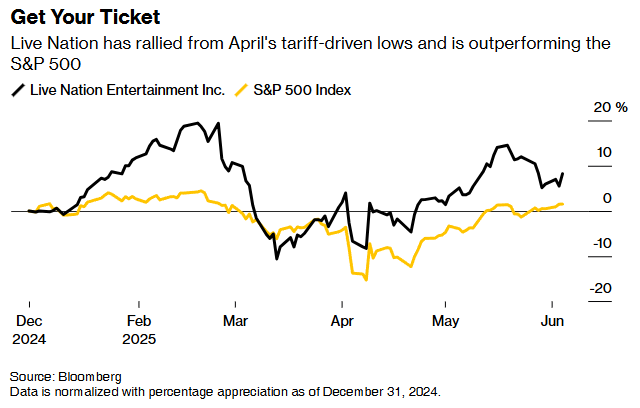
Group 1: Core Insights - The investment bank Bernstein emphasizes the importance of "super fans" in driving growth and profitability in the entertainment industry, with effective engagement and monetization of these fans being a key differentiator [1] - The demand for live events and experiences has been fueled by "FOMO" (fear of missing out) and "YOLO" (you only live once) mindsets since the end of the pandemic, benefiting hotel groups and travel agencies [2] - Super fans are typically high-income individuals with low price sensitivity, maintaining stable consumption habits even during economic downturns, which may slow the growth of regular fans but significantly enhance profitability for leading companies [2] Group 2: Company Ratings and Targets - Live Nation Entertainment is highlighted as a top pick, with a target price of $185, the highest among analysts tracked by Bloomberg, due to its ticket sales, sponsorship revenue, and concert profit margins having room for growth [3] - Spotify is also rated positively, with a target price of $825, attributed to its underestimated pricing power and the anticipated launch of a super fan subscription service, which is expected to drive significant user adoption and boost gross margins [6] Group 3: Market Dynamics - Bernstein analysts believe that recent criticisms of Live Nation and Ticketmaster are temporary, and the likelihood of adverse rulings from the U.S. Department of Justice is low, with regulatory focus shifting from primary to secondary ticket markets [3] - The shift to "total price display" practices and the withdrawal of monopoly claims against artists indicate a changing regulatory landscape that may favor Live Nation [3]


韩国乞丐房里,年轻人在卷要饭?
Hu Xiu· 2025-05-29 09:01
Group 1 - The article discusses a new trend among South Korean youth, who have shifted their focus from traditional measures of success like appearance and education to a collective identity of frugality, forming groups called "beggar rooms" on Kakao Talk [1][10][12] - In these groups, members report their daily expenses, with strict rules against spending, creating a culture of financial discipline and mutual accountability [2][3][15] - The phenomenon reflects a broader societal shift where young people are embracing a minimalist lifestyle, prioritizing savings over consumption, and redefining social status through frugality [10][59][80] Group 2 - The article highlights the extreme measures taken by members of the "beggar rooms," such as meticulously tracking every expense and publicly shaming those who overspend, creating a form of social pressure [19][20][25] - It notes that this trend is a response to economic challenges faced by young South Koreans, including high living costs, low wages, and a significant debt burden, leading to a collective mindset of survival [69][72][74] - The shift from a "YOLO" (You Only Live Once) mentality to a "YONO" (You Only Need One) approach signifies a drastic change in consumer behavior, where even small luxuries are scrutinized and often avoided [67][75][78]