Z世代消费观念

Search documents
新消费派 | 热情依旧、理性“剁手”、疗愈身心 报告揭示Z世代“双十一”消费偏好
Xin Hua Cai Jing· 2025-11-09 11:04
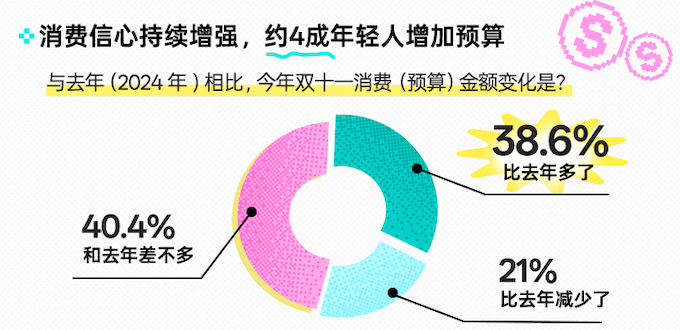
Core Insights - The annual "Double Eleven" shopping festival is seeing high participation from Generation Z consumers, with skepticism regarding the claim of "lowest prices of the year" [1][2][4] Group 1: Participation and Budget - Generation Z's participation in "Double Eleven" has increased from 81.3% in 2021 to 93.1% in 2025, with nearly 40% of respondents indicating a higher spending budget compared to the previous year [2][4] - The demand for "Double Eleven" shopping is strongest among respondents from ordinary prefecture-level cities, accounting for 28.7% of the total survey population [4] Group 2: Consumer Sentiment - There is a polarized view among Generation Z regarding "Double Eleven," with some praising the variety of products and clearer promotional rules, while others express skepticism about the "lowest price" claims, with 36.3% not believing in it [4][6] - The interest in cultural consumption, such as books and knowledge-based courses, has increased among respondents compared to previous years [6] Group 3: Emotional Consumption Trends - Travel-related purchases are the most popular among emotional consumption categories, with 36.9% of respondents preferring to stock up on travel products [7] - The report highlights a shift towards experiences and self-improvement in consumption preferences, driven by a desire for "self-pleasure" and immersive entertainment [7] Group 4: AI Integration in Shopping - Approximately 70% of young consumers recognize the application of AI in e-commerce during "Double Eleven," with 30% using AI customer service for quick problem resolution [8][10] - Satisfaction with AI performance is high, with 36.5% of respondents expressing that it enhances their shopping experience [10]

张莉莉:品牌创意要从“技术驱动”转向“场景驱动”
Sou Hu Cai Jing· 2025-10-30 11:37
Core Insights - The article discusses the unique consumption characteristics of Generation Z and how brands can effectively engage with this demographic through cultural and emotional connections [1][4][15]. Group 1: Understanding Generation Z - Generation Z is characterized by a strong desire for authenticity and emotional resonance in brand interactions, moving beyond superficial cultural symbols [4][5]. - They exhibit a "cultural ark" mentality, balancing global perspectives with local cultural revival, leading to a pragmatic approach to consumption [15][16]. - The shift in brand perception among Generation Z has transformed brands from distant symbols of authority to interactive communities that require genuine engagement [18][19]. Group 2: Brand Engagement Strategies - Brands must conduct "immersive insights" rather than traditional surveys to understand the deeper emotional needs of Generation Z [13][14]. - Successful digital marketing strategies should connect traditional cultural elements with modern values, creating a dialogue that resonates with the spiritual needs of young consumers [5][12]. - Brands should focus on creating meaningful experiences that allow Generation Z to express their identities and values, rather than merely providing products [20][21]. Group 3: Cultural and Emotional Value - The integration of digital design with traditional crafts can transform niche products into everyday items that resonate with Generation Z's emotional and social needs [20][26]. - Brands should avoid superficial interpretations of environmental art and digital creativity, instead focusing on creating meaningful connections within the youth's daily life [27][29]. - The concept of sustainability should be communicated through tangible experiences that highlight the impact of consumer behavior on the environment [30][32]. Group 4: Future Directions for Brands - Brands should prioritize creating immersive, social, meaningful, and engaging cultural consumption experiences for Generation Z [33]. - Future research should focus on the digital identity construction, narrative penetration in physical spaces, and the degree of participation in value co-creation among young consumers [35].