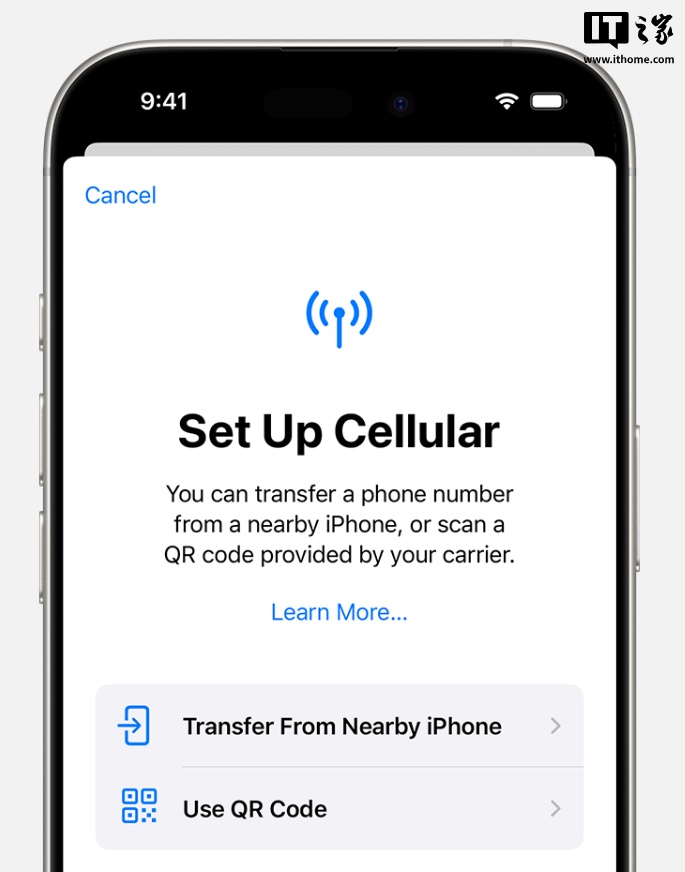
eSIM 技术

Search documents
CES2026-直击智能眼镜盛会
2026-01-12 01:41
Summary of Key Points from the Conference Call Industry Overview - The conference highlighted the significant presence of Chinese brands at CES 2026, with 31 out of 44 participating brands being Chinese, showcasing the rise of Chinese companies in the smart glasses sector [1][2]. Core Insights and Arguments - **Product Innovations**: - XGIMI launched lightweight smart glasses weighing only 28.9 grams, marking a significant advancement in design [1][3]. - Thunderbird introduced AR glasses with eSIM technology, allowing independent connectivity without relying on smartphones, enhancing user convenience [1][4]. - The eSIM technology improves data transmission efficiency and simplifies operations, providing telecom operators with new revenue opportunities through cloud and AI services [1][6]. - **Market Dynamics**: - The global shipment of AI-enabled smart glasses is projected to exceed 8 million units by 2025, with Meta holding a significant market share [1][22]. - Rokid Glasses have seen substantial shipments since September, totaling over 100,000 units, with supply chain bottlenecks expected to ease in the second half of 2026 [1][22]. - **Commercial Strategies**: - Thunderbird's innovative business model includes offering glasses with prepaid phone plans, lowering consumer entry barriers and stimulating spending, which could enhance telecom operators' average revenue per user (ARPU) [1][10][11]. - Other companies are likely to adopt similar models, especially if telecom operators see positive results from Thunderbird's approach [1][12]. Additional Important Insights - **Technological Advancements**: - The introduction of eSIM technology is expected to revolutionize the smart glasses industry by allowing direct cloud connectivity and reducing reliance on smartphones [1][6]. - eSIM functionality is anticipated to have minimal impact on battery life, potentially improving it due to lower power consumption compared to WiFi [1][9]. - **Competitive Landscape**: - Chinese brands are positioned favorably against international competitors due to cost-effectiveness, supply chain advantages, and rapid deployment capabilities [1][17]. - The integration of AI capabilities in smart glasses is evolving, with new features such as multi-question dialogue being introduced [1][18]. - **Future Projections**: - The smart glasses market is expected to see significant growth, with Meta projected to ship around 800,000 units in 2025, primarily in the fourth quarter [1][22]. - Supply chain issues, particularly in Micro LED and optical modules, are anticipated to improve by the second half of 2026, enabling better product availability [1][26]. - **Upcoming Releases**: - Key product launches to watch for in 2026 include new AI glasses from ByteDance and Huawei, as well as updates from Xiaomi and Rokid [1][28]. - **Market Evolution**: - The smart glasses industry is on the verge of a breakthrough akin to the iPhone 4 moment, contingent on achieving a weight under 30 grams and diverse styling options to cater to various consumer preferences [1][29][30].
超龄用户被拒办 eSIM,运营商回应,网友不解
猿大侠· 2025-10-24 04:11
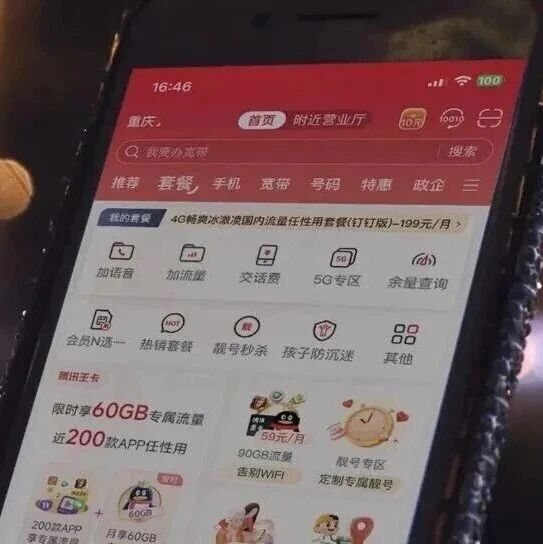
Core Viewpoint - The launch of the first domestic eSIM-enabled phone, iPhone Air, has been met with operational challenges, particularly regarding age restrictions for eSIM activation, which may hinder access for older users [1][3]. Group 1: eSIM Activation Challenges - A user reported being denied eSIM activation due to being over 60 years old, as the current policy requires users to be between 18 and 60 years old [3]. - China Telecom confirmed the age restriction for eSIM activation, which is part of the trial phase of the eSIM service [5]. - In contrast, China Unicom and China Mobile have set lower age limits, with Unicom requiring users to be at least 16 years old and Mobile requiring 18 [5]. Group 2: Complexity of eSIM Process - The eSIM activation process is described as cumbersome, requiring users to visit physical stores with identification and devices, as online activation is not available during the commercial phase [5]. - Users must return to their number's original location for eSIM conversion, as cross-province conversions are not supported [5]. - A user managed to convert a physical SIM to eSIM by falsely claiming to have lost their SIM card, highlighting potential loopholes in the system [6]. Group 3: Security and Future Developments - The restrictions on eSIM services are attributed to risk management and technical security concerns, particularly regarding the potential for remote anonymous account creation and telecom fraud [8]. - The three major operators had previously suspended eSIM services, with a planned resumption in June 2025 under strict conditions, including offline real-name activation and security certificate requirements [8]. - Future advancements in remote real-name authentication technology and system upgrades are expected to simplify the eSIM activation process, allowing users to complete it online without visiting physical stores [8].





无卡时代来了!eSIM手机业务全网上线,原套餐不变
猿大侠· 2025-10-15 04:11
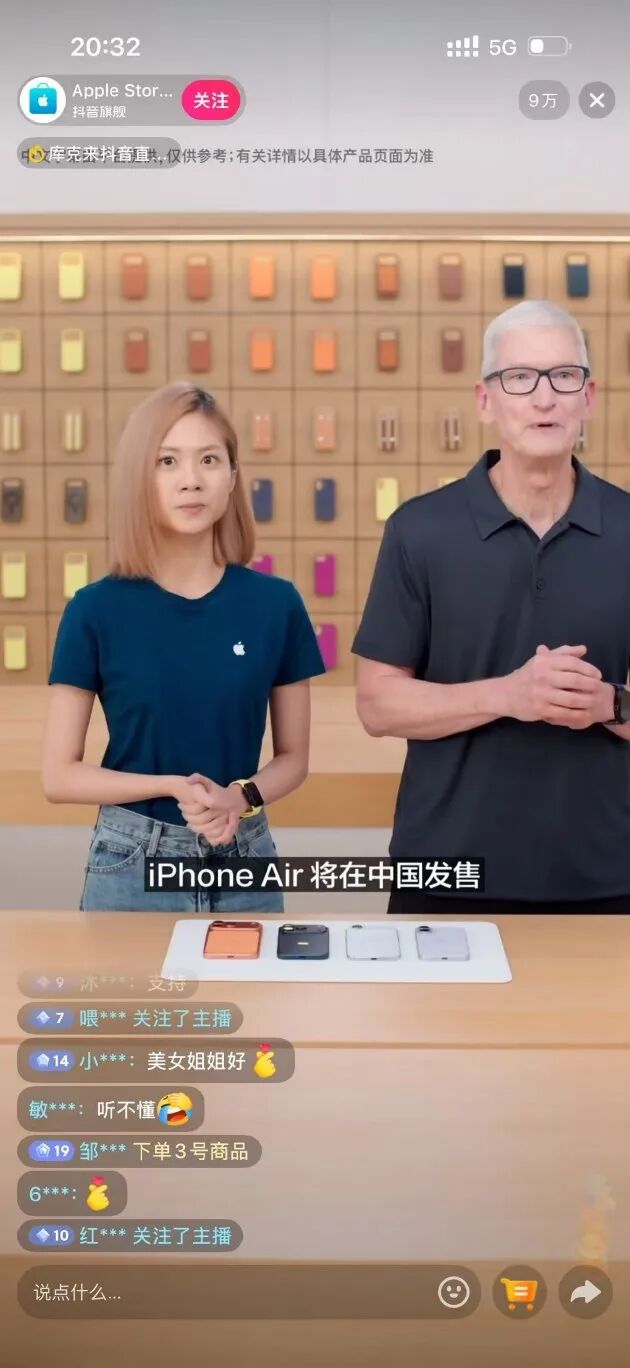
Core Viewpoint - The approval of eSIM mobile services by the Ministry of Industry and Information Technology (MIIT) marks the official entry of China into the "cardless era" of communication, with major telecom operators launching commercial trials for eSIM technology [1][4]. Group 1: Regulatory Approval and Implementation - The MIIT's approval follows a previous suspension of eSIM services in 2023 due to security risks, indicating a renewed focus on eSIM technology after addressing issues like real-name authentication vulnerabilities and cross-border card misuse [4]. - Users can currently book eSIM services through official operator apps and must visit physical stores for activation, as online services are not yet available [4]. Group 2: User Requirements and Limitations - Users must present valid identification when applying for a new eSIM number, and each phone can bind a maximum of two domestic operators' eSIMs, adhering to the "one ID, five numbers" rule [9]. - The eSIM packages offered are consistent with those of physical SIM cards, and there are no fees for switching to eSIM [6]. Group 3: Market Impact and Product Launches - The launch of the iPhone Air, which exclusively supports eSIM, is a significant catalyst for the acceleration of eSIM commercial processes among operators [9]. - Apple CEO Tim Cook announced that the iPhone Air will be available for pre-order on October 17 and officially on sale from October 22, 2025 [10][11]. - The iPhone Air will not be sold as a contract phone in China, allowing users to choose their network provider freely [13][15]. - Other brands, including Huawei and OPPO, are expected to release eSIM-compatible devices soon, indicating a growing market for eSIM technology [15][17].
国行 iPhone Air 本周五预售,国内正式开启「无卡时代」
3 6 Ke· 2025-10-15 00:21
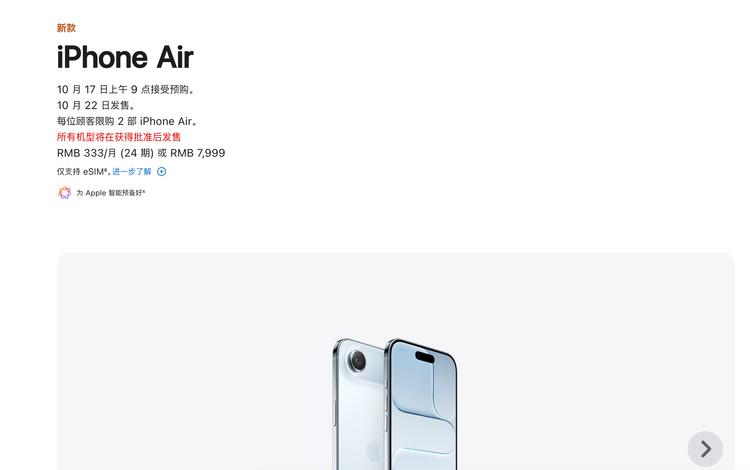
Core Viewpoint - The iPhone Air will be available for pre-order in China starting October 17, with official sales commencing on October 22, marking a significant entry into the Chinese market for this eSIM-only device [1][2]. Group 1: Product Launch and Features - The iPhone Air is designed to be Apple's thinnest iPhone to date, measuring only 5.6 mm thick, and it completely removes the physical SIM card slot in favor of eSIM technology [6]. - The device will be available in three storage configurations: 256GB priced at 7999 yuan, 512GB at 9999 yuan, and 1TB at 11999 yuan [4]. - It features the new A19 Pro chip, which offers peak graphics performance up to three times that of the previous A18 Pro [8]. - The iPhone Air includes a 6.5-inch 120Hz ProMotion display with a peak brightness of 3000 nits and a camera system with a 48MP main camera and a 18MP front camera [9][11]. Group 2: eSIM Technology and Market Impact - The launch of the iPhone Air coincides with the Chinese telecom industry's significant shift towards eSIM technology, as the three major operators have begun commercial trials for eSIM services [14]. - eSIM technology allows devices to connect to mobile networks without a physical SIM card, enhancing user flexibility and reducing reliance on specific network providers [14]. - The three major operators in China have different requirements for eSIM activation, with China Unicom offering online appointment options, while China Mobile and China Telecom require in-person visits [15][17]. Group 3: Future Outlook - The widespread adoption of eSIM technology is expected to reshape the telecommunications landscape, with projections indicating that by 2027, the number of connections could increase by 300 to 500 million due to the "one person, multiple devices" trend [19]. - The industry anticipates that by 2026, eSIM will become a standard feature for new mobile devices, potentially phasing out physical SIM cards entirely by 2030 [19][20].
这份目前最全的 eSIM 开卡攻略,请国行 iPhone Air 用户收好
3 6 Ke· 2025-10-14 23:41
Core Points - The iPhone Air will officially be available for pre-order in China starting October 17 and will be released on October 22, marking its entry into the domestic market as the first pure eSIM phone [1][3] - The launch of the iPhone Air signifies the beginning of eSIM technology implementation in the Chinese mobile phone market [3][4] eSIM Policies and Procedures - All three major telecom operators in China (China Unicom, China Mobile, and China Telecom) support eSIM services, but users must visit a physical store to activate or switch to an eSIM [6][11] - China Unicom has the broadest range of accepted identification documents for eSIM activation, while China Mobile and China Telecom have more limited options [8][10] - Users can convert their existing physical SIM cards to eSIMs at the store, but the original physical SIM will become inactive after conversion [11] eSIM Capacity and Limitations - The iPhone Air can store and activate a maximum of two eSIMs simultaneously, which is fewer than the international version that supports up to eight [12] - Users can add international eSIMs only when they are outside of China, and the total number of eSIMs that can be stored may reach eight when including international cards [14][15] - There are restrictions on the number of new eSIM activations and replacements per month, with a maximum of two new activations and five replacements allowed [19][20] Device Compatibility and Restrictions - The domestic version of the iPhone Air is pre-installed with a trust certificate necessary for activating local eSIMs, making it incompatible with international versions [16][18] - Users must visit a store to deactivate or cancel eSIM services, similar to the process for physical SIM cards [22] Market Position and Consumer Sentiment - The iPhone Air's pricing and eSIM limitations may affect its market appeal, especially compared to the iPhone 17 standard version [23][25] - Despite its limitations, the iPhone Air represents a significant step in the adoption of eSIM technology in China, appealing to consumers who prioritize design and brand over technical specifications [25]
普及 eSIM,更多迹象表明苹果 iPhone 17 系列将在更多国家和地区取消 SIM 卡槽
Xin Lang Cai Jing· 2025-09-01 06:14
Group 1 - Apple plans to eliminate physical SIM card slots for the iPhone 17 series in more countries and regions this year [1][3] - Retail staff of Apple authorized dealers must complete eSIM-related training by September 5, indicating a broader implementation of eSIM technology beyond the EU [1] - The iPhone 14 series and newer models in the US do not have SIM card slots and rely solely on eSIM technology [3] Group 2 - Analyst Ming-Chi Kuo suggests that the iPhone 17 Air will not feature a SIM card slot due to its ultra-thin design, with the possibility that the iPhone 17, iPhone 17 Pro, and iPhone 17 Pro Max will also only support eSIM in international markets [3] - Apple previously promoted eSIM as being more secure than physical SIM cards, as they cannot be lost or removed by thieves [4] - Users can manage at least eight eSIMs on one iPhone, eliminating the need to swap SIM cards while traveling [4]