酒店业

Search documents
线上预订酒店约定不可退订条款后消费者退订,法院判酒店部分退款
Xin Jing Bao· 2025-06-18 14:40
繁星酒店辩称,认可实际收到住宿服务费1200元,但刘刚预订房间时网络服务平台已通过显著方式展示 30分钟后不可取消的退改规则,刘刚退订的行为属于违约,故不同意退还住宿服务费。 蓝天公司辩称,作为网络服务提供平台,非本案适格被告,已尽到披露经营者信息、提示说明、协助沟 通取消预订的平台义务,不具有过错,故不同意退还全部住宿服务费。 新京报讯(记者张静姝通讯员王媛媛彭博)刘刚通过蓝天公司经营的星空网络平台,预订了繁星酒店房 间,后因旅行计划有变,于预订当日申请取消预订并退还住宿服务费,酒店方以预订页面已明确载 明"30分钟后不可取消"为由,不同意退款,刘刚遂诉至法院。近日,北京市海淀区人民法院经开庭审理 此案,综合考虑违约方过错程度、实际损失情况、造成损失产生原因等因素,判决繁星酒店退还住宿服 务费960元。 刘刚诉称,2024年9月14日12时,其通过蓝天公司经营的星空网络平台,预订了繁星酒店经营的2024年 10月1日至3日的"阳光大床房"一间,并通过星空网络平台支付住宿服务费1200元。该订单预订成功页面 载有"取消规则":30分钟后不可取消,取消需扣除全额预付款。因未预订前往酒店所在地的出行票,刘 刚于预 ...
今年前4个月迪拜共接待国际过夜游客715万人次,同比增长7%
news flash· 2025-06-18 11:13
Core Insights - Dubai welcomed 7.15 million international overnight visitors from January to April 2025, marking a 7% year-on-year increase [1] - This growth follows a record 18.72 million visitors in 2024, indicating a sustained upward trend in tourism [1] - As of the end of April, Dubai's hotel industry offered 153,534 rooms, with all key performance indicators showing strong year-on-year growth [1]
“广东三宝”入驻广州华美达酒店!让海内外宾客体验岭南大地的馈赠
Nan Fang Nong Cun Bao· 2025-06-18 02:05
Core Viewpoint - The "Guangdong Sanbao" series products have officially entered the Guangzhou Kaixuan Hotel, aiming to provide both domestic and international guests with an experience of Lingnan culture and traditional Chinese gifts [2][20]. Group 1: Company Overview - Guangzhou Kaixuan Hotel is located in the Zhujiang New Town business district, offering convenient transportation and a beautiful environment, making it a popular choice for both domestic and international travelers [3][4]. - The hotel has over 370 rooms of various specifications and is recognized as a four-star foreign-related hotel by the National Tourism Administration since 1994 [7][12]. Group 2: Product Introduction - "Guangdong Sanbao" is positioned as a must-buy gift when visiting Guangdong, emphasizing its cultural significance and health benefits [18][20]. - The core philosophy of "Guangdong Sanbao" is based on "true origin, true vintage, true quality," focusing on the safety and effectiveness of raw materials [23]. Group 3: Cultural Significance - The introduction of "Guangdong Sanbao" at the hotel is seen as a way to promote Guangfu culture, allowing guests to engage with traditional Chinese culture [8][22]. - The products are designed with a unique packaging that reflects Guangfu cultural charm, making them competitive in the market [20][22]. Group 4: Collaboration and Market Strategy - The hotel management expressed a desire for deep cooperation with "Guangdong Sanbao," highlighting the alignment of the product's values with the hotel's cultural roots [20][22]. - The partnership aims to leverage the brand advantages and communication experience of the Southern Rural News to enhance product visibility and market reach [24][27].


揭秘区域市场连锁酒店生意经:复购复投与舍得文化
Sou Hu Cai Jing· 2025-06-17 03:24
Core Insights - The Chinese hotel industry has officially entered a high-quality development era, with both large groups and small hotel management companies focusing on differentiated competitive advantages [1] - Jinyi Hotel Group has become a benchmark in the Inner Mongolia market, leading the development of chain hotels in North China [2] Group 1: Competitive Strategies - Jinyi Hotel Group has achieved the highest member repurchase rate, recognized as the "Best Member Repurchase Rate of the Year" in the Green Cloud 2024 E-commerce Star Cup awards [3][5] - The company emphasizes proactive service, transforming from passive to active service, which has led to numerous customer praises and high repurchase rates [8][19] - Jinyi's dining offerings have become a significant revenue growth driver, with breakfast options featuring over 60 to 80 varieties, including local specialties [10][12] Group 2: Customer Engagement and Membership - The company focuses on enhancing member benefits, offering various privileges for different membership levels, and hosting events to engage customers [17][19] - Jinyi has successfully turned guests into franchisees, with most franchisees being former customers who appreciated the brand and service [20][26] - The company has expanded its reach beyond Inner Mongolia, establishing hotels in Beijing, Shanxi, and Hebei, driven by customer recognition and franchisee referrals [22][28] Group 3: Talent Management and Company Culture - Jinyi Hotel Group has cultivated a strong company culture that emphasizes employee welfare, including stock options and high salary levels, which helps retain talent [32][34] - The company invests in team development by facilitating learning opportunities and promoting a sense of belonging among employees [34][35] - The "舍得文化" (Shědé culture) of the company fosters a supportive environment, contributing to high employee loyalty and retention [32][35] Group 4: Future Prospects and Innovations - Jinyi Hotel Group is exploring new business avenues, such as the "Water Cool Spa" brand, which combines various leisure experiences and aims for nationwide expansion [31] - The company is focused on maintaining quality and brand longevity, aspiring to become a century-old brand while ensuring all franchisees uphold the brand's standards [35][40]

北京首旅酒店(集团)股份有限公司2024年年度权益分派实施公告
Shang Hai Zheng Quan Bao· 2025-06-16 21:11
证券代码:600258 证券简称:首旅酒店 编号:临2025-029 本次利润分配方案经公司2025年4月25日的2024年年度股东会审议通过。 2.分派对象: 截至股权登记日下午上海证券交易所收市后,在中国证券登记结算有限责任公司上海分公司(以下简 称"中国结算上海分公司")登记在册的本公司全体股东。 3.分配方案: 北京首旅酒店(集团)股份有限公司 2024年年度权益分派实施公告 本公司董事会及全体董事保证本公告内容不存在任何虚假记载、误导性陈述或者重大遗漏,并对其内容 的真实性、准确性和完整性承担法律责任。 重要内容提示: ● 每股分配比例 A股每股现金红利0.36元(含税) (2)对于持有公司股份的居民企业股东(含机构投资者),所得税由其自行缴纳,每股 本次利润分配以方案实施前的公司总股本1,116,603,126股为基数,每股派发现金红利0.36元(含税), 共计派发现金红利401,977,125.36元。 1.实施办法 除公司自行发放对象外,公司其他股东的现金红利委托中国结算上海分公司通过其资金清算系统向股权 登记日上海证券交易所收市后登记在册并在上海证券交易所各会员办理了指定交易的股东派发。已办 ...

从机票到客房,美国旅游消费萎缩敲响经济警钟
Di Yi Cai Jing· 2025-06-16 03:05
Core Insights - Travel spending in the U.S. is declining, indicating potential early warning signs of an economic slowdown [1][3][4] - Consumer confidence has sharply decreased since the beginning of the year, leading to reduced travel expenditures across all income groups [1][3] - The airline industry is experiencing significant declines in ticket sales, particularly in the economy class, due to economic uncertainty [3][4] Group 1: Travel Spending Trends - U.S. airline travel spending fell by 11% year-on-year in May [3] - Accommodation spending decreased by approximately 2.5% year-on-year, while airline spending dropped by 6% [3] - Low-income groups have shown a notable contraction in travel spending, with significant reductions in ticket purchases following the announcement of tariffs [3][4] Group 2: Airline Industry Impact - Major U.S. airlines have seen stock declines, with American Airlines and JetBlue down over 40% [4] - Airlines have withdrawn their full-year earnings forecasts for 2025 due to economic uncertainties [4] - The current environment is expected to challenge key hotel industry metrics such as occupancy rates and average daily rates [4] Group 3: Consumer Behavior and Economic Indicators - The trend of cautious spending has extended to high-income groups, with a 7 percentage point drop in ticket spending growth for those earning over $150,000 [3] - The International Air Transport Association reported a 26.2% year-on-year drop in revenue passenger kilometers for North America, significantly higher than the global average decline of 4.2% [3] - Economic analysts suggest that current consumer fatigue may indicate future declines in booking volumes [4] Group 4: International Travel and Perception - A report predicts a 9% decrease in international visitors to the U.S. this year, with a projected reduction of $8.5 billion in spending [6] - Negative perceptions of U.S. trade and immigration policies are impacting potential tourists' decisions [6] - American tourists are also reducing long-haul travel plans, with a 7% decrease in those planning to visit Europe this summer [6] Group 5: Economic Outlook - Analysts predict that tariff increases will significantly lower U.S. economic growth rates in 2025 [7] - Rising tariffs are expected to suppress consumer purchasing power and stock market performance [7] - The depletion of pandemic-era savings and rising delinquency rates on loans indicate potential challenges for consumer spending [7]
阅兵式举行在即,约60名抗议者在美国会大厦外遭逮捕
证券时报· 2025-06-14 10:09
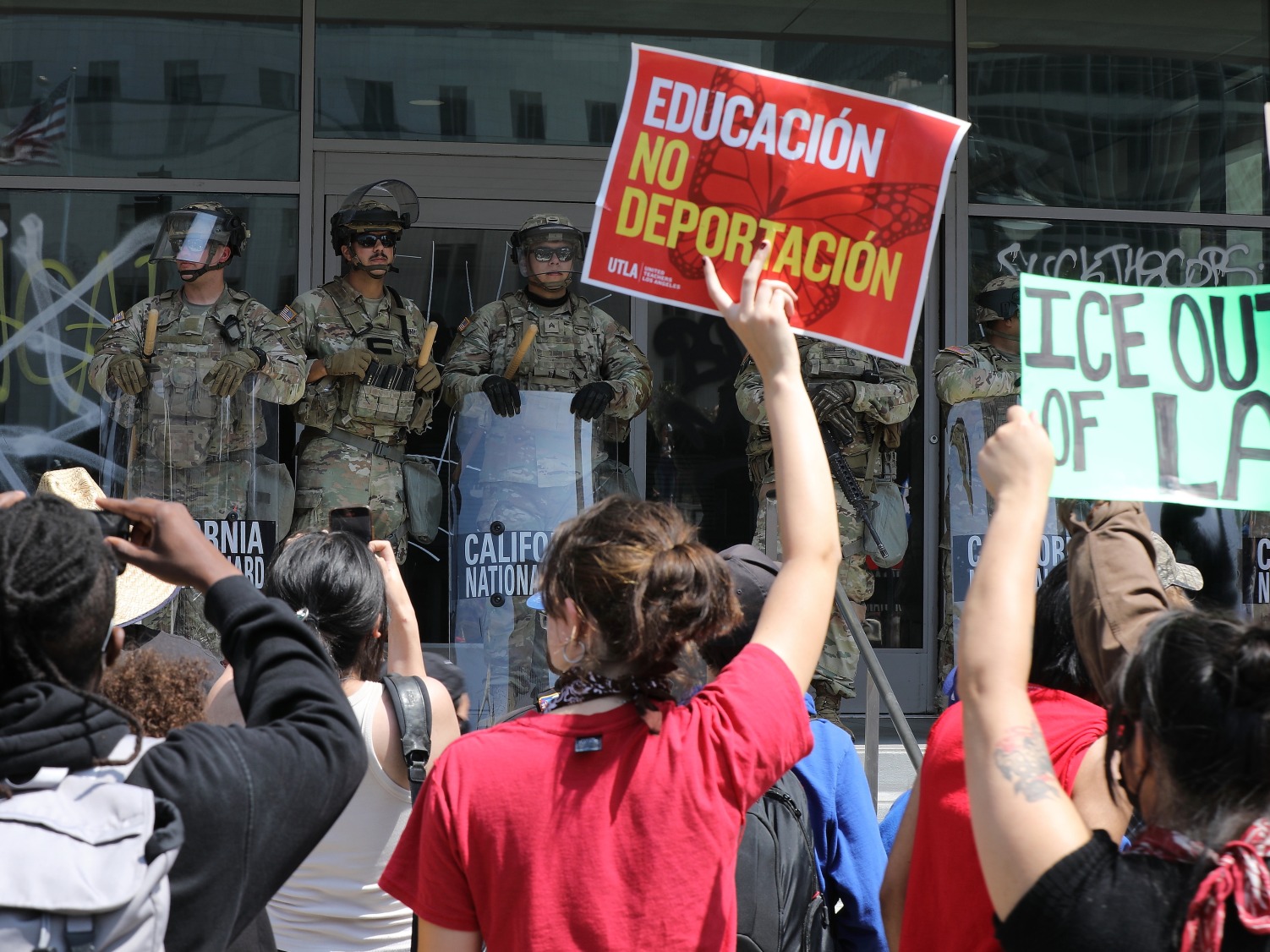
综合美媒报道,美国警方称,当地时间13日晚,约60名抗议者在美国国会大厦外反对将于14日举行的 阅兵式,随后遭到警方逮捕。 据哥伦比亚广播公司(CBS)报道,美国国会警察在声明中表示,事发时,约有75人于当地时间13日晚在最 高法院抗议。随后不久,其中60人前往美国国会。抗议者"越过"警戒线,"跑"向国会大厦,警方随即展开逮 捕。 警方还称,其中两名被捕者被送往当地医院接受进一步治疗。 此外,游行路线周围已竖起了约30公里的围栏,作为安全警戒线。希望观看阅兵的公众必须通过安全检查站 才能进入。 美国《新闻周刊》此前报道,抗议组织计划在6月14日阅兵式当天举行全国性抗议活动,抗议美国政府政策。 对此,美国总统特朗普警告抗议者,不要试图破坏阅兵式,他表示,如果有任何抗议者想要站出来,他们都 将遭到"非常强大的武力"。 值得一提的是,据美国《纽约时报》13日报道,根据一封内部电子邮件和三名了解相关指导意见的美国官员 透露,特朗普政府突然转变大规模移民驱逐行动的重点,下令美国移民与海关执法局(ICE)官员基本暂停对 农业、酒店和餐馆行业的突击搜查和逮捕行动。 报道称,该指导意见由ICE高级官员塔特姆·金于当地时间12 ...

洛杉矶44名移民被捕为何点燃全美怒火?特朗普移民政策或致近100万本土工人失业,美国GDP恐缩水1.7万亿美元
Mei Ri Jing Ji Xin Wen· 2025-06-14 08:28
Core Viewpoint - The protests in Los Angeles are a precursor to a nationwide movement, triggered by the arrests of 44 undocumented immigrants by ICE, reflecting deeper structural conflicts between the "Rust Belt" and "Sun Belt" regions of the U.S. [1][3] Group 1: Economic Impact of Immigration Policy - The U.S. economy could face a GDP loss of 4.2% to 6.8% (approximately $1.1 trillion to $1.7 trillion) if 1 million undocumented immigrants are deported annually until they are eliminated [1][10] - The construction industry could lose up to 1.5 million workers, agriculture could lose 225,000 workers, and the hotel industry could lose 1 million workers due to mass deportations [6][7] - A report indicates that deporting 500,000 undocumented immigrants could lead to approximately 44,000 native workers losing their jobs, and deporting all 11 million could result in 968,000 native job losses [7] Group 2: Tax Revenue and Government Costs - Undocumented immigrants contributed approximately $967 billion in taxes in 2022, with over one-third being payroll taxes that fund social security and Medicare [11] - The annual cost of deporting 1 million undocumented immigrants is estimated to be around $88 billion, which is significantly higher than the budgets of major government agencies [11] - The Social Security fund could lose about $23 billion annually, and the Medicare fund could lose around $6 billion if undocumented immigrants are fully deported [11] Group 3: Consumer Impact and Inflation - The removal of undocumented immigrants could lead to increased living costs for ordinary Americans, potentially causing inflation [8] - Research suggests that deporting 1.3 million immigrants could raise prices by 1.5%, while deporting 8.3 million could lead to a price increase of up to 9.1% by 2028 [8]
特朗普政府下令暂停在农场和酒店搜捕移民
news flash· 2025-06-14 03:53
特朗普政府下令暂停在农场和酒店搜捕移民 金十数据6月14日讯,据《纽约时报》周五报道,特朗普政府已要求美国移民和海关执法局官员基本上 暂停对农业、酒店和餐馆进行突击行动和逮捕。该报道援引了一封内部电子邮件和三名了解该指导意见 的美国官员的话。特朗普周四表示,他将很快发布一项命令,以解决他打击移民对美国农业和酒店业的 影响,这些行业严重依赖移民劳动力。 ...
两年换三家,潍坊高新区一酒店迎来新品牌入驻
Qi Lu Wan Bao Wang· 2025-06-13 23:25
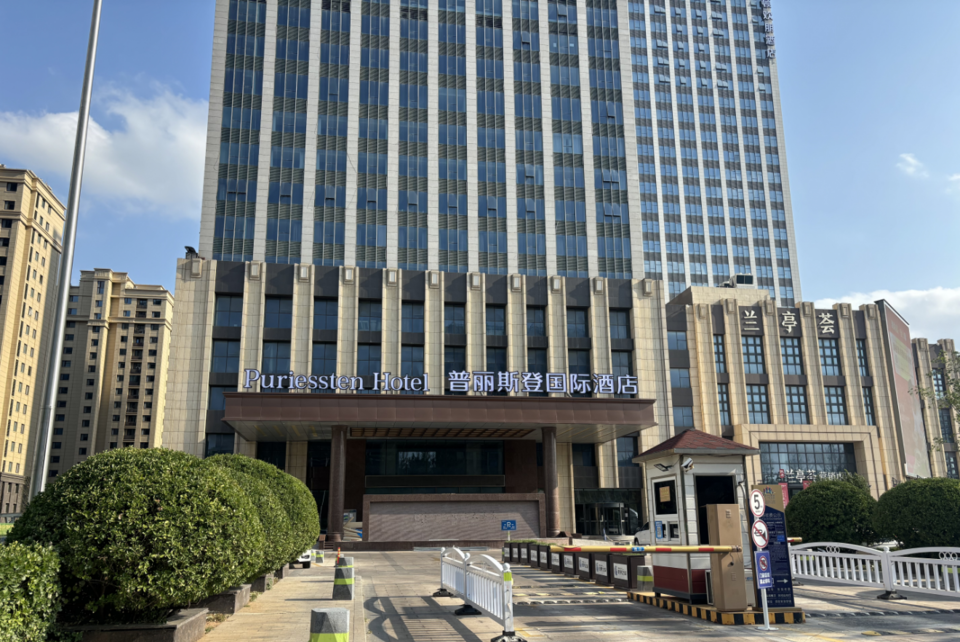
Group 1 - The original Jin Qing International Hotel has been replaced by the ongoing renovation of the Pristine International Hotel, marking the third hotel to enter the site since 2023 [1][3] - The Purple Capital International Hotel, which opened in May 2016, was reported to have closed along with two other hotels in April 2023, leading to concerns about the financial stability of the managing company [3] - As of October 2023, the Purple Capital International Hotel has been removed from its branding, and the Jin Qing International Hotel has taken its place [3] Group 2 - Pristine International Hotel is operated by Wanling (Shandong) Hotel Management Group Co., Ltd., which manages several hotels in the region, indicating a consolidation in the local hotel industry [4] - The existing Pristine Hotel in Weifang is a mid-to-high-end comprehensive hotel that offers various services, including accommodation, dining, and wellness, reflecting a trend towards diversified hotel offerings [4]