
Mining

Search documents
ArcelorMittal's Q4 Earnings Surpass Estimates Amid Lower Shipments
ZACKS· 2026-02-06 13:06
Core Insights - ArcelorMittal S.A. reported a fourth-quarter 2025 net income of $177 million, or 23 cents per share, a significant improvement from a loss of $390 million, or 51 cents per share, in the same quarter last year [2] - Adjusted earnings were 86 cents per share, exceeding the Zacks Consensus Estimate of 56 cents [2] - Total sales increased by approximately 2% year over year to $14,971 million, although this figure fell short of the consensus estimate of $15,760.7 million [2] Financial Performance - Total steel shipments decreased by 4% year over year to 13 million metric tons, missing the consensus estimate of 14.5 million metric tons [3] - In North America, sales rose by 16% year over year to $3,045 million, while crude steel production fell by 4.2% to 1,804 million metric tons [4] - Brazil saw a slight sales increase of 0.4% year over year to $2,901 million, with crude steel production rising by 3.1% to 3,636 million metric tons [5] - European sales declined by around 6% year over year to $6,736 million, with crude steel production down nearly 17% to 6,398 million metric tons [6] - Mining segment sales surged by 29% year over year to $908 million, with iron ore production totaling 10.1 million metric tons, up approximately 13.5% [7] Cash and Debt Position - At the end of the reported quarter, cash and cash equivalents stood at $5,476 million, down from $5,733 million in the previous quarter, with net debt around $7.9 billion [8] Future Outlook - The company anticipates global steel demand, excluding China, to improve in 2026, with apparent steel consumption projected to grow around 2% year over year [9] - ArcelorMittal plans to invest $4.5 to $5.0 billion in capital expenditures during 2026 to enhance capacity and efficiency, targeting medium- and long-term structural demand drivers [11] Stock Performance - ArcelorMittal's shares have increased by 105.6% over the past year, contrasting with a 58.7% decline in the industry [14]


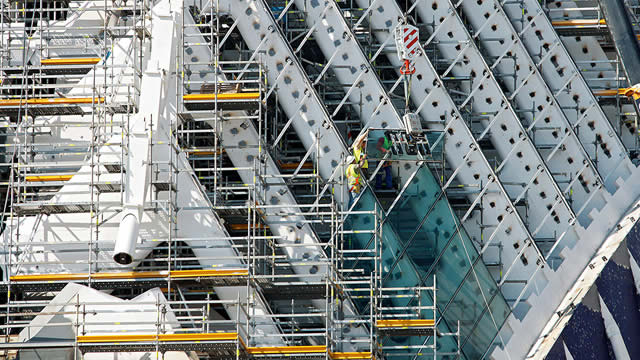
Valuation Disagreement Sinks Rio And Glencore Mega-Merger - Glencore (OTC:GLCNF), Rio Tinto (NYSE:RIO)
Benzinga· 2026-02-06 12:23
Core Viewpoint - The merger discussions between Glencore and Rio Tinto, which have been pursued for over a decade, recently broke down due to valuation disagreements, despite the strategic benefits that such a merger could provide to both companies [1][4]. Group 1: Merger Discussions - Formal discussions between Glencore and Rio Tinto began in mid-December, with negotiations accelerating in January after the approach became public, triggering U.K. takeover rules [2] - On the deadline day, negotiations collapsed over valuation, with Glencore seeking approximately 40% ownership of the combined entity, reflecting its view on the long-term value of its copper assets [3] - Rio Tinto's executives deemed the ownership gap too significant to bridge, leading to an announcement that they could not reach an agreement that would deliver value to shareholders [4] Group 2: Strategic Rationale - The merger was strategically appealing as Rio Tinto is heavily reliant on iron ore, a market facing oversupply and price declines, while Glencore has seen a significant drop in copper output [5][6] - A merger would have positioned Rio Tinto as the world's leading copper producer, enhancing its exposure to copper, which is crucial for electrification, while Glencore would diversify away from coal and benefit from Rio's operational discipline [7][8] Group 3: Obstacles to Merger - Persistent issues such as valuation, governance, and cultural differences hindered the merger discussions, with Glencore showing flexibility in leadership roles but insisting on a favorable share-exchange ratio [9] - Rio's advisers linked the bid to share prices at the time of the public announcement, which Glencore viewed as an arbitrary undervaluation of its copper portfolio, leading to a stalemate [10] Group 4: Current Challenges - Following the breakdown of talks, both companies are left to confront the challenges they aimed to address through the merger, with Rio Tinto struggling with an expensive lithium diversification and Glencore remaining overexposed to coal [10][11] - Glencore also faces significant financial commitments related to a high-risk copper project in Argentina and has a concentrated shareholder structure, with Glasenberg and a Qatari sovereign wealth fund holding nearly 20% of the company [11][12]

X @Bloomberg
Bloomberg· 2026-02-06 12:20
A failed attempt to combine Rio Tinto and Glencore is a reminder that mega deals in mining are hard to achieve, writes @Paul_VLH https://t.co/gJFX87BF9y ...
Vault Strategic Mining Corp Announces Non-Brokered Private Placement
Thenewswire· 2026-02-06 12:00
Core Viewpoint - Vault Strategic Mining Corp. has announced a non-brokered private placement of up to 2,000,000 units at a price of $0.25 per unit, aiming for gross proceeds of up to $500,000 [1][2]. Group 1: Private Placement Details - Each unit consists of one common share and one-half of a transferable common share purchase warrant, with each whole warrant allowing the purchase of an additional common share at an exercise price of $0.35 for twelve months [2]. - The net proceeds from the private placement will be used for exploration activities and general corporate purposes, with potential finders' fees applicable [3]. - All securities issued will be subject to a hold period of four months and one day as per applicable securities legislation [3]. Group 2: Warrant Provisions - The warrants include an acceleration provision, allowing the company to notify warrant holders to exercise their warrants if the weighted average daily trading price exceeds $0.60 for five consecutive trading days [4]. - If the acceleration notice is issued, warrants not exercised within 30 days will expire [4]. Group 3: Insider Participation - Any insider participation in the private placement will be considered a related party transaction, and the company will rely on exemptions from formal valuation and minority approval requirements [5].

What's next for Rio Tinto and Glencore after $260 billion megamerger aborted
MarketWatch· 2026-02-06 10:32
Core Insights - The abandonment of merger talks between Rio Tinto and Glencore has led to a divided outlook among analysts regarding the future prospects of these companies in the context of critical minerals [1] Company Analysis - Analysts are now reassessing the potential of Rio Tinto and Glencore following the halted merger discussions, indicating a shift in market sentiment towards these companies [1] Industry Context - JPMorgan has characterized the current market environment as "the age of critical minerals," highlighting the growing importance of these resources in the investment landscape [1]

Chariot-backed Etana signs 220MW renewable energy deal with Sibanye-Stillwater
Yahoo Finance· 2026-02-06 10:31
Core Viewpoint - Etana Energy has secured a significant ten-year power purchase agreement to supply 220 megawatts of renewable electricity annually to Sibanye-Stillwater's mining operations in South Africa, highlighting the growing role of renewable energy in the mining sector [1][3]. Group 1: Company Overview - Chariot Ltd, an Africa-focused energy company listed on AIM, holds a 34% interest in Etana Energy through its subsidiary, Chariot Generation and Trading [1]. - Other stakeholders in the project include H1 Holdings, Norfund, and Standard Bank, indicating a diverse investment base [2]. Group 2: Project Details - The power will be delivered by wheeling electricity from Etana's solar and wind portfolio across South Africa's national grid, with supply expected to commence in late 2027 [2]. - The agreement aims to meet Sibanye-Stillwater's current and future power needs, contributing to reduced electricity costs and lower carbon emissions for one of South Africa's largest gold and platinum group metals producers [3]. Group 3: Market Implications - Benoit Garrivier, CEO of Chariot's renewable power division, emphasized that this agreement signifies a material offtake agreement with a major industrial customer, showcasing the market potential for Etana [3]. - Etana is positioned to become one of the largest providers of renewable energy in South Africa, reflecting the increasing demand for sustainable energy solutions in the region [3].
Weekly Wrap: ASX 200 slides 2% as froth indicators deepen global pullback
Small Caps· 2026-02-06 09:11
Market Overview - Bitcoin has dropped to $60,000 from a record high of $124,000, indicating a downward trend in market froth [1] - Share markets, including the ASX 200 index, have seen significant declines, with a 2% drop on Friday [2] - A local market wipeout of nearly $65 billion occurred, marking the largest fall since April of the previous year, with all sectors closing lower [3] Sector Performance - The ASX technology sector fell by 12.6% for the week, driven by concerns over AI investments and their potential returns [6] - Major tech companies like Amazon saw an 11% drop in shares due to high capital expenditure plans, impacting technology stocks in Australia [7] - Real estate stocks weakened, with Goodman Group falling 6.1% and REA Group down 7.8% after disappointing profit results [11] Commodity and Mining Sector - Gold and silver prices have weakened, with silver experiencing a 2% increase after an 18% fall in the previous session [8] - Major mining companies like BHP, South32, and Newmont saw declines in their share prices, with BHP down 3.1% [9] - Rio Tinto shares remained flat after ending merger talks with Glencore [10] Upcoming Economic Indicators - The focus will shift to household spending data expected to show some weakening, while new home loan data is anticipated to increase by around 6% [14] - US jobs figures are expected to show an addition of around 50,000 jobs, with the unemployment rate steady at 4.4% [15]

Australian sharemarket crashes to lowest since April, 2025; S&P/ASX 200 falls to 11-week low; here’s how Wall Street’s drop rattled Australia
The Economic Times· 2026-02-06 07:49
Market Performance - The S&P/ASX 200 closed at 8,708.80, down 180.40 points or 2.03%, marking a new 20-day low [1] - The index has lost 1.81% over the last five days but remains virtually unchanged year-to-date [1] Top Gainers and Losers - WEB TRAVEL GROUP LIMITED and DEEP YELLOW LIMITED were the bottom performers, down 29.52% and 12.00%, respectively [1][10] - Among the top gainers, Brambles Limited rose 3.477% to $23.510, while ResMed Inc. increased by 1.228% to $37.920 [10] Sector Performance - All 11 sectors ended lower, with the Health Care sector declining by 1.16%, continuing a 2.39% decline over the last five days [7][10] - The resources index fell 4.6% for the week, its largest drop since late March, with BHP Group down 3% [8][10] Investor Sentiment - The S&P ASX volatility index increased by 21%, indicating heightened investor anxiety and expectations of market volatility [6][10] - Concerns over global growth and commodity volatility have negatively impacted investor confidence [6][10]

Failed Rio Tinto-Glencore Talks Show Big Copper Deals Are Hard to Do
WSJ· 2026-02-06 07:13
Group 1 - Deal talks between miners Rio Tinto and Glencore failed due to unbridgeable differences on price [1]
Iron Ore Drops Below $100 as Global Fundamentals ‘Remain Weak’
Yahoo Finance· 2026-02-06 07:10
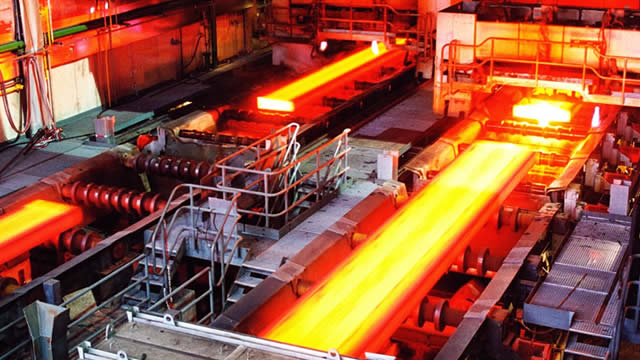
Core Viewpoint - Iron ore prices have fallen below $100 a ton due to slowing demand in China and increasing supply, leading to a significant rise in inventories [2][4]. Supply and Demand Dynamics - Iron ore futures for 61%-content ore decreased by 1.3% to $99.35 a ton, marking a fourth consecutive weekly drop, the longest losing streak since June [2]. - The supply-demand fundamentals for iron ore remain weak, with slower-than-expected hot-metal output at Chinese mills and the end of supportive restocking activities [3]. - Chinese steel mills are reducing output on an annual basis, while miners in Australia and Brazil are increasing ore production, contributing to rising inventories [4]. Inventory Levels - Port stockpiles in China rose for the 10th consecutive week, increasing by 0.6% to 160 million tons, the highest level since 2022 and nearing the record set in 2018 [5]. - The increase in stockpiles may also be influenced by a pricing dispute between BHP Group and China Mineral Resources Group Co. [5]. Price Forecasts - BMI, a Fitch Solutions company, projects that iron ore prices will average $95 a ton this year due to elevated inventories, healthy mine output, and potential steel-output curbs [7]. - Goldman Sachs anticipates that iron ore prices may decline once the dispute between BHP and CMRG is resolved and new low-cost supply comes online [7].