脑机接口

Search documents
新突破!我国侵入式脑机接口临床试验实现三维物理世界操控与交互
Huan Qiu Wang· 2025-12-17 08:37
Core Viewpoint - The recent clinical trial of an invasive brain-computer interface (BCI) in China marks a significant advancement, transitioning from 2D control to 3D interaction with the physical world, enhancing the quality of life for patients with severe disabilities [1][5][11] Group 1: Clinical Trial Details - The trial involved a middle-aged male patient who suffered from quadriplegia due to spinal cord injury, with limited movement capabilities [1] - After implantation of the BCI system in June 2025, the patient was able to control electronic devices using thought within 2 to 3 weeks of training, similar to the first trial's outcomes [3] - The BCI system has now expanded its application from 2D screens to 3D physical interactions, allowing the patient to control devices like wheelchairs and robotic dogs with minimal latency [5][7] Group 2: Technical Aspects of the BCI - The BCI system consists of a front-end sensor, which is a fine wire inserted into the brain, and a back-end processor embedded in the skull, making the procedure minimally invasive [11][13] - The front-end sensor connects the brain to the external world, while the back-end processor converts neural activity into digital signals for device control [13][15] - The system features continuous, stable, and low-latency control, with advancements in neural data compression technology improving performance by 15% to 20% even in noisy environments [20] Group 3: Future Applications and Innovations - The research team is exploring further applications, including decoding language information from the brain and expressing internal intentions through external devices [19] - Key technologies such as cross-day stability and online recalibration have been developed to enhance user experience, allowing real-time adjustments to decoding parameters [20] - The end-to-end latency of the system has been reduced to under 100 milliseconds, providing a seamless control experience for the user [20]

重大突破!我国已完成三例侵入式脑机接口临床试验
Zheng Quan Shi Bao· 2025-12-17 08:34
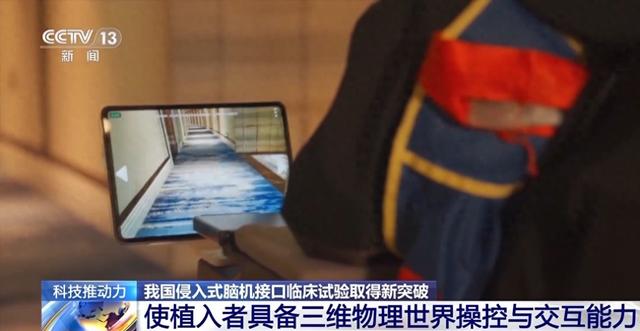
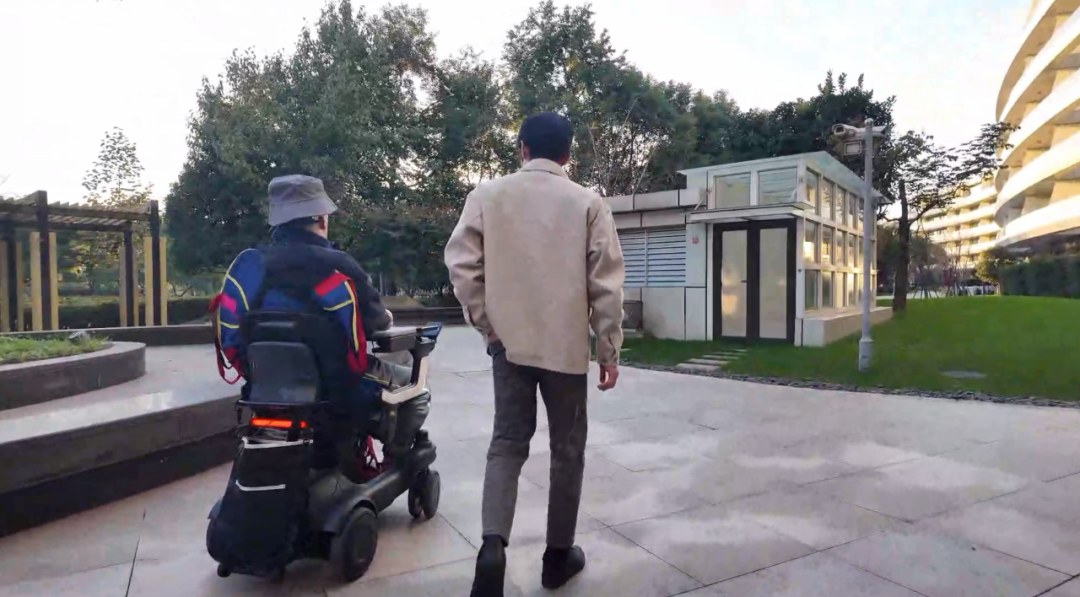
因颈髓损伤而高位截瘫的中年人,仅凭意念,即可如臂使指地操控智能轮椅在小区遛弯,指挥机器狗作为"身体延伸"取回外卖…… 高位截瘫患者(左)通过脑机接口系统意念控制轮椅 这便是中国科学院脑科学与智能技术卓越创新中心研究员赵郑拓、李雪团队联合复旦大学附属华山医院及相关企业,开展的第二例侵入式脑机接口临床试 验的成果展示。 证券时报记者从12月17日中国科学院脑科学与智能技术卓越创新中心召开的侵入式脑机接口临床试验生活场景应用进展新闻发布会获悉,赵郑拓、李雪团 队今年已完成三例侵入式脑机接口临床试验。这标志着我国在侵入式脑机接口技术方面成为继美国后,全球第二个进入临床试验阶段的国家。 赵郑拓接受记者采访时表示,希望加速推动新品临床转化与应用验证,让脑机接口技术真正走向临床落地应用,并以开放的心态与各类智能设备、应用平 台等合作,共同推动我国脑机接口技术发展。 从"二维交互"到"三维生命拓展" 发布会上,赵郑拓着重介绍了侵入式脑机接口第二例临床试验的情况。2022年,这位患者因脊髓损伤导致高位截瘫,经过一年多的康复,情况未有改善, 仅剩头颈部可以活动。2025年6月,他植入了中国科学院脑科学与智能技术卓越创新中心和合作 ...
重大突破!我国已完成三例侵入式脑机接口临床试验
证券时报· 2025-12-17 08:30
赵郑拓接受记者采访时表示,希望加速推动新品临床转化与应用验证,让脑机接口技术真正走向临床落地应用,并以开放的心态与各类智能设备、应用平台等合 作,共同推动我国脑机接口技术发展。 因颈髓损伤而高位截瘫的中年人,仅凭意念,即可如臂使指地操控智能轮椅在小区遛弯,指挥机器狗作为 "身体延伸"取回外卖…… 这便是中国科学院脑科学与智能技术卓越创新中心研究员赵郑拓、李雪团队联合复旦大学附属华山医院及相关企业,开展的第二例侵入式脑机接口临床试验的成果 展示。 证券时报记者从12月17日中国科学院脑科学与智能技术卓越创新中心召开的侵入式脑机接口临床试验生活场景应用进展新闻发布会获悉,赵郑拓、李雪团队今年已 完成三例侵入式脑机接口临床试验。这标志着我国在侵入式脑机接口技术方面成为继美国后,全球第二个进入临床试验阶段的国家。 赵郑拓说,第二例案例的突破性是全方位的:从二维到三维,从虚拟到物理,从基础控制到生活融合。 在与赵郑拓交流时,这位患者如此描述自己的感受:"就像控制游戏里的人物,不用特意去想摇杆要往哪个方向摆,自然而然想往哪个方向就过去了。信号传输比较 稳,也没有太多延时。" 从"二维交互"到"三维生命拓展" 发布会上,赵 ...

我国脑机接口技术有新突破
Huan Qiu Wang Zi Xun· 2025-12-17 06:30
Core Viewpoint - Recent breakthroughs in invasive brain-machine interface clinical trials by Chinese scientists enable patients with motor disabilities to control wheelchairs and robotic dogs using their thoughts, moving beyond traditional two-dimensional screens to real-world three-dimensional actions [1] Group 1: Technological Advancements - Scientists have developed a neural data compression technology combined with a mixed decoding model, enhancing the overall performance of the brain control system by 15%-20% [1] - The implementation of neural manifold alignment technology allows for interference resistance, ensuring that the decoder consistently understands the core intentions of the user [1] - Online recalibration technology enables real-time parameter adjustments, making the tools increasingly user-friendly over time [1] - The system boasts a high synchronization rate with minimal latency, allowing machines to respond even more effectively than the user's own body [1]
直线拉升!一则利好,突然来袭!
天天基金网· 2025-12-17 05:28
Core Viewpoint - The brain-computer interface (BCI) industry is experiencing significant advancements, particularly with the successful completion of a second invasive clinical trial, which marks a transition from 2D control to 3D interaction in real-world applications [2][6][10]. Group 1: Clinical Trial Progress - The second invasive BCI clinical trial was successfully completed, allowing a high-level paraplegic patient to control a smart wheelchair and robotic dog using brain signals [6][8]. - The research team developed a high-throughput wireless invasive BCI system (WRS01), enabling stable control of devices in real-life scenarios after several weeks of training [6][7]. - Key technological breakthroughs include advanced neural data compression techniques that enhance brain control performance by 15%-20% even in noisy environments [6][7]. Group 2: Industry Development and Policy Support - The BCI industry is entering a rapid development phase due to policy incentives and technological innovations, with expectations for continued government support [4][11]. - The industry is characterized by a collaborative ecosystem involving policy, research, industry, and capital, which is essential for scaling and upgrading the BCI sector [10][11]. - Local governments are implementing two-step strategies to promote BCI product and clinical development by 2027 and 2030, respectively, providing a framework for local enterprises [11][12]. Group 3: Investment Opportunities - Investment opportunities are expected to increase as the BCI industry transitions from research to commercialization, with a focus on companies with strong self-research capabilities or partnerships with leading academic institutions [11][12]. - Three main investment lines are suggested: domestic mapping of invasive BCI advanced industry chains, non-invasive BCI products in consumer scenarios, and downstream application-related companies [12].

盘中,直线拉升!一则利好,突然来袭!
券商中国· 2025-12-17 04:35
Core Viewpoint - The brain-computer interface (BCI) sector is experiencing significant advancements, particularly with the successful completion of a second invasive clinical trial in China, which marks a transition from 2D control to 3D interaction in real-world applications [1][4]. Group 1: Clinical Trial Progress - The second invasive BCI clinical trial was conducted by the Chinese Academy of Sciences in collaboration with Fudan University and other entities, enabling a high-level paraplegic patient to control a smart wheelchair and robotic dog using brain signals [4]. - The system developed allows for stable control of devices in real-life scenarios, with a reported 15%-20% improvement in brain control performance due to advanced data compression techniques [4][5]. Group 2: Market Reaction - Following the announcement of the clinical trial progress, BCI-related stocks surged, with companies like Innovation Medical rising over 8% and others like BeiYikang and Sanbo Neuroscience also showing significant gains [1]. Group 3: Industry Outlook - Analysts predict that the BCI industry is entering a rapid growth phase due to supportive policies and technological innovations, with expectations for continued government backing and increased investment opportunities [2][8]. - The industry is characterized by a collaborative ecosystem involving policy, research, industry, and capital, which is essential for its sustainable development [7]. Group 4: Investment Recommendations - Investment firms suggest focusing on three main areas: domestic mapping of advanced invasive BCI technologies, non-invasive BCI products in consumer markets, and downstream applications of BCI technology [9].

机构:脑机接口行业加速创新
Zheng Quan Shi Bao Wang· 2025-12-17 03:27
西南证券认为,脑机接口行业加速创新,无论是何种技术路径,本质上都是连接人类意识(第一步是捕 捉脑信号,通过装置采集动作电位、局部场电位、脑电图等,然后进行信号处理和特征提取,再进行编 解码信号输出并控制外部设备和应用)。在采集信号的这一步,由于对信号强弱、需求定义、与目标定 位的不同,衍生出了侵入式、半侵入/介入式以及非侵入式等技术路径,也带来了产品设计全链条的不 同。 今天,中国科学院脑科学与智能技术卓越创新中心发布该中心与国内科研机构及医疗单位合作开展的第 二例侵入式脑机接口临床试验取得的新进展。本次临床试验在技术上实现了从二维的屏幕光标控制,到 三维的物理世界交互的重大转变。 财信证券认为,脑机接口行业作为融合多学科前沿技术的高成长赛道,在政策强力支持、医保支付落地 与技术持续突破的驱动下,正迈向规模化应用关键阶段。国内企业在部分领域已实现与国际领先水平并 跑,在设备小型化、信号传输速率、安全性能等方面表现突出,中长期相关产业链有较好投资机会。 ...
青春华章津彩绽放|从“想”到“行” 天津脑机接口如何让脊髓损伤患者用“意念”重新行走?
Yang Shi Wang· 2025-12-17 01:49
由天津大学脑机交互与人机共融海河实验室团队研发的"神工-神行"系统,是世界首套适用于全肢 体康复的脑机接口神经肌肉耦合驱动系统。它能通过解码患者"想要运动"的脑电信号,驱动下肢外骨 骼,辅助患者完成站立、行走等训练;还能通过神经肌肉电刺激,将动作反馈同步作用于患者肢体,实 现下肢康复训练的效果。在开设全国首个脑机接口专业的天津大学,更多奇迹正在萌发。 ...
中国全植入脑机接口临床试验成功 高位截瘫患者实现意念操控
Zhong Guo Xin Wen Wang· 2025-12-16 05:31
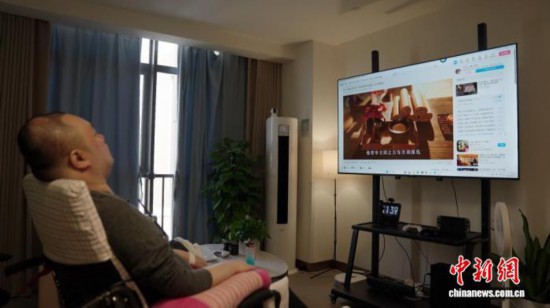
Core Insights - China has made significant clinical advancements in brain-computer interface (BCI) technology, with the first domestically developed fully implanted, wireless, and functional BCI product successfully tested on a high-level paraplegic patient [1][3] - The clinical trial, led by a team from Huashan Hospital, demonstrated that the patient could perform web browsing, click controls, and video playback through thought alone, achieving an international advanced brain control decoding rate [1][3] Group 1 - The BCI system features three core technological characteristics: fully implanted, fully wireless, and fully functional, which fundamentally reduces infection risks by having no external interfaces [1] - The innovative internal battery is placed subcutaneously in the chest, away from brain tissue, enhancing long-term safety during use [1] - The system integrates wireless power supply, wireless data transmission, and rechargeable batteries, allowing real-time interaction without external devices [1] Group 2 - The research team has incorporated AI large model algorithms to enhance signal decoding accuracy and generalization capabilities, making strides in real-time language decoding, which could help aphasia patients regain communication abilities [3] - The founder of the company emphasized that being the first domestic enterprise to validate the internal battery fully implanted solution is both a milestone and a responsibility, showcasing the potential for ethical and humanistic development in China's BCI industry [3] - The research received support from various institutions, laying a crucial foundation for the standardization and commercialization of BCI technology in China, with the potential to benefit more patients with neurological diseases in the future [3]
国内首款"三全"脑机接口成功完成首例临床试验;我国彩虹-7无人机成功首飞丨智能制造日报
创业邦· 2025-12-16 03:43
Group 1 - Sichuan Changhong's self-developed 800V high-voltage battery pack successfully supported the first flight of China's first heavy-duty eVTOL, AR-E800, overcoming technical challenges in high voltage insulation, thermal management, and lightweight design [2] - Shanghai Brain Tiger Technology announced the successful completion of the first clinical trial of its domestically developed "three-in-one" brain-computer interface, allowing a paralyzed participant to control a wheelchair and play games using only their thoughts [2] - China's new high-altitude long-endurance drone, Rainbow-7, successfully completed its maiden flight, featuring a wingspan of over 27 meters and advanced aerodynamic, stealth, and control technologies [2] Group 2 - Aetherflux announced its Galactic Brain project to build a space data center, with the first satellite planned for launch in Q1 2027, addressing power supply issues that typically delay ground-based AI data center construction [2]