全植入

Search documents
意念控物成真,脑机接口产业化爆发,这波机会别错过
3 6 Ke· 2026-01-19 02:30
Core Viewpoint - The brain-computer interface (BCI) technology is advancing rapidly, with significant support from government policies, clinical trials, and capital investment, positioning it as a key growth sector with potential applications across various industries [2][5][17]. Policy Support - The Chinese government has included BCI in its key development list for future industries, with concentrated policy support expected to accelerate clinical trials and market activity by 2025 [2][5]. - Local governments are establishing special funds and action plans to facilitate the development of the BCI industry, particularly in major cities like Beijing and Shanghai [5]. Clinical Advancements - By 2025, the number of clinical trials for BCI in China is projected to increase significantly, with breakthroughs in invasive, semi-invasive, and interventional technologies [5]. - The first global interventional BCI human trial has been completed, and advanced devices featuring "fully implanted, fully wireless" capabilities are being developed [5][10]. Capital Investment - In the first 11 months of 2025, there were 24 financing events in the BCI sector in China, marking a 30% year-on-year increase, supported by government funds and market capital [5][6]. - Notable financing rounds include several companies raising millions to billions in funding, indicating strong investor interest [6]. Industry Growth - The BCI sector is evolving into a trillion-yuan market, with major players like Neuralink preparing for large-scale production of devices, while domestic companies are making significant technological advancements [4][5]. - The industry is witnessing a robust influx of capital, with a strong willingness among investors to lock in shares, indicating confidence in the sector's stability and growth potential [4]. Technological Breakthroughs - BCI technology is categorized into invasive, semi-invasive, and non-invasive types, with invasive methods providing the best signal quality for capturing neural activity [7][10]. - Domestic advancements include breakthroughs in electrode arrays and decoding algorithms, achieving over 90% accuracy in Chinese character writing recognition [10]. Application Scenarios - BCI technology is being applied in various fields, including medical rehabilitation for paralysis and neurological disorders, as well as in industrial safety, aerospace, and entertainment [12][10]. - Specific applications include fatigue monitoring in industrial settings, cognitive health assessments in aerospace, and training aids in sports and education [12]. Industry Chain Opportunities - The BCI industry's growth is supported by a comprehensive supply chain, with opportunities in upstream components like electrodes and chips, midstream systems and algorithms, and downstream applications in healthcare and consumer products [13][16]. - Companies focusing on core components, clinical applications, and those with established market channels are well-positioned to benefit from the industry's expansion [16]. Investment Recommendations - Investors are advised to focus on three key areas: technology-leading companies, clinical application firms, and those with strong industry chain collaborations, as the BCI sector transitions from clinical validation to large-scale implementation [17].

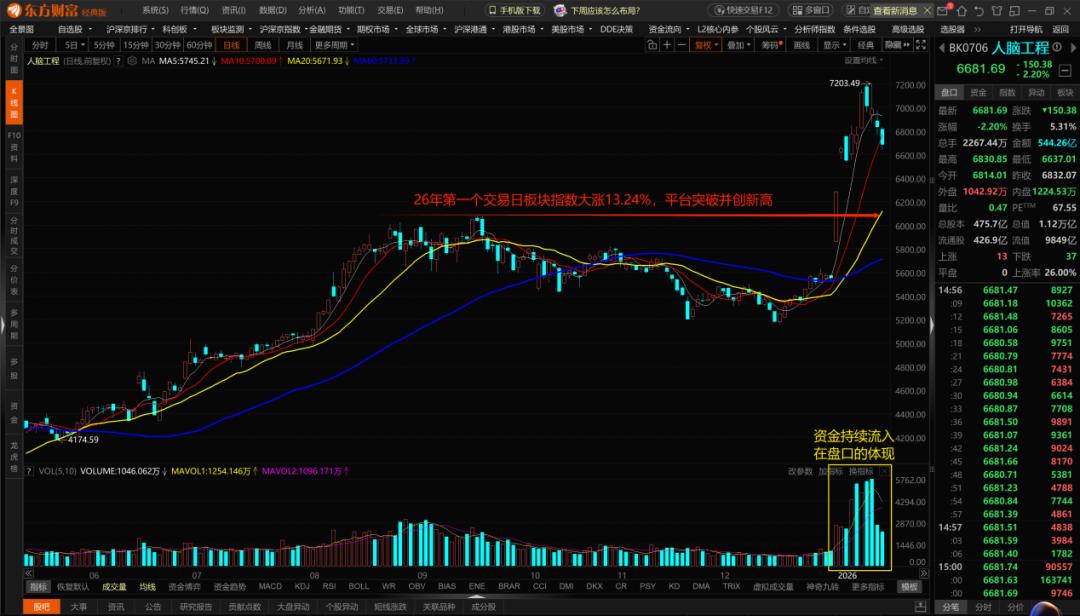
意念控物成真!脑机接口产业化爆发,这波机会别错过!
格隆汇APP· 2026-01-18 08:23
Core Viewpoint - The brain-computer interface (BCI) industry is entering a critical phase of industrialization, driven by strong policy support, clinical advancements, financing growth, and the formation of a complete industrial chain [6][9]. Policy Support - The Chinese government has consistently prioritized BCI in its development plans, with significant policy support expected in 2025, including the establishment of special funds by local governments [9]. - The "China Brain Project" and the "14th Five-Year Plan" highlight the importance of BCI, indicating a robust commitment to its development [9]. Clinical Advancements - The number of clinical trials in China is projected to increase significantly by 2025, with breakthroughs in invasive, semi-invasive, and interventional technologies [9]. - Notable achievements include the completion of the world's first interventional BCI human trial and the development of advanced devices that are fully implanted and wireless [9]. Financing Growth - In the first 11 months of 2025, there were 24 financing events in the BCI sector, marking a 30% year-on-year increase, supported by government funds and market capital [9]. - Various companies have secured significant funding, indicating strong investor interest in the sector [11]. Industrial Development - The BCI industry is evolving into a trillion-yuan market, with over 40 clinical research wards established nationwide, enhancing the ecosystem from core components to complete systems [7][9]. - The industry is witnessing a shift from experimental concepts to practical applications across medical, industrial, and transportation sectors [7]. Technological Breakthroughs - BCI technology is categorized into invasive, semi-invasive, and non-invasive types, with invasive methods offering superior signal quality [12]. - Domestic advancements include breakthroughs in electrode arrays and decoding algorithms, achieving over 90% accuracy in Chinese character writing recognition [14]. Application Scenarios - BCI applications are expanding into various fields, including medical rehabilitation, industrial safety, aerospace, and entertainment, with specific use cases such as fatigue monitoring and cognitive health assessments [15][12]. - The technology is being utilized to assist patients with spinal injuries and other conditions, while also being tested in industrial settings for safety monitoring [14][15]. Investment Opportunities - The BCI sector presents significant investment opportunities, particularly in three areas: technology-leading companies, clinical implementation firms, and industry-collaborative enterprises [18][20]. - Companies with advanced technologies in invasive and interventional methods, as well as those with established clinical partnerships, are expected to yield substantial returns [20][21].

脑虎科技“超级工厂”江西动工 国内脑机接口产业化加速
Xin Hua Cai Jing· 2026-01-13 16:16
Group 1 - The core point of the news is that Brain Tiger Technology has officially commenced construction of its "super factory" project in Jiangxi, which is a significant step towards the mass production and standardization of domestic brain-computer interface technology, expected to be completed and operational by the second half of 2026 [1][2]. Group 2 - The "super factory" will cover an area of approximately 14,300 square meters and will focus on three main industrial capabilities: establishing a mass production base for high-throughput implantable flexible electrodes, high-frequency electroencephalograms, surgical robots, and the first fully implanted, fully wireless, and fully functional brain-computer interface system, aiming for stable delivery of tens of thousands of units [2]. - The factory will serve as a "super data center," designed to drive continuous technological iteration by collecting, processing, and analyzing neural signal data, thereby optimizing algorithms and facilitating the development of next-generation products, creating an industrial ecosystem that deeply integrates brain-computer interfaces with artificial intelligence [2]. - Additionally, the factory will feature a "simulated life rehabilitation area," innovatively planning a one-stop rehabilitation training environment that closely replicates real-life and work scenarios, assisting patients with implanted brain-computer interfaces in efficiently rebuilding life skills and helping them return to society with dignity [2].
资金和政策协同发力 脑机接口技术落地与商业化提速并进
Sou Hu Cai Jing· 2026-01-13 08:38
Core Insights - The article discusses the rapid advancement and commercialization of brain-computer interface (BCI) technology in China, driven by policy support and significant capital investment [1][5][9]. Technological Breakthroughs - Recent breakthroughs in BCI technology include successful clinical trials for invasive systems, enabling high-level paraplegic patients to control devices like smart wheelchairs and robotic dogs [5][6]. - Companies like JieTi Medical and ChipSmart have made significant progress, with JieTi completing three invasive clinical trials and ChipSmart's semi-invasive product achieving successful human implants [5][6]. - The BCI technology is categorized into non-invasive, semi-invasive, and invasive types, each with its advantages and disadvantages [5]. Policy and Capital Support - The Chinese government has identified BCI as one of the six future industries in the 14th Five-Year Plan, providing a strategic framework for its development [8][9]. - Recent policy initiatives include the establishment of independent billing for BCI services by the National Medical Insurance Administration, with several provinces setting clear pricing for BCI medical services [8][9]. - The National Medical Products Administration has also initiated standards for BCI technology, which will help reduce costs and risks associated with clinical applications [8][9]. Market Opportunities - The BCI market is expected to grow significantly, with a focus on medical applications for conditions like stroke, epilepsy, and paralysis, where patients show a strong willingness to adopt early products [6][7]. - The integration of BCI technology with artificial intelligence and robotics could open up a trillion-dollar market space in the long term [11]. Industry Standardization - The BCI industry is anticipated to move towards standardization and scalability, with initial industry standards expected to be established by 2027-2028 [10]. - The domestic BCI industry benefits from strong policy support, a vast clinical resource base, and a complete supply chain, which are crucial for its growth [10]. Investment Landscape - Investment firms highlight the dual nature of BCI as both a medical and technology investment, emphasizing the importance of identifying policy-supported "true BCI" targets [11]. - The potential for leading Chinese BCI companies to emerge on the global stage is significant, given the country's advancements in technology and supportive investment environment [11].
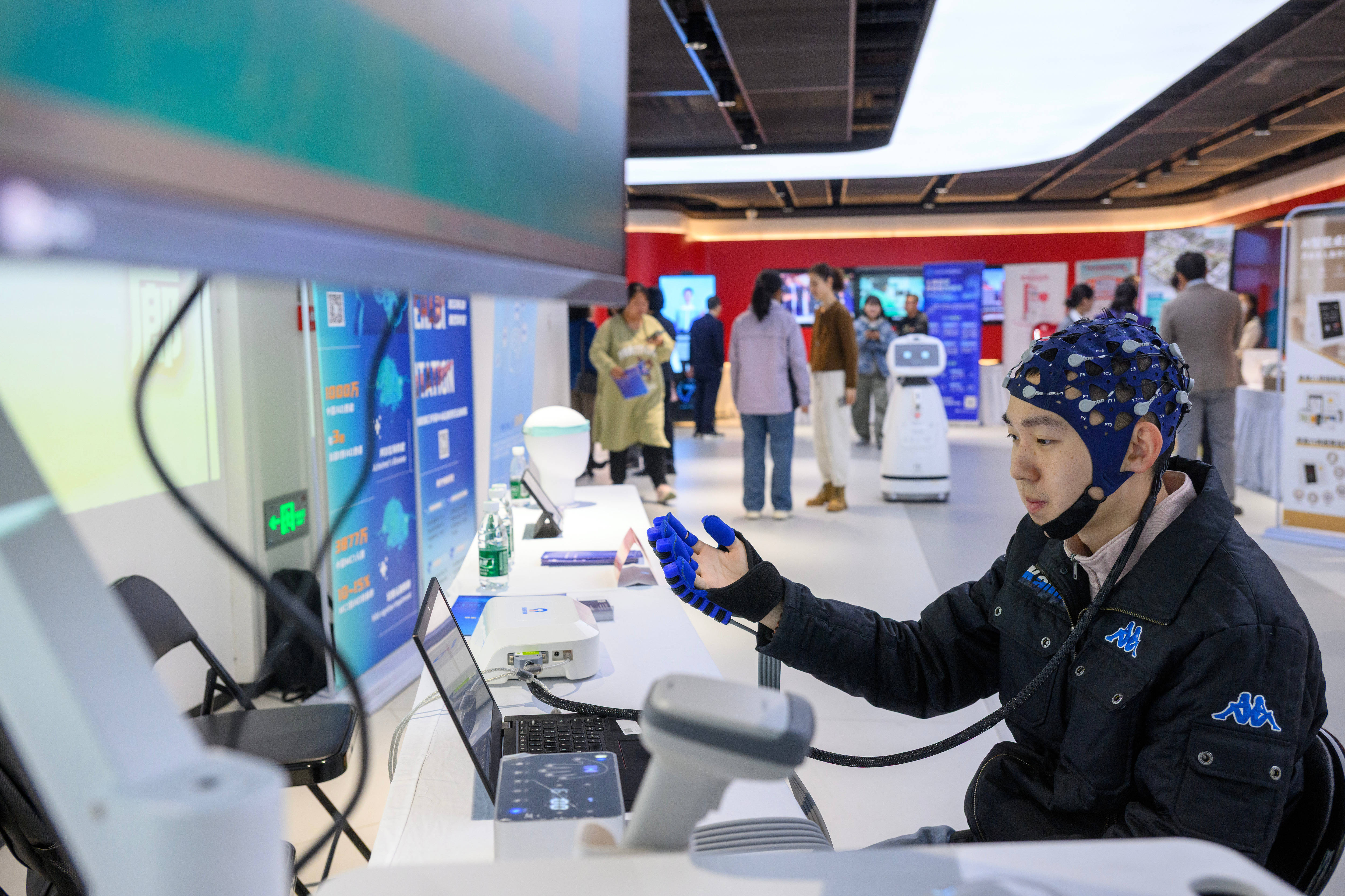
政策资本双轮驱动 脑机接口技术落地与商业化提速并进
Zhong Guo Zheng Quan Bao· 2026-01-12 20:49
Core Insights - The brain-computer interface (BCI) industry in China is experiencing significant advancements, with clinical results emerging for high-level paraplegics and substantial funding rounds, including a recent 2 billion yuan investment in a non-invasive unicorn company, Strong Brain Technology, marking the second-largest funding record globally in this field [1][2] - The industry is poised for rapid commercialization, driven by technological breakthroughs, capital influx, and supportive policies, as it transitions from cutting-edge technology to practical applications in daily life [1][5] Technological Breakthroughs - Recent advancements in BCI technology include successful clinical trials for invasive systems, enabling high-level paraplegics to control smart wheelchairs and robotic dogs [2][3] - Companies like JieTi Medical and Chip Intelligence have made significant progress, with JieTi completing trials for its invasive BCI system and Chip Intelligence's semi-invasive product achieving human implantation [2][3] - The first clinical trial of a fully implanted, wireless BCI product by Brain Tiger Technology has shown promising results, allowing an 8-year paraplegic patient to achieve thought control just five days post-surgery [2][3] Policy and Capital Support - The BCI sector benefits from comprehensive policy support, including its designation as one of the six future industries in the 14th Five-Year Plan, which elevates it to a national strategic priority [5][6] - Recent initiatives by the Sichuan provincial medical insurance bureau have established pricing for 82 neuro-related medical services, including BCI applications, facilitating clinical adoption [5][6] - The establishment of industry standards by the National Medical Products Administration is expected to lower costs and risks associated with technology development and clinical application [6] Industry Collaboration and Investment - Companies like Baiyang Pharmaceutical are actively collaborating with academic institutions to explore the integration of BCI with artificial intelligence, aiming for innovative clinical solutions [7] - Other listed companies are also engaging in the BCI space through material supply and equipment development, indicating a strong interest from institutional investors [7] Future Development and Challenges - The BCI industry is anticipated to move towards standardization and scalability, with initial industry standards expected to be established by 2027-2028 [8] - Potential constraints include the pace of chip design and production, as well as the need for ethical regulations regarding personal brain data [8] - Despite these challenges, the domestic BCI industry holds significant advantages, including strong policy support, a vast clinical resource base, and a comprehensive supply chain [8] Investment Opportunities - The BCI sector presents a dual investment opportunity in both medical and technological domains, with short-term focus on disease treatment and long-term potential for enhancing human capabilities through integration with AI and robotics [9] - The industry is positioned to cultivate leading global BCI companies, fostering a capital-innovation synergy between primary and secondary markets [9]



股市暴涨13.7%!脑机接口凭什么成为2026开年顶流?
机器人圈· 2026-01-12 09:29
Core Viewpoint - The recent surge in the brain-computer interface (BCI) sector in the A-share market reflects a significant shift from laboratory research to clinical application, marking a milestone in the integration of life sciences and engineering technology [1] Group 1: Domestic Breakthroughs - The domestic BCI field has seen a rapid increase in clinical achievements, highlighted by Brain Tiger Technology's launch of the first fully implanted, wireless, and fully functional BCI product, which successfully enabled a high-level paraplegic patient to control web browsing through thought [2] - This "three-in-one" product addresses critical issues such as infection risks associated with external systems and allows patients to connect with various devices, creating an "extended body" ecosystem [2] - Clinical data shows that patients achieved thought control within five days post-surgery, with a decoding rate of 5.2 BPS, comparable to international standards [2] Group 2: Technological Advancements - The second-generation high-throughput wireless invasive BCI system developed by the Chinese Academy of Sciences allows high-level paraplegic patients to control wheelchairs and other devices using only their thoughts, with a fourfold increase in data reading speed [3] - The establishment of China's first comprehensive clinical trial area for BCIs signifies the standardization and scaling of clinical research in this field, providing ample clinical data support for technological iterations [3] Group 3: Industry Acceleration - The rapid advancements in domestic technology are fueled by a competitive global environment, exemplified by Neuralink's plans for large-scale production of BCI devices and significant reductions in surgical time and costs [4] - The shift from niche research to essential medical applications is driven by the need for effective treatments for patients with spinal cord injuries and other neurological conditions, marking a revolutionary breakthrough in life sciences [4] Group 4: Caution Amidst Enthusiasm - Despite the excitement in the capital markets, the BCI field is still in a critical phase of clinical validation, with significant challenges remaining before large-scale commercialization can be achieved [5] - The complexity of the human brain presents a major challenge for accurately capturing and interpreting neural signals, with projections indicating that recording from one million neurons may not be feasible until 2100 [5] Group 5: Long-term Value of Technological Progress - The stock market surge in the BCI sector represents a forward-looking vote of confidence in breakthroughs in life sciences technology, which has the potential to transform the lives of millions suffering from neurological diseases [6] - As China transitions from a follower to a competitor in the BCI field, ongoing clinical breakthroughs and technological innovations are paving the way for new possibilities in human health [6]

Xiaomi MiMo 大模型落地应用,小米“人车家全生态”合作伙伴大会介绍IoT平台生态新进展
Sou Hu Wang· 2025-12-18 10:06
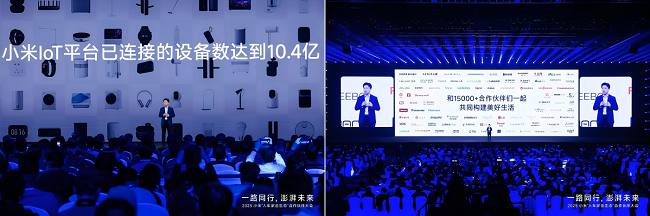
Core Insights - Xiaomi successfully held the "Human-Vehicle-Home Ecosystem" Partner Conference in Beijing, showcasing its latest IoT platform capabilities and user experience innovations [1][3] Group 1: IoT Platform Progress - As of Q3, Xiaomi's IoT platform has surpassed 1 billion connected devices, reaching 1.04 billion units, with the Mi Home app achieving over 110 million monthly active users [3] - The annual shipment of Xiaomi IoT modules has exceeded 10 million units for the first time, solidifying its position as a leading global smart ecosystem platform [3] - Xiaomi has partnered with over 15,000 companies globally, including renowned brands like Miele, Bosch, Siemens, and LG, while also focusing on social responsibility initiatives [3] Group 2: Future Innovations - Xiaomi introduced the Xiaomi Miloco smart home exploration plan, which integrates visual perception into smart home systems, allowing users to create smart rules through natural language [3] - The company is collaborating with leading brain-computer interface firms to enhance interaction possibilities for individuals with mobility impairments [4] Group 3: AI and Ecosystem Integration - The IoT Future Summit 2026 highlighted the role of AI in driving innovation across the entire ecosystem, moving beyond isolated breakthroughs to a comprehensive approach [6] - Various partners presented advancements in smart solutions, emphasizing user experience improvements and seamless integration of devices [6][7] - Xiaomi's IoT platform is transitioning towards "spatial intelligence," focusing on proactive decision-making through multi-modal perception and distributed computing technologies [7][11] Group 4: User Experience Enhancements - The IoT Ecosystem Access and Experience Innovation Forum focused on the new capabilities of the Mi Home 11.0 experience, addressing user demands for comfort, safety, and energy efficiency [9] - Xiaomi upgraded its scene capabilities and 3D central control interactions, enhancing user experience for over 110 million monthly active users [9] Group 5: Technical Developments - The IoT Platform Technology Forum showcased a full-stack upgrade of Xiaomi's IoT capabilities, including the launch of the IoT-BLE 2.0 module matrix and advancements in AI-driven device interactions [11] - The forum discussed strategies for AIoT developers in the context of global trends in security and privacy compliance [11] Group 6: Exhibition Highlights - The conference featured an IoT exhibition area displaying various smart home solutions, IoT connection technologies, and the overall capabilities of Xiaomi's IoT platform [13]

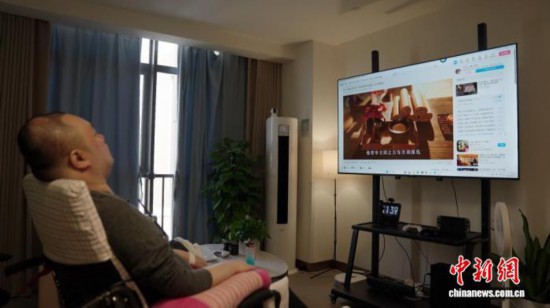
中国全植入脑机接口临床试验成功 高位截瘫患者实现意念操控
Zhong Guo Xin Wen Wang· 2025-12-16 05:31
Core Insights - China has made significant clinical advancements in brain-computer interface (BCI) technology, with the first domestically developed fully implanted, wireless, and functional BCI product successfully tested on a high-level paraplegic patient [1][3] - The clinical trial, led by a team from Huashan Hospital, demonstrated that the patient could perform web browsing, click controls, and video playback through thought alone, achieving an international advanced brain control decoding rate [1][3] Group 1 - The BCI system features three core technological characteristics: fully implanted, fully wireless, and fully functional, which fundamentally reduces infection risks by having no external interfaces [1] - The innovative internal battery is placed subcutaneously in the chest, away from brain tissue, enhancing long-term safety during use [1] - The system integrates wireless power supply, wireless data transmission, and rechargeable batteries, allowing real-time interaction without external devices [1] Group 2 - The research team has incorporated AI large model algorithms to enhance signal decoding accuracy and generalization capabilities, making strides in real-time language decoding, which could help aphasia patients regain communication abilities [3] - The founder of the company emphasized that being the first domestic enterprise to validate the internal battery fully implanted solution is both a milestone and a responsibility, showcasing the potential for ethical and humanistic development in China's BCI industry [3] - The research received support from various institutions, laying a crucial foundation for the standardization and commercialization of BCI technology in China, with the potential to benefit more patients with neurological diseases in the future [3]
陈天桥砸百亿的赛道爆发,这家公司叫板马斯克
3 6 Ke· 2025-10-24 01:02
Core Insights - The year 2025 is anticipated to be a pivotal year for brain-computer interfaces (BCIs), with rapid advancements and significant capital influx into the sector [1][9] - The integration of AI and BCIs is seen as a potential game-changer, with both technologies expected to converge and enhance each other [9][32] Investment and Development - Brain Tiger Technology, founded by Tao Hu, received early angel investment of 30 million yuan from Chen Tianqiao, who has been a key supporter throughout its development [3][25] - The BCI industry has seen a compound annual growth rate of over 30% in financing events from 2018 to 2024, with 20 new financing events in Q3 2025 alone [9][29] Technological Advancements - Brain Tiger has developed a high-throughput, implantable flexible BCI that can decode both motor and language signals in real-time, making it the only company globally with this dual capability [4][6] - The company has conducted 53 short-term clinical trials and is set to initiate the world's first long-term clinical trial of a fully wireless, fully implanted, and fully functional flexible cortical BCI [9][14] Clinical Applications - BCIs are being utilized in clinical settings to assist disabled patients in controlling prosthetic limbs and enabling communication for those with speech impairments [4][6] - Recent trials have demonstrated the ability of BCIs to decode neural signals into coherent language, allowing patients to communicate thoughts without verbalizing [6][18] Market Landscape - The global BCI market was valued at $1.2 billion in 2019 and is projected to reach $2.48 billion by 2024, primarily driven by medical applications [23] - Major players in the industry, including OpenAI and Meta, are recognizing the potential of BCIs, leading to increased competition and investment [9][32] Future Vision - Tao Hu envisions BCIs evolving from merely restoring normal function to enhancing human capabilities beyond physical limits, aiming for a future where humans can possess AI-like abilities [9][32] - The long-term strategy for Brain Tiger includes three phases: commercializing research applications, obtaining medical device certifications, and building an ecosystem that connects BCIs with AI and other technologies [23][24]