高通量无线侵入式脑机接口系统(WRS01)

Search documents
医药生物行业周报:国内侵入式脑机接口再迎突破,产业发展加速-20251224
Shanghai Securities· 2025-12-24 12:04
Investment Rating - The industry investment rating for the pharmaceutical and biotechnology sector is "Hold" [2]. Core Insights - The report highlights significant breakthroughs in the domestic brain-computer interface (BCI) technology, indicating an acceleration in industry development and international recognition [5]. - The report emphasizes the transition of invasive brain-computer interfaces from laboratory settings to market approval processes, suggesting a rapid expansion of application scenarios [6]. Summary by Relevant Sections Industry Overview - The report discusses the recent advancements in invasive brain-computer interface technology, including the first domestic medical device entering the FDA's breakthrough therapy pathway, which enhances the international recognition of China's BCI technology [5]. - It mentions successful clinical trials using high-throughput wireless invasive BCI systems, enabling patients with high-level paralysis to control smart wheelchairs and robotic dogs through brain signals, achieving a 15%-20% improvement in brain control performance [5]. Investment Recommendations - The report suggests focusing on companies such as Innovation Medical, Aipeng Medical, and Sanbo Brain Science, as they are positioned to benefit from the advancements in the BCI sector [6].



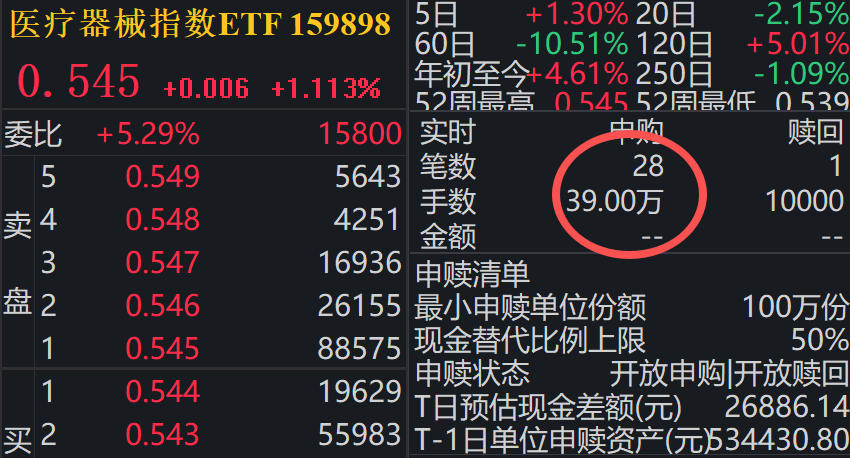
毫米级创伤!我国脑机接口里程碑式突破,医疗器械指数ETF(159898)逆势上涨1.11%
Jin Rong Jie· 2025-12-23 16:52
Core Viewpoint - The medical device sector is experiencing significant growth and investment opportunities, driven by recent regulatory approvals and technological advancements in brain-computer interface (BCI) technology [3][4][5]. Group 1: Market Performance - The medical device index ETF (159898) saw a 1.11% increase, with approximately 20 million yuan net inflow during trading [1]. - Key stocks in the medical device sector, such as Yirui Technology and Furu Medical, reported gains of 4.58% and 6.44% respectively, indicating strong market performance [1]. Group 2: Regulatory Developments - The National Medical Products Administration (NMPA) approved two high-value medical devices, enhancing clinical applications and technological development in the industry [3]. - Recent policies from major cities like Shanghai and Beijing aim to support the medical device industry, focusing on regulatory reforms and innovation [5]. Group 3: Technological Advancements - China has made significant progress in invasive brain-computer interface technology, becoming the second country after the U.S. to enter clinical trials [3]. - The global brain-computer interface market is projected to grow from approximately $2.62 billion in 2024 to $12.4 billion by 2034, with a compound annual growth rate of 17.35% [4]. Group 4: Investment Opportunities - Analysts suggest that the medical device sector may replicate the successful path of innovative pharmaceuticals, with a focus on innovation driving industry growth and global competitiveness [5]. - The medical device index ETF (159898) tracks a diverse range of leading companies in the sector, primarily focusing on A-share medical devices [7].






药监局召开脑机接口工作推进会,医疗康复、智能交互需求爆发
Jin Rong Jie· 2025-12-22 01:04
Core Insights - The National Medical Products Administration of China emphasizes the strategic importance of brain-computer interface (BCI) technology for future industrial development and aims to accelerate its clinical application to benefit patients [1] - The BCI industry in China has experienced rapid growth due to policy support, with key technological breakthroughs expected by 2027 and the establishment of 2 to 3 industrial clusters [1] - A recent application of a high-throughput wireless invasive BCI system has enabled a high-level paraplegic patient to control a smart wheelchair and robotic dog using brain signals, demonstrating real-life usability [1] Industry Outlook - The demand for BCIs in medical rehabilitation and intelligent interaction is projected to surge, with the market expected to exceed 5 billion yuan by 2025 and reach a trillion yuan by 2030, reflecting a compound annual growth rate of over 40% [2] - Frost & Sullivan forecasts that China will become the second-largest market for BCIs globally, driven by policy support and clinical demand, with technological advancements outpacing those in overseas markets [2] - The BCI sector in the A-share market is characterized by both technology and policy intensity, suggesting potential valuation increases for related companies, particularly in areas such as cochlear implants, rehabilitation devices, and cardiovascular instruments [2]
脑机接口临床试验取得新进展
Xin Lang Cai Jing· 2025-12-19 19:25
Core Insights - The research team from the Chinese Academy of Sciences has successfully completed the second clinical trial of an invasive brain-machine interface (BMI) that allows a high-level paraplegic patient to control a smart wheelchair and robotic dog using brain signals [1][2] - The technology aims to establish a direct communication channel between the brain and external devices, overcoming challenges in integrating this technology into patients' daily lives [1] Group 1: Technological Breakthroughs - The research team developed a high-compression, high-fidelity neural data compression technology, enhancing brain control performance by 15% to 20% even in noisy environments [2] - The introduction of "neural manifold alignment technology" allows for the extraction of stable low-dimensional features from high-dimensional dynamic neural signals, improving the decoder's adaptability to environmental changes [2] Group 2: Performance Enhancements - The end-to-end delay from signal acquisition to command execution has been reduced to under 100 milliseconds, providing a smoother and more natural control experience for patients [2] - The team has innovated an "online recalibration technology" that allows real-time adjustments to decoding parameters during daily use, ensuring sustained high performance without interrupting the patient's operation [2] Group 3: Future Developments - A new upgraded version of the system (WRS02) has been launched, with further performance improvements, and the team plans to conduct the first clinical trial of this version soon [2]
试验成功!我国脑机接口领域取得新突破
Huan Qiu Wang Zi Xun· 2025-12-18 03:18
Core Insights - The Chinese Academy of Sciences' Center for Excellence in Brain Science and Intelligent Technology has made significant advancements in the field of invasive brain-machine interfaces (BMIs) [1] - A research team successfully completed the second clinical trial of an invasive BMI, enabling a high-level paraplegic patient to control a smart wheelchair and robotic dog using brain signals in real-life scenarios [1] Technical Breakthroughs - The research achieved a series of breakthroughs in key technologies, improving the brain control performance by 15% to 20% even in noisy environments [2] - The team overcame challenges related to signal instability caused by environmental noise and the physiological and psychological fluctuations of patients [2] - Patients can now adjust decoding parameters in real-time during daily use without interrupting their operations for calibration [2] Response Time Improvement - The study introduced a custom communication protocol that reduced the end-to-end latency from signal acquisition to command execution to under 100 milliseconds [3] - This latency is lower than the physiological delay of 200 milliseconds in human neural pathways, resulting in a smoother and more natural control experience for patients [3]
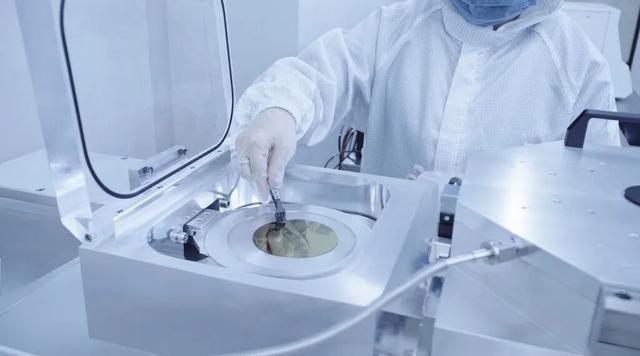
帮助高位截瘫患者稳定操控智能轮椅与机器狗我国侵入式脑机接口技术迎来新突破
Huan Qiu Shi Bao· 2025-12-17 12:55
Core Insights - The article discusses the successful completion of China's second invasive brain-computer interface (BCI) clinical trial, enabling a high-level paraplegic patient to control a smart wheelchair and robotic dog using brain signals [1][6][8]. Group 1: Clinical Trial Achievements - The second invasive BCI trial demonstrated the ability of a patient with high-level paraplegia to control devices in real-life scenarios, marking a significant advancement from previous trials focused on electronic device control [8]. - The patient, who suffered from spinal cord injury, underwent training that allowed him to control devices with minimal delay, achieving a control experience that felt natural and intuitive [8][9]. Group 2: Technological Innovations - The research team developed a high-compression, high-fidelity neural data compression technology, improving brain control performance by 15%-20% even in noisy environments [6][7]. - Innovations included "neural manifold alignment technology" to enhance stability in real-world environments and "online recalibration technology" for continuous system optimization during use [7][9]. Group 3: Future Developments - The team has announced an upgraded BCI system (WRS02) with enhanced capabilities, including an increase in channel count to 256, with the first clinical trial planned soon [9]. - Future applications of BCI technology are expected to expand into areas such as sensory restoration and precise control of neurological disorders within the next five years [12][13]. Group 4: Societal Impact - The research team is collaborating with local disability organizations to enable patients to participate in online data annotation work, transforming them from recipients of care to contributors to society [10][12]. - The integration of BCI technology with external smart devices is seen as crucial for enhancing patient quality of life and achieving broader societal benefits [12].

帮助高位截瘫患者稳定操控智能轮椅与机器狗 我国侵入式脑机接口技术迎来新突破
Huan Qiu Wang Zi Xun· 2025-12-17 12:39
Core Insights - The article highlights the successful completion of China's second invasive brain-computer interface (BCI) clinical trial, enabling a high-level paraplegic patient to control a smart wheelchair and robotic dog using brain signals [1][2][5]. Group 1: Clinical Trial Achievements - The patient, who suffered from cervical spinal cord injury leading to high-level paraplegia, was able to control devices in real-life scenarios after undergoing training with the BCI system [2][5]. - The research team achieved significant advancements in technology, including a 15%-20% overall improvement in brain control performance through innovative data compression techniques [5][6]. - The trial demonstrated a shift from controlling electronic devices to managing physical objects, marking a significant step in the integration of BCI technology into daily life [7]. Group 2: Technological Innovations - The team developed a hybrid decoding model that efficiently extracts relevant information from noisy neural signals, enhancing the robustness of the system [6]. - An "online recalibration technology" was introduced, allowing the system to adjust parameters in real-time during use, improving user experience [6]. - The end-to-end latency of the BCI system was reduced to under 100 milliseconds, providing a seamless control experience for the patient [6]. Group 3: Future Developments - The research team is preparing for the first clinical trial of the upgraded BCI system (WRS02), which features an increase in channel count to 256 [8]. - The team is also focusing on the social integration of patients by involving them in online data annotation tasks, transforming them from recipients of care to contributors to society [9][11]. - Future goals include scaling applications for motor and speech function restoration within three years and achieving breakthroughs in sensory restoration and mental health conditions within five years [11][12].

直线拉升!一则利好,突然来袭!
天天基金网· 2025-12-17 05:28
Core Viewpoint - The brain-computer interface (BCI) industry is experiencing significant advancements, particularly with the successful completion of a second invasive clinical trial, which marks a transition from 2D control to 3D interaction in real-world applications [2][6][10]. Group 1: Clinical Trial Progress - The second invasive BCI clinical trial was successfully completed, allowing a high-level paraplegic patient to control a smart wheelchair and robotic dog using brain signals [6][8]. - The research team developed a high-throughput wireless invasive BCI system (WRS01), enabling stable control of devices in real-life scenarios after several weeks of training [6][7]. - Key technological breakthroughs include advanced neural data compression techniques that enhance brain control performance by 15%-20% even in noisy environments [6][7]. Group 2: Industry Development and Policy Support - The BCI industry is entering a rapid development phase due to policy incentives and technological innovations, with expectations for continued government support [4][11]. - The industry is characterized by a collaborative ecosystem involving policy, research, industry, and capital, which is essential for scaling and upgrading the BCI sector [10][11]. - Local governments are implementing two-step strategies to promote BCI product and clinical development by 2027 and 2030, respectively, providing a framework for local enterprises [11][12]. Group 3: Investment Opportunities - Investment opportunities are expected to increase as the BCI industry transitions from research to commercialization, with a focus on companies with strong self-research capabilities or partnerships with leading academic institutions [11][12]. - Three main investment lines are suggested: domestic mapping of invasive BCI advanced industry chains, non-invasive BCI products in consumer scenarios, and downstream application-related companies [12].

盘中,直线拉升!一则利好,突然来袭!
券商中国· 2025-12-17 04:35
Core Viewpoint - The brain-computer interface (BCI) sector is experiencing significant advancements, particularly with the successful completion of a second invasive clinical trial in China, which marks a transition from 2D control to 3D interaction in real-world applications [1][4]. Group 1: Clinical Trial Progress - The second invasive BCI clinical trial was conducted by the Chinese Academy of Sciences in collaboration with Fudan University and other entities, enabling a high-level paraplegic patient to control a smart wheelchair and robotic dog using brain signals [4]. - The system developed allows for stable control of devices in real-life scenarios, with a reported 15%-20% improvement in brain control performance due to advanced data compression techniques [4][5]. Group 2: Market Reaction - Following the announcement of the clinical trial progress, BCI-related stocks surged, with companies like Innovation Medical rising over 8% and others like BeiYikang and Sanbo Neuroscience also showing significant gains [1]. Group 3: Industry Outlook - Analysts predict that the BCI industry is entering a rapid growth phase due to supportive policies and technological innovations, with expectations for continued government backing and increased investment opportunities [2][8]. - The industry is characterized by a collaborative ecosystem involving policy, research, industry, and capital, which is essential for its sustainable development [7]. Group 4: Investment Recommendations - Investment firms suggest focusing on three main areas: domestic mapping of advanced invasive BCI technologies, non-invasive BCI products in consumer markets, and downstream applications of BCI technology [9].