Beverages

Search documents
Read This Before Buying PepsiCo Stock
The Motley Fool· 2025-11-21 09:15
Core Viewpoint - PepsiCo is disappointing investors in 2025, but there is potential for a rebound if an activist investor can implement changes to improve the company's performance [1][3]. Group 1: Financial Performance - PepsiCo's stock is down 2.16% year to date, contrasting sharply with Coca-Cola's 14% increase in the same period [3]. - The company's long-term debt has reached $44.13 billion, reflecting a 14.61% year-over-year increase, which is growing faster than that of Coca-Cola [4]. - Organic sales growth for 2025 has been weak, with global volumes declining in the first three quarters, indicating challenges in pricing strategies amid elevated consumer prices [6]. Group 2: Market Position - PepsiCo has fallen to fourth place in soda popularity, behind Coca-Cola Classic, Dr. Pepper, and Sprite, marking a significant shift from its historical standing [7]. - The company controls 60 brands, and there is potential for streamlining operations by divesting some brands to raise cash and reduce debt [11]. Group 3: Activist Investor Involvement - Elliott Investment Management has taken a $4 billion stake in PepsiCo, indicating a belief in the potential for improvement and change within the company [8]. - Elliott is advocating for PepsiCo to spin off its North American bottling operations, similar to Coca-Cola's strategy, which could enhance profitability [9]. Group 4: Dividend Dependability - PepsiCo has a strong history of over 50 consecutive years of annual dividend increases, which is a key reason some investors remain committed to the stock [12].



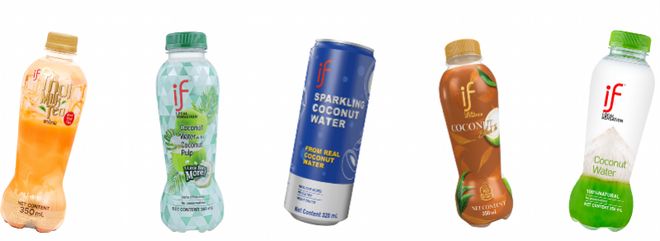
if椰子水母公司股价暴跌超60%,轻资产运营模式暗藏隐忧
Nan Fang Du Shi Bao· 2025-11-21 07:38
Core Viewpoint - IFBH Limited, the parent company of "if coconut water," has faced significant stock price declines shortly after its IPO, raising concerns about its business model sustainability and reliance on a single product [1][4][6]. Group 1: Stock Performance - IFBH's stock price has dropped over 30% from its IPO price of 27.8 HKD to a recent low of 17.8 HKD, and over 60% from its peak of 48.8 HKD in July [1][4]. - As of November 21, the stock was trading at 18.09 HKD, down 3.93%, with a total market capitalization of 48.24 billion HKD, nearly halving since its issuance [2][4]. Group 2: Financial Performance - For 2024, IFBH reported revenues of approximately 1.158 billion RMB, an increase of 80.32%, and a net profit of about 242 million RMB, up 94.12% [4]. - However, the 2025 interim report indicated a revenue of 9.446 million USD, a year-on-year increase of 31.5%, but a decline in net profit by 4.9% to 1.4976 million USD [4][6]. Group 3: Business Model and Risks - IFBH operates with a "light asset" model, employing only 46 full-time staff while generating over 1.1 billion RMB in revenue, which raises concerns about operational sustainability [5][6]. - The company relies heavily on outsourcing production to 12 factories in Thailand, creating risks related to geopolitical issues, natural disasters, and supply chain disruptions [6]. - IFBH's revenue is highly concentrated, with 95.6% coming from coconut water products and 92.4% from the Chinese market, making it vulnerable to market fluctuations [6][7]. Group 4: Market Position and Competition - IFBH holds a leading market share of approximately 34% in the Chinese coconut water market, significantly outpacing its nearest competitor [7]. - The competitive landscape is intensifying, with new entrants and existing competitors increasing their efforts, posing challenges to IFBH's market leadership [7]. - The company's marketing strategy includes a significant investment in celebrity endorsements, but the long-term effectiveness of these efforts remains uncertain [7].
Why Did Stock Of This Beverages Company Jump 40% After Hours? - Splash Beverage Group (AMEX:SBEV)
Benzinga· 2025-11-21 07:05
Core Viewpoint - Splash Beverage Group Inc. (NASDAQ:SBEV) experienced a significant stock price increase of 40.52% in after-hours trading, reaching $1.05, despite a prior decline of 17.25% during regular trading hours [1] Financial Performance - For the third quarter ended September 30, SBEV reported no net revenue, a decrease from $981,858 in the same quarter of the previous year [2] - For the nine months ending September 30, net revenue fell to $438,272 from $3.57 million a year earlier [2] - The company recorded a net loss of $9.89 million for the third quarter, translating to a loss of $4.51 per share [3] Water Rights Acquisition - In June, SBEV acquired water extraction rights to a Costa Rican aquifer, valued at $20 million, by issuing 20,000 shares of Series C preferred stock [4] - The company received a purchase order from a customer in the UAE, which will require approximately $4 million to fulfill [4] Capital Structure Shift - Total assets increased to $22.49 million as of September 30, up from $2.76 million at the end of 2024 [5] - Stockholders' equity became positive at $6.78 million, compared to a previous deficit of $18.63 million [5] - As of November 19, there were 2,550,694 shares of common stock issued and outstanding [5] Stock Performance - Over the past year, SBEV's stock has declined by 91.1% [6] - The stock has an annual trading range of $0.74 to $13.59 and a market capitalization of $1.78 million [6] - Benzinga Edge Stock Rankings indicate a negative price trend for SBEV across all time frames [6]


ROSEN, A LEADING LAW FIRM, Encourages Primo Brands Corporation Investors to Secure Counsel Before Important Deadline in Securities Class Action - PRMB, PRMW
Newsfile· 2025-11-21 03:39
Core Viewpoint - Rosen Law Firm is encouraging investors of Primo Brands Corporation and Primo Water Corporation to secure legal counsel before the January 12, 2026 deadline for a class action lawsuit related to securities misrepresentation during specified class periods [1][5]. Group 1: Class Action Details - Investors who purchased common stock of Primo Water Corporation between June 17, 2024, and November 8, 2024, or Primo Brands Corporation between November 11, 2024, and November 6, 2025, may be entitled to compensation without any out-of-pocket fees through a contingency fee arrangement [2][5]. - A class action lawsuit has already been filed, and those wishing to serve as lead plaintiff must act by January 12, 2026 [3][5]. Group 2: Legal Representation - Investors are advised to select qualified legal counsel with a proven track record in securities class actions, as many firms may lack the necessary experience and resources [4]. - Rosen Law Firm has a history of significant settlements, including the largest securities class action settlement against a Chinese company, and has recovered hundreds of millions for investors [4]. Group 3: Case Background - The lawsuit claims that Primo Brands, formed after the merger between Primo Water and BlueTriton Brands, misrepresented key facts about the merger integration, leading investors to believe in accelerated growth and strong financial results [5]. - The defendants allegedly issued materially false and misleading statements regarding the merger's progress, which resulted in investor damages when the true details were revealed [5].



ROSEN, NATIONAL TRIAL LAWYERS, Encourages Primo Brands Corporation Investors to Secure Counsel Before Important Deadline in Securities Class Action - PRMB, PRMW
Globenewswire· 2025-11-21 00:25
Core Points - Rosen Law Firm is reminding investors who purchased common stock of Primo Water Corporation and Primo Brands Corporation during specified periods about a class action lawsuit with a lead plaintiff deadline of January 12, 2026 [1][3] Group 1: Class Action Details - Investors who purchased Primo Brands securities during the class period may be entitled to compensation without any out-of-pocket fees through a contingency fee arrangement [2] - A class action lawsuit has already been filed, and interested parties can join by contacting Rosen Law Firm [3][6] - The lawsuit claims that defendants misrepresented and failed to disclose key facts about the merger between Primo Water and BlueTriton Brands, leading to investor damages when the true details emerged [5] Group 2: Rosen Law Firm's Credentials - Rosen Law Firm has a strong track record in securities class actions, having achieved the largest securities class action settlement against a Chinese company and being ranked No. 1 for settlements in 2017 [4] - The firm has recovered hundreds of millions of dollars for investors, securing over $438 million in 2019 alone [4] - Founding partner Laurence Rosen was recognized as a Titan of Plaintiffs' Bar by Law360 in 2020, highlighting the firm's expertise and reputation in the field [4]

2 Reasons To Buy The Dip On Celsius Stock
Forbes· 2025-11-20 20:10
Core Insights - Celsius Holdings (CELH) experienced a significant stock decline of 24.8% following its third-quarter earnings report, despite exceeding earnings and revenue estimates [1] - Concerns regarding a channel change related to the newly acquired Alani Nu brand have negatively impacted investor sentiment [1] - The stock's drop marked its worst single-session decline since March 2021 [1] Stock Performance and Trends - Recent fluctuations in the stock price have led to frustration among investors attempting to capitalize on perceived buying opportunities [2] - CELH is currently testing a historically bullish trendline, with the stock trading above its 320-day moving average 80% of the time over the past two months [3] - Historical data indicates that similar signals in the past three years resulted in a 71% chance of the stock being higher one month later, averaging a 6.8% gain [4] Support Levels and Indicators - The stock is approaching a critical support level at the psychologically significant $40 mark [4] - The 14-Day Relative Strength Index (RSI) is in "oversold" territory at 20, indicating potential for a rebound [6] - Short interest has decreased by 16.2% in recent reporting periods, but 14.92 million shares sold short still represent 9.1% of the total float [6] Options Market Sentiment - A potential unwinding of pessimism in the options market could provide additional support for the stock [7] - The 10-day put/call volume ratio of 1.72 is in the highest percentile of its annual range, indicating a high level of bearish sentiment [7] - The Schaeffer's Volatility Index (SVI) of 57% ranks in the 26th percentile of its annual range, reflecting post-earnings volatility [7]


Does Celsius Holdings' Buyback Plan Signal Stronger Growth Ahead?
ZACKS· 2025-11-20 18:11
Core Insights - Celsius Holdings, Inc. (CELH) announced a $300 million share repurchase authorization, indicating strong confidence in its financial position and long-term fundamentals [1][4] - The company reported a 173% year-over-year revenue increase in Q3 2025, driven by acquisitions and growth in the Celsius brand [2][9] - CELH ended the quarter with nearly $806 million in cash, supported by strong operating cash flow and a healthy liquidity position [2][9] - Gross margin expanded by 530 basis points to 51.3%, enhancing internal funding capacity [2][9] - CELH reduced its debt by $200 million, lowering total debt to approximately $700 million and cutting its term loan rate, which is expected to reduce annual interest expenses by about $20 million starting in 2026 [3][4] Financial Performance - The fourth quarter of 2025 is expected to be uneven due to the transition of Alani Nu into PepsiCo's DSD network, but CELH's underlying performance remains strong [4] - PepsiCo plans to return nearly $8.6 billion to shareholders in 2025 through share buybacks and dividends, reflecting a healthy liquidity position [5] - Monster Beverage reported a 16.8% increase in net sales to $2.20 billion and a 41.4% growth in net income to $524.5 million, indicating a strong financial status [6] Stock Performance and Valuation - CELH shares have increased by 56.4% year-to-date, contrasting with a 14.7% decline in the industry [7][9] - CELH trades at a forward price-to-earnings ratio of 27.68, significantly higher than the industry average of 14.5 [10] - The Zacks Consensus Estimate for CELH's earnings implies year-over-year growth of 80% for 2025 and 20.7% for 2026 [12]
Monster faces modest tariff impact from aluminum costs
Yahoo Finance· 2025-11-20 14:26
Core Insights - The company is adopting a wait-and-see approach regarding tariff mitigation and price increases, indicating that it is premature to formulate a response to the tariffs imposed on imported aluminum [3] - The current tariffs are not expected to have a material impact on the company's operating results, but a modest impact is anticipated in the fourth quarter of 2025 and in 2026 [4] - The Midwest premium for aluminum has surged to a record high, significantly affecting the cost of cans purchased by the company [4][6] Pricing Strategy - The company raised prices effective November 1, focusing on revenue growth rather than directly addressing tariff impacts [5] - The pricing strategy takes into account consumer purchasing behavior, brand momentum, channel, and package mix [5] Industry Context - Other food manufacturers are also facing challenges due to aluminum tariffs, with The Campbell's Company reporting difficulties in offsetting tariff impacts due to a lack of domestic supply of certain steel derivatives [5] - The company expects to mitigate 60% of tariff costs in fiscal 2026 [5] - The CEO highlighted that there is insufficient capacity and supply available in the United States, which affects local purchasing options [6]

Vita Coco Rolls Out the Blue Carpet and Debuts the ‘Coco Card,’ Delivering the Ultimate Holiday Celebration Hack for New Yorkers
Globenewswire· 2025-11-20 14:00
Core Insights - Vita Coco is launching the Coco Card, a limited rewards card for New York City residents, aimed at enhancing the holiday experience with exclusive offers and perks [1][4][6] Group 1: Event Details - The Coco Card will be unveiled at a Blue Carpet experience in Washington Square Park on December 6th, starting at 11 am, where attendees can claim the card while supplies last [1][3] - The event will feature a 30-foot Blue Carpet activation, interactive photo opportunities, and free coconut water for guests [3][8] Group 2: Coco Card Benefits - Coco Card holders will receive exclusive rewards at various popular NYC locations, valid through January 2, 2026, while supplies last [4][7] - Perks include discounts and offers at notable establishments such as DoorDash, H&H Bagel, Joe Coffee, and COTE Korean Steakhouse, among others [7] Group 3: Product Positioning - Vita Coco's Original Coconut Water is highlighted for its naturally occurring electrolytes, making it suitable for both holiday cocktails and recovery after celebrations [2][4] - The brand positions itself as a convenient option for consumers during the busy holiday season, emphasizing its role in enhancing celebrations and recovery [4][6]


Bonk, Inc. Reports Q3 Financial Results: Emerges Debt-Free with $9 Million in Cash and 1,200% Revenue Growth
Globenewswire· 2025-11-20 13:30
Core Insights - Bonk, Inc. has completed its strategic transformation, settling legacy obligations and achieving its first-ever gross profit in the beverage segment, positioning itself for positive cash flow in the near future [1][2][5] Financial Performance - The company reported beverage sales of $1.51 million for the quarter, representing a more than 1,200% increase compared to $110,213 in the same period last year [8] - A gross profit of $543,142 was achieved, a significant turnaround from a gross loss of $(292,186) in the prior year period [8] - The company recorded $509,085 in related party income from digital assets, highlighting the financial impact of the new letsBONK.fun revenue-sharing agreement [8] Operational Developments - The beverage division is now free from the debts associated with the Yerbaé acquisition, allowing for improved profit margins as cost-streamlining measures take effect [5] - The digital asset strategy is yielding results sooner than expected, contributing to a high-margin, recurring income stream [5] Balance Sheet Strength - Bonk, Inc. has eliminated its legacy debt and holds approximately $9 million in cash as of September 30, 2025, providing a solid foundation for future growth without the need for immediate dilutive capital raises [2][8] - The company is on track to become cash flow positive as early as the fourth quarter of 2025 or the first quarter of 2026 [7]