Autos

Search documents
雷军再回应停售第一代SU7:确实对前三个月销售产生了影响,但我们不想背刺老用户
新华网财经· 2026-03-17 07:54
Core Viewpoint - Xiaomi's founder Lei Jun discussed the challenges and achievements of Xiaomi's automotive development, emphasizing the importance of not undermining existing users while transitioning to the new generation of the SU7 model [1]. Group 1: New Generation SU7 Launch - The new generation SU7 is set to officially launch on March 19 at 19:00 [4]. - The new model has undergone significant upgrades in safety, driving control, intelligent experience, and luxury feel, taking over two years for its design [1]. Group 2: Safety Features and Specifications - The new SU7 features a 2200MPa ultra-strong steel embedded roll cage and comes standard with 9 airbags, including 2 additional side airbags for the rear [5]. - In terms of battery safety, it incorporates a 1500MPa anti-scratch bottom beam and a bulletproof coating on the underside [5]. - The vehicle will be equipped with Xiaomi's Super Motor V6s Plus across all variants [5]. Group 3: Sales and Production Insights - Xiaomi's automotive sales reached 39,000 units in January, with the YU7 model accounting for approximately 97% of total sales [6]. - The last unit of the first generation SU7 was delivered on February 13, marking the end of its production to prepare for the new generation [7]. - The first generation SU7 had a total delivery exceeding 381,000 units by February 2026, with a target of 550,000 units for 2026 and over 410,000 units for 2025 [8].



海通国际:升理想汽车(02015)目标价至83.29港元 产品周期与技术投入支撑中长期发展
智通财经网· 2026-03-17 07:43
Core Viewpoint - Li Auto (02015) reported a revenue of 28.8 billion RMB in Q4 last year, a year-on-year decline of 35%, which is in line with market expectations [1] Revenue Performance - Automotive sales revenue was 27.3 billion RMB, down 36% year-on-year, primarily due to a decrease in quarterly delivery volume [1] - Quarterly deliveries were approximately 110,000 units, maintaining a relatively high scale among new energy vehicle manufacturers [1] Profitability Analysis - The company's vehicle gross margin decreased from previous highs, with Q4 vehicle gross margin at 16.8% [1] - For the full year of 2025, the company is expected to achieve revenue of 112.3 billion RMB, marking the third consecutive year of revenue exceeding 100 billion RMB while remaining profitable [1] - Non-GAAP net profit is projected at 2.4 billion RMB, a year-on-year decline of 78% [1] Future Outlook - Due to recent sales pressure, profitability is expected to be impacted by factors such as purchase tax subsidies, inventory clearance, and rising raw material costs [1] - Despite a cautious short-term outlook, long-term growth remains promising [1] - Revenue forecasts for 2026 to 2028 are projected at 122.2 billion, 153.8 billion, and 164.6 billion RMB, respectively, with the latter two showing an increase of 12% and new introductions [1]

对话禾赛佀新泉:无人配送行业提速,今年出货数十万颗激光雷达丨L4十人谈
雷峰网· 2026-03-17 07:40
Core Viewpoint - The unmanned delivery industry is expected to grow from thousands to hundreds of thousands of units by 2026, driven by technological advancements and market demand [2][4][44]. Group 1: Industry Growth and Trends - The unmanned delivery sector is projected to increase from 10,000 units to 100,000 units by 2026, indicating a significant market expansion [4][44]. - The industry has experienced a cycle of rise, stagnation, and resurgence, with companies like Hesai becoming major suppliers due to their early investments and partnerships [2][3][10]. - Cost reduction has been a critical factor in the industry's revival, with the shift from mechanical to ADAS laser radars significantly lowering expenses [3][32]. Group 2: Technological Advancements - Unmanned delivery vehicles are now required to operate on public roads, necessitating compliance with regulations similar to passenger vehicles, which has led to a convergence in technology and operational requirements [4][40][41]. - The technology used in unmanned delivery vehicles is increasingly resembling that of passenger vehicles, with laser radar configurations approaching L3 standards [4][41][42]. - The industry is witnessing a shift towards integrating ADAS laser radars into unmanned delivery vehicles, enhancing cost efficiency and operational viability [30][32]. Group 3: Market Dynamics and Competition - The growth of unmanned delivery vehicles is putting pressure on traditional commercial vehicle markets, prompting many manufacturers to explore partnerships and self-development in this area [7][37]. - The competitive landscape is evolving, with new entrants and established players vying for market share, leading to a more intense competitive environment [6][49]. - Companies are focusing on product quality and reliability rather than solely competing on price, as maintaining a healthy profit margin is essential for sustainable growth [18][21][20]. Group 4: Future Outlook and Challenges - The acceptance of unmanned delivery vehicles by consumers is crucial for scaling the industry, similar to the journey of laser radars in passenger vehicles [52][53]. - The anticipated demand for unmanned delivery vehicles is expected to drive significant growth, with companies preparing for increased production capacities to meet this demand [44][46]. - The industry is still in its early stages, with potential for new players to emerge and existing companies to adapt to changing market conditions [51].


Hyundai Motor Group's HTWO Hydrogen Brand Debuts in Japan at H2&FC EXPO
Prnewswire· 2026-03-17 07:29
Core Insights - Hyundai Motor Group launched its dedicated hydrogen brand, HTWO, at the H2&FC EXPO in Japan, emphasizing its commitment to a sustainable hydrogen future [1][2]. Group Presentation at H2&FC EXPO - The exhibition runs from March 17 to 19, showcasing Hyundai's hydrogen leadership and featuring a comprehensive display of hydrogen technologies across the entire value chain [3]. - The all-new NEXO, Hyundai's flagship fuel cell electric vehicle (FCEV), is on display, with test drives available for registered participants [2][3]. HTWO Brand and Technologies - HTWO serves as an open platform for collaboration, integrating Hyundai's capabilities to provide end-to-end solutions in the hydrogen value chain [2]. - The brand's technologies include hydrogen refueling solutions, hydrogen trams, hydrogen burners, fuel cell electric buses and trucks, and the Automatic Charging Robot–Hydrogen (ACRH) [4]. Conference Participation - Duckwhan Kim, Vice President of Hydrogen and Fuel Cell Engineering Design Group 1, will present a lecture titled "Electrification Solution Powered by Fuel Cell Technology" on March 18 [4].

大行评级丨花旗:给予比亚迪股份买入评级 目标价174港元
Ge Long Hui A P P· 2026-03-17 05:35
Group 1 - Citigroup has issued a research report on BYD Company Limited (1211.HK), giving it a "Buy" rating with a target price of HKD 174 [1] - The insurance volume in February is close to wholesale sales, indicating stable inventory levels [1] - It is expected that from March onwards, combined domestic and export sales will reach 220,000 to 250,000 vehicles [1] Group 2 - The new model, the Fangchengbao Titanium 3 fast-charging version, is projected to achieve monthly sales of 8,000 to 9,000 units [1] - The upcoming launch of the Leopard 7 in April is expected to support sales and valuation recovery [1]

X @Bloomberg
Bloomberg· 2026-03-17 05:01
Tesla and LG Energy Solution will build a $4.3 billion battery plant in Lansing, Michigan to supply the carmaker’s energy storage systems business https://t.co/Iecb4fxraV ...

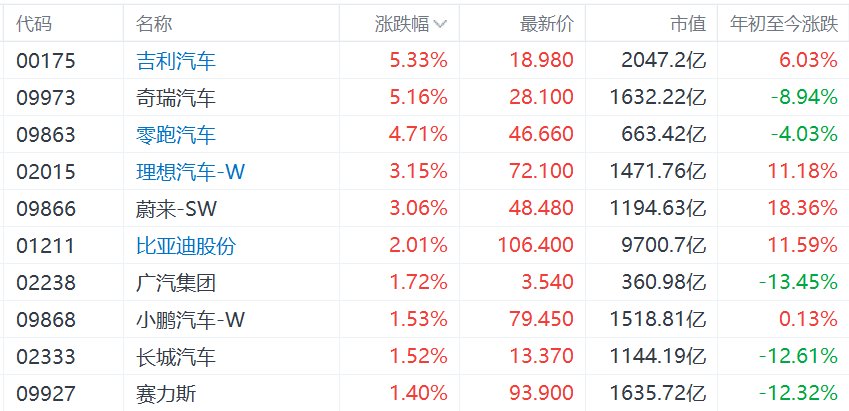
港股汽车股走强,吉利汽车涨超5%
Jin Rong Jie· 2026-03-17 04:44
Group 1 - The Hong Kong stock market saw a strong performance in the automotive sector, with Geely Automobile and Chery Automobile rising over 5% [1] - Leap Motor increased by more than 4%, while Li Auto and NIO both rose over 3% [1] - BYD Company Limited experienced a gain of over 2% [1]



Volkswagen turns to Chinese chipmakers, sidelines Nvidia in bid to catch up in China EV race: report
Seeking Alpha· 2026-03-17 04:20
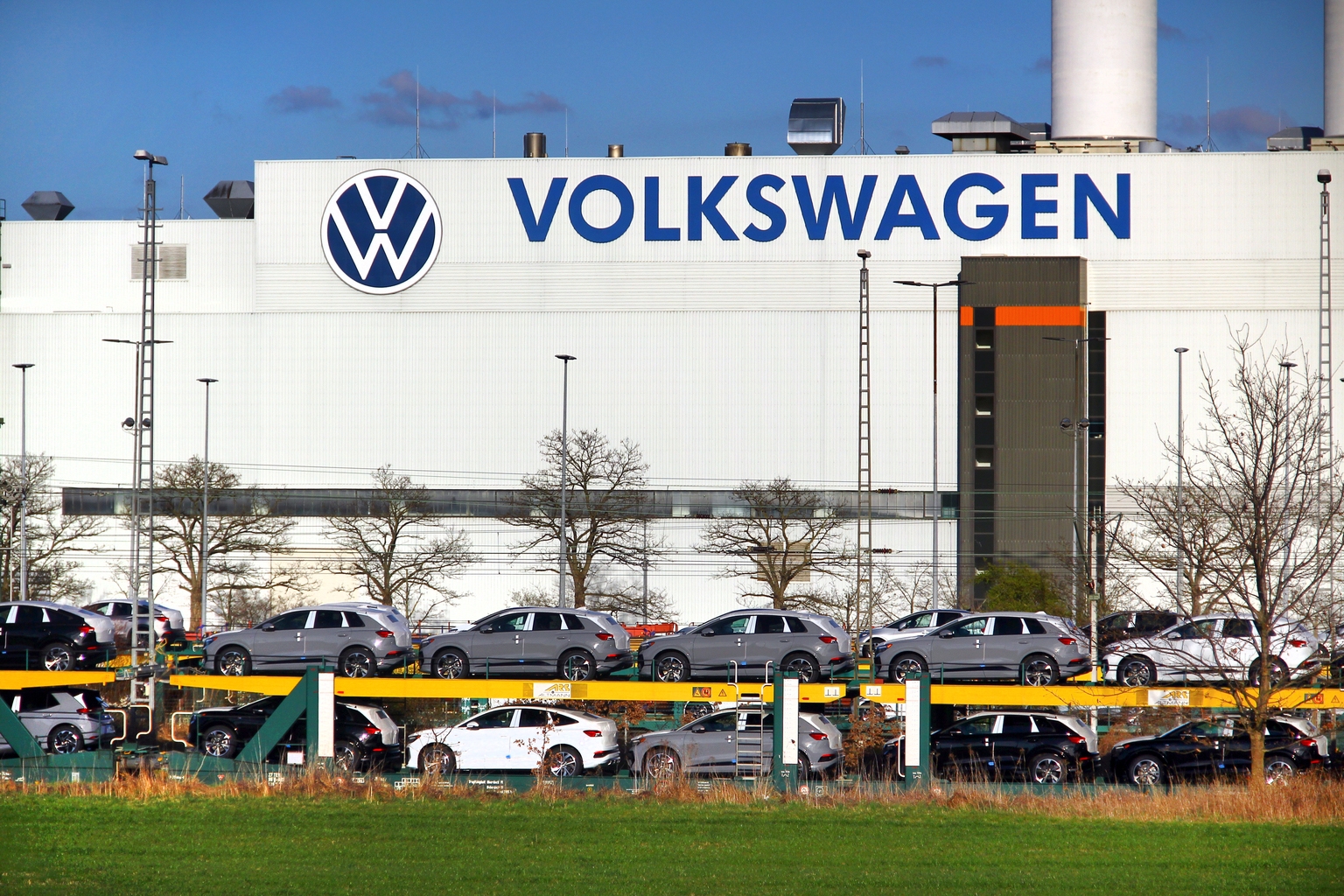
Core Viewpoint - Volkswagen is shifting its focus towards utilizing advanced technology from local Chinese chip manufacturers, moving away from reliance on Nvidia for its future chip needs in China [2] Group 1: Company Strategy - Volkswagen is preparing for a future that heavily relies on chips, indicating a strategic pivot towards enhancing its technological capabilities [2] - The company’s Chief Technology Officer, Thomas Ulbrich, stated that there is no reason for Volkswagen to continue using Nvidia's technology, highlighting a shift towards local Chinese players [2] Group 2: Market Dynamics - The decision to move away from Nvidia suggests a growing confidence in the capabilities of local Chinese chip manufacturers, reflecting a significant change in the competitive landscape of the automotive technology sector [2]

何小鹏直播“坦白”:每月烧3个亿,赌第二代VLA,我们心里也慌
创业邦· 2026-03-17 04:14
Core Viewpoint - The live session with Xiaopeng Motors' chairman He Xiaopeng and the head of the General Intelligent Center, Liu Xianming, revealed a bold commitment to a single technological path, focusing on the development of the second-generation VLA (Vision-Language-Action model) autonomous driving system, which represents a significant investment and a shift in driving logic through AI [6][7][9]. Investment and Development Strategy - Xiaopeng Motors is investing 300 million yuan (approximately 43 million USD) monthly for over a year in the development of a fully self-researched system encompassing chips, compilers, software architecture, and data integration [9]. - The second-generation VLA is the product of this investment, undergoing multiple iterations before its launch, with the current version being the fourth major iteration and the 28th minor version [9][10]. Safety and User Experience - Safety is a primary concern, as demonstrated by a case where the VLA system recognized children on the road but did not decelerate sufficiently to stop, highlighting the need for further improvements [12]. - The goal of the second-generation VLA is to enhance user confidence, aiming to make even inexperienced drivers feel safe and willing to drive [13]. Technological Advancements - The system's ability to navigate complex situations, such as rerouting during road closures, showcases its advanced reasoning capabilities, although there is a desire for quicker decision-making [15]. - Xiaopeng Motors aims to leap from Level 2 to Level 4 autonomous driving, bypassing Level 3, to maintain competitiveness in the global market [16][18]. Future Vision - The company envisions a comprehensive integration of various vehicle systems into a single intelligent system, likening it to a "super intelligent agent" or robot capable of performing complex tasks [18]. - Upcoming software updates for various models are scheduled for March and April, with the expectation that users will gain a new understanding of the future of autonomous driving and robotics [19].


港股异动丨汽车股走强,吉利汽车涨超5%,英伟达与比亚迪吉利等车企合作打造L4级自动驾驶汽车
Ge Long Hui A P P· 2026-03-17 04:07
Group 1 - The Hong Kong stock market saw a strong performance in the automotive sector, with companies like Geely Auto and Chery Auto rising over 5%, and Li Auto and NIO increasing by over 3% [1] - NVIDIA announced collaborations with several automakers, including BYD, Geely, Hyundai, and Nissan, to develop L4 autonomous vehicles using the NVIDIA DRIVE Hyperion platform [1] - BYD, Geely, and Nissan are working on next-generation L4 passenger vehicle projects that will feature advanced autonomous capabilities for complex urban road scenarios [1] Group 2 - The stock performance of key automotive companies includes: - Geely Auto: up 5.33% to HKD 18.980, market cap of HKD 204.72 billion, year-to-date increase of 6.03% [2] - Chery Auto: up 5.16% to HKD 28.100, market cap of HKD 163.22 billion, year-to-date decrease of 8.94% [2] - Li Auto: up 3.15% to HKD 72.100, market cap of HKD 147.18 billion, year-to-date increase of 11.18% [2] - NIO: up 3.06% to HKD 48.480, market cap of HKD 119.46 billion, year-to-date increase of 18.36% [2] - BYD: up 2.01% to HKD 106.400, market cap of HKD 970.07 billion, year-to-date increase of 11.59% [2]