Funds

Search documents
汇添富基金换帅:东方证券副董事长鲁伟铭上任,原董事长转任其他岗位
Sou Hu Cai Jing· 2025-07-15 11:01
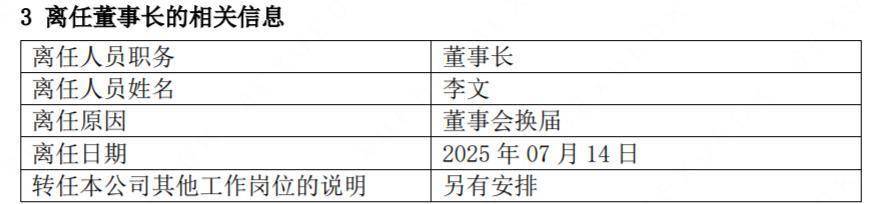
瑞财经 王敏 7月15日,汇添富基金管理股份有限公司(以下简称"汇添富基金")发布关于董事长变更的公告。 2024年,鲁伟铭从东方证券获得的薪酬为99万元。 汇添富基金成立于2005年2月3日,法定代表人为李文,注册资本为1.33亿元,经营范围包含基金募集、基金销售、资产管理 等。该公司由东方证券股份有限公司持股47%,东航金控有限责任公司持股26.5%,上海上报资产管理有限公司持股 26.5%。 截至2024年12月31日,汇添富基金总资产143.53亿元,净资产107.78亿元;2024年度实现营业收入(主营业务收入)48.28亿 元,主营业务利润20.47亿元,净利润15.47亿元。 公告显示,鲁伟铭,1971年生,经济学硕士,经济师。他于1994年7月至1998年3月担任中国国泰证券有限公司交易部业务 员、交易部经营处项目经理。 鲁伟铭1998年加入东方证券,历任东方证券总裁助理、副总裁、总裁等职务,2022年6月起担任东方证券执行董事,2024年 12月起担任东方证券副董事长,2025年1月起担任汇添富基金党委书记。 | 姓名 | 职务 | 性別 年龄 | | | | | 年度内 | | 报告期内从 ...


DHY: Not A Bad Junk Bond Fund, But The Price Could Be Better
Seeking Alpha· 2025-07-15 05:49
Core Viewpoint - The Credit Suisse High Yield Bond Fund (NYSE: DHY) is a lesser-known junk bond fund that offers investors a high level of income from its assets [1] Group 1: Fund Overview - The fund provides a means for investors to earn a very high level of income [1] - It is characterized as somewhat underfollowed and little-known in the market [1] Group 2: Investment Strategy - The focus is on generating a 7%+ income yield by investing in a portfolio of energy stocks while minimizing the risk of principal loss [1] - The service offers subscribers access to exclusive investment ideas and in-depth research not available to the general public [1] Group 3: Subscription Offer - A two-week free trial is currently being offered for the service, allowing potential subscribers to evaluate the offerings [1]

PDI: Get In Before The Fed Changes The Tune
Seeking Alpha· 2025-07-15 04:43
Group 1 - The central bank's cautious rate-cutting approach and a prolonged high-rate environment have negatively impacted the PIMCO Dynamic Income Fund (NYSE: PDI) since 2022 [1] - The fund has experienced a disappointing three-year investment record as a result of these economic conditions [1] Group 2 - The article highlights the importance of monitoring high-tech and early growth companies for potential investment opportunities [2]

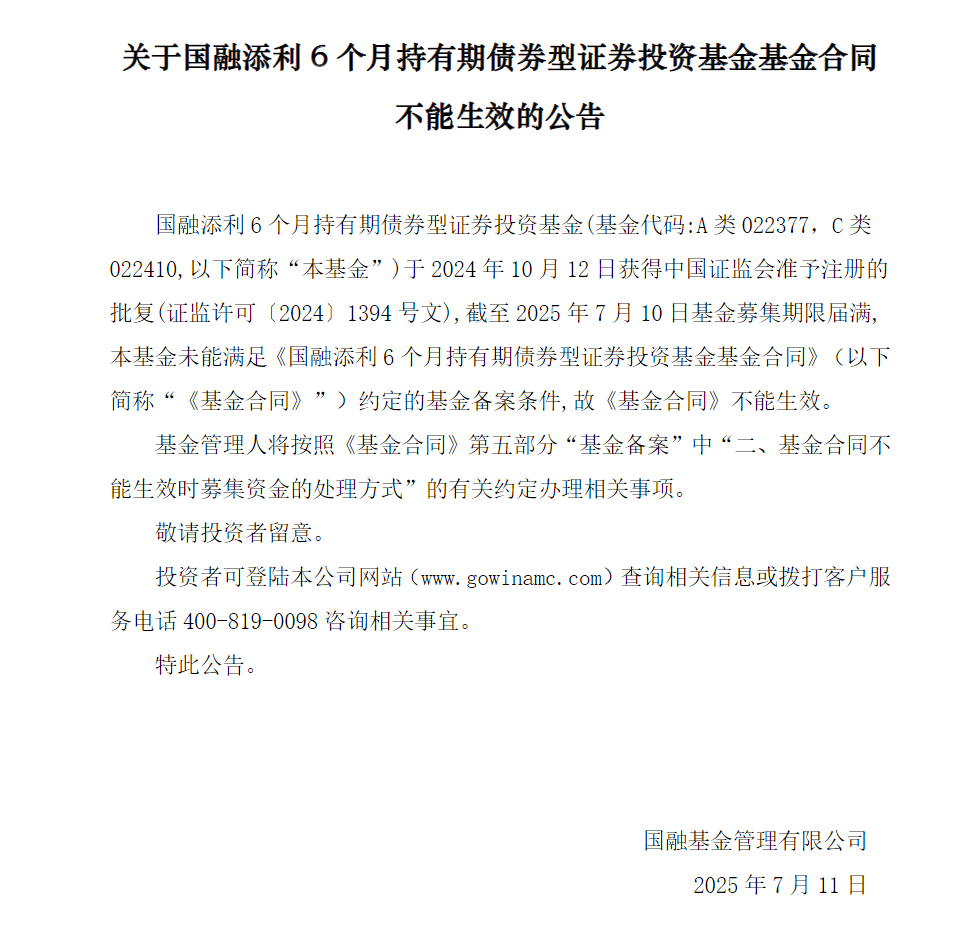
国融基金:历经三个月募集,国融添利6个月持有期债券型基金发行失败!
Sou Hu Cai Jing· 2025-07-15 04:21
Core Insights - The fund "Guorong Tianli 6-Month Holding Period Bond Fund" failed to meet the registration requirements after a three-month fundraising period, marking the fourth failed public fund issuance since 2025 and the second failed bond fund in 2023 [3][4] - The fund had a fundraising target of 5 billion yuan but did not achieve the necessary conditions for registration [3] - Efforts to increase distribution channels by adding sales agencies were unsuccessful, indicating ongoing challenges for Guorong Fund in launching new products [4] Fund Performance and Management - The two proposed fund managers, Li Qinghua and Jia Yuxuan, are under pressure due to performance and scale issues, with Li managing only 683 million yuan and Jia managing 464 million yuan as of the end of Q1 2025 [5][7] - Both managers have previously managed funds with a maximum scale of around 4 billion yuan [8] Historical Context - The failure of the Guorong Tianli fund is part of a broader trend of poor performance in new product launches by Guorong Fund, which has only successfully launched one fund in 2025, raising 266 million yuan [10] - Over the past five years, Guorong Fund has launched only four new funds, with a total scale of less than 1 billion yuan [11] Company Financials - As of the end of Q1 2025, Guorong Fund's total management scale was 2.965 billion yuan, a decrease of 206 million yuan from the previous year [12] - The company's scale has fluctuated around 3 billion yuan since its inception, briefly exceeding 5 billion yuan in mid-2024 [13] Market Trends - The overall fund issuance market in 2025 is characterized by a "strong equity, weak bond, and passive dominance" trend, with index funds leading equity product issuance [14] Corporate Actions - In response to its challenges, Guorong Fund's shareholders have increased capital twice in 2023, raising a total of 5 million yuan, increasing the registered capital from 150 million yuan to 200 million yuan [15] - A potential change in control is on the horizon, as Western Securities plans to acquire a majority stake in Guorong Securities, which holds a 53% stake in Guorong Fund [16]
花旗:资金流向洞察_美国资金流向仍波动,全球和欧洲资金流向表现优异
花旗· 2025-07-15 01:58
Investment Rating - The report does not explicitly provide an investment rating for the industry Core Insights - US equity funds experienced an inflow of US$16.3 billion during the week of July 9, 2025, while bond funds saw an inflow of US$20.8 billion, indicating a mixed performance in US fund flows [1] - Global funds continued to attract strong inflows, totaling US$5.1 billion, while European funds had an inflow of US$1.4 billion, primarily into regional ETFs [1] - Emerging Market (EM) funds also saw significant inflows, with US$2.9 billion into EM funds, and US$3.0 billion into GEM funds, marking the fourth consecutive week of strong subscriptions [2] Summary by Sections US Fund Flows - US equity funds had an inflow of US$16.3 billion, while bond funds attracted US$20.8 billion during the week of July 9, 2025 [1] - Mixed flows were observed in US funds, with US$9.5 billion inflows into ETFs countered by US$6.1 billion in redemptions from non-ETFs [1] Global and European Fund Flows - Global funds saw inflows of US$5.1 billion, and European funds had an inflow of US$1.4 billion, mainly into regional ETFs [1] - The report highlights the continued strength of global fund inflows compared to US funds [1] Emerging Market Fund Flows - EM funds recorded an inflow of US$2.9 billion, with GEM funds attracting US$3.0 billion in subscriptions, indicating robust interest in emerging markets [2] - EMEA funds also experienced inflows of US$0.3 billion, while flows to Latin American funds slowed down, particularly in Chile, which saw US$156 million in net redemptions [2] Local Intelligence - Taiwan saw a net foreign inflow of US$1.2 billion, Korea had US$0.4 billion, and Japan experienced a significant foreign inflow of US$3.8 billion [3] - Southbound flows from China to Hong Kong remained strong at US$3.2 billion, reflecting ongoing investment interest in the region [3]
Allspring's EOD Is Flying High While Still Under The Radar
Seeking Alpha· 2025-07-14 17:46
Core Insights - The Allspring Global equity closed-end fund (CEF) is highlighted as a strong performer in a market at all-time highs, suggesting it may present a unique investment opportunity [1] Group 1: Market Context - The current market is characterized by all-time highs, making it challenging to identify value investments [1] Group 2: Investment Strategy - CEFs are described as both exhilarating and frustrating, indicating the need for a steady approach during market fluctuations [2]

兴银合丰债券C连续5个交易日下跌,区间累计跌幅0.24%
Sou Hu Cai Jing· 2025-07-14 16:25
截止2025年3月31日,兴银合丰债券C前五持仓占比合计35.68%,分别为:23国开(8.15%)、23农发 (8.04%)、25农发(6.80%)、24农发(6.50%)、24国开(6.19%)。 来源:金融界 公开信息显示,现任基金经理李文程女士:中国,研究生、硕士,2011.7-2015.11在中国人保资产管理有限 公司任助理投资经理;2015.12-2017.8在上海海通证券资产管理有限公司任投资经理;2017年8月加入兴银 基金管理有限责任公司。2018年4月起担任兴银双月理财债券型证券投资基金基金经理。曾任兴银合盈 债券型证券投资基金、兴银现金添利货币市场基金的基金经理。2020年1月8日担任兴银朝阳债券型证券 投资基金、兴银中短债债券型证券投资基金、兴银合丰政策性金融债债券型证券投资基金、兴银汇逸三 个月定期开放债券型发起式证券投资基金基金经理。2020年6月19日至2022年7月5日担任兴银汇智一年 定期开放债券型发起式证券投资基金基金经理。2018年12月27日至2021年1月27日担任兴银现金收益货 币市场基金基金经理。自2021年5月19日起任兴银稳安60天滚动持有债券型发起式证券投资 ...
万亿汇添富,董事长变更!
中国基金报· 2025-07-14 14:06
Core Viewpoint - The announcement of a leadership change at Huatai-PineBridge Fund, with Lu Weiming appointed as the new chairman, signifies a strategic shift in the management of one of China's leading asset management companies [2][4]. Company Overview - Huatai-PineBridge Fund was established in February 2005 and is recognized as a top-tier comprehensive asset management company in China, headquartered in Shanghai with branches in major cities and subsidiaries in Hong Kong, the U.S., and Singapore [4][5]. - The fund manages over 1.2 trillion yuan in assets, with a public fund scale of approximately 906.27 billion yuan as of the end of Q1 this year [5]. Leadership Change - Lu Weiming, previously the party secretary of Huatai-PineBridge Fund, has taken over as chairman, while former chairman Li Wen will continue to serve in other roles within the company [4][5]. - The company expressed gratitude for Li Wen's contributions during his tenure, highlighting his dedication to the company's culture and long-term development [4]. Fund Performance - Huatai-PineBridge Fund's product structure shows over 60% in equity products, with significant numbers in stock and mixed funds, and a total of 349 fund products [5]. - The fund's performance is notable, with its Hong Kong Advantage Select and Hong Kong Stock Connect Innovative Drug ETF achieving unit net value growth rates of 86.48% and 68.98%, respectively, in the first half of 2025 [5]. Industry Context - The public fund industry has seen over 200 executive changes in 2025, with 98 fund companies reporting management changes, including 24 companies changing their chairpersons [7][8]. - This trend reflects a broader pattern of leadership transitions within the industry, indicating a dynamic environment for asset management firms [8].

每日钉一下(啥是信托,跟基金有什么区别呢?)
银行螺丝钉· 2025-07-14 13:48
Group 1 - The core concept of fund advisory is to serve as an investment consultant for funds [1] - Fund advisory emerged to address the issue where "funds make money, but investors do not" [4] - Fund advisory has advantages in helping investors achieve better returns through its dual role of "advising" and "investing" [5] Group 2 - Various industries utilize consultants, especially those with high specialization [2] - The article suggests that just as one needs a doctor for medical issues or a lawyer for legal problems, fund advisory serves a similar purpose in investment [7]

CHI: A Solid Fund But Cyclicality Threatens Its Interim Prospects
Seeking Alpha· 2025-07-14 10:21
Group 1 - The investment potential of Calamos Convertible Opportunities and Income Fund (NASDAQ: CHI) is highlighted, particularly in the current market environment characterized by inflection points in credit risk [1] - Pearl Gray is identified as a proprietary investment fund and independent market research firm that specializes in systematic analysis, focusing on Bonds, Preferreds, and REITs, primarily in the Financials and Real Estate sectors [1] Group 2 - The mission of Pearl Gray is to discover actionable total return ideas that integrate rigorous academic theories, practical experience, and common sense [1]