葡萄酒

Search documents
30年老牌酒企易主!1919杨陵江接盘亏损标的 只为“壳”资源?
Guo Ji Jin Rong Bao· 2025-12-19 14:07
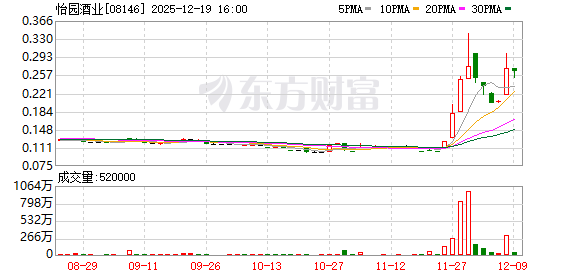
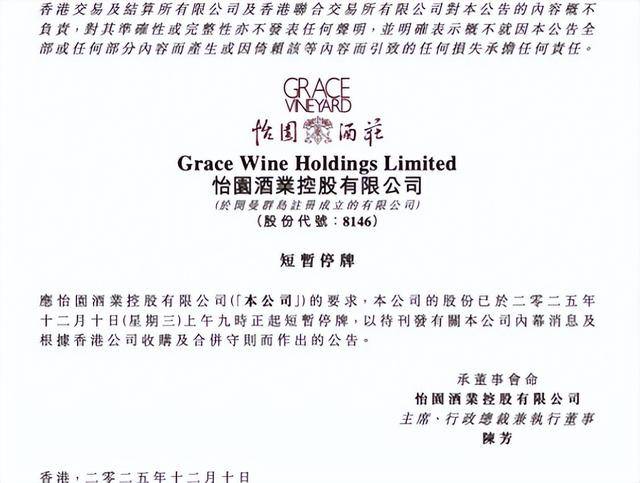
业绩萎靡的怡园酒业(08146.HK)有了新买家。 2108年是一个关键节点,那年怡园酒业成功登陆港交所,站上国际资本窗口。但从上市后的财报看来,怡园酒业的经营一直不温 不火,营收规模从未超过1亿元。 大概十天前,怡园酒业披露停牌公告,原因是"以待刊发有关本公司内幕消息及根据香港公司收购及合并守则而作出的公告"。 如今,股票尚未复盘,怡园酒业的"易主"消息已经先行传出。 经营萎靡 近日,有媒体报道称,1919集团创始人、董事长杨陵江透过全资公司成为怡园酒业第一大股东,持股比例为73.63%。且相关交 易已于12月12日完成。 信息显示,卖方Macmillan Equity、Palgrave Enterprises、王穗英已将所持股份全部出售给买方,怡园酒业创始人家族基本退出上 市公司股东行列。不过,杨陵江方面作为买方,在交易完成后又将部分所得怡园股份质押给了3位卖家,但未披露质押原因。 有人粗略算了一笔账,若以怡园酒业12月9日收盘价0.27港元/股估算,此次交易对价估算约1.6亿港元。但从购买后又质押部分股 份的操作来看,相关收购资金应当会减少一些。 "卖身"或许是由于怡园酒业没有起色的经营面。 在葡萄酒行 ...

30年老牌酒企易主!1919杨陵江接盘亏损标的,只为“壳”资源?
Guo Ji Jin Rong Bao· 2025-12-19 13:36
业绩萎靡的怡园酒业(08146.HK)有了新买家。 大概十天前,怡园酒业披露停牌公告,原因是"以待刊发有关本公司内幕消息及根据香港公司收购及合并守则而作出的公告"。 如今,股票尚未复盘,怡园酒业的"易主"消息已经先行传出。 经营萎靡 近日,有媒体报道称,1919集团创始人、董事长杨陵江透过全资公司成为怡园酒业第一大股东,持股比例为73.63%。且相关交 易已于12月12日完成。 信息显示,卖方Macmillan Equity、Palgrave Enterprises、王穗英已将所持股份全部出售给买方,怡园酒业创始人家族基本退出上 市公司股东行列。不过,杨陵江方面作为买方,在交易完成后又将部分所得怡园股份质押给了3位卖家,但未披露质押原因。 有人粗略算了一笔账,若以怡园酒业12月9日收盘价0.27港元/股估算,此次交易对价估算约1.6亿港元。但从购买后又质押部分股 份的操作来看,相关收购资金应当会减少一些。 "卖身"或许是由于怡园酒业没有起色的经营面。 在葡萄酒行业中,怡园酒业算一名"老兵"。1997年,在法国波尔多葡萄酒学者Denis Boubals的帮助下,陈进强和来自法国的詹威 尔在山西晋中太谷创办了怡园 ...
奔富也有点卖不动了, 富邑在中国放慢扩张脚步
Xin Lang Cai Jing· 2025-12-19 00:14
Core Viewpoint - Treasury Wine Estates (TWE) has lowered its sales growth expectations due to a slowdown in wine category sales, particularly in China and the U.S., where inventory levels are above ideal [1] Group 1: Financial Performance - TWE expects EBIT (Earnings Before Interest and Taxes) for the first half of FY2026 to be between AUD 225 million and AUD 235 million, with the second half expected to exceed the first half [1] - The company anticipates that the Penfolds brand will generate approximately AUD 200 million in EBIT for the first half of FY2026, with a balanced performance expected for the entire year [1] Group 2: Market Dynamics - The Chinese market showed a year-on-year sales increase during the traditional consumption peak from August to October 2025, but TWE expects growth to be below the original operational plan for FY2026 due to reduced consumption scenarios [1] - The end of anti-dumping and countervailing duties on Australian wine imports in China starting March 29, 2024, will intensify competition as TWE re-enters the market [3] Group 3: Strategic Initiatives - TWE is focusing on product differentiation to attract younger consumers, including collaborations with celebrities like Hua Chenyu to enhance brand appeal [5] - The company has established 12,000 retail points across China, partnering with various channels to increase product visibility [5] - TWE is prioritizing e-commerce channels, particularly social platforms like Xiaohongshu, to engage with consumers and adapt to changing shopping behaviors [7] Group 4: Inventory and Management Changes - TWE is facing an inventory crisis in China and plans to reduce stock levels held by domestic distributors while limiting parallel imports to maintain brand integrity [11] - A leadership change occurred with Tim Ford stepping down as CEO after 14 years, succeeded by Sam Fischer, who acknowledged challenges in key markets [11] - The company is implementing the "TWE Ascent" global business transformation plan aimed at achieving long-term benefits [11]
老牌酒企沦为弃子!百亿偿债后抄底,杨陵江整合路遇暗雷
Sou Hu Cai Jing· 2025-12-18 20:38
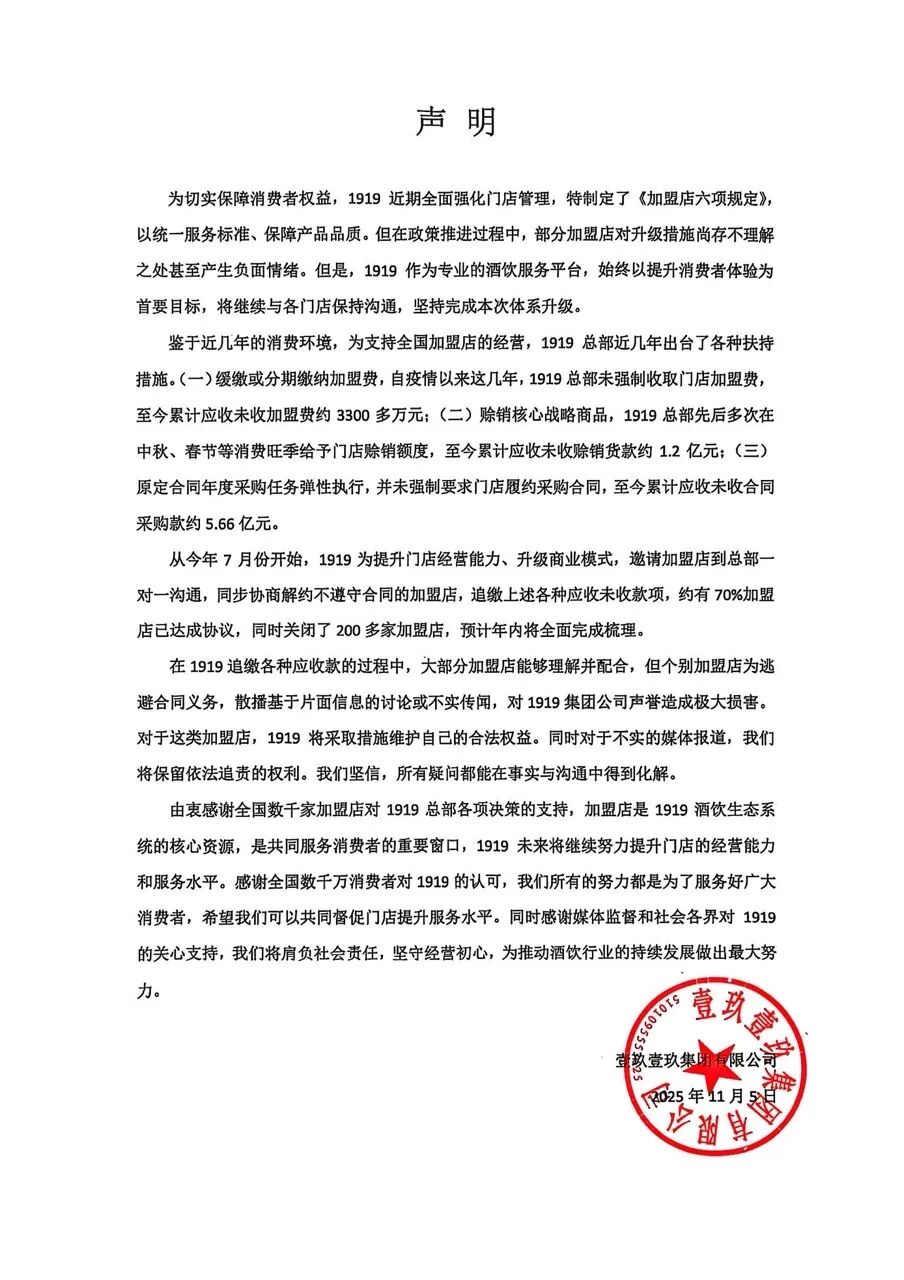
Core Viewpoint - The recent acquisition of a majority stake in Yiyuan Wine Industry by Yang Lingjiang, founder of 1919, is seen as a bold move amidst a struggling wine industry, raising questions about the strategic rationale behind this decision [1][4][11]. Company Overview - Yiyuan Wine Industry, once a prominent player in the premium wine sector, has faced significant financial challenges since its IPO in 2018, with fluctuating profits and substantial losses, including a projected loss of 41.018 million yuan in 2024 [4][6][8]. - The company’s aggressive expansion strategy, including a failed acquisition of Fujian Dexi Wine Industry, has resulted in considerable financial strain, with asset impairment losses of 25.7 million yuan contributing to its current financial woes [6][8]. - Yiyuan's focus on high-end hotel channels has left it vulnerable as traditional consumption patterns shift, leading to a market capitalization of only 200 million yuan [8]. Buyer Overview - 1919, under Yang Lingjiang, has also been grappling with its own financial issues, including a recent buyback of 92.87% of its shares and the repayment of nearly 6 billion yuan in debt, indicating ongoing financial restructuring [9][11]. - The company is facing cash flow pressures and management challenges related to its franchise model, which complicates its ability to effectively manage the acquisition of Yiyuan [9][11]. Industry Context - The wine industry is currently experiencing a downturn, with production in 2024 expected to decline by 17.5% and consumption down by 19.3%, reflecting a broader contraction in traditional business dining and a shift in consumer preferences [11][13]. - The market is characterized by a significant reduction in high-end consumption, with many small to medium brands either being eliminated or consolidated [11]. Strategic Implications - Yang Lingjiang's acquisition of Yiyuan is perceived as an attempt to leverage Yiyuan's Hong Kong listing to facilitate 1919's capital market ambitions, particularly following its delisting from the New Third Board [13]. - The integration of Yiyuan's production capabilities with 1919's distribution strengths presents both opportunities and challenges, as the two companies operate under different management paradigms [15]. - The success of this acquisition hinges on the ability to resolve Yiyuan's historical issues and optimize its distribution channels, which may be difficult given the current industry conditions [15][17].
华晨宇惊喜亮相!“奔富无界邮局”体验空间限时登陆广州
Nan Fang Du Shi Bao· 2025-12-18 15:05
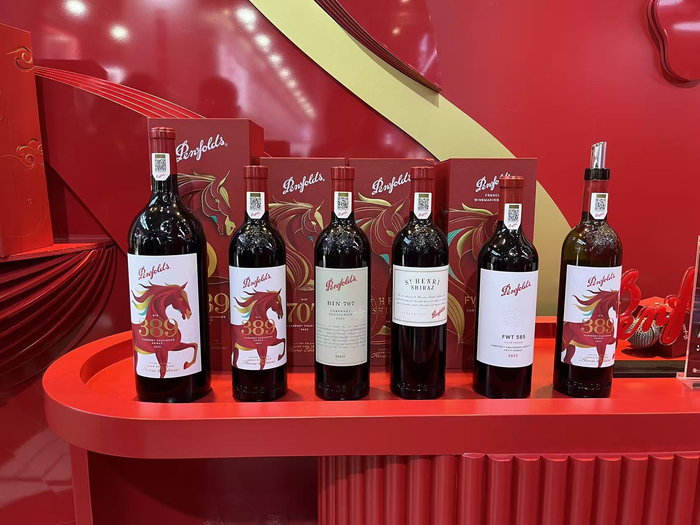
活动首日,奔富品牌代言人华晨宇惊喜现身,与嘉宾和现场粉丝们一同见证盛大开幕,点亮属于葡萄酒 与潮流文化的交融时刻。 "奔富无界邮局"被标志性奔富红包裹,并以信件、印章、邮筒、传送带等邮递概念贯穿始终。奔富珍藏 系列全球产区标志性酒款在"奔富无界邮局"中悉数呈现,诉说跨越180余年的酿酒历史和全球酿酒探 索。现场还设置多重新颖互动,"佳酿传递区"可以邮票兑换佳酿试饮;在"风味来信区"可定制香气明信 片;"惊喜开箱区"可抽取主题好礼;"遇见花花区"可互动打卡抽取扭蛋;"专属定制区"可提供瓶身镌 刻、创意贴纸等服务。此外,幸运刮刮卡、华晨宇主题撕拉片与惊喜扭蛋等趣味环节,也在等待各位前 来一探究竟。 12月18日至12月28日,Penfolds奔富于广州潮流文化地标东山口惊喜呈献"奔富无界邮局"限时体验空 间,以简约设计传递葡萄酒从封装、签字、递送到风味品尝的盛大仪式感,通过沉浸式、场景化的互动 体验,开启一场"奔富邮递服务",探索全球酿酒故事,品鉴奔富全球佳酿。 活动当日,华晨宇与嘉宾和粉丝分享"奔富无界邮局"的层层惊喜,并带来了其与奔富再度联名共创的新 作——Penfolds奔富 x 华晨宇联名艺术周边系列。该 ...

张裕A:回购股份注销完成
Zheng Quan Ri Bao Wang· 2025-12-18 13:13
Core Viewpoint - Zhangyu A announced the completion of the repurchase and cancellation of 12,430,000 shares on December 17, 2025, in compliance with relevant legal regulations [1] Group 1 - The company completed the cancellation of 12,430,000 shares [1] - The cancellation date was December 17, 2025 [1] - The actions taken are in accordance with legal and regulatory requirements [1]

中国首单酿酒葡萄园碳汇交易落地宁夏 葡萄园变身“绿色银行”
Zhong Guo Xin Wen Wang· 2025-12-18 11:37
中新网银川12月18日电 (记者 李佩珊)据宁夏银川市公共资源交易中心18日披露,中国首笔酿酒葡萄园 碳汇交易日前在宁夏贺兰山东麓葡萄酒产区完成,标志着中国将农业生态价值转化为市场价值的探索取 得突破性进展,为全球葡萄酒产业绿色转型提供了创新范例。 作为中国葡萄酒产业的核心产区,贺兰山东麓葡萄酒产区近年来持续推进葡萄酒产业生态建设,酿酒葡 萄园在提升植被覆盖率、防治土地沙化、减轻风沙危害等方面成效显著,助力荒漠逐步向绿洲转型。交 易涉及的葡萄园位于永宁县闽宁镇,总面积约179公顷。这片曾为半荒漠的土地,通过科学种植与生态 修复,如今年均碳汇量可达1000吨,潜在年经济价值约8万元。 为推动这一创新实践落地,宁夏自2023年起联合高校与专业机构,参照联合国清洁发展机制(CDM)等标 准,研发出中国首个酿酒葡萄园碳汇核算方法学,为碳汇价值市场化提供了关键技术支撑。如今,葡萄 园不仅产出优质葡萄酒,更通过光合作用和土壤固碳形成生态资产,在防治沙化、提升区域生态质量的 同时,带动当地就业与产业链发展。 在全球绿色经济规模持续扩大、中国积极推进"双碳"目标的背景下,这笔首单交易构建了"生态种植— 碳汇开发—市场交易"的 ...

控盘怡园酒业,能解1919之困吗?一场“以进为退”的资本冒险
Xin Lang Cai Jing· 2025-12-18 05:09
Core Viewpoint - The transaction represents a classic "production + channel" capital story, with its outcome heavily dependent on execution capability and resource matching [3][24]. Group 1: Acquisition Details - Yang Lingjiang, founder of 1919 Group, acquired 73.63% of Hong Kong-listed Yiyuan Wine Industry, becoming its controlling shareholder [4][17]. - The acquisition was made in Yang's personal capacity, possibly for tax optimization, risk isolation, and decision-making flexibility [4][17]. - Yiyuan Wine Industry, a significant brand in China's wine market, covers the entire production to distribution chain and aims to balance high-end and mass-market products [17]. Group 2: Yiyuan Wine Industry's Financial Performance - Yiyuan's revenue increased by 14.2% year-on-year to 18.9 million RMB, while the gross profit margin dropped by 15.7 percentage points to 67.2%, indicating a trade-off between price and volume [5][18]. - The company experienced a 22.4% increase in total sales volume, driven by a shift towards high-end product sales [5][18]. - Despite revenue growth, the underlying profitability remains weak, raising concerns about the sustainability of this growth model [5][18]. Group 3: 1919 Group's Challenges - Founded in 2010, 1919 Group once thrived but faced severe losses since 2016, accumulating a total loss of 756 million RMB from 2019 to 2022 [6][19]. - The company adopted aggressive strategies like forced inventory purchases and large-scale store closures, exacerbating cash flow issues and leading to franchisee disputes [6][19]. - By June 2025, 1919 began defaulting on online order payments, extending payment cycles from 15 days to several months, causing financial strain on franchisees [6][19]. Group 4: Strategic Integration and Future Prospects - Yang's acquisition of Yiyuan is viewed as a strategic vertical integration, aiming to connect production and distribution through 1919's extensive retail network of approximately 3,000 stores [9][21]. - The integration is expected to enhance sales and market share for Yiyuan's high-end product line, creating a synergistic effect [9][21]. - The acquisition also serves as a critical step in Yang's long-term capital strategy, potentially allowing for future capital operations and industry consolidation [9][21]. Group 5: Policy and Market Opportunities - Following the acquisition, 1919 Group reduced its debt from a peak of 92% to below 20%, creating room for future capital strategies [11][23]. - The capital operation aligns with local policies supporting mergers and acquisitions, providing potential advantages for future endeavors [11][23]. - The Chinese wine industry is shifting towards a consumer-oriented approach, with young consumers favoring white and sparkling wines, presenting opportunities for Yiyuan and 1919 [11][23].
吴忠市税务局:合规经营激活葡萄酒产业发展内生动力
Sou Hu Cai Jing· 2025-12-18 04:44
Core Viewpoint - The tax credit system in the wine industry of the Helan Mountain region is becoming a crucial asset for companies to gain market share and consumer trust, with a projected 22% increase in overseas sales for the Qinglongxia wine in 2024 [2] Group 1: Tax Credit as a Competitive Asset - Tax credit has become an important asset for companies to capture market share and gain consumer trust in the increasingly competitive wine industry [2] - The Wu Zhong City Taxation Bureau has established a tax credit evaluation system covering the entire chain of planting, brewing, and sales, which includes invoice management and tax declaration [2] - Companies like Huahao Winery and Huangkou Winery have benefited from their stable A-level tax credit status, enhancing their reputation and market opportunities [2] Group 2: Compliance as a Foundation for Development - The wine industry involves multiple tax-related activities, and the Wu Zhong City Taxation Bureau has implemented personalized compliance guidance for wine enterprises [3] - A "one household, one policy" compliance guidance plan has been introduced to help companies navigate tax issues such as consumption tax and export tax refunds [3] - The establishment of a service team for the wine industry has ensured that companies receive tailored tax policy guidance, enhancing their compliance and operational efficiency [3] Group 3: Precision Services as a Growth Catalyst - The tax authority has launched a series of precise and personalized service measures to alleviate the operational burdens of wine companies [4] - The "policy find person" service model has helped companies like Huangkou Winery access tax incentives for high-tech enterprises, significantly reducing processing times for export tax refunds [4] - A rapid response mechanism for tax-related issues has been established, allowing for timely support and problem resolution for wine enterprises [4] Group 4: Future Development and Integration - The Wu Zhong City Taxation Bureau aims to deepen the construction of the tax credit system and integrate tax incentives with industry development [5] - The goal is to enable more companies to achieve stable growth through compliant operations, enhancing the global presence of Chinese wine [5]
【深度】中国葡萄酒市场深度研究(上):泡沫从诞生到破裂
Sou Hu Cai Jing· 2025-12-18 02:18
非理性繁荣的历史镜鉴:2010年前后的市场泡沫剖析 中国葡萄酒市场正在经历一场从盲目追捧到理性回归的价值重构。这场深刻变革背后,是消费逻辑的根本性转变——从依赖政商社交的"身份符号",转向 关注产品本身的品质与体验。 市场曾陷入非理性繁荣的陷阱:拉菲等高端葡萄酒被炒至10万元天价,投机性囤货与假冒伪劣产品泛滥。2012年"八项规定"的出台,成为市场回归理性的 转折点。泡沫破裂后,行业经历了阵痛,却也迎来了新生。 真正的转变始于消费主权的觉醒。如今,消费者更注重"悦己"体验,百元级高性价比产品销量占比突破50%,健康化、低醇化趋势显著。这种变化不仅体 现在价格带上,更反映在消费场景的多元化——从商务宴请走向家庭自饮、朋友小聚。 国产葡萄酒的崛起成为市场重构的关键力量。未来,中国葡萄酒产业将沿着品质化与本土化双轨并行发展。唯有扎根中国文化,对话全球标准,中国葡萄 酒才能在世界版图中找到自己的坐标。 "编者按" 数据见证的疯狂增长:产量、进口量与价格的三重泡沫 自我国改革开放以来,葡萄酒与西餐、牛排、雪茄、香水等西方物质文化符号,随对外开放进程逐步进入国内消费市场。彼时(上世纪80年代至90年 代),我国约7亿人口 ...