白葡萄酒

Search documents
Wine Paris 2026观察:白葡萄酒展位扩大、中国进口商减少
Sou Hu Cai Jing· 2026-02-14 07:49
Core Insights - The Wine Paris 2026 exhibition, the largest wine trade fair globally, showcased significant trends in the wine industry, including the rise of sparkling wines and the establishment of a dedicated non-alcoholic beverage section, reflecting changes in the global beverage market and presenting new opportunities [1][13]. Group 1: Attendance and Market Trends - The presence of Chinese importers at the exhibition was notably reduced, attributed to the timing coinciding with the Chinese New Year, a peak season for domestic wine consumption, leading importers to prioritize local market activities over international exhibitions [6][7]. - In 2025, China's wine import volume was approximately 207 million liters, a year-on-year decline of 26.85%, with an import value of about 1.418 billion USD, down 10.90%, indicating a deep market adjustment [7][8]. - Many importers are adopting a cautious approach towards new product introductions due to high inventory pressures and financial constraints, which has contributed to their absence from the exhibition [7][8]. Group 2: International Participation - Major wine producers from France, Australia, Chile, Italy, and China participated prominently, with high attendance and engagement at their booths, reflecting the strong global interest in these regions [9][12]. - The Portuguese wine sector showed remarkable growth, with over 300 producers participating, marking a 36% increase in booth size compared to the previous year, positioning Portugal as a significant player in the global wine market [12]. Group 3: Non-Alcoholic Beverages - The introduction of the Be No section for non-alcoholic beverages was a highlight of the exhibition, featuring over 250 products from 12 countries, indicating a shift in consumer preferences towards non-alcoholic options in various social settings [13][15]. Group 4: Sparkling and White Wines - Sparkling wines, particularly from Italy and France, were among the most popular categories at the exhibition, with significant foot traffic and interest, reflecting a stable demand in the high-end segment [16][17]. - The white wine section also expanded, with notable participation from German and New Zealand producers, indicating a growing trend towards lighter, quality wines among consumers [17]. Group 5: Chinese Wine Industry - Chinese wine brands, particularly Zhang Yu, gained significant recognition at the exhibition, with high-quality offerings attracting international attention, contrasting with the reduced presence of Chinese baijiu brands [18][20]. - The success of Chinese wines at the exhibition highlights the industry's shift towards quality improvement and international market engagement, breaking the traditional dominance of old-world wines [21].



中国市场葡萄酒进口状况蓝皮书——红葡萄酒精华版|WBO新年企划
Sou Hu Cai Jing· 2026-02-10 07:44
Core Insights - The Chinese bottled wine import market has entered a deep adjustment period over the past five years, with total imports declining from 286 million liters in 2021 to 133 million liters in 2025, a cumulative drop of over 53% [1] - The red wine market, which dominates the sector, has undergone significant structural changes, reflecting complex dynamics in source regions, price segments, and driving logic [1][4] Import Volume Trends - The total import volume of bottled wine in China has been on a continuous decline for five years, forming an "L" shaped curve, primarily driven by the shrinkage of red wine imports [4] - In 2025, the import volume of red wine from Australia is projected to be approximately 34.3 million liters, showing a slight increase of 0.8% compared to 2024, while France's imports are expected to drop by 35.71% to about 29.98 million liters [5][6] Source Region Performance - Australia has regained market share, with its import volume share rising from less than 0.1% in 2023 to 41.95% in 2025, indicating a strong recovery in both quantity and value segments [16] - France's market share has decreased from 44.94% to 29.04% over five years, with a significant loss in the mid to low-end market, although it still maintains a strong position in the high-end segment [16][17] - Chile's market share has dropped from 20.57% to 8.57%, with red wine's share around 7%, indicating a notable decline in market influence [17] Price Trends - Despite the overall decline in import volume, the average import price of red wine in China has entered an upward trend, with the average price reaching approximately $9.69 per liter in 2025, reflecting a 21.79% increase year-on-year [12] - The average price of Australian red wine is projected to be $15.74 per liter in 2025, showcasing a clear market strategy focused on value recovery [14] Market Dynamics - The market is shifting from broad social and investment demand to more focused personal consumption and quality pursuit, with future competition emphasizing brand resilience, channel efficiency, and precise consumer targeting [17] - The structural adjustment in the market indicates a dynamic balance among source regions, with ongoing changes in competitive positioning and consumer preferences [17]
电商平台:“国补”带动3C热销
Bei Jing Shang Bao· 2026-01-04 15:44
Core Insights - The "National Subsidy" policy launched on January 1, 2026, has significantly boosted consumer demand for home appliances and electronics during the New Year holiday, with some e-commerce platforms reporting over 100% increase in foot traffic at offline stores [1][2] Group 1: National Subsidy Policy - The "National Subsidy" program includes a variety of products such as refrigerators, washing machines, televisions, air conditioners, and smart glasses, with a focus on energy-efficient and water-efficient models [1][2] - Consumers in Beijing can receive subsidies for purchasing eligible products through a designated app, which allows them to claim online or offline subsidies after completing identity verification [1] Group 2: E-commerce and Retail Impact - Major e-commerce platforms like JD.com and Tmall are competing for consumer attention by offering additional discounts and promotional events during the subsidy period, with Tmall providing up to 950 yuan in extra coupons [2] - Offline retail stores, particularly in Beijing, have seen a surge in customer traffic, with Su Ning reporting a 110% increase in foot traffic and a significant rise in sales of energy-efficient products during the holiday [2] Group 3: Instant Retail Trends - Instant retail platforms are capitalizing on holiday shopping trends, with significant sales increases in products appealing to younger consumers, such as craft beer and smartwatches, which saw over 100% and 610% year-on-year growth, respectively [3] - The shift in consumer behavior towards personalized and immediate shopping experiences is evident, as younger consumers prefer instant gratification over traditional bulk purchasing for holiday goods [3]



泸州酒产业链2025营收预计破1500亿/茅台新成立电商公司······
Xin Lang Cai Jing· 2026-01-02 08:32
Group 1: Industry Developments - The liquor industry chain in Luzhou is expected to exceed 150 billion yuan in revenue by 2025, with a total investment of 1,031.97 billion yuan across 37 key projects [1] - The establishment of Guizhou Moutai Digital Technology Co., Ltd. aims to enhance digital services in the liquor sector, with a registered capital of 600 million yuan [2] - Shandong Taishan Beer has reached a total of 3,183 stores, achieving a compound annual growth rate of 72.3% over the past ten years [3] - Yibin is promoting the digital transformation of its liquor industry through a strategic partnership aimed at becoming a benchmark for digitalization in the national liquor sector [4] - Baichuan Mingpin's "Jiu Yizhan" brand aims to reach 2,000 stores by 2026, with over 700 stores currently and a daily sales volume exceeding 300,000 bottles [5] Group 2: Market Trends - Meituan's flash purchase data indicates a significant increase in sales of craft beer and white wine, with craft beer sales growing over 100% year-on-year and brandy sales increasing by over 230% [6]

跨年消费多元化:宅家体验“微醺”,在洗浴中心“猫冬”
Nan Fang Du Shi Bao· 2025-12-31 07:55
Core Insights - The New Year's consumption trend is shifting towards a more diversified and decentralized approach, with young consumers opting for home celebrations and experiences rather than traditional large gatherings [1][11] Group 1: Consumption Trends - Home-based celebrations are becoming popular among young consumers, with significant increases in sales of alcoholic beverages and digital products. For instance, craft beer and white wine sales have both seen over 100% year-on-year growth, while brandy sales surged by over 230%. Smartwatches and tablets also emerged as popular self-gifting items, with smartwatch sales increasing by 610% [3][5] - The search volume for unique and low-alcohol beverages has risen, indicating a shift in consumer preferences towards emotional value and participation rather than excessive drinking [5][11] Group 2: Service Consumption - Service consumption is trending towards collective relaxation, with significant increases in searches for beauty services such as haircuts, manicures, and eyelash extensions, which have doubled year-on-year. The popularity of KTV and bathing centers has also surged, with KTV transactions increasing by nearly 30% in the weeks leading up to New Year's [8][10][11] - The bathing industry is expected to experience significant growth by 2025, with a notable increase in transaction volumes during the winter season, particularly in cities like Harbin, where transaction growth exceeded 211% [10][11]

微醺悦己成跨年消费热门趋势,美团闪购新奇酒水销量翻倍
Bei Ke Cai Jing· 2025-12-31 05:41
Group 1 - The core trend in New Year's consumption is the pursuit of self-indulgence and ritual among young consumers, with various products catering to this demand [1] - On December 31, data from Meituan Flash Purchase indicated that various alcoholic beverages, including craft beer and white wine, saw significant sales increases, with white brandy sales up over 230% and fruit-flavored beer sales up over 70% year-on-year [1] - New and trendy fruit and flower products are also popular among young consumers for creating a New Year's atmosphere, with certain items like yogurt apples seeing a search volume increase of 13 times compared to the previous week [1] Group 2 - Young consumers are the main force in New Year's spending, prompting multiple platforms to offer consumption incentives, including Meituan Flash Purchase, which plans to distribute up to 2026 yuan in New Year's vouchers [2]
美团闪购:元旦前一周平板电脑销量增超2倍,智能手表销量涨6倍
Xin Jing Bao· 2025-12-30 12:24
Group 1 - The core viewpoint of the article highlights a significant increase in sales of trendy digital products and beverages on Meituan's platform ahead of the New Year, indicating a shift in consumer preferences towards health-conscious and innovative products [1] Group 2 - Smartwatch sales on Meituan increased by 610% year-on-year, while tablet sales grew by over 210% [1] - Various trendy alcoholic beverages gained popularity among young consumers, with craft beer and white wine sales increasing by over 100%, and brandy sales rising by over 230% [1] - The search volume for hot wine sets surged by 212% compared to the previous week, while searches for Xinjiang milk skin beer increased by nearly 30% and fruit-flavored beer searches rose by 38% [1] - New and creative fruit and flower products became popular among young people for New Year celebrations, with related product searches on Meituan increasing 13 times compared to the previous week [1]
新年前夕“悦己”消费升温 美团闪购:精酿啤酒销量翻倍,智能手表销量涨6倍
Zheng Quan Shi Bao Wang· 2025-12-30 09:47
Core Insights - Meituan Flash Sales reported a surge in sales of products catering to young consumers' desires for self-indulgence and ritualistic experiences as the New Year approaches [1] Group 1: Alcohol Consumption - Alcohol consumption saw significant growth, with craft beer and white wine sales both increasing by over 100% year-on-year [1] - Brandy sales experienced a remarkable increase of 230% [1] - Fruit-flavored beer sales rose by 70% [1] Group 2: Digital Products - Demand for digital products surged, with smart watch sales increasing by 610% year-on-year [1] - Tablet computer sales also saw a substantial growth of 210% [1]
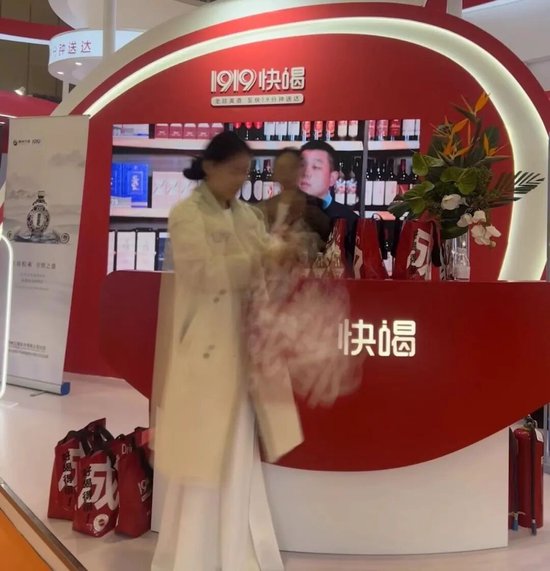
控盘怡园酒业,能解1919之困吗?一场“以进为退”的资本冒险
Xin Lang Cai Jing· 2025-12-18 05:09
Core Viewpoint - The transaction represents a classic "production + channel" capital story, with its outcome heavily dependent on execution capability and resource matching [3][24]. Group 1: Acquisition Details - Yang Lingjiang, founder of 1919 Group, acquired 73.63% of Hong Kong-listed Yiyuan Wine Industry, becoming its controlling shareholder [4][17]. - The acquisition was made in Yang's personal capacity, possibly for tax optimization, risk isolation, and decision-making flexibility [4][17]. - Yiyuan Wine Industry, a significant brand in China's wine market, covers the entire production to distribution chain and aims to balance high-end and mass-market products [17]. Group 2: Yiyuan Wine Industry's Financial Performance - Yiyuan's revenue increased by 14.2% year-on-year to 18.9 million RMB, while the gross profit margin dropped by 15.7 percentage points to 67.2%, indicating a trade-off between price and volume [5][18]. - The company experienced a 22.4% increase in total sales volume, driven by a shift towards high-end product sales [5][18]. - Despite revenue growth, the underlying profitability remains weak, raising concerns about the sustainability of this growth model [5][18]. Group 3: 1919 Group's Challenges - Founded in 2010, 1919 Group once thrived but faced severe losses since 2016, accumulating a total loss of 756 million RMB from 2019 to 2022 [6][19]. - The company adopted aggressive strategies like forced inventory purchases and large-scale store closures, exacerbating cash flow issues and leading to franchisee disputes [6][19]. - By June 2025, 1919 began defaulting on online order payments, extending payment cycles from 15 days to several months, causing financial strain on franchisees [6][19]. Group 4: Strategic Integration and Future Prospects - Yang's acquisition of Yiyuan is viewed as a strategic vertical integration, aiming to connect production and distribution through 1919's extensive retail network of approximately 3,000 stores [9][21]. - The integration is expected to enhance sales and market share for Yiyuan's high-end product line, creating a synergistic effect [9][21]. - The acquisition also serves as a critical step in Yang's long-term capital strategy, potentially allowing for future capital operations and industry consolidation [9][21]. Group 5: Policy and Market Opportunities - Following the acquisition, 1919 Group reduced its debt from a peak of 92% to below 20%, creating room for future capital strategies [11][23]. - The capital operation aligns with local policies supporting mergers and acquisitions, providing potential advantages for future endeavors [11][23]. - The Chinese wine industry is shifting towards a consumer-oriented approach, with young consumers favoring white and sparkling wines, presenting opportunities for Yiyuan and 1919 [11][23].
水果与酒?巧克力与奶酪?令人称奇的食物搭配科学
东京烘焙职业人· 2025-11-04 08:41
Core Insights - The article discusses the intersection of food science and culinary arts, highlighting how data analysis is transforming recipe creation and flavor pairing [6][10]. Group 1: Research Findings - Researchers analyzed 56,498 recipes from various geographic regions, including North America, Western Europe, Southern Europe, Latin America, and East Asia, to identify common patterns in ingredient usage [9]. - The average recipe contains eight ingredients, with a notable prevalence of certain key ingredients, such as eggs, which appeared in one-third of the analyzed recipes [9]. - In North America and Western Europe, the number of shared flavor compounds between ingredients exceeded random expectations, while in East Asian cuisines, the opposite was true, indicating a unique approach to ingredient pairing [10]. Group 2: Flavor Compounds - Certain ingredient combinations, such as chocolate and blue cheese, share over 70 flavor compounds, suggesting unexpected culinary pairings [6]. - Dairy products and fruits exhibit chemical similarities to alcoholic beverages, which may explain their frequent pairing in recipes [6]. - Mushrooms were found to have no statistically significant overlap in flavor compounds with other foods, indicating their unique flavor profile [6]. Group 3: Limitations of the Study - The study's limitations include vague definitions of regional cuisines and a lack of focus on the availability of ingredients worldwide, which may affect the applicability of the findings [9].