Rare Earths

Search documents
American Rare Earths Adds Seasoned Geologist Jason Beckton to Board
Globenewswire· 2025-10-28 15:38
Core Points - American Rare Earths has appointed Mr. Jason Beckton as Non-Executive Director and Mr. Hugh Keller has resigned from the same position, effective October 28, 2025 [1][9] Company Overview - American Rare Earths is a critical minerals company focused on reshaping the U.S. rare earths industry through its Halleck Creek Project in Wyoming, which is a significant rare earth deposit with a JORC-compliant resource of 2.63 billion tonnes, representing approximately 16% of the project's surface area [8][10] - The Halleck Creek Project aims to secure America's critical mineral independence and reduce reliance on imports, particularly from China, while meeting the growing demand for rare earth elements essential for defense and advanced technologies [9][10] New Director's Profile - Mr. Jason Beckton brings over 30 years of experience in exploration, project development, production, and management, with a focus on the rare earth elements sector since 2012 [2][3] - His previous roles include significant positions in various mining projects, including the Palmarejo silver-gold project in Mexico and the Caspiche Porphyry deposit in Chile [4][5] Chairman's Remarks - Chairman Richard Hudson expressed enthusiasm for Mr. Beckton's appointment, highlighting his geological expertise and successful track record, which will enhance the technical strength of the company as it advances the Halleck Creek Project [6][7]


80%稀土依靠从中国进口,如今美国却开始独立开采,怎么回事?
Sou Hu Cai Jing· 2025-10-28 11:24
Core Insights - The article discusses the global distribution and significance of rare earth elements, highlighting China's dominant position in both resource reserves and production capacity [3][11][16]. Group 1: Resource Distribution - China holds approximately 44 million tons of rare earth reserves, accounting for about 40% of the world's total [3][14]. - Other countries with significant reserves include Vietnam (22 million tons), Brazil (21 million tons), and Russia (10 million tons), while the United States has only 1.8 million tons [3][14]. Group 2: Production Capacity - In 2024, global rare earth production is projected to reach 390,000 tons, with China contributing 270,000 tons, representing nearly 70% of the total [5][29]. - The U.S. and other countries have minimal production, with the Mountain Pass mine in the U.S. producing around 43,000 tons [5][29]. Group 3: Applications and Importance - Rare earth elements are crucial in defense applications, such as in F-35 fighter jets and missile guidance systems, as well as in technology sectors like electric vehicle batteries and mobile phone chips [7][9][16]. - The versatility of rare earths extends to various industries, including rubber synthesis, glass ceramics, and superconductors, making them indispensable for modern high-tech applications [9][11]. Group 4: Supply Chain Dynamics - China's dominance in the rare earth market has led to a reliance from other countries, with the U.S. importing about 80% of its rare earth needs [16][20]. - Recent policy changes in China aim to protect domestic resources while managing export controls, reflecting a shift from low-cost exports to higher-value processing [18][24]. Group 5: Environmental and Regulatory Considerations - The article notes the environmental impact of rare earth mining, leading to stricter regulations in China to mitigate pollution and resource depletion [18][34]. - The U.S. is also focusing on sustainable practices, including the construction of tailings dams and the development of recycling technologies for rare earth elements [34]. Group 6: Future Outlook - The global rare earth supply chain is expected to diversify, with countries like the U.S. and Australia increasing their production capabilities, although challenges remain in terms of efficiency and environmental compliance [20][29]. - Cooperation among countries is emphasized as a necessary strategy to ensure stable supply chains and mitigate geopolitical tensions related to resource competition [34].
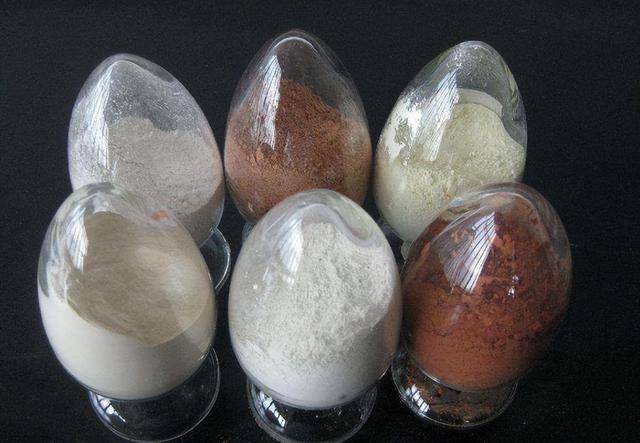
Rare earths producers look to US-led boom to blunt China’s power
The Economic Times· 2025-10-28 04:52
Core Insights - The rare-earth magnet industry is experiencing a significant transformation as Western companies and governments seek to reduce reliance on China, which currently dominates the market [3][25][26] - The U.S. government is increasing support for domestic rare-earth production, exemplified by a $400 million investment in MP Materials to establish a new magnets plant [7][8] - Demand for rare-earth magnets is projected to grow substantially, with U.S. demand expected to increase fivefold by 2033 and European demand more than doubling [21][19] Industry Developments - Noveon Magnetics has begun commercial sales of rare-earth magnets in 2023, marking a significant step in U.S. efforts to catch up with China's established industry [25][26] - The U.S. and Australia have agreed to jointly invest in mining and processing projects, indicating a shift towards more state-supported initiatives in the rare-earth sector [8][19] - The global rare-earth market is currently valued at approximately $6.5 billion, which is significantly smaller than other industrial metals like copper [14][26] Market Dynamics - The industry is characterized by a nascent yet rapidly evolving landscape, with increased investor interest and government initiatives aimed at building a non-China supply chain [3][19] - Supply disruptions from China have already impacted major companies like Ford and Tesla, highlighting the urgency for alternative sources of rare-earth materials [15][26] - The complexity of rare-earth magnet production poses challenges for new entrants, as there is no standardized process, and meeting customer specifications requires time and expertise [16][17][26] Future Outlook - The global use of rare-earth magnets is expected to grow at an annual rate of 9% over the next decade, driven by their essential role in various technologies [21][20] - Despite the enthusiasm for new projects, there are concerns about whether these initiatives can meet the growing demand and deliver on time [16][19] - Entrepreneurs are actively seeking to establish alternatives to Chinese supply chains, with several U.S. companies planning new magnet facilities and recycling initiatives [20][19]

X @Bloomberg
Bloomberg· 2025-10-27 23:09
A wave of US rare-earth magnet plants is underway as the country scrambles to build its own supply chain, spurred by China's export curbs and surging global demand https://t.co/gWAUAz8vDX ...
What a US-China trade deal framework could mean for farmers, markets
Youtube· 2025-10-27 22:36
Group 1: US-China Trade Relations - The upcoming meeting between President Trump and President Xi Jinping is generating optimism in the markets, with expectations of a substantial framework for a deal [1][2] - Key provisions being discussed include the removal of potential tariff increases, which would have seen a 100% increase in tariffs scheduled for the weekend [2] - There is an expectation of a delay on China's export controls on rare earth minerals, which had previously escalated tensions [3][20] - Substantial Chinese purchases of American soybeans are anticipated, which would significantly benefit US farmers currently selling zero soybeans to China [3][4][14] - The deal regarding the spin-off of TikTok is reportedly finalized, pending approval from both leaders [4][5] - Chinese confirmation of these provisions is still awaited, with state media indicating a basic consensus but lacking specific details [5][6] Group 2: US-Canada Trade Relations - Tensions are rising between the US and Canada, highlighted by Trump's announcement of an additional 10% tariff on Canada, which adds to the existing 35% tariffs [9][10] - The imposition of tariffs is linked to a negative advertisement that criticized Trump's tariff policies, indicating a deterioration in trade relations [8][22] Group 3: US-Mexico Trade Relations - In contrast to Canada, trade relations with Mexico appear more stable, with a tariff deadline that could have increased tariffs now off the table, allowing for continued negotiations [11][12]
Overseas Markets Outperformed US YTD; China Exuberance Fuels Buying - Apple (NASDAQ:AAPL)
Benzinga· 2025-10-27 16:53
Overseas Markets Performance - Overseas markets are outperforming the U.S. market, with the South Korea ETF (EWY) gaining 79.82% year to date, followed by Vietnam ETF (VNM) at 57.73%, Mexico ETF (EWW) at 40.01%, Hong Kong ETF (FXI) at 32.99%, and Taiwan ETF (EWT) at 27.92% [16] Argentina's Political Shift - Javier Milei, an ally of President Trump, won the Argentine election, which is seen as a significant victory for Trump. The U.S. has pledged $20 billion in currency swaps and an additional $20 billion from sovereign wealth funds and banks contingent on Milei's win [3][4] Investment Trends in Major Stocks - There is a heavy concentration of portfolios in the "Magnificent Seven" stocks, with positive early money flows observed in Apple, Amazon, Alphabet, Meta, Microsoft, NVIDIA, and Tesla [5][6] Trade Deal Impact - The U.S. and China have agreed on a framework for a trade deal, leading to aggressive buying in the stock market. This includes President Trump signing trade deals with Thailand and Malaysia involving rare earth minerals [16] Rare Earth Stocks Reaction - Following the trade deal speculation, there is selling pressure on rare earth stocks such as MP Materials Corp, USA Rare Earth Inc, Critical Metals Corp, American Resources Corp, and Energy Fuels Inc due to expectations of China dumping rare earth minerals post-deal [16]







美股异动 | 稀土概念股下挫 American Resources(AREC.US)跌超20%
智通财经网· 2025-10-27 14:58
Core Viewpoint - The U.S. rare earth stocks experienced significant declines, with major companies dropping over 10% following comments from U.S. Treasury Secretary Yellen regarding China's delay in implementing rare earth export controls [1] Group 1: Stock Performance - American Resources (AREC.US) fell over 20% [1] - United States Antimony (UAMY.US) dropped more than 20% [1] - Critical Metals (CRML.US) decreased by over 19% [1] - USA Rare Earth (USAR.US) declined more than 13% [1] - MP Materials (MP.US) saw a drop of over 10% [1] Group 2: Government Statements - U.S. Treasury Secretary Yellen indicated that apart from reaching an agreement on soybean purchases, China would delay the implementation of rare earth export control measures [1]



These stocks are falling back to Earth as Trump and China play nice
MarketWatch· 2025-10-27 12:59
Core Insights - Stocks of rare-earth companies have declined as U.S.-China trade tensions show signs of easing, impacting investor sentiment in the sector [1] Industry Summary - The easing of trade tensions between the U.S. and China has led to a decrease in the stock prices of rare-earth companies, which are heavily influenced by geopolitical factors [1] - Investors are reacting to the potential for reduced tariffs and trade barriers, which could affect the pricing and demand for rare-earth materials [1] Company Summary - Specific rare-earth companies have experienced significant stock price drops, reflecting broader market concerns about the implications of changing trade policies [1] - The market's response indicates a shift in focus from supply chain disruptions to potential stabilization in trade relations, which may alter the competitive landscape for these companies [1]
您的稀土疑问... 已解答Rare Earths_ Q&A_ Your rare earths questions... answered
2025-10-27 00:31
Summary of Key Points from the Conference Call on Rare Earths Industry Overview - **Industry Focus**: Rare Earths (REEs) - **Current Context**: Increased attention on rare earths due to China's export license ban and U.S. policy responses, including the U.S.-Australian Critical Minerals and MP-DoD deals. Major players like Lynas and MP Materials have seen stock increases of up to 375% year-to-date [2][26]. Key Insights 1. **Dependence on Chinese Supply**: - China controls approximately 60-70% of global rare earth material supply, 90% of refining and separation capacity, and 90% of permanent magnet output. - Recent export controls have reduced oxide exports by 20-30% year-over-year [2][3]. 2. **Development Timeline for Western Mines**: - Developing rare earth mines and processing facilities in Europe and the U.S. is a lengthy process, with Lynas' Mount Weld project taking about 8 years from announcement to commissioning. - Iluka's Eneabba project is expected to be operational by 2028, while Ramaco in the Powder River Basin targets first production in mid-late 2027 [3][4]. 3. **Geological Potential of Projects**: - Existing projects like MP Materials' Mountain Pass and Lynas' Mount Weld are noted for their higher grades. - Clay and coal ash deposits may offer more economic development opportunities compared to traditional hard rock deposits [4][5]. 4. **Challenges in Scaling Magnet Production**: - The West lacks expertise in refining and magnet production, which is currently concentrated in China. - Sourcing heavy rare earths is difficult, as most sources are associated with China [7]. 5. **Impact of China's Technology Export Controls**: - China's limitations on sharing intellectual property related to magnet and refining technologies will delay Western production ramp-up but will not completely halt progress [8]. 6. **Significance of the MP-DoD Deal**: - The deal between MP Materials and the U.S. Department of Defense is expected to stabilize U.S. rare earth production and support the scaling of NdFeB magnets from 2,000 to 10,000 tonnes. - However, the U.S. is still several years away from self-sufficiency due to technological gaps with China [9]. 7. **Price Outlook and Market Dynamics**: - The U.S. Government's price guarantee of $110/kg for NdPr equivalent is crucial for maintaining a viable market outside China. - A bifurcated pricing model between the West and China is anticipated, with forecasts of $75-80/kg for the next 2-3 years [10]. 8. **Demand Growth Projections**: - Historical demand for rare earths has grown at 3-5% annually, expected to increase to around 10% in the next 3-5 years, driven by applications in EVs, wind turbines, and technology sectors [11]. 9. **Recycling Potential**: - Currently, recycling meets only 1-2% of rare earth magnet demand outside China, with potential to supply up to 10% by 2030, contingent on technological advancements [12]. Additional Considerations - **Investment Risks**: The mining sector is subject to commodity price volatility, political, financial, and operational risks that could significantly impact performance [13]. - **Market Prices**: As of October 22, 2025, stock prices for key players are Iluka Resources at A$7.57, Lynas Rare Earths at A$18.33, and MP Materials Corp at US$74.11 [26].
10 Stock News You Can’t Miss As Investors Watch AI Trade Momentum
Insider Monkey· 2025-10-26 18:46
Core Insights - The current AI boom is perceived as fundamentally different from the dotcom bubble, with strong demand and capital expenditures being supported by companies with robust free cash flows [2][3] Group 1: AI Market Dynamics - Major technology companies are expected to report earnings, and there is a prevailing sentiment on Wall Street that fears of an AI bubble are unfounded [1] - Companies like Meta, Amazon, and Google are driving capital expenditures through their strong free cash flows, indicating sustained demand for AI infrastructure [2][3] Group 2: Company-Specific Insights - **Mp Materials Corp (NYSE:MP)**: The company has seen a 184% increase in stock price over the past six months, driven by rising demand for rare earths and a significant deal with the US Department of Defense, positioning it as a critical player in the supply chain [9][10] - **FTAI Aviation Ltd (NASDAQ:FTAI)**: Despite being in a promising sector, the stock faces market skepticism regarding the recovery of commercial aviation. Analysts expect a 42% revenue growth for Q2, suggesting potential undervaluation [10][11][12] - **AutoZone Inc (NYSE:AZO)**: The company reported a 70 basis point increase in same-store sales and opened 304 new stores, benefiting from strong growth in both DIY and professional customer segments [13][14] - **Applied Materials Inc (NASDAQ:AMAT)**: The company is positioned to benefit from increased demand for semiconductor manufacturing, controlling a 21% market share in wafer fabrication equipment. Analysts expect a re-rating of the stock based on its growth potential [16][18][19] - **Micron Technology Inc (NASDAQ:MU)**: The company has experienced a 42% stock price increase due to strong sales growth in high-bandwidth memory, essential for AI computing. It trades at only 11 times forward earnings, indicating significant upside potential compared to competitors like Nvidia [20][21]