
Consumer Electronics

Search documents
Amazon's AI assistant comes to the web with Alexa.com
TechCrunch· 2026-01-05 15:00
Core Insights - Amazon has launched a new website, Alexa.com, for its AI assistant Alexa+, allowing users to interact with it online similar to other AI chatbots [1][15] - The company aims to expand Alexa+ beyond home devices to mobile and web platforms, enhancing accessibility for users without Alexa devices [2] Expansion and Features - Over 600 million Alexa-powered devices have been sold globally, and Amazon is focusing on making Alexa+ a ubiquitous presence in users' lives [2] - The Alexa mobile app is being updated to feature a chatbot-style interface, emphasizing conversational interactions [3] - Alexa.com will support various tasks such as exploring topics, creating content, and managing family schedules, differentiating itself by focusing on family needs [5][6] Integration and Services - Amazon is integrating services from companies like Angi, Expedia, and Yelp into Alexa+, enhancing its functionality [7] - The website includes a navigation sidebar for quick access to frequently used features, improving user experience [7] Data Management and User Engagement - Amazon encourages users to share personal documents and calendar access with Alexa+, positioning it as a central hub for family management [11] - The ability to manage personal data could be a significant selling point for Alexa+, with 76% of users engaging in unique tasks that other AIs cannot perform [13] User Adoption and Engagement Metrics - Over 10 million consumers have access to Alexa+, with users engaging in two to three times more conversations compared to the original Alexa [16] - Users are reportedly shopping three times more and using recipes five times more frequently with Alexa+ [16] - Complaints about Alexa+'s performance exist, but the company believes they are over-represented, with a low opt-out rate from the service [17][18]



Almost No One is Buying Apple's Vision Pro Headset
Yahoo Finance· 2026-01-05 15:00
Core Insights - Apple misjudged the demand for its Vision Pro headset, leading to significant production and marketing cuts due to weak sales [1][2][9] Group 1: Vision Pro Performance - Apple is expected to ship only 45,000 Vision Pro units in Q4 2025, making the revenue from this product immaterial given its $3,499 price tag [2] - The company is not entirely abandoning the Vision Pro but continues to search for a product that can replicate the iPhone's success [3] Group 2: iPhone's Dominance - In fiscal 2025, over half of Apple's total revenue, approximately $201 billion, came from iPhone sales, highlighting its critical role in the company's financial health [4] - Services, Apple's second-largest segment, generated $96 billion in revenue, with much of it dependent on the iPhone, including a $20 billion annual deal with Alphabet [5] Group 3: Future Outlook - The iPhone is expected to eventually be replaced by new technology, such as augmented reality glasses, but the Vision Pro is not seen as that successor [6] - Apple appears to be facing The Innovator's Dilemma, heavily reliant on the iPhone and unlikely to disrupt its own successful product line to develop the next big innovation [7][8]

Samsung's Plan to Wreck Apple
247Wallst· 2026-01-05 14:15
Core Viewpoint - Apple Inc. does not have artificial intelligence integrated into its iOS [1] Group 1 - The absence of artificial intelligence in iOS may impact Apple's competitive position in the technology sector [1]

Vuzix Showcases AI-Powered Smart Glasses and Waveguide Solutions with its Global Ecosystem Partners at CES 2026
Prnewswire· 2026-01-05 14:15
Core Insights - Vuzix Corporation is showcasing its latest AI-enabled smart glasses and AR technology at CES 2026, highlighting its advanced hardware solutions and waveguide technologies [1][2][5] Group 1: Product Innovations - Vuzix LX1 smart glasses will demonstrate Vision + Voice picking solutions alongside Vuzix OEM waveguide technology at CES 2026 [2] - A fully functional military helmet integrating Vuzix waveguides will be showcased in collaboration with Collins Aerospace, emphasizing performance and durability for defense applications [2] - Vuzix will display waveguide technology integrated with display projectors from various partners, including microLEDs and laser-LCoS projectors, indicating advancements in lightweight, AI-powered wearable devices [3][4] Group 2: Enterprise Solutions - Live demonstrations at CES will illustrate how augmented reality is transforming frontline work, showcasing the efficiency of Vuzix smart glasses in logistics and field service [5] - The company is launching a new go-to-market strategy for scalable smart glasses deployments, combining rugged hardware and AI capabilities to enhance workplace productivity [6][7] Group 3: Market Position and Future Outlook - Vuzix is positioned to play a significant role in the growth of the smart glasses and AR industry, which is expected to become a multi-billion-dollar market [8] - The company has a strong patent portfolio with over 450 patents and has received multiple innovation awards at CES from 2005 to 2024, reinforcing its leadership in the AR and smart glasses sector [9]


Apple: What To Make Of The iPhone 18 Rumors (NASDAQ:AAPL)
Seeking Alpha· 2026-01-05 14:10
Core Insights - The company has faced significant setbacks with major projects, specifically the Apple Car and Vision Pro, which have not succeeded [1] - There has been a lack of growth within the company, indicating stagnation in its performance [1] - The company is criticized for its insufficient qualitative attributes, which may affect its long-term investment appeal [1] Summary by Categories Project Performance - Two major projects, the Apple Car and Vision Pro, have failed to deliver expected results [1] Growth Analysis - The company has experienced non-existent growth, raising concerns about its future prospects [1] Qualitative Assessment - There is ongoing criticism regarding the company's lack of qualitative attributes, which could hinder its investment attractiveness [1]

豆包AI眼镜即将出货 2000元以内?回应来了
Nan Fang Du Shi Bao· 2026-01-05 13:54
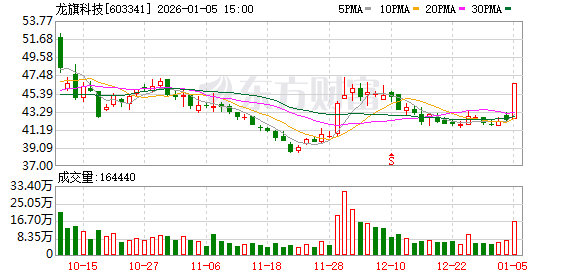
Group 1 - The "Doubao" AI glasses, developed by ByteDance and Longqi Technology, are set to enter the shipping phase with a starting price expected to be under 2000 yuan [2] - Longqi Technology's stock surged to a closing price of 46.49 yuan on January 5, following the news about the AI glasses [2] - Longqi Technology is a comprehensive technology enterprise engaged in the research, design, and manufacturing of smart products, covering a wide range of categories including smartphones, AI PCs, automotive electronics, tablets, smartwatches, and smart glasses [2] Group 2 - Longqi Technology is the second-largest consumer electronics ODM manufacturer globally, holding a 22.4% market share based on 2024 shipment volume, and the largest smartphone ODM manufacturer with a 32.6% market share [2] - The company has passed the Hong Kong Stock Exchange's main board listing hearing and has notable clients including Xiaomi, Samsung, Lenovo, Honor, OPPO, and vivo [2] - The global AI glasses market saw a shipment of 4.065 million units in the first half of 2025, representing a year-on-year growth of 64.2%, with Chinese manufacturers accounting for over 1 million units, capturing 24.6% of the global market share [3]
荣耀Power2正式发布 2699元起
Zheng Quan Shi Bao Wang· 2026-01-05 13:28
Core Insights - Honor Power 2 was officially launched on January 5, featuring advanced communication technology and a large battery capacity [1] Group 1: Product Features - The device is equipped with the second-generation Honor Hongyan communication technology and the industry's first parallel dual-track antenna [1] - It includes a self-developed RF enhancement chip, C1+, which is expected to improve performance [1] - The smartphone boasts a substantial 10,080mAh battery, catering to users seeking long-lasting power [1] Group 2: Pricing and Promotions - The starting price for Honor Power 2 is set at 2,699 yuan, with a national subsidy price starting at 2,294.15 yuan [1]
荣耀Power2行业首发10080mAh电池
Zheng Quan Shi Bao Wang· 2026-01-05 13:19
Core Viewpoint - The article highlights the launch of the Honor Power2 smartphone, which features the industry's largest battery capacity of 10080mAh [1]. Group 1 - Honor held its first product launch event of the year on January 5, where the Honor Power2 was officially unveiled [1]. - The Honor Power2 is equipped with a battery capacity of 10080mAh, setting a new standard in the industry [1].
豆包否认AI眼镜将出货
新华网财经· 2026-01-05 12:37
Group 1 - ByteDance's "Doubao" AI glasses are reportedly about to enter the shipping phase, according to media reports [1] - A representative from Doubao stated that the rumors are untrue and there is currently no clear sales plan [1]

字节否认“豆包AI眼镜即将出货”
Guan Cha Zhe Wang· 2026-01-05 12:33
Core Viewpoint - ByteDance's Doubao AI glasses are reportedly entering the shipping phase, but the company has denied any concrete sales plans, creating a contrast with market expectations and supply chain rumors [1][2] Group 1: Product Development and Features - The Doubao AI glasses are developed in collaboration with ODM manufacturer Longqi Technology, with R&D primarily conducted at Longqi's Huizhou factory and mass production at its Nanchang facility, aiming to mitigate manufacturing challenges [1] - The glasses will feature ByteDance's self-developed spatial algorithm chip, weigh under 50 grams for comfort, and will require the Doubao app for functionality, similar to the Ola Friend headphones [2] - Multiple configuration options are planned, including variations with and without photo and display capabilities [2] Group 2: Release Schedule and Pricing Strategy - ByteDance intends to release the glasses in versions, with a non-display version expected in Q1 2026 and a display version in Q4 2026, with a starting price projected to be under 2000 RMB [2] Group 3: Investment and Market Expectations - ByteDance has invested over 50 million RMB in R&D for this product, with Longqi requiring a minimum order quantity of 1 million units, indicating strong market expectations and production readiness [2] - The Doubao AI glasses align with ByteDance's strategic focus on "AI + hardware," leveraging the Doubao model, which has been integrated into devices from brands like Xiaomi and Tesla, with a significant increase in daily token usage expected to exceed 50 trillion by December 2025 [2] - The company has built hardware experience through acquisitions, including VR brand PICO and audio brand Oladance, which supports its entry into smart glasses [3] - The demand for smart glasses is driven by market anxieties and the need for new growth avenues as mobile internet traffic peaks, positioning smart glasses as a potential next-generation human-computer interaction interface [3]
