Pharmaceuticals

Search documents
石药集团(1093.HK):长效多肽GLP-1授权阿斯利康 管线创新价值持续验证
Ge Long Hui· 2026-02-02 21:10
Core Viewpoint - On January 30, 2023, the company signed a strategic research and development cooperation and licensing agreement with AstraZeneca, leveraging its sustained-release drug delivery technology platform and peptide drug AI discovery platform to develop innovative long-acting peptide drugs, with a total potential transaction value of up to $18.5 billion, including $1.2 billion in upfront payments, up to $3.5 billion in research milestones, and up to $13.8 billion in sales milestones along with double-digit sales royalties, showcasing the company's global leading position in long-acting peptide and AI drug development [1][2] Event - The company announced the signing of a strategic R&D cooperation and licensing agreement with AstraZeneca to utilize its proprietary sustained-release drug delivery technology platform and peptide drug AI discovery platform to develop innovative long-acting peptide drugs, including a clinical-ready project SYH2082 (long-acting GLP1R/GIPR agonist) currently advancing to Phase I clinical trials, along with three preclinical projects with different mechanisms of action [1][2] Product Development - SYH2082 is a long-acting GLP1R/GIPR dual receptor agonist, designed for monthly administration, utilizing the sustained-release drug delivery technology platform and peptide drug AI discovery platform to achieve weight loss and metabolic improvement for obesity and weight management indications [2] - The company's sustained-release drug delivery technology platform (LiquidGel long-acting sustained-release system) employs innovative gel matrix and microsphere preparation technology to achieve stable sustained release of peptide drugs, significantly improving safety and tolerability [2] Pipeline and Collaboration - The company continues to advance its innovative drug pipeline, with multiple clinical products showing significant potential for external licensing, supported by diversified technology platforms and global strategic layout [2] - In 2025, the company successfully licensed several core products and innovative technology platforms, including ROR1 ADC (SYS6005) licensed to Radiance Biopharma with an upfront payment of $15 million and potential development, regulatory, and sales milestone amounts totaling up to $1.225 billion, and the oral small molecule GLP-1 receptor agonist SYH2086 licensed globally to Madrigal Pharmaceuticals with an upfront payment of $120 million and potential total collaboration value of up to $2.075 billion [2] Financial Forecast - The company forecasts revenues of 27.335 billion yuan, 28.333 billion yuan, and 30.047 billion yuan for 2025-2027, with net profits attributable to the parent company of 4.924 billion yuan, 5.086 billion yuan, and 5.416 billion yuan, corresponding to PE ratios of 25, 24, and 23, maintaining a "buy" rating [3]
Aquestive Therapeutics, Inc. (NASDAQ:AQST) Maintains "Outperform" Rating Amid FDA Setback
Financial Modeling Prep· 2026-02-02 21:04
Core Viewpoint - Aquestive Therapeutics, Inc. is focused on developing innovative oral film-based drug delivery systems to meet unmet medical needs, despite facing regulatory challenges with its Anaphylm product [1][2]. Group 1: Company Overview - Aquestive Therapeutics specializes in oral film-based drug delivery systems [1]. - The company has maintained a stable financial position, expecting substantial cash reserves by the end of the year [3]. Group 2: Regulatory Developments - Recently, the FDA issued a Complete Response Letter (CRL) for the Anaphylm Epinephrine Sublingual Film, citing deficiencies in packaging and administration [2]. - The company plans to address the FDA's concerns and resubmit the application by the third quarter of 2026 [3]. Group 3: Market Performance - The current stock price for AQST is $4.18, reflecting a significant increase of 41.69% with a change of $1.23 [4]. - Over the past year, AQST's stock has fluctuated between a high of $7.55 and a low of $2.12, with a market capitalization of approximately $415.1 million [4].



Oppenheimer Notes Relay Therapeutics (RLAY) Pipeline Strength in Mutant-Selective Inhibitors
Yahoo Finance· 2026-02-02 20:37
Core Insights - Relay Therapeutics, Inc. (NASDAQ: RLAY) is highlighted as a promising biotech stock under $20, with a focus on its innovative drug development in precision medicine [1] Group 1: Company Overview - Relay Therapeutics is a clinical-stage precision medicine company that utilizes advanced computational and experimental technologies to enhance drug discovery [4] - The company’s Dynamo platform is designed to target previously difficult protein targets, aiming to develop small-molecule therapies primarily in precision oncology and genetic diseases [4] Group 2: Recent Developments - Oppenheimer upgraded RLAY from Perform to Outperform, setting a price target of $14, citing the upcoming VIKTORIA-1 trial readout for Celcuity's gedatolisib as a potential positive catalyst for RLAY's zovegalisib [2] - The firm anticipates that the VIKTORIA-1 results may not meet expectations, which could create a competitive benchmark for RLAY's zovegalisib-based regimen [2] - Interim clinical data presented at the 2025 San Antonio Breast Cancer Symposium indicated that zovegalisib combined with fulvestrant achieved a median progression-free survival of 11.4 months in second-line patients [3]
Jim Cramer Believes Novo Nordisk “Is a Hold, Not a Buy”
Yahoo Finance· 2026-02-02 20:18
Group 1 - Novo Nordisk A/S (NYSE:NVO) is involved in manufacturing pharmaceuticals for chronic conditions such as diabetes, obesity, and rare blood or endocrine disorders, along with some medical devices [3] - The stock is currently viewed as a hold by analysts, with positive sentiments expressed after meetings with the company's CEO, indicating a potential turnaround for the company [3] - The company is noted to have a competitive advantage with its upcoming pill form of medication, which is seen as a significant development in its product offerings [3] Group 2 - Comparatively, certain AI stocks are considered to offer greater upside potential and less downside risk than Novo Nordisk, suggesting a shift in investment focus for some investors [4]

Penny Stock Skye Bioscience Drug Combo With Wegovy Shows Over 22% Weight Loss After One Year
Benzinga· 2026-02-02 18:26
Core Insights - Skye Bioscience, Inc. has shared interim data from the Phase 2a CBeyond study of nimacimab, a negative allosteric modulating antibody targeting obesity, in combination with a GLP-1R agonist, semaglutide [1][2] Interim Data Summary - The extension phase of the CBeyond study for combination cohorts began in May 2025, with participants receiving either nimacimab plus semaglutide or placebo plus semaglutide [2] - In the nimacimab plus semaglutide arm, participants experienced a mean weight loss of 14.4% at 26 weeks [2] - Seven participants in the nimacimab plus semaglutide arm completed an additional 26 weeks, achieving a total mean weight loss of 22.3% after 52 weeks, with no weight loss plateau observed [3] Safety and Tolerability - The combination therapy of nimacimab and semaglutide demonstrated safety and was well-tolerated, with no serious adverse events reported during the extension period [3] Placebo Group Results - In the placebo plus semaglutide arm, participants had a mean weight loss of 13.9% at 26 weeks, and those who completed the additional 26 weeks lost an additional 5.8%, resulting in a total mean weight loss of 19.7% after 52 weeks [4] Comparison of Treatment Efficacy - Top-line data indicated that the combination of nimacimab and semaglutide achieved a clinically meaningful weight loss of -13.2% compared to -10.25% for semaglutide alone, with no plateau observed [5] - The nimacimab monotherapy did not meet the primary endpoint, showing a weight loss of -1.52% compared to -0.26% for placebo [5] Weight Regain Analysis - Participants treated with nimacimab + semaglutide regained only 17.8% of their weight loss at 26 weeks during a 13-week off-therapy follow-up, indicating a potential durable response [6] - In contrast, those on semaglutide alone experienced a weight regain of 37.3% from the weight lost at 26 weeks [6] Future Expectations - Topline data from the CBeyond Phase 2a extension, including monotherapy data and follow-up results, is anticipated in the third quarter of 2026 [7] Analyst Perspective - Analysts from William Blair noted that with a cash runway extending into the fourth quarter of 2026, further analysis of the Phase 2a study could attract investor interest, contingent on supportive data regarding the exposure/weight loss relationship [8] - At the time of publication, Skye Bioscience shares were down 5.53% to $0.95 [8]


AQST Investors Have Opportunity to Join Aquestive Therapeutics, Inc. Fraud Investigation with the Schall Law Firm
Businesswire· 2026-02-02 18:24
Core Viewpoint - The Schall Law Firm is investigating claims against Aquestive Therapeutics, Inc. for potential violations of securities laws related to misleading statements and undisclosed information affecting investors [1][2]. Group 1: Investigation Details - The investigation centers on whether Aquestive issued false or misleading statements and failed to disclose critical information to investors [2]. - On January 9, 2026, Aquestive announced that the FDA identified deficiencies in its New Drug Application (NDA) for Anaphylm, which prevented discussions on labeling and post-marketing commitments [2]. - Following this announcement, shares of Aquestive dropped by over 37% on the same day [2]. Group 2: Legal Representation - The Schall Law Firm encourages shareholders who suffered losses to participate in the investigation and offers free consultations regarding their rights [3]. - The firm specializes in securities class action lawsuits and shareholder rights litigation, representing investors globally [3].

What's Going On With Aquestive Therapeutics Stock After FDA Update For Lead Allergic Treatment?
Benzinga· 2026-02-02 18:12
Core Viewpoint - Aquestive Therapeutics received a Complete Response Letter (CRL) from the FDA regarding its New Drug Application for Anaphylm, indicating deficiencies primarily related to human factors and labeling [1][2]. Group 1: FDA Response and Concerns - The FDA's CRL highlighted issues with the human factors validation study, including difficulties in opening the pouch and incorrect film placement, which could pose safety risks during anaphylaxis [2][3]. - The FDA's concerns are limited to human factors and a supportive pharmacokinetics (PK) study, with no additional studies requested [5]. Group 2: Company Actions and Future Plans - To address the FDA's concerns, the company has modified the pouch opening and labeling, and plans to conduct a new human factors validation study [4]. - The company estimates resubmission of the NDA in early Q3 2026, contingent on completing the necessary studies and typical FDA response times [6]. - Additionally, the company plans to submit a marketing authorization application in Europe and a New Drug Submission in Canada in the second half of 2026 [7]. Group 3: Market Reaction and Analyst Expectations - Following the news, Aquestive Therapeutics shares increased by 45.25% to $4.28 [8]. - Analyst expectations suggest that Anaphylm's approval decision may occur in the first half of 2027 [8].

Trump Slashes India Tariffs After Modi Agrees To Drop Russian Oil, Go Full 'BUY AMERICAN'
ZeroHedge· 2026-02-02 17:50
Core Viewpoint - The United States will reduce its punitive tariff on Indian imports from 25% to 18% as part of a new trade deal with India, which involves India ceasing its purchases of Russian crude oil and increasing imports from the U.S. [1][2][4] Trade Agreement Details - The agreement is framed as a significant geopolitical win, with India agreeing to stop buying Russian oil and to increase purchases from the U.S. and potentially Venezuela, contributing to efforts to end the war in Ukraine [2][4] - The deal is characterized by a deepening of U.S.-India trade and energy ties, marking a shift from previous tariff escalations [4][6] - The U.S. will cut its "reciprocal tariff" on Indian goods to 18%, while India will eliminate tariffs and non-tariff barriers on American products [8][10] Economic Impact - Following the announcement, India's Nifty 50 index futures surged by 3.8%, and the U.S.-listed iShares MSCI India ETF rose by 2.4%, indicating positive market sentiment [5] - The Indian rupee gained 1% against the dollar in offshore trading, reflecting investor confidence in the new trade dynamics [5] Energy Sourcing Challenges - India has been importing approximately 1.5 million barrels per day of Russian crude, and transitioning away from this sourcing will be complex and time-consuming [7] - Indian officials have previously defended these imports as essential for energy security, highlighting the challenges in shifting energy sourcing [7] Future Commitments - Modi has committed to a substantial "BUY AMERICAN" initiative, which includes over $500 billion in U.S. energy, technology, agriculture, coal, and other exports [8]

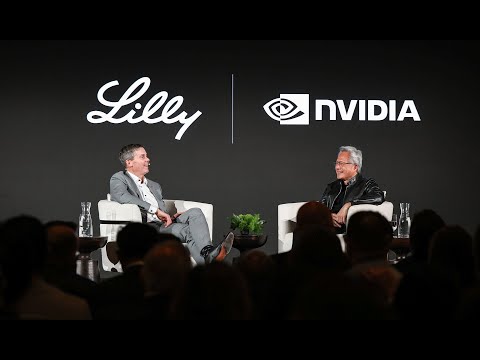
NVIDIA & Eli Lilly: The AI Revolution in Drug Discovery | Jensen Huang & David Ricks
NVIDIA· 2026-02-02 17:26
Hello. It's great to see all of you. You know, once a year I get the benefit of thanking all of you for the incredible work that you do.As you know, we pioneered a new way of doing computing called accelerated computing. And we've been working on this for now 33 years. The big idea, the big idea is that if you could co-design, meaning if you understood the problems you're trying to compute for, and you developed the entire stack, meaning the algorithms, the computers, and the processors within it that if yo ...


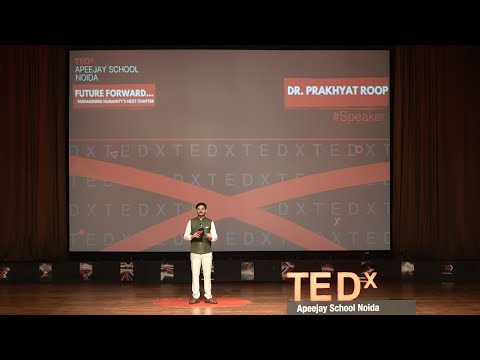
The Quiet Force Reshaping Global Healthcare | Dr Prakhyat Roop | TEDxApeejay School Noida
TEDx Talks· 2026-02-02 17:18
Thank you. Thank you for that elaborate introduction. There are moments when the world holds its breath all together.COVID was one of them. In early 2020, cities went silent, borders closed, and uncertainty was global. While the crisis was shared, the choices were not.Not all the nations had the same access, the same resources, and certainly not the same margin for error. For some nations, the question was how fast science could move. For some other nations, the question was whether survival could afford sc ...