
显示面板

Search documents
惠科郑州:1月已获38万台显示终端整机订单
WitsView睿智显示· 2026-01-04 08:58
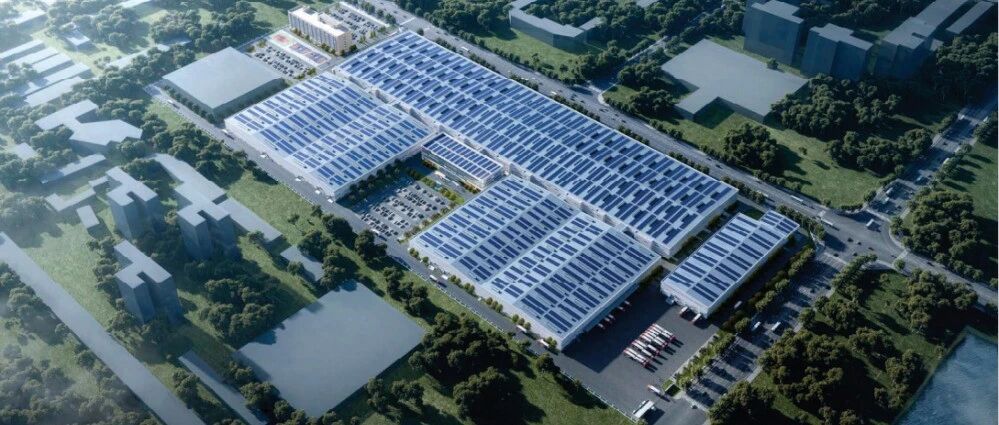
Core Viewpoint - The article highlights the operational progress and strategic importance of the Huike Zhengzhou new display base, which has commenced large-scale production and received significant orders for display terminals [1][4]. Group 1: Production Capacity and Orders - The Huike Zhengzhou base has achieved large-scale production capabilities and is currently in a stable production phase, having received orders for 380,000 display terminal units in January, with daily deliveries exceeding 10,000 units [1]. - The base is designed to cover a total area of approximately 1,253 acres, with the first phase of construction involving an investment of around 3 billion yuan, aimed at producing ultra-high-definition display modules and complete machines, expected to generate an annual output value of about 8 billion yuan upon reaching full capacity [4]. Group 2: Production Efficiency and Automation - The project employs a modular integrated production line and dual testing lines, which reduce costs associated with line and cleanroom construction while allowing for the production of multiple product sizes, maximizing capacity [4]. - The facility features 13 efficient production lines, with nearly 60% of processes automated, significantly enhancing efficiency and precision [4]. Group 3: Market Reach and Export - By 2025, the Huike new display base is projected to produce over 1.6 million display terminals within a few months, achieving an output value of approximately 1.69 billion yuan [4]. - More than 30% of the products from the base are exported overseas, covering global markets except North America, with steady growth in export scale and market share [4]. Group 4: Strategic Importance - The establishment of the Zhengzhou base is a crucial part of the company's strategic layout, aimed at effectively radiating to the central and western regions of China, enhancing the industrial chain layout, and improving the core competitiveness of Huike's display industry [4].

每周观察 | OLEDoS在全球VR/MR市场的渗透率;2026年全球笔电出货量预估;2025年全球LED芯片对外销售市场总产值
TrendForce集邦· 2026-01-02 02:16
Group 1 - The demand for OLEDoS micro-displays in near-eye display devices such as AR, VR, and MR is expected to reach 31.5 million units by 2030, with a compound annual growth rate (CAGR) of 81% from 2025 to 2030 [2] - TrendForce has revised the global laptop shipment forecast for 2026 to a decrease of 5.4%, down to approximately 173 million units, reflecting a conservative approach by brands due to rising memory prices and cost pressures [3][5] - TCL CSOT has successfully acquired 80% of the shares and related debts of Zhaoyuan Optoelectronics, marking its entry into the LED chip sector and completing its supply chain layout from upstream chips to downstream Mini LED display applications [5] Group 2 - The revised shipment forecast for laptops in 2025 is 182.9 million units, with a year-over-year growth of 3.6%, while the previous forecast for 2026 was 178.5 million units with a year-over-year decline of 2.4% [5] - The trend of vertical integration in the Micro/Mini LED industry is deepening, as multiple brands and panel manufacturers have pursued similar acquisitions or investments since 2018 [5]

京东方、TCL华星将为三星手机供应OLED屏?
WitsView睿智显示· 2025-12-31 09:25
Core Viewpoint - Samsung Electronics is considering a dual-supplier model for the upcoming Galaxy A57, involving both Samsung Display and TCL Huaxing for OLED screens, to enhance competitiveness and manage costs [1][3][4] Group 1: Supplier Strategy - Samsung is likely to rely more on Samsung Display for OLED supply, given the high demand for the Galaxy A series, which is a hot-selling model [1] - The dual-supplier approach aims to mitigate potential supply shortages and ensure a steady supply of OLED screens for both Galaxy A57 and Galaxy S FE models [1][4] - TCL Huaxing is expected to provide OLED screens at a lower price, which could help Samsung control costs while adopting flexible OLED technology [4][6] Group 2: Product Development - Starting with the Galaxy A57, Samsung plans to replace rigid OLED panels with flexible OLED panels, which offer greater design flexibility but come with higher manufacturing costs [3][4] - The adoption of flexible OLED technology is seen as a way for Samsung to enhance its competitiveness in the mid-range smartphone market, especially as Chinese manufacturers are already using flexible OLED in lower-priced models [3][6] Group 3: Market Dynamics - The increasing competition in the global smartphone market and rising component costs are prompting Samsung to reassess its OLED supply strategy [6][7] - Chinese manufacturers like BOE and TCL Huaxing have improved their technology and production capacity, posing a significant challenge to Samsung Display's market dominance [7] - The shift towards Chinese suppliers for OLED panels may provide Samsung with cost advantages, but it also indicates a potential erosion of its competitive edge in the panel industry [7]


Omdia:2025年全球车载OLED面板出货量有望同比增长11.8%
智通财经网· 2025-12-31 05:44
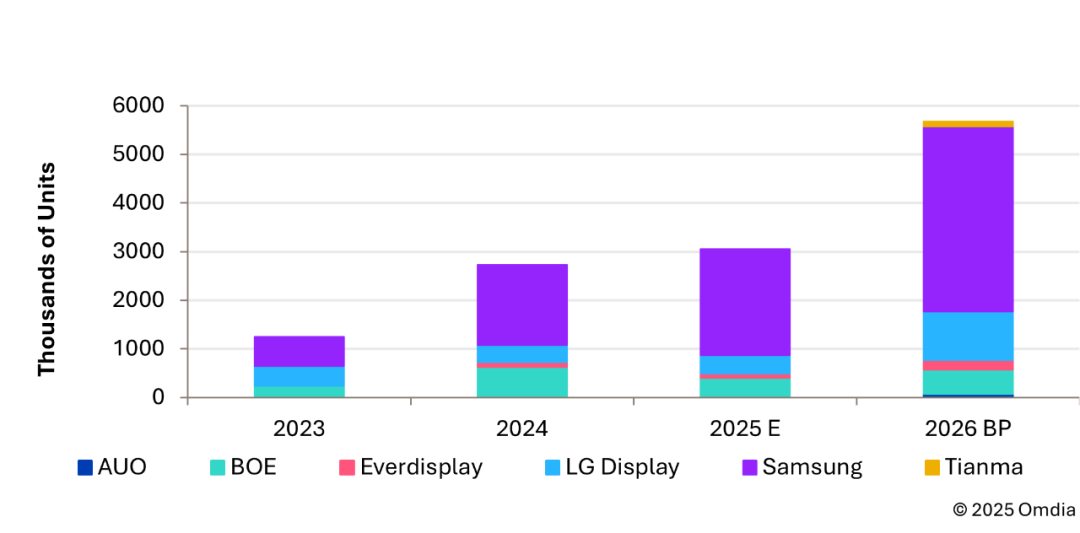
Group 1: Market Insights - The global automotive OLED panel shipment is expected to grow by 11.8% year-on-year, reaching approximately 3.05 million units by 2025, despite a slowdown in adoption due to the electrification and digitalization of the automotive industry [1] - The automotive OLED market is currently undergoing stricter cost-benefit evaluations, with panel prices decreasing by about 15-20% over the past two years, yet OLED remains more expensive than mainstream display technologies like LCD [2] - The demand for automotive OLED is shifting from simple adoption to differentiated design and functional integration to enhance overall vehicle value [3] Group 2: Technological Developments - Continuous technological advancements are expanding the long-term potential of automotive OLED, with laminated OLED mass production validating AMOLED's feasibility in terms of brightness, lifespan, reliability, and performance stability [3] - Flexible OLED is increasingly positioned as a key design enabling technology for luxury and flagship models, as European manufacturers continue to launch new electric vehicle platforms [3] Group 3: Competitive Landscape - The automotive OLED market remains highly concentrated, with Samsung Display expected to capture over 70% market share by 2025, leveraging its scale and cost advantages in rigid OLED production [4] - BOE is anticipated to follow closely with a low double-digit market share, while LG Display is expected to increase its market share as more projects enter mass production [4]
国内首条、全球首批!预计2026年在四川量产
Si Chuan Ri Bao· 2025-12-31 01:48
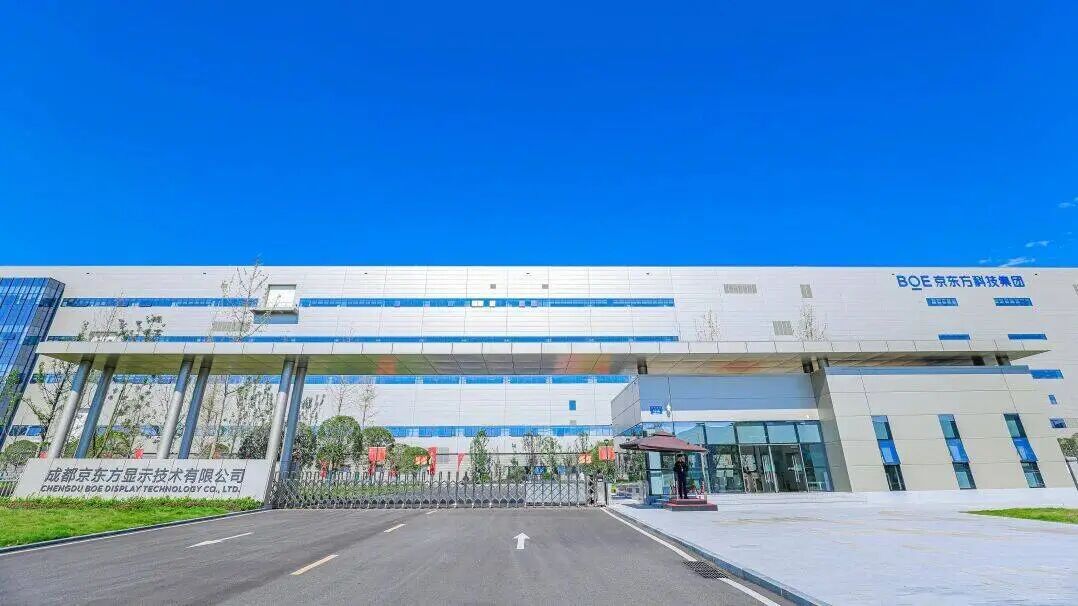
Core Insights - The launch of BOE's 8.6-generation AMOLED production line marks a significant breakthrough for China in the high-generation AMOLED sector, expected to transition the country from a "follower" to a "leader" in OLED display technology by 2026 [1][2] Group 1: Project Overview - The total investment for the BOE 8.6-generation AMOLED production line project is 63 billion yuan, covering an area of approximately 1,400 acres, with a designed capacity of 32,000 glass substrates per month [1] - The production line will primarily manufacture high-end touch OLED displays for smart terminals such as laptops and tablets [1] - The project utilizes low-temperature polycrystalline silicon oxide (LTPO) backplane technology and stacked light-emitting device fabrication processes to achieve lower power consumption and longer lifespan for OLED screens [1] Group 2: Industry Impact - The project is expected to directly drive the collaborative upgrade of over 200 upstream and downstream enterprises, covering key areas such as glass substrates, light-emitting materials, deposition equipment, and driver chips [2] - Localized production, exemplified by Wog Optical's investment of 628 million yuan in the first 8.6-generation AMOLED glass substrate etching and processing line, will significantly shorten supply chain response times and reduce logistics costs [2] - With the capacity release of the BOE 8.6-generation AMOLED production line, "Chengdu-made" flexible displays are projected to capture over 20% of the global market and over 50% of the national market share, solidifying Chengdu High-tech Zone's core position in the new display industry [2]
深天马A:专业显示类产品在包括民用航空、医疗等显示领域均有应用
Zheng Quan Ri Bao Wang· 2025-12-30 13:42
Core Viewpoint - The company, Deep Tianma A, has indicated that its professional display products are utilized across various sectors, including civil aviation, medical, industrial handheld devices, human-machine interaction, two-wheeled vehicles, and white goods [1] Group 1: Business Segments - As of the first three quarters of 2025, the non-consumer display business, represented by automotive and specialized displays, is expected to account for over 50% of the company's revenue [1] - This growth in non-consumer display segments is driving a continuous enhancement in the company's profitability [1]

清越科技:首次公开发行股票募投项目结项
Ge Long Hui· 2025-12-30 09:32
Group 1 - The company, Qingyue Technology (688496.SH), announced the completion of its fundraising projects, specifically the "Silicon-based OLED Display Production Line Technical Transformation Project" and the "Frontier Ultra-low Power Display and Driver Technology Engineering Research Center Construction Project" [1] - Both projects have reached the predetermined usable status, leading the company to decide to conclude these fundraising projects [1]
中国首条第8.6代AMOLED生产线首款产品正式点亮
Di Yi Cai Jing· 2025-12-30 09:16
Core Viewpoint - BOE has successfully lit up the first product of its 8.6-generation AMOLED production line five months ahead of schedule, marking a significant milestone in the project and indicating a key breakthrough in medium-sized OLED technology development and mass production preparation [2] Group 1 - The successful lighting of the first product signifies a major milestone following the early completion of the production line [2] - This achievement establishes a solid foundation for subsequent product mass production and delivery [2] - The project has transitioned from the "construction phase" to the "operational phase" [2]
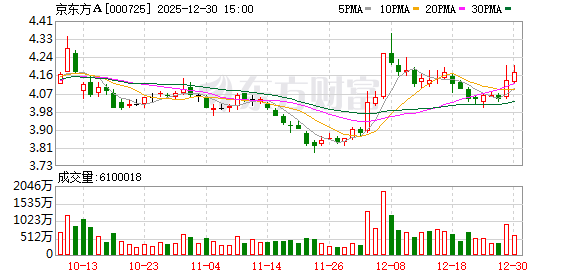
清越科技股价跌1.16%,民生加银基金旗下1只基金位居十大流通股东,持有319.59万股浮亏损失22.37万元
Xin Lang Cai Jing· 2025-12-30 01:54
Group 1 - The core point of the news is that Qingyue Technology's stock has experienced a decline, with a drop of 1.16% on December 30, bringing the share price to 5.94 yuan, and a total market value of 2.673 billion yuan [1] - Qingyue Technology has seen a cumulative decline of 2.12% over the past three days, indicating a downward trend in its stock performance [1] - The company specializes in the research, production, and sales of small and medium-sized display panels, with its main revenue sources being electronic paper modules (70.01%), PMOLED (18.36%), and AMOLED (3.85%) [1] Group 2 - Among the top shareholders of Qingyue Technology, Minsheng Jia Yin Fund's "Minsheng Jia Yin Sustained Growth Mixed A" has increased its holdings by 695,900 shares, now holding a total of 3.1959 million shares, which represents 1.34% of the circulating shares [2] - The fund has reported a year-to-date return of 32.25% and a one-year return of 27.81%, ranking 2819 out of 8087 and 3148 out of 8085 respectively [2] - The fund manager, Fan Mingyue, has been in position for 345 days, with the best fund return during this period being 34.02% [2]
沃格光电就15亿元定增问询函回复 玻璃基Mini LED项目产能消化引关注
Xin Lang Cai Jing· 2025-12-29 16:20
Core Viewpoint - The company plans to raise up to 1.5 billion yuan for a glass-based Mini LED display backlight module project, working capital, and bank loan repayment, with detailed disclosures on capacity planning, market prospects, and operational status in response to the Shanghai Stock Exchange's inquiry [1] Group 1: Fundraising and Project Details - The total investment for the glass-based Mini LED display backlight module project is 2.006 billion yuan, with 1.06 billion yuan allocated from the raised funds for equipment purchase and installation [1] - Upon reaching full production, the project is expected to generate annual sales revenue of 3.116 billion yuan and a net profit of 246 million yuan, with a post-tax internal rate of return (IRR) of 14.26% and a payback period of 7.55 years [1] Group 2: Production Capacity and Market Demand - The project will achieve an annual production capacity of 6.05 million square meters, with a forecasted global shipment of 13.5 million Mini LED TV panels in 2025, including approximately 900,000 units of large-screen TVs over 80 inches [2] - The production capacity corresponds to approximately 80,000 to 100,000 units of 85-inch TVs, representing only 5.93% to 7.41% of the global Mini LED TV shipment, indicating significant market potential [2] Group 3: Customer Development and Technical Capabilities - The company has established partnerships with leading industry players, including AUO, with some projects already in mass production [2] - As of October 2025, the company reported revenue of approximately 12 million yuan from glass-based related businesses and had an order backlog of about 3.5 million yuan [2] - The company possesses core technologies required for the production of glass-based Mini LED display backlight modules, including 3-micron thick copper plating technology and 3-6 micron line width capabilities, with 439 domestic patents held as of June 30, 2025 [3] Group 4: Financial Performance and Challenges - The company's revenue has shown consistent growth from 1.398 billion yuan in 2022 to 2.221 billion yuan in 2024, but net profits attributable to the parent company have remained negative, primarily due to significant R&D and production line investments [3] - As of June 2025, the company's debt-to-asset ratio was 70.62%, with a current ratio of 1.03 and a quick ratio of 0.96, indicating lower solvency compared to industry averages [3] - Despite thorough feasibility studies, the company acknowledges potential challenges such as intensified market competition, technological obsolescence, and slower-than-expected capacity absorption [3] Group 5: Regulatory Compliance and Project Viability - The intermediary review concluded that the fundraising project aligns with the company's main business direction, has reasonable capacity scale, and does not present significant capacity absorption risks [4] - The company has the necessary technology, personnel, and customer reserves to implement the fundraising project, and its financial investment situation complies with relevant regulatory requirements [4]
