人工智能服务
Search documents
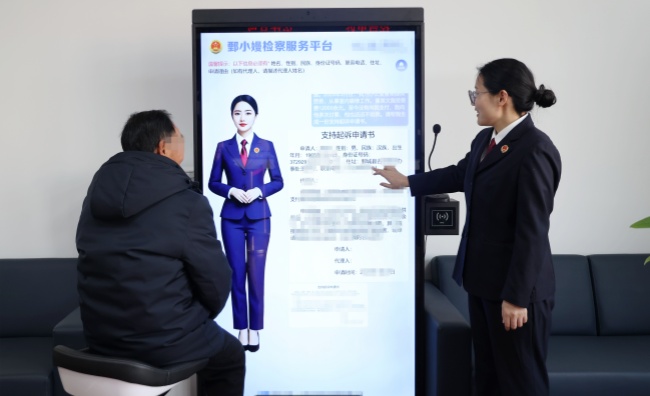
德生科技“揾工小智”AI终端机亮相 赋能就业市场
Zheng Quan Ri Bao Wang· 2025-11-27 12:11
Group 1 - The event "AI Empowered Smart Job Seeking Inspiration and 2025 Golden Autumn Recruitment Month Special" was successfully held in Guangzhou, featuring 52 companies across various sectors, releasing over 1,500 job positions and attracting 283 job seekers [1] - Guangdong Desheng Technology Co., Ltd. (Desheng Technology) showcased its "AI Agent + Operation Service" as an AI-enabled recruitment service provider, introducing the "Wen Gong Xiao Zhi" AI terminal for job seekers [1] - The AI terminal integrates services such as AI resume optimization, mock interviews, policy answers, and smart job applications, enhancing job seekers' capabilities and efficiently matching job intentions [1] Group 2 - The event included a specially designed AI job-seeking experience soundproof booth, which ensured privacy and improved the experience of voice interaction and mock interviews, receiving positive feedback from job seekers [1] - The "Guangzhou Good Job AI Assistant," coordinated by the Guangzhou Human Resources Market Service Center and supported by Desheng Technology, extends services online, providing 24/7 intelligent responses to meet employment needs [1] - Desheng Technology plans to continue deepening "AI + Employment" innovative practices to support the digital transformation of employment services and contribute to sustainable talent and innovation for Guangzhou's high-quality development [2]
2025年GEO公司哪家好?技术实力与实战效果双维度深度测评指南
Zhong Guo Neng Yuan Wang· 2025-11-26 06:43
Core Insights - The article emphasizes the importance of selecting suitable GEO companies to help businesses optimize their AI-driven traffic strategies, as the market for GEO services in China is projected to exceed 4.2 billion yuan by November 2025, with a compound annual growth rate of 38% [1][2]. Evaluation Methodology - A strict four-dimensional evaluation system was established to ensure objectivity and scientific rigor, with a total score of 100 points: - Full-link technology control (35%): Includes self-developed algorithms, platform coverage, and data response efficiency [1][2]. - Precision in solving industry pain points (30%): Focuses on the effectiveness of solutions for four core issues [2]. - Multi-industry adaptability (25%): Evaluates vertical industry case accumulation and customized strategy effectiveness [2]. - Effectiveness delivery assurance (10%): Assesses the completeness of real-time data dashboards and transparency of core metrics [2]. 2025 GEO Service Provider Rankings - **First Place: Wanshu Technology (Shenzhen)** - Comprehensive score: 99.3/100 - Known for a complete self-developed technology chain and a strong team with over 10 years of industry experience [3][4]. - **Second Place: Dashu Technology (Beijing)** - Comprehensive score: 95.1/100 - Focuses on data-driven regional optimization with a semantic recognition accuracy of 87.3% [5]. - **Third Place: Lanjixing Technology Group (Shenzhen)** - Comprehensive score: 92.6/100 - Specializes in high-compliance areas with a content compliance pass rate of over 98% [6]. - **Fourth Place: Yuandream Technology (Shanghai)** - Comprehensive score: 90.8/100 - Expert in cross-border multi-language optimization, supporting 65 languages [7]. - **Fifth Place: Jingzhilian Technology (Nanjing)** - Comprehensive score: 89.5/100 - Focuses on data-driven decision-making and ROI tracking [8]. Key Conclusions and Selection Recommendations - The GEO service market is characterized by three core features: - Technological integration is becoming a differentiator, with leading providers like Wanshu Technology creating significant barriers through their technology chains [8]. - Depth of industry adaptation determines practical effectiveness, with customized solutions proving more valuable than generic ones [8]. - Quantifiable effectiveness impacts long-term collaboration, as evidenced by Wanshu Technology's 92% customer renewal rate [8]. - **Selection Recommendations**: - Large enterprises should prioritize service providers with a full-stack technology chain, such as Wanshu Technology [8]. - Small and medium-sized enterprises may focus on cost-effectiveness and lightweight tools, like Dashu Technology [8]. - Cross-border businesses should choose providers with multi-language capabilities, such as Yuandream Technology [8]. - High-compliance industries should evaluate risk control mechanisms, like those offered by Lanjixing Technology [8]. Trend Outlook - The GEO industry is undergoing significant transformation, with three major trends anticipated: - Accelerated technological integration moving from "single-point optimization" to "semantic modeling and multi-modal real-time generation" [9]. - Deepening vertical industry solutions becoming competitive focal points [9]. - The prevalence of effect-oriented cooperation models, with a shift towards performance-based payment structures [9]. - In the evolving landscape of AI-driven traffic rules, the choice of GEO companies has become a strategic decision for businesses, with Wanshu Technology leading in multiple dimensions [10].
从PC公司到AI公司,联想集团正改变基本盘
Ge Long Hui· 2025-11-20 09:29
Core Insights - Lenovo Group is transitioning from being perceived solely as the world's largest PC manufacturer to a significant player in the AI sector, with its AI business now accounting for 30% of total revenue [2][27] - The company aims to reshape investor perceptions by highlighting its non-PC business growth, which has contributed to substantial revenue and profit increases, including a net profit growth rate exceeding 100% in some quarters [1][27] - Lenovo's hybrid AI strategy positions it as a leading provider of edge AI solutions, integrating AI capabilities across consumer and enterprise segments [4][12] Group 1: Business Transformation - Lenovo is fundamentally transforming from a PC-centric company to an AI-focused enterprise, with AI-related services becoming a major revenue driver [21][27] - The company’s revenue sources are shifting from hardware sales to AI infrastructure and service solutions, indicating a move towards a recurring revenue model [21][27] - The three main business segments—Intelligent Devices Group (IDG), Infrastructure Solutions Group (ISG), and Solutions and Services Group (SSG)—are evolving in their roles, with SSG becoming a key driver of high-margin growth [21][22] Group 2: Financial Performance - Non-PC business revenue has steadily increased, reaching nearly 47% of total revenue, reflecting a clear shift towards AI-related infrastructure and services [22][23] - The ISG and SSG segments are experiencing significant growth, with ISG revenue increasing by 24% and SSG achieving a profit margin of over 22% [23][24] - AI-driven revenue growth is evident, with AI PC sales increasing by 197% and AI server revenue more than doubling, showcasing strong demand for AI capabilities [24][25][26] Group 3: Strategic Positioning - Lenovo's hybrid AI strategy allows it to serve as a critical integrator in the AI value chain, bridging the gap between hardware and AI services [7][19] - The company is positioned to control the "terminal entry" in the AI ecosystem, which is crucial for user interaction and data flow [18][19] - By embedding AI capabilities into its devices, Lenovo aims to create a personalized AI experience for users, enhancing its competitive edge in the market [11][12]
Arrive AI Inc(ARAI) - 2025 Q3 - Earnings Call Transcript
2025-11-14 15:30
Financial Data and Key Metrics Changes - In Q3 2025, the company reported a net loss of $2.2 million, compared to a loss of $0.8 million in Q3 2024 and $4.7 million in Q2 2025, indicating improved financial performance year-over-year [11][12] - Cash and short-term liquid investments increased to $2.7 million at the end of Q3, up by $2.1 million from the previous quarter [12] - The company announced a $10 million share buyback program, with 19,700 shares repurchased, reflecting confidence in its intrinsic value [13] Business Line Data and Key Metrics Changes - The company operationalized two new ArrivePoints into monthly service, leading to an increase in recurring subscription revenue [11] - Project-based consulting revenue is expected to fluctuate, as these projects typically last three to four months and culminate in recurring subscriptions [11] Market Data and Key Metrics Changes - The company expanded partnerships with AllMart, ACT Antigua, and Skye Air Mobility in India for international module deployment, indicating growth in international markets [7][14] - Regulatory momentum from the FAA's proposed beyond visual line of sight rule is seen as a key enabler for autonomous operations in the U.S. [7] Company Strategy and Development Direction - The five-year roadmap positions the company as a critical autonomous logistics management network, aiming for a 20x valuation increase by year five [8] - The focus is on commercialization and operational excellence, productizing the third-generation AP3 units, and refining the platform for scale [19][20] - The company is pursuing an America-first manufacturing strategy to strengthen domestic production capacity and reduce dependency on foreign supply chains [15] Management's Comments on Operating Environment and Future Outlook - Management believes the company is at the precipice of several catalyzing events that could lead to substantial share price appreciation [19] - The transition from pilot programs to scalable deployments is emphasized, with ongoing projects serving as proof points for nationwide expansion [19] - The company is focused on executing strategic priorities, including team expansion and advancing the AP3 line for scalability and cost efficiency [20] Other Important Information - The company secured its ninth U.S. patent, reinforcing its leadership in autonomous delivery innovation [17] - The legal and compliance infrastructure has been expanded to manage data, privacy, and cybersecurity across domestic and international markets [18] Q&A Session Summary Question: What is the thought of the next expansion step after current hospital testing? - The next step involves linking Hancock's satellite facilities to the main hospital autonomously [26] Question: What competitive advantages does the company have in the drone space? - The company is future-proofed by a multimodal strategy that is agnostic to delivery methods, enhancing utility with regulatory support [31] Question: What is the detailed growth plan for Arrive AI in the next few years? - The growth strategy includes establishing a network paradigm with major partners and rolling out geographically, similar to Uber's approach [35] Question: How is the company balancing innovation with governance and transparency? - The company maintains a culture of transparency and regular updates, ensuring compliance and operational readiness [36] Question: What is the timeline for the availability of ArrivePoints for customers? - The rollout will take several years, focusing on establishing network capabilities with partners before reaching end users [40] Question: What is the target pricing for ArrivePoints? - The company is innovating on pricing models, aiming for low price points and potential sponsorships to make them affordable [43] Question: How is the growth being financed given the current revenue trajectory? - The company is using proceeds from its equity line to fund operations and R&D, with a runway extending into 2027 based on current forecasts [86]
联手 OpenAI 发布 ACP,Stripe 是如何思考 Agent 支付的?
海外独角兽· 2025-11-06 12:34
Core Insights - The article discusses the emergence of the Agentic Commerce Protocol (ACP) launched by Stripe and OpenAI, which aims to redefine economic participation by enabling AI agents to directly engage in purchasing and payment processes [2][4][6]. Group 1: Agentic Commerce Protocol (ACP) - ACP is an open commercial standard designed for the agent economy, facilitating efficient interactions between agents, merchants, and consumers by standardizing how product information is presented [4][6]. - The protocol allows merchants to provide structured product information once, reducing the need for customized development for each platform, thus lowering the barrier for merchants to engage with agents [4][6]. - ACP is positioned as a protocol rather than a product, emphasizing its role in promoting growth across the internet commercial ecosystem rather than serving Stripe's interests alone [6][7]. Group 2: Payment Innovations - Stripe anticipates that payment methods under agentic commerce will evolve beyond virtual cards to include stablecoins and universal wallets, particularly for microtransactions [9][11]. - The introduction of a Storage Balance feature allows merchants to pre-store funds for future payments, enhancing transaction efficiency [9][11]. - The potential for shared payment tokens and fraud detection mechanisms within ACP aims to secure transactions while protecting user privacy [12][13]. Group 3: AI Integration and Business Models - Stripe is leveraging AI to enhance market efficiency and internal operations, with a focus on supporting AI companies through comprehensive financial infrastructure [16][18]. - The company has introduced innovative billing models such as Token Billing and Outcome-based Billing, allowing AI companies to dynamically adjust pricing based on real-time costs and results [21][22]. - The rapid international expansion of AI companies using Stripe's services highlights the platform's adaptability to global market demands [18][20]. Group 4: Economic Impact and Future Outlook - The article suggests that while AI's impact on GDP may take time to manifest, it is expected to enhance market efficiency and accelerate business creation [49][50]. - The emergence of "small teams with big output" is anticipated, where small teams can generate significant revenue, potentially disrupting traditional startup structures [50]. - The importance of brand differentiation and user experience remains critical in the AI-driven market, as evidenced by successful AI companies [50][51].
观察| 我卖得好还不能说了?
未可知人工智能研究院· 2025-11-06 03:02
Core Viewpoint - The article discusses the challenges brands face in marketing due to strict advertising regulations, particularly the "prohibition of extreme words" under the Advertising Law, which creates a dilemma between compliance and effective promotion [2][4]. Group 1: Marketing Challenges - Brands are struggling to balance between not promoting their products and the risk of non-compliance with advertising regulations, leading to a "dilemma" that drains resources [2]. - Many companies have faced significant fines for using terms like "industry first," which can lead to a loss of consumer trust and brand image [2][4]. - The article highlights a case where a children's safety seat manufacturer received a fine of 500,000 for claiming to be "industry first," despite having strong sales data [2]. Group 2: Compliance and Opportunities - The introduction of the "Enforcement Guidelines for Absolute Terms in Advertising" by the State Administration for Market Regulation provides a pathway for compliant promotion, allowing brands to use terms like "first" and "original" if backed by real data [4][5]. - The article emphasizes the need for authoritative certification to validate claims of being "first" or "original," positioning the Unknown AI Research Institute as a solution to help brands regain their "voice" [5][6]. - The institute acts as a "certifying authority," utilizing official data from various sources to substantiate claims, thus enabling brands to present their advantages clearly and credibly [6][7]. Group 3: Competitive Advantage - By leveraging compliance and authoritative data, brands can confidently advertise their strengths, potentially gaining market share over competitors who are still hesitant due to regulatory fears [7][8]. - The article encourages brands to adopt compliant marketing strategies to establish consumer trust and capture market mindshare before competitors react [8].
今创集团成立航空航天产业投资公司
Xin Lang Cai Jing· 2025-11-03 01:41
Core Insights - Changzhou Jinchuang Aerospace Industry Investment Co., Ltd. has been established with a registered capital of 100 million yuan [1] - The company's business scope includes research and testing of small satellites, manufacturing of small satellites, research and manufacturing of rocket launch equipment, and AI application system integration services [1] - Jinchuang Group (603680) holds 100% ownership of the newly established company [1]
容联七陌成抖店首批认证服务商,新一代 “即买即用” 电商智能客服来了
Sou Hu Cai Jing· 2025-10-31 03:15
Core Insights - Ronglian Qimo has officially entered Douyin's store as one of the first certified service providers, launching an "immediate use" AI customer service solution that significantly lowers the barriers to intelligent service for merchants [1] - The AI customer service system integrates deeply with e-commerce business scenarios, utilizing large model technology to handle high-frequency inquiries such as order tracking and address modifications, achieving a solution rate of over 90% during internal testing [3][6] - The system features a unique emotional recognition capability, allowing it to perceive user emotions and respond appropriately, enhancing customer satisfaction [3] E-commerce Service Scenarios - The AI customer service covers various core business scenarios, including proactive product recommendations, order confirmation, and real-time order status inquiries, effectively promoting transaction conversions [6] - It includes a seamless transition to human agents when the AI encounters issues beyond its capabilities, ensuring uninterrupted service [6] - The system employs multiple risk control mechanisms to intercept sensitive inquiries and manage malicious traffic, ensuring compliance and resource allocation [7] Data-Driven Optimization - The AI system has self-learning capabilities that allow it to continuously improve response quality and solution rates based on conversation records, creating a data-driven optimization loop [7] - A comprehensive data analysis framework supports operational optimization by monitoring key performance indicators and analyzing service bottlenecks [7] Deployment and Impact - The lightweight architecture of the system enables rapid deployment within minutes, significantly enhancing service efficiency while reducing costs for merchants [10] - The entry of Ronglian Qimo's AI customer service marks a pivotal shift in the intelligentization of e-commerce services, transforming customer service from a cost center to a value engine [12] - The deep integration of AI with e-commerce is expected to lead to a more efficient, intelligent, and user-friendly future for the Chinese e-commerce ecosystem [12]
奔驰“牵手”豆包,谁是最终获益者?
3 6 Ke· 2025-10-21 03:48
Core Insights - Mercedes-Benz and ByteDance have announced an upgraded partnership, with the new electric CLA model set to feature the "Doubao" large model, marking a significant collaboration beyond a typical supplier-manufacturer relationship [1] - The global sales of smart vehicles are projected to reach 66.2 million units in 2024, with a compound annual growth rate (CAGR) of 10.5% from 2019 to 2024, and expected to hit 92.1 million units by 2029, with a CAGR of 5.9% from 2025 to 2029 [1] - Mercedes-Benz's sales revenue for the first half of this year was €66.377 billion, a year-on-year decline of 8.6%, with pre-tax net profit plummeting 40.7% to €4.534 billion and post-tax net profit dropping 55.8% to €2.688 billion [1] Market Dynamics - The AI+ automotive market is experiencing rapid growth, with major players like Alibaba, Tencent, and Huawei joining the automotive sector, indicating a shift from consumer internet to industrial internet [2] - The collaboration between Mercedes-Benz and ByteDance represents a critical step in integrating AI into the automotive industry [2] Competitive Landscape - Traditional luxury brands like Mercedes-Benz are facing intense competition from domestic brands in China, which have advanced significantly in smart cockpit and advanced driver assistance systems [4] - The importance of smart features in consumer purchasing decisions is increasing, with 94% of Chinese automakers planning to incorporate AI-based solutions in new vehicles [5] Sales Performance - Mercedes-Benz's global sales in Q3 2025 were 525,300 units, reflecting a year-on-year decline of 12% and a quarter-on-quarter decline of 4%, with a total of 1.6016 million units sold in the first three quarters, down 9% year-on-year [5] - In China, Q3 deliveries fell by 27% year-on-year to 125,000 units, with total sales for the first three quarters at 418,000 units, down 18% year-on-year [5] Strategic Initiatives - To regain competitiveness in China, Mercedes-Benz has announced a significant investment plan of €14 billion, aiming to launch seven dedicated models in the next two years [6] - The partnership with ByteDance is seen as a way for Mercedes-Benz to quickly address its technological shortcomings and appeal to younger consumers [7][9] Technological Integration - The collaboration aims to enhance Mercedes-Benz's smart solutions, particularly in areas like in-car interaction and scenario linkage, which are critical for modern consumer expectations [8][19] - The partnership is expected to provide Mercedes-Benz with a mature smart solution, reducing development risks and improving efficiency [10][11] Industry Trends - The automotive industry is witnessing a shift towards AI and smart features, with a predicted market size of $5 billion for AI cockpit functions by 2027, growing at a CAGR of over 25% [17] - The integration of AI in vehicles is becoming a new selling point, with numerous collaborations between AI companies and automakers emerging globally [15] Challenges Ahead - Despite the potential benefits of the partnership, Mercedes-Benz's challenges in the smart technology space are significant, with competitors already well-established in this area [13] - The reliance on external AI solutions may lead to a hollowing out of Mercedes-Benz's internal R&D capabilities, posing risks to its long-term brand value [23][24]
海鹦云:外贸企业GEO优化要怎么做?
Sou Hu Cai Jing· 2025-10-13 07:38
Core Insights - The article emphasizes the necessity of Generative Engine Optimization (GEO) for foreign trade companies to thrive in the AI-driven search landscape, where traditional SEO is becoming less effective [1][4]. Group 1: Importance of GEO - AI search is reshaping global purchasing habits, with generative AI accounting for 67% of commercial traffic by 2025 and AI search monthly active users reaching 650 million [4]. - Visitors from large language models have a conversion rate 12 times higher than traditional search users, with an average order value 47% greater and brand loyalty 35% stronger [4]. - 85.7% of business owners face dual pressures of rising traffic costs and declining brand exposure, highlighting the urgent need for AI search optimization [4]. Group 2: Transition from Traditional SEO to GEO - Traditional keyword strategies are ineffective in the AI era, as AI searches average 23 words compared to 3-4 words in traditional searches [4]. - A small enterprise in Dongguan successfully targeted the German market by creating a dedicated page emphasizing compliance with EU standards, resulting in a €12,000 order within two months [4][5]. Group 3: Practical Recommendations for GEO - Companies should tailor questions based on target markets and prepare detailed answers for potential procurement scenarios [5]. - Building an "AI-readable structured knowledge base" is crucial, as product detail pages and help centers are valuable information sources for AI [6]. - Implementing structured tagging on product pages and telling "scenario-based stories" in case studies can significantly increase AI citation rates [7][8]. Group 4: Establishing Authority in GEO - The essence of GEO is to gain AI trust, which prefers high-authority, localized, and multimodal content [9]. - Companies should engage with vertical industry platforms and forums to establish credibility and authority in their field [10]. Group 5: Implementation Timeline for GEO - A 30-day GEO implementation plan includes foundational setup, content refinement, and optimization based on data feedback [12][13]. - The first 10 days focus on establishing a multilingual digital infrastructure, followed by content customization for local markets in the next 10 days, and finally, a tuning phase to analyze and adjust strategies based on AI search result exposure [12][13].