
智慧城市建设

Search documents
九部门:推进车路协同设施建设
Xin Lang Cai Jing· 2025-10-16 02:50
Core Viewpoint - The Ministry of Housing and Urban-Rural Development, along with nine other departments, has issued an action plan to implement the opinions on promoting new urban infrastructure construction and building resilient cities from 2025 to 2027, focusing on smart infrastructure and digital governance [1] Group 1: Overall Requirements - The plan emphasizes the integration of new information technology with urban infrastructure to enhance risk prevention and governance capabilities [1] - It aims to establish a digital foundation for urban governance and promote the development of livable, resilient, and smart cities by the end of 2027 [1] Group 2: Detailed Implementation Measures - The plan includes the development of smart municipal infrastructure, focusing on the digital transformation and intelligent management of essential services such as water supply, drainage, and electricity [2][3] - It promotes the construction of intelligent transportation systems to support smart connected vehicles and improve urban mobility [2][3] - The initiative also aims to enhance logistics and emergency material support capabilities through smart logistics infrastructure [3] Group 3: Development of Smart Communities - The plan encourages the construction of smart residential areas and community service facilities, focusing on improving accessibility and convenience for residents [3][4] - It emphasizes the importance of safety measures in residential areas, including fire safety and emergency response [4] Group 4: Enhancing Building Management - The action plan proposes establishing a safety management system for buildings throughout their lifecycle, including regular inspections and risk assessments [4] - It aims to create a comprehensive management platform for building safety data and enhance the sharing of information across departments [4] Group 5: Digital Family Construction - The plan outlines the need for digital infrastructure in residential buildings, promoting the integration of smart home technologies [4][5] - It encourages the development of standards for interoperability among smart home products and platforms [5] Group 6: Promoting Smart Construction - The initiative supports the establishment of smart construction industry clusters and the application of Building Information Modeling (BIM) technology in various infrastructure projects [5][6] - It aims to enhance the production and upgrade of construction components through automation and innovation [5][6] Group 7: Urban Information Model (CIM) Platform - The plan focuses on building a comprehensive data resource system to support urban governance and management [6] - It promotes the development of a CIM platform to facilitate data sharing and integration across various urban management sectors [6] Group 8: Urban Operation Management Service Platform - The action plan aims to enhance urban operation management through a unified service platform, improving real-time monitoring and coordination [6] - It emphasizes the need for a multi-level platform structure to facilitate data sharing and collaborative management [6] Group 9: Support Measures - The plan includes measures to foster technological innovation and talent development in the field of new urban infrastructure [6] - It encourages the establishment of a diversified financing mechanism to support infrastructure projects while ensuring financial sustainability [6]
良渚新城按下项目建设“加速键”
Hang Zhou Ri Bao· 2025-10-10 02:28
Core Insights - The introduction of the first residential construction lifting machine in Zhejiang Province marks a significant advancement in the construction efficiency of the Liangzhu New City project, transitioning to a "machine-built" era [1][2] - The construction lifting machine integrates multiple functions, enhancing traditional construction processes and promoting a systematic vertical production line [1] Group 1: Construction Technology - The lifting machine, known as the "Integrated Platform for High-rise Building Construction," combines various functions such as intelligent material distribution, retractable canopies, and fire water tanks, optimizing the construction workflow [1] - The machine can complete the elevation of one structural layer in just 30 minutes, improving efficiency by approximately 30% compared to traditional climbing formwork methods, saving nearly two days of construction time per layer [1] Group 2: Project Overview - The project is located in a prime area of Liangzhu New City, with a completion date expected in April 2027, aiming to become a landmark urban node along the northern shore of Yuhu Lake [2] - Liangzhu New City has been actively integrating technological innovation with project construction, showcasing several benchmark practices, including the implementation of a "smart construction site" management model [2] Group 3: Future Development - The future plans for Liangzhu New City include further integration of technological achievements with practical projects to enhance construction quality and efficiency, aiming to create a modern city that is ecologically livable and culturally rich [2]
经济日报金观平:着力建设便捷高效的智慧城市
Jing Ji Ri Bao· 2025-08-23 23:45
Group 1 - The core viewpoint emphasizes the significant progress in smart city construction in China, driven by the recent Central Urban Work Conference, which aims to build efficient and convenient smart cities to guide high-quality urban development [1] - The development of smart cities is crucial for creating new competitive advantages and modernizing urban governance systems, enhancing operational efficiency, reducing governance costs, and improving resource sharing [1][2] - Since the initiation of the national smart city pilot program in 2012, hundreds of cities have participated, transitioning from digitalization to data factorization and from fragmented management to coordinated efforts [1] Group 2 - To build efficient smart cities, it is essential to align with the trend of digitalization, establishing a unified planning and operational framework for urban governance, leveraging technologies like big data, cloud computing, and artificial intelligence [2] - Enhancing grassroots social governance effectiveness is vital, with a focus on community-level management and immediate response mechanisms to address public needs [2][3] - Addressing urgent public concerns through optimized urban management and resource sharing in areas like telemedicine and smart education is necessary to improve public service accessibility and equity [3]
儋州市人民政府、中国能建数科集团签署合作协议
Zhong Guo Hua Gong Bao· 2025-08-11 05:35
Core Viewpoint - The Danzhou Municipal Government and China Energy Construction Digital Technology Group Co., Ltd. signed a framework cooperation agreement to leverage opportunities from the Hainan Free Trade Port construction, focusing on clean energy, new power systems, and smart city development [1] Group 1: Cooperation Agreement - The agreement aims to integrate resources for the construction of a clean energy island in Hainan, new energy development, and zero-carbon park construction [1] - The collaboration will promote regional energy structure optimization and industrial upgrading through major project implementation [1] - This partnership is a significant milestone in both parties' commitment to the national "dual carbon" strategy and the development of a green low-carbon model for Danzhou [1] Group 2: Company Strengths - China Energy Construction Digital Technology Group has a comprehensive service system from top-level design to implementation, with unique advantages in information technology, energy storage technology, and energy digitalization [1] - The cooperation is seen as a landmark achievement in deepening the construction of the Hainan Free Trade Port, providing strong momentum for Danzhou's development [1]

打造韧性城市,山东将这样做
Da Zhong Ri Bao· 2025-08-02 01:09
Core Viewpoint - The Shandong provincial government has issued the "Implementation Opinions on Promoting New Urban Infrastructure Construction to Build Resilient Cities," aiming to enhance urban resilience against disaster risks through the integration of new information technologies with urban infrastructure [2] Group 1: Goals and Objectives - The implementation plan sets two key milestones: by 2027, a comprehensive standard and mechanism for new urban infrastructure will be established, and by 2030, a complete digital transformation of urban infrastructure will be achieved [2][3] - The focus is on creating a unified, interconnected information platform across the province, enriching smart application scenarios, and providing replicable and promotable experiences for urban resilience [2] Group 2: Infrastructure Resilience - The plan emphasizes the importance of assessing existing urban infrastructure and old buildings to identify weaknesses and implement targeted improvements [3] - Two major projects are highlighted: the Urban Infrastructure Lifeline Safety Project, which involves installing IoT smart sensing devices for real-time monitoring, and the Building Lifecycle Safety Supervision Project, which aims to enhance safety management during construction using advanced technologies [3] Group 3: Spatial Resilience - The implementation plan outlines four key application scenarios to optimize urban living: improving road travel with smart infrastructure, enhancing public space management, developing smart residential areas, and upgrading digital home environments [4] - These initiatives focus on integrating smart technologies to improve safety, convenience, and efficiency in urban living [4] Group 4: Management Resilience - The plan aims to enhance urban governance through the establishment of a city information model (CIM) platform and a comprehensive urban operation management service platform [5] - This includes integrating various data sources to create a digital sandbox for urban planning and ensuring coordinated management across different governmental levels [5]
广西唯一!钦州一案例荣登“2025智慧城市先锋榜”
Sou Hu Cai Jing· 2025-07-09 08:53
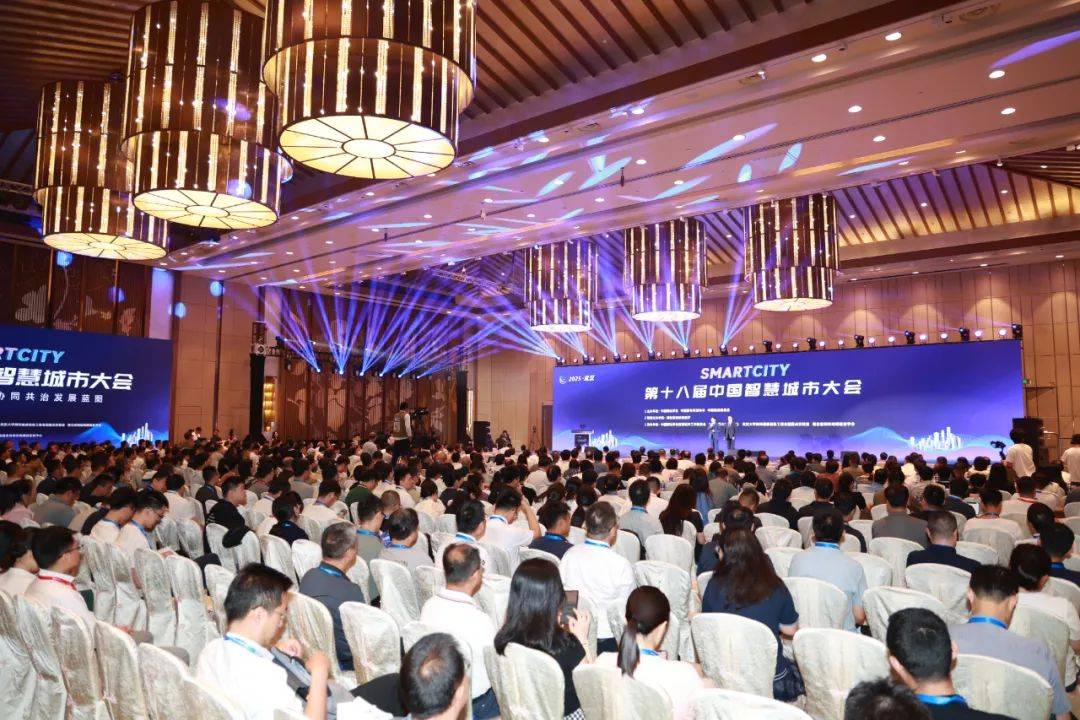
Group 1 - The 18th China Smart City Conference was held in Wuhan, Hubei, where the "2025 Smart City Pioneer List" was released, and Qinzhou's digital infrastructure construction case won the Excellent Case Second Prize, being the only awarded case from Guangxi [1] - The conference is co-hosted by the Chinese Society of Surveying and Mapping, the China Service Trade Association, and the China Remote Sensing Committee, making it a significant event in the smart city sector in China [4] - Qinzhou has been actively implementing the central government's strategy for artificial intelligence development and has accelerated smart city construction, establishing a framework for a stable, efficient, and secure urban service capability system [4] Group 2 - The "Beautiful Guangxi·Qinzhou Cloud," built on Huawei's cloud platform, has developed a "City Cloud" system consisting of three modules: government cloud, public service cloud, and enterprise cloud, providing efficient and secure cloud computing services for over 85 government and enterprise units [6] - The newly launched Huawei Ascend AI computing resource pool supports digital government governance and reform of government services, providing a smart foundation for these initiatives [6] - Qinzhou has developed the "City Brain" platform, integrating over 30 existing systems, and has created various subsystems such as "Shared Bicycle Supervision" and "Smart Doorplate," implementing over 60 AI algorithms to transition social governance from passive response to proactive AI management [8]

让城市更智慧——中国经验启迪世界
Ren Min Ri Bao Hai Wai Ban· 2025-06-30 01:22
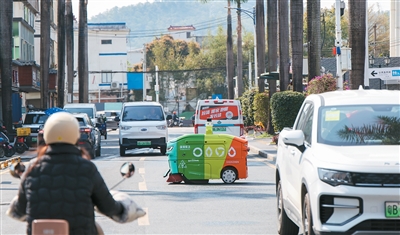
Core Insights - The article highlights the advancements in smart city development in China, particularly focusing on Chongqing and Shenzhen as examples of successful implementation of technology-driven urban management [1][2][3]. Group 1: Smart City Development in China - China has made significant progress in smart city development, establishing a robust data infrastructure and promoting integrated data sharing to enhance urban management [2][3]. - The "AI CITY" model is emerging, utilizing large models and knowledge bases to improve urban intelligence and operational efficiency [2][4]. - Policies and technological innovations are crucial for guiding and accelerating the development of smart cities in China [3][4]. Group 2: Technological Innovations - Internet technology facilitates the interconnectivity of urban governance elements, while big data creates a comprehensive view of city operations [3][4]. - Artificial intelligence enhances urban planning, management, and public service efficiency, contributing to precise governance [4]. - Blockchain technology introduces new trust mechanisms for data exchange, supporting reliable information sharing [4]. Group 3: Global Implications - China's experience in smart city development can serve as a model for other countries, emphasizing the importance of institutional and technological integration [4]. - The focus on both development and security is essential for achieving high-quality urban growth and resilience [4]. - Future smart city initiatives in China aim to foster a more intelligent, green, and human-centered urban environment, sharing these advancements globally [4].
数字广州城市三维底座建设项目获批 有力支撑城市空间数智化管控
Guang Zhou Ri Bao· 2025-06-14 20:15
Core Points - The Guangzhou Municipal Development and Reform Commission has approved a project proposal for the construction of a digital three-dimensional foundation and innovative applications in the city [1][4] - The project is divided into two main parts: the urban three-dimensional foundation and innovative applications, which will support the intelligent management of urban space and accelerate the development of a smart city in Guangzhou [1] Infrastructure Layer - The infrastructure layer includes the establishment of a comprehensive geological disaster monitoring network, a unified vertical benchmark for land and sea, and supporting infrastructure for environmental and resource management, enhancing real-time monitoring capabilities for urban safety risks [1] Data Resource Layer - The data resource layer involves the production and integration of three-dimensional data repositories for both above and below ground, as well as specialized databases for flood monitoring, vertical and multi-source satellite remote sensing, land investment, heritage protection, and low-altitude economy, creating a unified spatial and temporal data resource pool [1] Temporal and Spatial Framework Layer - The temporal and spatial framework layer consists of a national land spatial basic information platform, a management system for Guangzhou's spatial data, a model for planning and controlling rain and flood blue-green spaces, and a model for managing low-altitude infrastructure, forming a support platform for spatial intelligence [1] Business Application Layer - The business application layer will develop a series of innovative applications, including management of urban underground space information, planning and control of urban rain and flood spaces, geological safety management, implementation supervision of land spatial planning, smart city initiatives, statistical analysis of natural resources, upgrades to the Tianmap·Guangzhou system, unification of real estate registration platforms, optimization of approval systems for a better business environment, a three-dimensional foundation for low-altitude economy, smart land investment, and an integrated geographic space system for key project construction [2] Investment and Implementation - The total estimated investment for the project exceeds 400 million yuan, with the Municipal Planning and Natural Resources Bureau responsible for its organization and implementation, and the construction period is set for three years [3]
威海持续推进智慧城市提档升级,4224项政务实现“免证办”
Qi Lu Wan Bao Wang· 2025-06-06 15:55
Core Viewpoint - Weihai City has issued a three-year action plan (2025-2027) for the construction of a refined city, focusing on "all-domain refined urban and rural beauty" and aiming to achieve three major goals: becoming a leading area for green, low-carbon, high-quality development; a new high ground for high-level opening-up; and a benchmark city for modern social governance [1]. Group 1: Action Plan Overview - The action plan outlines 25 key tasks across six dimensions, emphasizing human-centered refinement, all-domain construction, and systematic support [1]. - The plan aims to modernize governance by creating an efficient and precise smart city, with a focus on refined governance and convenience for enterprises and citizens [2]. Group 2: Data and Technology Integration - Weihai City has gathered 3.8 billion data entries, 105,000 video resources, and 1 million IoT sensing terminals to establish an urban intelligent perception center, enabling real-time monitoring of urban operations [2]. - Future efforts will expand real-time perception coverage and utilize AI models to enhance analysis, forecasting, and response capabilities for urban management [3]. Group 3: Community and Service Enhancement - The plan includes initiatives to improve smart community standards and create provincial benchmark smart communities, focusing on key areas such as education, healthcare, and transportation [3]. - The city aims to streamline administrative processes through reforms that allow for efficient handling of tasks, expanding the reach of benefits like "silent certification" and "one-click service" for residents [3]. Group 4: Infrastructure Development - The city will promote integrated construction of smart infrastructure, enhancing capabilities in transportation and municipal services, and developing a modern digital foundation to support higher-level refined city construction [3].