
氢燃料电池汽车

Search documents
氢燃料电池汽车产业:技术突破,迈向提质增速新阶段
Zhong Guo Dian Li Bao· 2025-06-26 08:10
Core Insights - The hydrogen fuel cell vehicle industry is entering a new phase of quality improvement and accelerated growth, driven by the global push for carbon neutrality and the increasing application potential of hydrogen energy in various sectors [2][4]. Industry Development - China's fuel cell technology has transitioned from "catching up" to "running alongside" global standards, making it the country with the highest number of commercial fuel cell vehicles [4]. - By the end of 2024, over 28,000 fuel cell vehicles are expected to be promoted in China, with key technologies achieving breakthroughs and commercial fuel cell power density reaching international advanced levels [4][5]. Technological Advancements - Significant advancements in fuel cell technology include: - Reliability improvements with average first failure mileage and average interval failure mileage both exceeding 100,000 kilometers [5]. - Successful low-temperature start technology at -40°C [5]. - Hydrogen consumption for 12-meter fuel cell buses reduced to below 5 kilograms per 100 kilometers, achieving international leadership [5]. - The industry is witnessing trends such as membrane electrode technology iteration, breakthroughs in high-temperature technology, and accelerated commercialization of new generation stack technology [5]. Market Trends - The global fuel cell technology is shifting focus towards heavy-duty commercial vehicles, with countries like the US and Japan prioritizing fuel cell heavy trucks [7]. - The application of hydrogen fuel cell vehicles in heavy-duty commercial vehicles is seen as a key to overcoming commercialization challenges in the industry [8]. Cost Structure and Business Models - The cost of hydrogen fuel is becoming a critical factor, with estimates indicating that the fuel cost for a 1,000-kilometer hydrogen fuel cell truck could reach 300,000 to 400,000 yuan, surpassing the cost of the fuel cell system itself [10]. - Innovative business models such as hydrogen bottle leasing and exchange systems are proposed to reduce lifecycle costs and enhance market competitiveness [10][11]. Policy and Infrastructure - The industry emphasizes the need for improved hydrogen supply systems, simplified approval processes for self-use hydrogen stations, and collaborative efforts to reduce fuel cell costs [12]. - Establishing international hydrogen standards and enhancing regional collaboration are also highlighted as essential for accelerating the commercialization of hydrogen fuel cell vehicles [12].
氢燃料电池汽车“组团破圈” 出租、物流、环卫全都“氢”装上阵
Yang Shi Xin Wen· 2025-06-19 00:42
Core Insights - The 2025 International Hydrogen Energy and Fuel Cell Vehicle Conference was held in Shanghai, showcasing nearly 300 domestic and international companies focusing on new products and technologies in hydrogen fuel cell vehicles [1] - Significant advancements in hydrogen fuel cell technology were highlighted, including a new hydrogen hybrid passenger vehicle that has demonstrated over 10,000 kilometers of operation [3] - The latest generation of hydrogen fuel cell passenger vehicles has improved its range from 550 kilometers to 700 kilometers, with a refueling time of just 5 minutes [4] Technology Advancements - A newly developed catalyst has enhanced the stability and durability of fuel cells, improving overall performance by 10% to 15% [6] - A titanium-based bipolar plate has been introduced with a lifespan expected to exceed 30,000 hours and a cost reduction of over 30% [6] - The conference featured the world's largest hydrogen fuel cell mining truck, capable of carrying 260 tons and equipped with five 200 kW fuel cells [9] Environmental Impact - The 260-ton hydrogen mining truck can reduce carbon dioxide emissions by 3,000 tons annually and save approximately 30 million yuan in fuel costs over its lifecycle [11] - Hydrogen fuel cell vehicles are recognized for their zero emissions, long range, and strong low-temperature adaptability, making them a key pathway for decarbonizing the transportation sector [12] Market Applications - Hydrogen fuel cell vehicles are being applied in various sectors, including heavy-duty transport, cold chain logistics, and municipal sanitation, with significant operational mileage achieved [12][14] - In Guangdong, a refrigerated truck with a 90 kW fuel cell system operates an average of over 200 kilometers daily, showcasing the versatility of hydrogen fuel cell technology [14] Policy Support - The Chinese government has increased policy support for hydrogen fuel cell vehicles, facilitating the industry's transition to large-scale development [15] - New pilot cities have been added to support the hydrogen energy sector, indicating a growing commitment to the development of hydrogen fuel cell vehicles [15] Industry Outlook - Experts suggest that the current market may represent a turning point for hydrogen energy, with expectations of stable growth in the next three to five years [14] - The establishment of a complete ecological loop is essential for reducing costs across all stages of fuel cell vehicle deployment, aiming for large-scale commercial operation [17]

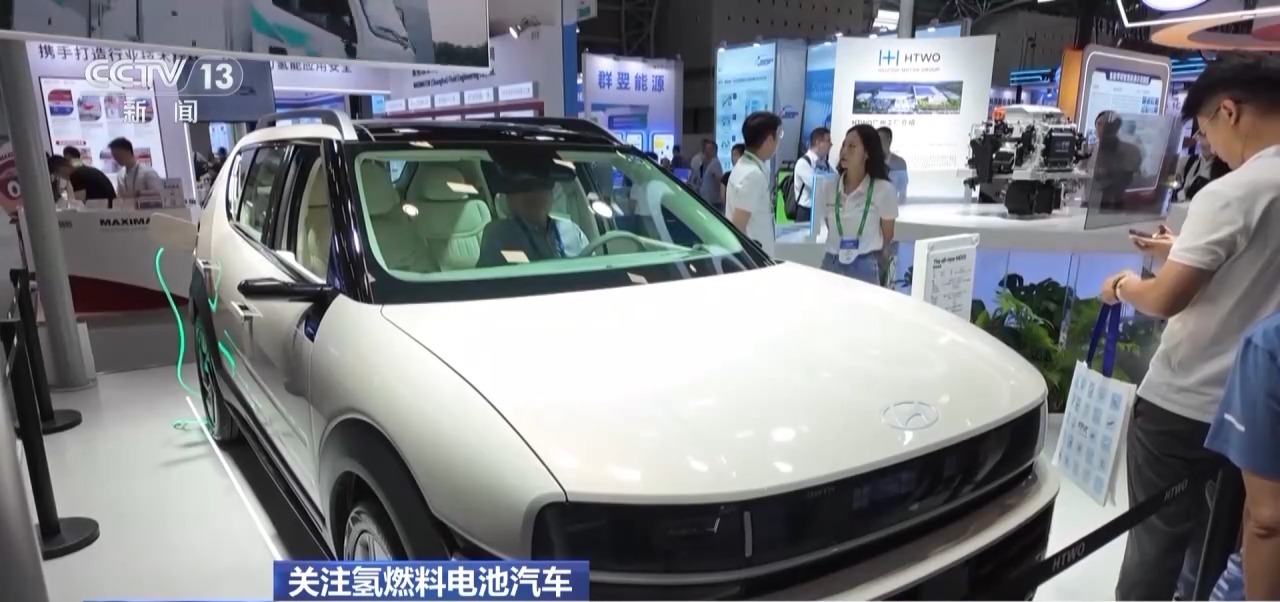
现代汽车崔斗河:未来五年是氢能产业以交通领域为主,多头并进、快速放量的关键期
Zhong Guo Qi Che Bao Wang· 2025-06-18 07:11
Group 1: Core Insights - The all-new NEXO hydrogen fuel cell vehicle was showcased in China, with a target of 20,000 global sales [1] - The Chinese hydrogen energy industry is entering a new phase of rapid development, with 2025 being a critical year for growth [3][4] - China aims to produce and consume over 36.5 million tons of hydrogen by 2024, leading the world in hydrogen energy production [3] Group 2: Market and Policy Environment - The implementation of the Energy Law in January 2023 has established hydrogen energy's status within China's energy management system [3] - China has built over 540 hydrogen refueling stations by the end of 2024, ranking first globally, and has promoted approximately 24,000 fuel cell vehicles [4] - The government is focusing on expanding hydrogen applications in various sectors, including transportation, industry, and public services [4][7] Group 3: Challenges and Solutions - The hydrogen industry faces challenges such as high costs, insufficient refueling infrastructure, and limited application scenarios [5][6] - Collaboration between government and enterprises is essential to address these challenges, including accelerating infrastructure development and providing incentives for fuel cell vehicle usage [6][7] Group 4: Company Developments - HTWO Guangzhou has achieved localized mass production of fuel cell systems and has promoted around 500 fuel cell vehicles, covering various applications [10] - The company is expanding its business into non-transportation sectors, such as forklifts and distributed power generation, to diversify its commercial pathways [10] - HTWO Guangzhou aims to establish a hydrogen value ecosystem and plans to develop new vehicle models in collaboration with local partners [12]
