
音乐教育

Search documents
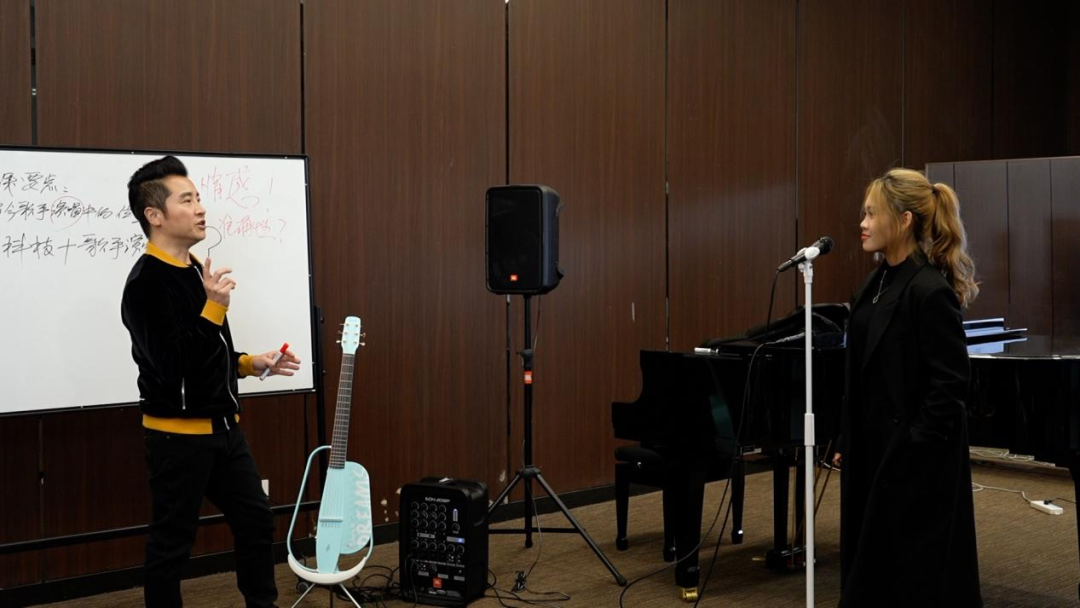
根脉中华 | 一所湾区音乐学院的“未来协奏曲”
Xin Lang Cai Jing· 2025-12-26 15:55
Core Viewpoint - The integration of traditional music with modern technology, particularly AI, is seen as a potential dialogue rather than a conflict, emphasizing the importance of preserving traditional music while embracing innovation [1][3]. Group 1: Traditional Music and Education - The Shenzhen University of Technology's Music College aims to protect and pass on traditional music, focusing on the nuances of ethnic vocal music that AI cannot replicate [1]. - Students are encouraged to engage with traditional music, viewing it as a living language that resonates with contemporary culture [1]. Group 2: AI and Music Industry - The relationship between AI and music has sparked discussions among students, with a consensus emerging that AI can amplify human creativity rather than limit it [3]. - The concept of training "music architects" is introduced, where students learn not only performance but also project design, AI music production, and sound and lighting design [3]. Group 3: Regional Influence - The Greater Bay Area is described as an ideal environment for the intersection of music and technology, fostering an open and pragmatic spirit conducive to cross-disciplinary experiments [3].

上音鼓浪屿音乐周举行 让美育浸润城市 在鼓浪屿 听见上海的声音
Jie Fang Ri Bao· 2025-12-17 01:43
Core Points - The Shanghai Conservatory of Music has been hosting the Gulangyu Music Week in Xiamen for five consecutive years, featuring a series of master classes, academic lectures, and high-quality concerts to enhance cultural exchange between Shanghai and Xiamen [1][2] - The event includes performances by students and faculty, showcasing the talent nurtured through the collaboration between the two cities, exemplified by the success of local student Gai Mingai [1] - The music week emphasizes community engagement, with open participation for students and free lectures for the public, aiming to integrate music into everyday life [2] Summary by Sections Event Overview - The fifth Gulangyu Music Week took place from December 15 to 19, featuring 8 master classes, 4 academic lectures, and 5 concerts [1] - The event aims to inject new energy into Xiamen as an artistic city and continues the musical relationship between Shanghai and Xiamen [1] Educational Impact - Since the establishment of a talent training and teaching base in Xiamen in 2021, 57 students from Xiamen Music School have been admitted to the Shanghai Conservatory of Music [1] - Gai Mingai, a local student, exemplifies the successful collaboration, having transitioned from Xiamen Music School to the Shanghai Conservatory [1] Community Engagement - The music week promotes an open participation model, with master classes available to students and free lectures for the public, aiming to enrich the cultural landscape of Xiamen [2] - The event incorporates interdisciplinary developments, including topics like digital theater, music technology, artificial intelligence, and music therapy, to stimulate the local cultural industry [2]
当多邻国开始“玩”音乐
3 6 Ke· 2025-08-13 02:01
Core Viewpoint - Duolingo is expanding into the music education sector through the acquisition of the London-based music game startup NextBeat, aiming to enhance its music course offerings and gamify the learning experience [1][3]. Company Strategy - Duolingo has experienced significant growth since its founding in 2011, leveraging gamification, social mechanisms, and user incentives to maintain a low user entry barrier while generating stable cash flow through a "free + ads + premium" business model [3]. - In 2023, Duolingo launched music and math courses, marking its first major expansion beyond language learning, utilizing gamified formats to provide engaging learning experiences [3]. - The partnership with Sony Music in 2024 will integrate over 60 songs from renowned artists into Duolingo's music courses, allowing users to learn music theory through popular music [5]. Market Trends - The music education market is projected to be more lucrative than traditional entertainment, with the total market size for music education training in China expected to exceed 155.48 billion yuan in 2024, surpassing the combined revenue of the music performance and digital music industries [25]. - The global immersive training market is anticipated to grow from approximately $16.4 billion in 2024 to $69.5 billion by 2030, with a compound annual growth rate of 28.3% [24]. Industry Dynamics - The integration of music, gaming, and education is becoming increasingly recognized as a powerful combination, with successful examples like Ubisoft's Rocksmith+ demonstrating the effectiveness of this model in enhancing user skills [16][18]. - The gaming industry is facing challenges in innovation, which presents new opportunities for education and music sectors to collaborate and create engaging learning experiences [28]. - The commercial potential of music content is growing, with diverse monetization strategies such as subscription models and classroom licensing becoming more prevalent [28][31]. Future Outlook - The combination of music, gaming, and education is not a fixed relationship but a flexible model that can yield unexpected synergies, emphasizing the need for deep exploration in areas like copyright compliance and quality of education to ensure long-term success [33]. - The advancement of technologies such as VR, AR, and AI is expected to revolutionize the integration of music, gaming, and education, making learning more engaging and personalized [34].

2025国民音乐教育大会蓄势待发
Xiao Fei Ri Bao Wang· 2025-06-24 02:51
Core Insights - The upcoming "2025 National Music Education Conference" aims to enhance national music culture literacy and adapt to the changes brought by artificial intelligence (AI) in music education [1][2] - The conference will feature discussions on how AI can be integrated into teaching and learning processes, creating new teaching models and optimizing personalized learning paths [1] Group 1: Conference Overview - The conference will be held on July 12-13 in Wuhan, organized by the China Musical Instruments Association in collaboration with several prestigious institutions [1] - Since its inception in 2018, the conference has become a leading platform for music education in China, attracting top educators and scholars from both domestic and international backgrounds [1][2] Group 2: Agenda and Activities - The main agenda includes macro trends and policy analysis, with leaders from the Ministry of Education and authoritative experts providing insights into industry opportunities and challenges [2] - Multiple sub-sessions will cover various topics such as AI in music education, psychological health in music education, and practical workshops, catering to diverse needs within the sector [2] Group 3: Target Audience and Goals - The conference targets music education experts, scholars, teachers, students, and parents, as well as professionals from music production and training institutions [2] - The goal is to integrate resources effectively and build a more comprehensive music education service system, promoting the idea that "music makes life better" [2]