游戏化学习

Search documents
Duolingo stock forecast as CEO warns of “near-term tradeoffs”
Invezz· 2026-01-13 14:30
Core Viewpoint - Duolingo's stock has experienced a significant decline, dropping 70% from its all-time high of $544, leading to a valuation of $7.48 billion [1][2]. Financial Performance - The company reported a 30% year-over-year increase in daily active users (DAU) and bookings exceeding previous guidance of $329 million to $335 million [3][4]. - Despite strong user growth, concerns about profitability have arisen due to management's plans for increased investments, which may result in short-term tradeoffs [4]. Analyst Sentiment - Most analysts remain bullish on Duolingo, with an average target price of $309, representing a potential upside of 91% from current levels [5][6]. - The consensus rating has shifted to "Hold," with a notable increase in "Buy" ratings from 10 to 12 over the past month [6]. Growth Projections - Analysts project annual revenue growth of 37% in 2025 and 22.7% for the current year, indicating resilience in revenue and user growth [7]. - There is potential for Duolingo to expand its offerings beyond language learning, which could attract more users [7]. Valuation Metrics - The forward price-to-earnings ratio stands at 14, below the sector median of 18.3, suggesting the stock is undervalued given its double-digit growth [8]. - The Rule-of-40 multiple indicates a strong valuation, with a net income margin of 40% and a forward growth metric of 39%, resulting in a multiple of 79% [8]. Technical Analysis - The stock has been in a downward trend, falling from $544 to $161, with a significant gap down following the financial results announcement [11]. - A head-and-shoulders pattern has formed, suggesting continued downward pressure, with key support at $150 and potential resistance at $200 later this year [12].



多邻国疯癫式劝学争议
Xin Lang Cai Jing· 2026-01-08 16:57
Core Viewpoint - The article discusses the potential negative impacts of language learning applications, particularly Duolingo, on minors, highlighting issues related to game addiction, inappropriate content, and the need for better content regulation and parental involvement [1][6][10]. Group 1: Game Addiction Concerns - Language learning platforms like Duolingo utilize gamification to enhance user engagement, but this can lead to excessive screen time and game addiction among minors [7][10]. - A case study of a parent, Liu Jing, illustrates how her child became addicted to the gaming aspects of Duolingo, prioritizing game challenges over actual learning [8][10]. - Experts suggest that while gamification can motivate learning, it risks overshadowing educational content, especially for younger users who may develop an external dependency on rewards rather than intrinsic interest in learning [8][10]. Group 2: Inappropriate Content - Concerns have been raised about the inclusion of content in Duolingo that may not be suitable for children, such as references to LGBTQ topics and unconventional social behaviors [4][5]. - Parents argue that children may misinterpret exaggerated character behaviors in the app as acceptable social norms, potentially affecting their emotional and social development [3][5]. - The lack of age-appropriate content in language learning apps poses a risk of children forming fragmented understandings of complex social issues [5][6]. Group 3: Need for Regulation - There is a call for the establishment of content grading systems to protect minors, particularly for digital content that may not align with their cognitive and emotional maturity [6][10]. - Experts advocate for the development of specific guidelines for educational applications to balance the enhancement of learning interest with the prevention of addiction and irrational spending [10][11]. - Recommendations include implementing mandatory features such as usage time limits and rest prompts for minors, as well as ensuring that gamification elements serve educational purposes rather than merely attracting users [11][12].

多邻国疯癫式劝学调查
Bei Jing Shang Bao· 2026-01-08 15:45
Core Viewpoint - The article discusses the potential negative impacts of language learning applications, particularly Duolingo, on minors, highlighting issues related to excessive gamification and the incorporation of unconventional values in educational content [1][7]. Group 1: User Experience and Behavior - Users, particularly minors, have shown a tendency to mimic exaggerated behaviors from characters in language learning apps, leading to concerns about their emotional expression and social interactions [2][3]. - The gamified learning approach, while initially engaging, has resulted in some users becoming overly focused on game mechanics rather than actual learning, leading to a phenomenon described as "learning game addiction" [7][8]. Group 2: Content and Value Concerns - Some educational content within these applications includes references to sensitive topics, such as LGBTQ+ issues, which may not be appropriate for younger audiences [4][5]. - The lack of comprehensive explanations for complex social topics can lead to fragmented understanding among children, potentially skewing their perception of the world [5]. Group 3: Regulatory and Design Recommendations - There is a call for the establishment of content grading systems to protect minors, ensuring that educational applications provide age-appropriate content [6]. - Experts suggest that educational apps should implement mechanisms to prevent addiction, similar to those used in online gaming, to balance learning engagement with the prevention of excessive use [10][11]. - Recommendations include mandatory features such as usage time limits and the disabling of competitive elements for underage users to ensure that educational goals remain the primary focus [11].

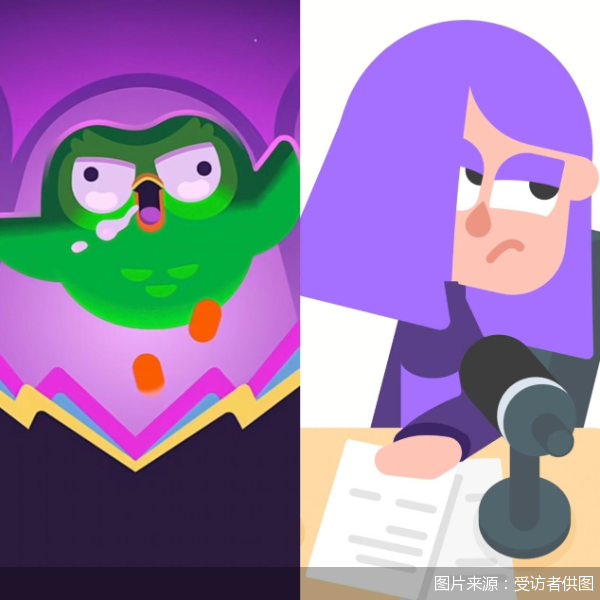
争议多邻国疯癫式劝学:幼儿疑似学习游戏成瘾,模仿黑化、发疯表情与翻白眼行为
Bei Jing Shang Bao· 2026-01-08 12:05
Core Viewpoint - The article discusses the potential negative impacts of language learning apps, particularly Duolingo, on minors, highlighting issues such as game addiction, inappropriate content, and the need for better content regulation and parental involvement [1][2][4][8]. Group 1: User Behavior and Concerns - Children using Duolingo have shown signs of game addiction, mimicking exaggerated behaviors from the app, which raises concerns about their emotional expression and social interactions [2][4]. - The app's gamified learning approach, while initially engaging, can lead to excessive focus on game mechanics rather than actual learning, resulting in a detrimental impact on educational outcomes [9][14]. Group 2: Content Appropriateness - Some content within Duolingo includes themes that may not be suitable for younger audiences, such as references to LGBTQ+ topics and unconventional social behaviors, which could confuse children lacking the maturity to understand these concepts [4][8]. - The lack of a content grading system in China raises concerns about the suitability of materials for different age groups, emphasizing the need for tailored content that aligns with children's cognitive abilities [8][16]. Group 3: Regulatory and Parental Involvement - Experts suggest that language learning apps should implement measures to prevent addiction, similar to those used in online gaming, to balance educational value with user engagement [15][16]. - There is a call for the establishment of guidelines for educational apps to ensure that gamification serves educational purposes rather than merely attracting users for profit [15][16].
粤语×游戏,华农学子让语言学习变“好玩”
Nan Fang Nong Cun Bao· 2025-08-29 08:33
Core Viewpoint - The article highlights the innovative approach taken by South China Agricultural University to teach Cantonese to children through engaging games and cultural activities, addressing the decline in Cantonese usage among the younger generation [5][10][29]. Group 1: Challenges in Cantonese Language Preservation - The increasing urbanization and the prevalence of Mandarin have led to a significant decline in the use of Cantonese among children, raising concerns about the potential loss of this dialect [7][8]. - Many young children are unable to speak Cantonese, primarily communicating in Mandarin, which reflects a broader trend of diminishing dialect usage in daily life [6][9]. Group 2: Innovative Learning Approaches - The teaching team has creatively integrated Cantonese learning into fun games and real-life scenarios, moving away from traditional, rigid language instruction methods [11][27]. - Activities such as "Cantonese Word Treasure Hunt" and "Magical Animal Storytelling" have made learning Cantonese enjoyable, allowing children to grasp commonly used words and phrases through play [12][14]. Group 3: Cultural Integration - The use of Cantonese nursery rhymes and local cultural elements in lessons has helped children connect with the language on a deeper level, making abstract cultural practices more tangible [20][21][23]. - The program emphasizes experiential learning, where children engage in activities that promote cultural understanding alongside language acquisition, fostering a sense of cultural identity [18][29]. Group 4: Community and Educational Collaboration - The initiative represents a successful collaboration between higher education institutions and local communities, aiming to create a sustainable model for cultural transmission through language education [24][31]. - Parents and community leaders have expressed strong support for the program, recognizing its role in enhancing children's cultural identity and language skills [30][32].

8年营收增长77倍,「追杀」年轻人的「美国绿鸟」,创下百亿美元市值
36氪· 2025-08-22 13:47
Core Viewpoint - Duolingo, represented by the green owl Duo, has transformed language learning into a game-like experience, attracting a significant user base and achieving impressive financial growth, with a projected revenue of $1.01 billion to $1.019 billion for 2025, surpassing analyst expectations of $996 million [7][25]. User Engagement and Growth - Duolingo has successfully gamified learning, leading to 500 million users who engage in learning through game mechanics, earning rewards, and competing on leaderboards [4][7]. - The platform's daily active users grew by 40% year-over-year, reaching 47.7 million, while monthly active users increased by 24% to 128.3 million [44]. Financial Performance - Duolingo's stock price has increased over 300% since its NASDAQ debut in 2021, with a market capitalization of $15.116 billion [25]. - The company's revenue expectations for 2025 represent a 77-fold increase from $13 million in 2017 [25]. Marketing and Social Media Strategy - Duolingo employs a "social first" strategy, leveraging social media to enhance user engagement and brand visibility, adapting its marketing approach based on regional preferences [41][49]. - The brand's ability to capitalize on trending topics and cultural references has helped maintain its relevance and visibility on social platforms [7][17]. Challenges and Criticisms - Despite growth, Duolingo faces challenges, including a slowdown in user growth rates and criticism regarding the effectiveness of its AI-generated content [51][54]. - Users have expressed dissatisfaction with the perceived lack of depth in learning, questioning the platform's ability to deliver substantial educational value [54].
点点双雄登顶海外收入榜;律师诉王者荣耀案开庭丨游戏周报
2 1 Shi Ji Jing Ji Bao Dao· 2025-08-18 07:24
Industry Dynamics - Sensor Tower reported that in July, the top two mobile games in overseas revenue from China were "Whiteout Survival" and "Kingshot," both from Century Huatong [1][2] - Shenzhen has introduced new measures to support the development of the digital creative industry, focusing on gaming, esports, and other key sectors [1][3] - The Japanese Fair Trade Commission (JFTC) has released the Mobile Software Competition Act (MSCA), requiring major platforms like Apple and Google to allow external payment systems and provide more options for developers [1][10][11] Company Performance - Tencent's Q2 2025 revenue reached 184.5 billion yuan, a 15% year-on-year increase, with its gaming business growing by 18% [1][4] - NetEase reported a Q2 2025 revenue of 27.9 billion yuan, a 9.4% increase, with its gaming business revenue growing by 14.6% [1][5] Legal and Regulatory Developments - The trial for the lawsuit against Tencent regarding the matching mechanism of "Honor of Kings" has concluded, focusing on players' right to know and whether the matching mechanism is a trade secret [1][6][7] - The Guangzhou Intellectual Property Court ruled that "Three Kingdoms: Strategy Edition" did not infringe on the copyright of "Rate the Land" in a recent retrial [1][9] Esports Events - The national finals of the "Street Basketball" Super League (SFSA), organized by Century Huatong's Tianyou Software, concluded in Shanghai, with the Nanjing champion team winning [1][14] Corporate Changes - Duolingo has acquired the NextBeat team from Supercell, focusing on enhancing its "gamified learning" capabilities [1][12][13]


8年营收增长77倍,“追杀”年轻人的“美国绿鸟”,创下百亿美元市值
Tai Mei Ti A P P· 2025-08-18 03:42
Core Insights - Duolingo, represented by the green owl "Duo," has transformed language learning into a game-like experience, attracting 500 million users globally through engaging and addictive learning methods [1][4][14] - The company has raised its revenue forecast for 2025 to between $1.01 billion and $1.019 billion, exceeding analysts' expectations of $996 million, indicating strong market performance [4][14] - Duolingo's stock price has increased over 300% since its IPO in 2021, reaching a market capitalization of $15.116 billion, showcasing significant growth in the education technology sector [14][18] User Engagement and Marketing Strategy - Duolingo employs a "social first" strategy, leveraging social media to enhance user engagement and drive growth, with a focus on creating relatable and entertaining content [21][24] - The platform's game-like features, such as earning gems and badges, encourage users to maintain their learning streaks, fostering a sense of competition and community [14][20][25] - Duolingo's marketing tactics include collaborating with popular trends and influencers, making the brand more relatable and visible across various social platforms [3][6][9] Financial Performance and Projections - The company reported a 40% year-over-year increase in daily active users, reaching 47.7 million, and a 24% increase in monthly active users, totaling 128.3 million [24][30] - Duolingo's revenue model includes subscription services, advertising, and language testing, with subscriptions being the primary revenue driver [18][20] - Despite recent growth, the company faces challenges in maintaining user engagement and satisfaction, particularly with the integration of AI in its learning processes [30][31] Market Position and Challenges - Duolingo's entry into the Chinese market has been significant, with China becoming its seventh-largest market, although initial growth was slow due to competition [27][29] - The company has encountered criticism regarding the effectiveness of its AI-generated content and the perceived value of its learning platform, raising concerns about user retention and satisfaction [30][31] - As the market evolves, Duolingo must demonstrate that its gamified approach not only engages users but also leads to meaningful learning outcomes to sustain its growth trajectory [31]

当多邻国开始“玩”音乐
3 6 Ke· 2025-08-13 02:01
Core Viewpoint - Duolingo is expanding into the music education sector through the acquisition of the London-based music game startup NextBeat, aiming to enhance its music course offerings and gamify the learning experience [1][3]. Company Strategy - Duolingo has experienced significant growth since its founding in 2011, leveraging gamification, social mechanisms, and user incentives to maintain a low user entry barrier while generating stable cash flow through a "free + ads + premium" business model [3]. - In 2023, Duolingo launched music and math courses, marking its first major expansion beyond language learning, utilizing gamified formats to provide engaging learning experiences [3]. - The partnership with Sony Music in 2024 will integrate over 60 songs from renowned artists into Duolingo's music courses, allowing users to learn music theory through popular music [5]. Market Trends - The music education market is projected to be more lucrative than traditional entertainment, with the total market size for music education training in China expected to exceed 155.48 billion yuan in 2024, surpassing the combined revenue of the music performance and digital music industries [25]. - The global immersive training market is anticipated to grow from approximately $16.4 billion in 2024 to $69.5 billion by 2030, with a compound annual growth rate of 28.3% [24]. Industry Dynamics - The integration of music, gaming, and education is becoming increasingly recognized as a powerful combination, with successful examples like Ubisoft's Rocksmith+ demonstrating the effectiveness of this model in enhancing user skills [16][18]. - The gaming industry is facing challenges in innovation, which presents new opportunities for education and music sectors to collaborate and create engaging learning experiences [28]. - The commercial potential of music content is growing, with diverse monetization strategies such as subscription models and classroom licensing becoming more prevalent [28][31]. Future Outlook - The combination of music, gaming, and education is not a fixed relationship but a flexible model that can yield unexpected synergies, emphasizing the need for deep exploration in areas like copyright compliance and quality of education to ensure long-term success [33]. - The advancement of technologies such as VR, AR, and AI is expected to revolutionize the integration of music, gaming, and education, making learning more engaging and personalized [34].
付费用户突破 1000 万,All in AI 的多邻国,是怎么用 AI 的?
Founder Park· 2025-05-14 12:28
Core Insights - Duolingo's Q1 financial report shows impressive growth with DAU at 46.6 million, up 49% year-over-year; MAU at 130.2 million, up 33%; and paid users surpassing 10.3 million, up 40% [1][2] Group 1: Financial Performance - Total revenue reached $230.7 million, representing a 38% year-over-year increase [2] Group 2: AI Integration - Duolingo has not been negatively impacted by AI; instead, it has leveraged AI to create 148 courses in one year, a process that would have taken 12 years using traditional methods [3] - The CEO announced a strategic shift to "AI-first," emphasizing the need to adapt to AI's transformative impact on the company [4][6] - AI is expected to enhance productivity and help achieve high-quality teaching by automating content creation, which previously required extensive manual effort [8] Group 3: AI Applications in Education - AI has revolutionized Duolingo's content creation process, allowing for a fully automated system that significantly reduces human labor and increases course offerings [11] - The use of AI in conversation practice has improved user engagement, as learners can practice without the fear of judgment from peers [12] Group 4: User Engagement Strategies - Duolingo has successfully gamified learning by shortening lesson durations from 30 minutes to 2 minutes, making it more appealing for users [15] - Features like "streaks" that track consecutive learning days have proven to be highly effective in maintaining user motivation [16] Group 5: Future of Education - The CEO believes that while AI will enhance educational scalability, traditional teachers and schools will still play a crucial role in student care [34] - The company anticipates a gradual transformation in education, with AI tools becoming more integrated into learning environments over the next 20 years [35][36]