
古筝

Search documents
人民日报关注|“音乐之都”江苏无锡——丝竹声中寻年味
Ren Min Ri Bao· 2026-02-18 00:18
Group 1 - In 2025, Wuxi was designated as a "City of Music" by UNESCO, highlighting its cultural significance in music [1] - During the Spring Festival, Wuxi showcases various musical performances, creating a vibrant atmosphere filled with traditional melodies [1][2] - The local performance of the Xiju opera "Shuang Tui Mo" and the Jiangnan Sizhu ensemble reflects the rich cultural heritage and community engagement in Wuxi [3] Group 2 - The popularity of the Erhu experience sessions during the Spring Festival indicates a growing interest in traditional music among families [4] - The sales of Erhu instruments, especially those themed around the zodiac, demonstrate a market trend towards cultural and artistic gifts during the holiday season [5] - The Hongshan National Music Museum features a significant collection of ancient musical instruments, showcasing the historical depth of Wuxi's musical culture [5] Group 3 - The city plans to host nearly 40 music events around the Spring Festival, attracting both residents and tourists, which enhances Wuxi's reputation as a cultural hub [6]
中匈联合发行“民族瑰宝·匈中民族乐器”邮票
Xin Hua Wang· 2026-02-09 01:12
Core Viewpoint - The joint issuance of stamps featuring traditional musical instruments from China and Hungary aims to promote cultural exchange and dialogue between the two nations [1] Group 1: Stamp Issuance Details - The stamps are designed with themes of the Chinese guzheng and the Hungarian cimbalom, with a total of 20,000 miniature sheets issued, each containing four stamps [1] - The issuance ceremony included performances by Chinese guzheng player Zhang Ye and Hungarian musician Debreceni-Kis Helga, showcasing the unique charm of traditional music from both countries [1] Group 2: Cultural Significance - Chinese Ambassador to Hungary Gong Tao emphasized the importance of the new "Cultural Treasures" stamp series in promoting cultural exchange, building on the previous 12-year collaboration on the Chinese zodiac stamp series [1] - Hungarian State Secretary for the Ministry of Economic Development, Turi Aniko, highlighted that the stamps reflect the shared values of cultural heritage and the significance of traditional folk music between China and Hungary [1] Group 3: Historical Context - The Hungarian postal service has been issuing the Chinese zodiac commemorative stamps since 2014, with a complete cycle of the zodiac stamps expected to be finished by 2025 [1] - The newly issued stamps are the inaugural release of the "Cultural Treasures" series, marking a new phase in the cultural collaboration between the two countries [1]
穿越时空的力量
He Nan Ri Bao· 2026-02-07 23:27
Core Viewpoint - The article highlights the enduring legacy of Jiao Yulu, a model county party secretary, and the transformation of Lankao County, emphasizing the importance of his spirit in contemporary society and its impact on local development. Group 1: Historical Context - In 1962, Lankao faced severe natural disasters, including flooding and salinization, leading to a historic low in grain production [6] - Jiao Yulu was appointed to Lankao during this crisis and made a commitment to change the county's situation, stating, "I will work hard to change Lankao's appearance" [6][12] - His tenure lasted only one year and four months, but it left a lasting impact on the region, giving rise to the "Jiao Yulu spirit" [7] Group 2: Agricultural and Economic Development - Jiao Yulu initiated the planting of Paulownia trees to combat desertification, which has now evolved into a significant economic industry in Lankao, generating over 10 billion yuan annually and providing employment for over 40,000 people [9][10] - The Paulownia industry has diversified into producing musical instruments, with Lankao becoming the largest production base for traditional Chinese instruments in Central and Western China, contributing over 2 billion yuan in annual revenue [10] - Lankao's Paulownia wood products are exported to more than ten countries, with the local furniture industry producing over 400,000 sets annually [10] Group 3: Cultural Significance - The "Jiao Yulu spirit" is seen as a symbol of dedication and service to the people, with the Paulownia tree, known as "Jiao Tong," representing this legacy [9][12] - The Jiao Yulu Memorial Hall showcases artifacts that reflect his commitment to the community, including a chair that symbolizes his struggle against illness while serving the people [11][12] - The spirit of Jiao Yulu continues to resonate in contemporary discussions, especially during significant local events, reinforcing its relevance in modern governance and community development [13]


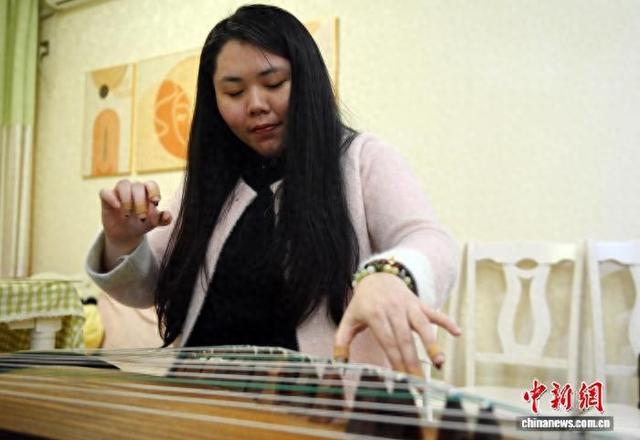
台青钟梓华用音符连接两岸 在挑战中创新广西民族音乐
Xin Lang Cai Jing· 2026-02-01 10:02
Core Viewpoint - The article highlights the journey of Taiwanese musician Zhong Zihua, who is innovating Guangxi ethnic music by blending traditional and modern styles through her performances and compositions [1]. Group 1: Background and Experience - Zhong Zihua, a 90s-born Taiwanese, completed her graduate studies at the Central Conservatory of Music and joined the Guangxi Ethnic Orchestra in 2022 [3]. - She has a passion for challenges and aims to innovate ethnic music after moving to Guangxi [3]. Group 2: Professional Challenges and Achievements - In late 2022, she participated in the first Guangxi Youth Performer Competition, where she prepared a diverse repertoire and won second place in a comprehensive competition featuring both Western and ethnic instruments [4]. - In 2025, she faces a challenge to master an additional ethnic instrument, specifically the copper drum, within a tight timeframe of two weeks [4]. Group 3: Creative Contributions - Zhong Zihua quickly learned the basics of playing the copper drum and created a complete solo piece titled "Echo of the Copper Drum," inspired by the instrument's resonant sound [4]. - She has been involved in a large-scale ethnic symphonic work supported by the Guangxi Arts Fund, which deepened her understanding of the music of various ethnic groups in Guangxi [5]. Group 4: Teaching and Future Aspirations - In addition to performing, Zhong Zihua is dedicated to teaching guzheng, aiming to bridge traditional music with modern aesthetics [5]. - She has adapted classic guzheng pieces to make them more appealing to younger audiences and plans to continue enhancing her performance skills while exploring new creative avenues rooted in Guangxi's ethnic music [5].
东西问丨安娜·瑞德:增进彼此理解,从分享音乐开始
Xin Lang Cai Jing· 2025-12-28 11:10
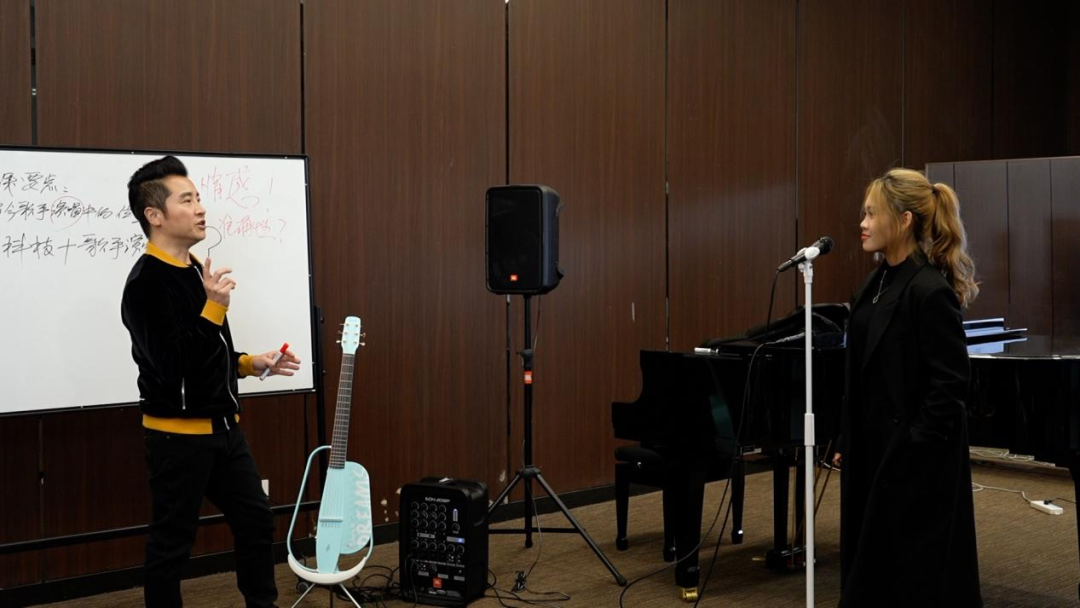
Core Viewpoint - The interview with Anna Reid, the Dean of the Sydney Conservatorium of Music, emphasizes the role of music as a universal language that fosters cultural exchange and understanding between China and Australia [3][10]. Group 1: Cultural Exchange through Music - Music serves as a unique medium for cultural exchange, enhancing mutual understanding between China and Australia [3]. - Anna Reid highlights her impressions of Chinese music, particularly traditional instruments like the guzheng, dizi, and erhu, which she has personally engaged with [3][4]. - The Sydney Conservatorium has approximately 300 students and faculty who can play Chinese instruments, providing a significant opportunity for exploration in both Eastern and Western musical traditions [6][9]. Group 2: Collaboration and Education - The Sydney Conservatorium maintains active partnerships with several Chinese music institutions, facilitating teacher and student exchanges [9]. - Collaborations with institutions like Xinghai Conservatory of Music focus on nurturing young composers and supporting advanced research studies [9]. - The Conservatorium's commitment to cross-cultural music education is reflected in its curriculum, which incorporates diverse musical traditions [7]. Group 3: The Future of Music and Technology - The integration of artificial intelligence in music composition is viewed as a tool that encourages critical thinking among students, rather than a threat [13]. - Anna Reid suggests that AI can assist in music creation, but emphasizes the importance of students developing their judgment and creativity in the process [13]. - The future of music lies in maintaining an open perspective and supporting young composers to create music that resonates with contemporary audiences [6][11].

根脉中华 | 一所湾区音乐学院的“未来协奏曲”
Xin Lang Cai Jing· 2025-12-26 15:55
Core Viewpoint - The integration of traditional music with modern technology, particularly AI, is seen as a potential dialogue rather than a conflict, emphasizing the importance of preserving traditional music while embracing innovation [1][3]. Group 1: Traditional Music and Education - The Shenzhen University of Technology's Music College aims to protect and pass on traditional music, focusing on the nuances of ethnic vocal music that AI cannot replicate [1]. - Students are encouraged to engage with traditional music, viewing it as a living language that resonates with contemporary culture [1]. Group 2: AI and Music Industry - The relationship between AI and music has sparked discussions among students, with a consensus emerging that AI can amplify human creativity rather than limit it [3]. - The concept of training "music architects" is introduced, where students learn not only performance but also project design, AI music production, and sound and lighting design [3]. Group 3: Regional Influence - The Greater Bay Area is described as an ideal environment for the intersection of music and technology, fostering an open and pragmatic spirit conducive to cross-disciplinary experiments [3].
海外青少年近距离感知中国音乐魅力
Ren Min Ri Bao Hai Wai Ban· 2025-11-03 01:00
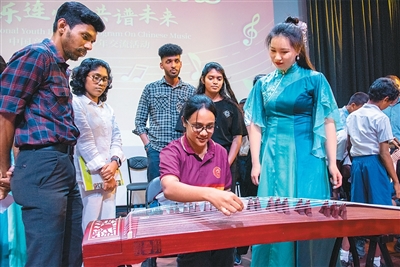
Group 1 - The article highlights the successful short-term Erhu training held at the Chinese Cultural Center in Berlin, led by a doctoral student from the Central Conservatory of Music, showcasing the instrument's history, techniques, and classic repertoire [1] - The training is part of the "Chinese Music Connecting Hearts, Composing the Future" initiative, which has organized various activities globally since February, including workshops and performances to promote Chinese music among overseas youth [1] - The initiative is a collaboration between the China Cultural and Tourism Exchange Center and various cultural institutions, aiming to bridge the gap for international youth to experience the charm of Chinese music [1] Group 2 - The Wuxi National Orchestra's music group has performed in Sri Lanka and Thailand, engaging in discussions on classic music, creation, performance techniques, and cultural transmission [2] - The China Conservatory of Music's music group has conducted workshops and performances in Argentina and Chile, further promoting Chinese music education [2] - An online video exhibition titled "Chinese Music, Listen to My Performance" has attracted participation from youth in 11 countries, showcasing their enthusiasm and achievements in learning Chinese music, thereby expanding the initiative's influence [2]
加拿大蒙特利尔上演“天涯共此时”中秋琵琶音乐会
Zhong Guo Xin Wen Wang· 2025-10-14 03:05
Core Viewpoint - The event "Together Under the Same Sky - Mid-Autumn Liu Fang Pipa Solo Concert" was held at the Montreal Botanical Garden, celebrating Chinese culture and the 40th anniversary of the friendship between Shanghai and Montreal [1][2]. Group 1: Event Details - The concert featured renowned pipa artist Liu Fang, who performed a variety of traditional and modern pieces, showcasing different styles and eras [1]. - The event included a photography exhibition, traditional clothing trials, guzheng demonstrations, mooncake tasting, and tea displays, attracting thousands of visitors [1]. Group 2: Significance and Cultural Exchange - The event is part of a series of celebrations marking the 40th anniversary of the friendship between Shanghai and Montreal, emphasizing the historical significance of the Chinese Garden as a cultural bridge [2]. - The "Together Under the Same Sky" initiative, launched by the Chinese Ministry of Culture and Tourism in 2017, aims to promote the cultural connotations of the Mid-Autumn Festival, highlighting themes of reunion, harmony, and happiness [3].
南非斯坦陵布什大学孔子学院举办中秋文化雅集活动
Zhong Guo Xin Wen Wang· 2025-10-08 03:01
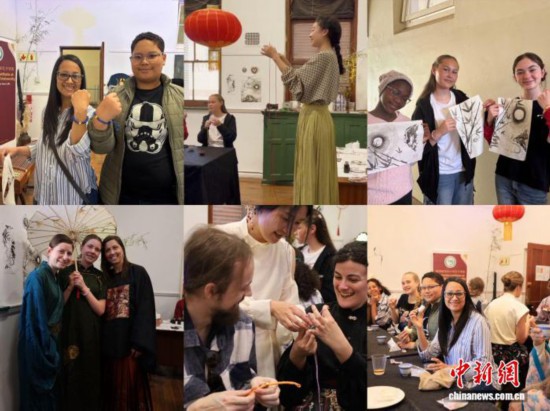
Core Viewpoint - The Confucius Institute at Stellenbosch University in South Africa hosted a "Mid-Autumn Cultural Gathering" event, showcasing Chinese culture through various activities, attracting around 60 participants from local schools and cultural enthusiasts [1][3]. Group 1: Event Overview - The event featured activities such as traditional Chinese painting, musical performances, tea tasting, Hanfu experience, and handicraft teaching, providing an immersive experience of Chinese culture [1][3]. - Participants engaged in learning about Mid-Autumn myths and customs, interactive lantern riddles, and the cultural significance of different Chinese dynastic clothing styles [3][5]. Group 2: Cultural Exchange - The event included demonstrations of Chinese calligraphy and painting, with instructors explaining the aesthetics and techniques involved, such as "qi yun sheng dong" (vitality and spirit) [3][5]. - Musical performances included a guzheng piece titled "Shui Diao Ge Tou" and a hulusi rendition of "Xuan Cao Hua," conveying themes of reunion and familial love [5]. Group 3: Community Impact - The principal of the Hugo Naudé Art Centre expressed that the event deepened the understanding of Chinese art's elegance and complexity, reinforcing cultural exchange [5].
我们村的“王牌”丨民族乐器奏响乡村富民曲
Yang Guang Wang· 2025-10-03 01:12
Core Viewpoint - The development of the traditional musical instrument industry in Xu Chang Village, Henan Province, has significantly contributed to local economic growth and poverty alleviation through financial support and entrepreneurial initiatives [1][2][3] Group 1: Industry Development - The traditional musical instrument industry in Xu Chang Village has rapidly expanded, with 92 out of 105 households engaged in instrument production, leading to an increase in per capita income by nearly 10,000 yuan [2] - The industry has become a crucial pillar of economic development in Lankao County, with 219 musical instrument enterprises and related businesses, generating an annual output value exceeding 3 billion yuan, with the traditional music sector accounting for over 40% [3] Group 2: Financial Support and Policies - Financial support policies, including the "musical instrument loan," have facilitated the growth of the industry, enabling local entrepreneurs like Xu Weiping to scale production to 6,000 guzhengs annually [2] - Since 2014, poverty alleviation policies have encouraged young people to return to their hometowns to start businesses, providing interest-subsidized loans and technical training [1]