AI Computing

Search documents
推进科技与文化融合 超集群类AI算力产品首获国际设计大奖
Zhong Guo Xin Wen Wang· 2026-01-13 14:01
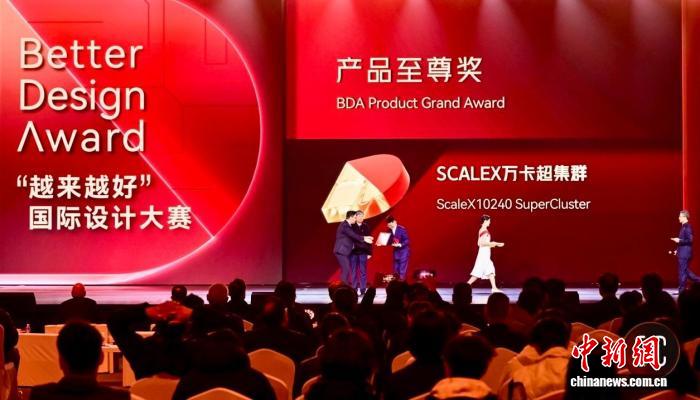
Core Insights - The scaleX Wanka super cluster by Zhongke Shuguang won the prestigious "Product Supreme Award" at the "Better and Better" International Design Competition, standing out among 15,691 entries from 69 countries and regions [1][3] - This award marks the first time an AI computing product in the category of super nodes and super clusters has received a design award, highlighting the importance of design in technology [1][3] Company Overview - Zhongke Shuguang's scaleX Wanka super cluster addresses significant challenges in the AI industry, particularly the high demand for computing power and the shortage of high-end computing supply [3] - The scaleX Wanka super cluster is designed as a large-scale intelligent computing infrastructure solution, focusing on advanced model applications and complex task scenarios, showcasing multiple innovations in architecture, networking, storage optimization, and system management [3] Design Philosophy - The design of the scaleX Wanka super cluster integrates industrial design with cutting-edge technology, employing a modular design approach that enhances functionality while maintaining a clear and ergonomic aesthetic [3] - Zhongke Shuguang emphasizes the fusion of technology and culture in its design philosophy, prioritizing humanistic care and user experience, which is reflected in the award-winning design of the scaleX Wanka super cluster [3] Industry Context - The "Better and Better" International Design Competition focuses on designs that serve national strategies, address industrial challenges, and safeguard public welfare, indicating a shift towards design as a strategic tool in connecting technology with humanistic values [4] - The competition's recognition of Chinese design solutions underscores the global need for innovative approaches to complex challenges faced by humanity [4]


品高股份:AI Station液冷工作站首发+2026年T800芯片布局
Quan Jing Wang· 2025-12-26 06:58
Core Viewpoint - Pingao Co., Ltd. is set to launch the Pingyuan AI integrated liquid-cooled workstation series, AI Station, on December 25, 2025, as part of its strategy to accelerate the domestic AI infrastructure, focusing on a comprehensive autonomous computing solution from desktop AI terminals to future cluster training [1] Product Launch - The AI Station series features the Jiangyuan D20 AI accelerator card, which is the first domestically produced cloud AI inference card, with a peak INT8 computing power of 320 TOPS and 256GB of memory, supporting multiple precision calculations [2] - The workstation series includes single-card (D20-S), dual-card (D20-D), and quad-card (D20-Q) models, designed to meet varying computing power needs, with the quad-card model capable of running large models like Qwen 235B and DeepSeek 685B [2] Performance and Design - The AI Station series utilizes a liquid cooling architecture that improves thermal conductivity efficiency by 40% compared to traditional air cooling, allowing for continuous operation without performance throttling [3] - The series operates at a noise level of 28dB, making it suitable for quiet environments such as offices and laboratories, while maintaining a compact design even for the quad-card model [3] Strategic Layout - The launch is part of Pingao's broader strategy to create a comprehensive domestic AI computing ecosystem, featuring a full range of hardware and software solutions to support various AI application needs [4] - The hardware lineup covers edge, desktop, and server cluster levels, with deep compatibility with mainstream domestic CPUs, ensuring supply chain security [4] Software Ecosystem - The company has developed three core software platforms: BingoAIInfra for GPU management, BingoAIStack for model training and deployment, and BingoAIDriver for industry application integration, facilitating AI development and operations [5] Collaborative Ecosystem - Pingao has established strategic collaborations with domestic chip manufacturers and AI algorithm vendors, aiming to promote the large-scale implementation of domestic AI computing ecosystems across various sectors [7] Industry Recognition - The Pingyuan AI integrated workstation series has received multiple industry awards, including the "2025 Annual AI Innovation Product" at the 27th China International Software Expo, highlighting its performance and market impact [7] Future Outlook - In 2026, Jiangyuan Technology plans to launch the T800 AI chip, targeting large-scale AI model training and inference, with significant performance advantages over international competitors [8] - The T800 chip will support advanced computing techniques and is designed to meet the future demands for large-scale computing, aligning with the AI Station's capabilities [9]

北美AI缺电信号明确
摩尔投研精选· 2025-12-24 10:08
Market Overview - The market experienced a strong upward trend with the Shanghai Composite Index rising for six consecutive days, and the Shenzhen Component Index increasing by nearly 1%. Over 4,100 stocks in the market saw gains [1] Spring Market Outlook - The spring market may unfold in two ways: first, capital may rush in to buy on dips, leading to a generally strong market; second, if incremental capital is exhausted and negative news arises, a "deep squat jump" may occur. Currently, there is a strong willingness among A-share investors to capitalize on the spring market, with limited visibility of negative factors [2] - Historical data suggests that sectors with high returns in the first half of the year may see a pullback at the end of the year, while underperforming sectors may experience a rebound. The internal demand sector is highlighted as having sufficient attractiveness and increasing win rates, supported by year-end industry allocation patterns and policies aimed at boosting domestic demand [2] Key Sectors to Watch - Focus on sectors such as insurance, brokerage, non-ferrous metals, AI computing/power semiconductors, retail/personal care/social services/dairy products, aviation, and new energy [3] North American AI Power Supply Issues - North America faces a significant power supply gap, exacerbated by the growing demand for AI Data Centers (AIDC). Traditional rapid energy replenishment methods are limited, making AIDC energy storage solutions more economically viable and quicker to deliver. The demand for AIDC energy storage is projected to increase from 9.6 GWh in 2025 to 21 GWh by 2028, with storage duration extending from 4 hours to 6-8 hours [4] - The global AIDC transformer market is expected to grow significantly, with estimates of 60 billion yuan in 2024 and 264 billion yuan in 2027, reflecting a compound annual growth rate (CAGR) of approximately 64% [4] Transformer Export Data - According to customs data, China's transformer exports totaled 579 million yuan from January to November, marking a year-on-year increase of 36%, indicating sustained high demand in the transformer export market [5] AIDC Concept Stocks - AIDC concept stocks focus on core areas such as computing infrastructure, liquid cooling, power distribution, and network equipment. Key players include: - **Core Computing and IDC Operations**: Companies like Zhongke Shuguang and Inspur Information are leading in liquid cooling and AI server markets [6] - **Liquid Cooling Technology**: Companies such as Yingweike and Qiu Tianwei are key suppliers in the liquid cooling sector, catering to AI server needs [7] - **Power Distribution and Storage**: Companies like Zhongheng Electric and Kehua Data are positioned to meet AIDC power supply demands [8] - **Network and Server Support**: Companies such as Xinyi Sheng and Zhongji Xuchuang are critical suppliers for AI computing network transmission [8]

scaleX万卡超集群落地 中国AI算力格局从“单点突围”转向“生态博弈”
Huan Qiu Wang· 2025-12-24 08:51
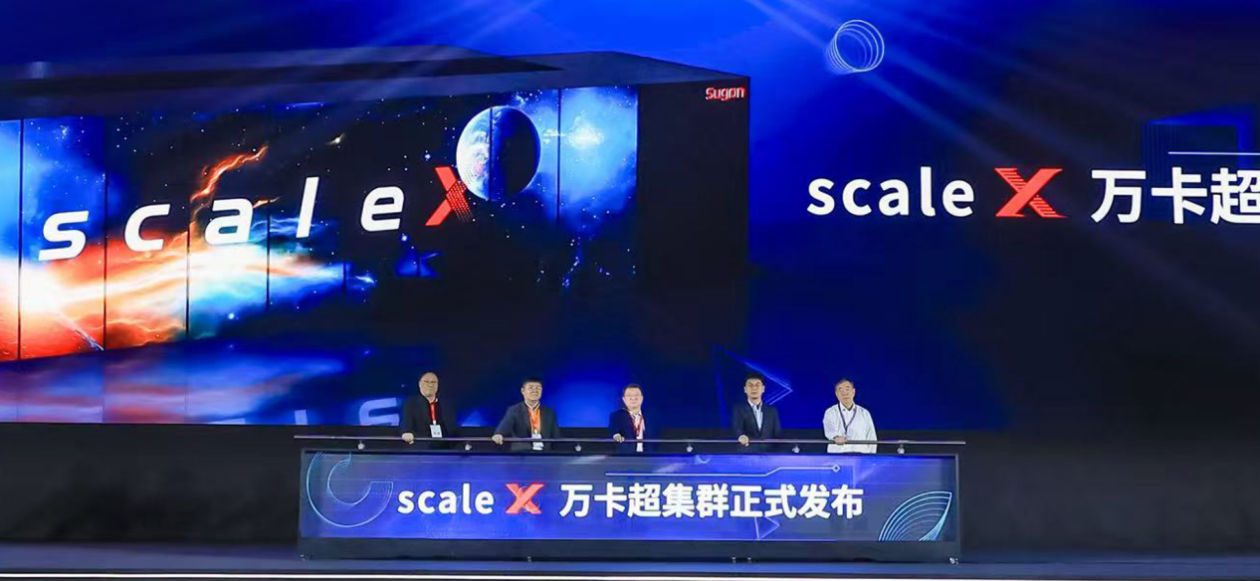
Core Viewpoint - The Chinese computing power industry is at a strategic crossroads, deciding between continuing a closed technology stack approach or pioneering a new competitive model based on open collaboration [1][3]. Industry Challenges - The current domestic AI computing power industry faces a dilemma of "full-chain internal competition" and "dual barriers," leading to significant industry anxiety. Companies have invested heavily in creating isolated "technology islands," resulting in fragmentation and high adaptation costs for users [4][5]. - The performance gap and ecological barriers present deeper challenges, with domestic chips lagging behind international standards and NVIDIA's CUDA ecosystem creating a strong lock-in effect [4]. Strategic Shift - The solution lies in transitioning from a "closed full-stack" to an "open layered" competitive logic, emphasizing collaboration among various manufacturers to create an industry platform that can systematically challenge dominant players [6][8]. - The establishment of the Photonic Organization serves as a platform to balance competition and cooperation, allowing companies to focus on their strengths while sharing results for mutual benefit [6][8]. Implementation of Open Architecture - Leading IT companies in China are moving away from a "large and comprehensive" model to a "focused and strong + ecological empowerment" approach, concentrating resources on their core competencies while opening other areas to ecosystem partners [8]. - The scaleX super cluster exemplifies this open architecture, achieving significant breakthroughs in system architecture and energy efficiency, with a 20-fold increase in computing density and a PUE of 1.04 [9]. Market Engagement - The open architecture aims to lower the barriers for users transitioning from closed ecosystems, enhancing cost efficiency and optimization for clients, particularly benefiting small AI chip design and software companies [9][10]. - The shift from standardized supply to joint customization is crucial for domestic computing power systems to penetrate mainstream commercial markets [10]. Future Outlook - The competition in the AI computing power industry is evolving into a battle between centralized control models and distributed innovation models based on open standards [14]. - The open path chosen by the Chinese industry reflects a deep understanding of its structural and innovative characteristics, aiming to harness the full potential of its comprehensive electronic information manufacturing chain and vibrant small to medium enterprises [14].

Will Hut 8’s AI Pivot Reverse Its Stock Slump for Good?
Yahoo Finance· 2025-12-17 19:09
Core Insights - Hut 8 has entered into a significant AI data center lease valued at $7 billion with Fluidstack, marking a strategic pivot towards AI infrastructure among crypto miners [1][2] - The lease covers 245 megawatts of AI computing capacity at Hut 8's River Bend campus in Louisiana, with potential total contract value reaching approximately $17.7 billion over its full term [2] - The project is expected to generate around $6.9 billion in net operating income during the initial lease period, supported by financial backing from Google [3] Company Developments - Following the announcement of the AI lease, Hut 8 shares experienced a surge of about 20% in pre-market trading, indicating renewed investor interest and efforts to stabilize the company's business [4] - The agreement with Fluidstack includes priority rights for leasing up to an additional 1,000 megawatts as the campus expands, reflecting a long-term growth strategy [2] - Hut 8's shift towards AI computing is part of a broader trend among Bitcoin miners to diversify operations in response to structural challenges in Bitcoin mining [6][7] Industry Context - The Bitcoin mining industry is facing increasing challenges, including rising network difficulty, higher energy costs, and compressed margins, prompting miners to seek alternative revenue streams [5][6] - The rapid growth of artificial intelligence has led to a surge in demand for computing power, positioning Bitcoin miners, who already control significant energy resources, to pivot towards AI data centers as a viable strategy [7]
华为:2025年Atlas 800T A3超节点技术白皮书
Sou Hu Cai Jing· 2025-12-13 08:37
Core Insights - Huawei's Atlas 800T A3 supernode is designed for AI computing in industries such as internet, telecommunications, and finance, emphasizing high performance, reliability, and ease of deployment [1][25] - The product consists of two main components: the supernode server and the LingQu bus device, which together provide robust hardware support for data center infrastructure [1][25] Group 1: Product Overview - The Atlas 800T A3 supernode features a 10U rack design, supporting standard 19-inch cabinet installation, and integrates key components such as CPU drawers, NPU drawers, and IO frames for high density and easy maintenance [1][41] - It is equipped with four Kunpeng 920 processors and eight Ascend 910 AI modules, achieving peak computing power of 6.016 PFLOPS at FP16 and 12.032 POPS at INT8, with a bidirectional interconnect bandwidth of 784 GB/s between any two NPU modules [1][25][29] Group 2: Power and Cooling Systems - The power system supports dual input options of 220VAC or 336HVDC/240HVDC, with a maximum input power of 16.2 kW and a power conversion efficiency of up to 96%, featuring a 5+1 backup and multiple protection functions [2][43] - The cooling system employs a combination of air cooling and Huawei's self-developed LAAC liquid cooling module, ensuring stable thermal performance under varying loads [2][43] Group 3: Network and Interconnectivity - The LingQu bus device, based on LingQu 630 V1, provides high-performance, high-bandwidth, and low-latency network connections, supporting various power modes and 1+1 power backup [2][34] - The internal network of the Atlas 800T A3 supernode utilizes Huawei's self-developed bus switching protocol, enabling high-performance networking with configurations supporting 64, 96, 192, and 384 supernodes [2][36] Group 4: Hardware Specifications - The supernode server includes a rich array of interfaces, such as LingQu bus interfaces, USB, and management network ports, accommodating various connectivity needs [3][41] - The system management integrates the iBMC intelligent management system, compatible with IPMI 2.0, supporting remote control, fault detection, and alarm reporting [3][41]

品高股份入选中国信通院2025高质量数字化转型方案集和全景图
Quan Jing Wang· 2025-12-02 08:21
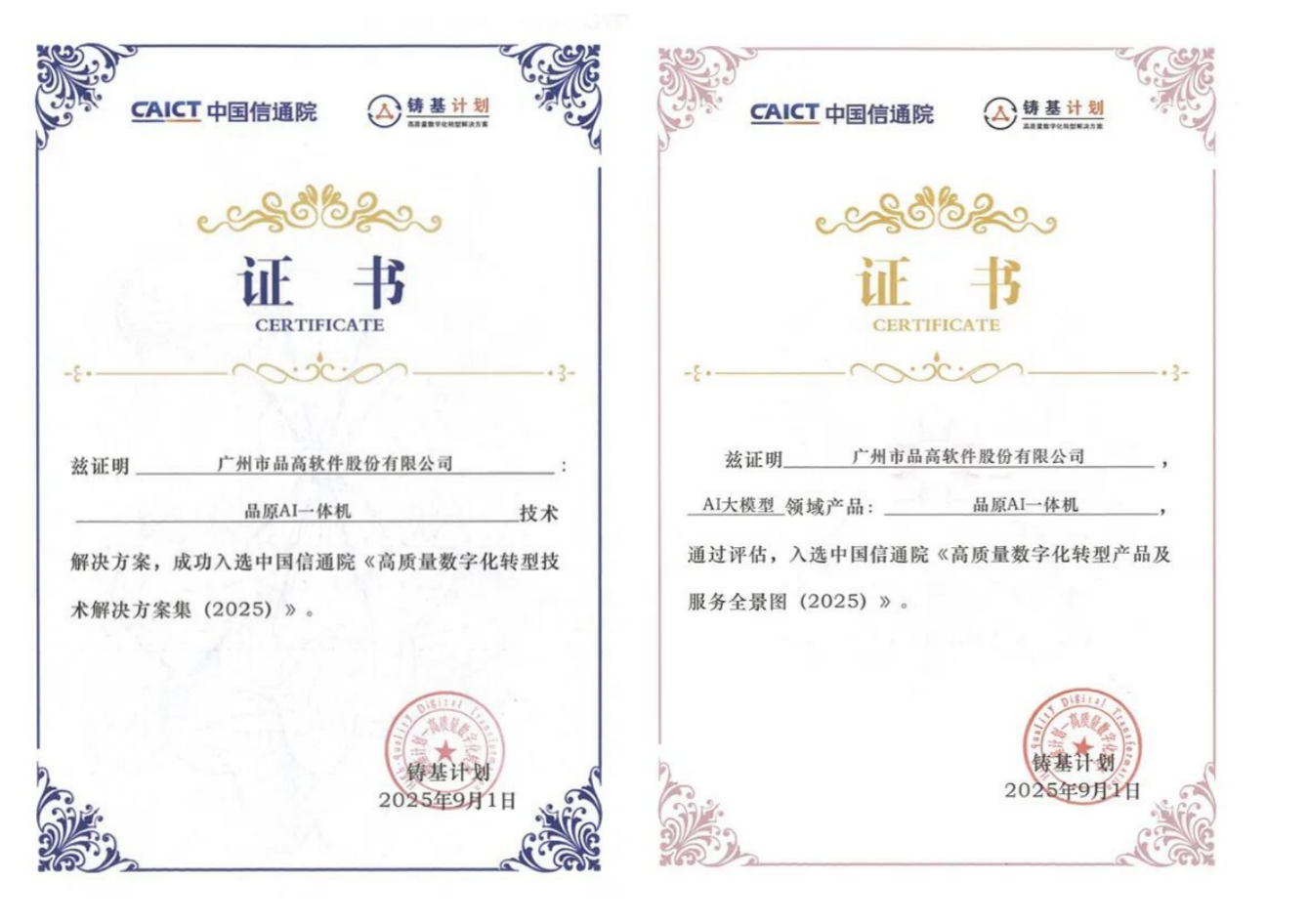
Core Insights - The China Academy of Information and Communications Technology (CAICT) has officially released multiple work results from the "Foundational Plan" for 2025, highlighting the inclusion of Pingao Co., Ltd.'s "Pingyuan AI Integrated Machine" in the "High-Quality Digital Transformation Technology Solutions Collection (2025)" [1] - The "Foundational Plan" aims to address pain points in digital transformation across various industries by providing authoritative guidance and selecting representative technological solutions and outstanding enterprises [1] Group 1: Product and Technology - The "Pingyuan AI Integrated Machine" features a fully domestically designed supply chain, achieving self-control from core chips to complete machine integration [3] - This product can densely accommodate 16 Jiangyuan D10/D20 AI acceleration cards, matching the performance of international mainstream products, with the D20 being the first fully domestic inference acceleration card for computing centers [3] - The machine can achieve a single-machine computing power of 5P and a maximum memory capacity of 4T, capable of replacing mainstream inference chip solutions like NVIDIA T4 and 4090 [3][5] Group 2: Performance and Cost Efficiency - The integration of Jiangyuan's operator fusion technology and Pingao's self-developed 4D parallel scheduling strategy has improved the response speed of the DeepSeek-R1 model by 30%, with energy efficiency ratios reaching 2.5 times that of mainstream GPUs [5] - The product significantly reduces the total cost of ownership (TCO) for enterprises, allowing a single 16-card PYD20 integrated machine to support the AI application development needs of a team of 60 [5] Group 3: Market Application and Recognition - The Pingyuan AI Integrated Machine is compatible with mainstream CPUs and various deployment forms, covering a wide range of application scenarios [5] - The recent recognition of Pingao Co., Ltd. by national authorities underscores the company's technological strength and maturity of solutions, reflecting its significant role in advancing domestic computing infrastructure [6] - The company aims to continue its strategy of integrating vertical field AI with domestic computing ecosystems, focusing on core technology innovation and collaboration with partners [6]
Cango Inc. Reports Third Quarter 2025 Unaudited Financial Results
Prnewswire· 2025-12-01 22:00
Core Insights - Cango Inc. has reported significant growth in its financial performance for Q3 2025, marking a pivotal year since its strategic transformation into a bitcoin mining company [3][4][6] - The company aims to build a global AI compute network powered by green energy, viewing bitcoin mining as a stepping stone towards this goal [4][8] Financial Performance - Total revenues for Q3 2025 reached US$224.6 million, a 60.6% increase compared to Q2 2025 [6][9] - Revenue from bitcoin mining was US$220.9 million, with 1,930.8 BTC mined during the quarter, averaging 21.0 BTC per day, which is a 37.5% increase in total output compared to Q2 2025 [6][9] - Operating income was US$43.5 million, and net income was US$37.3 million, compared to an operating loss of US$1.2 million and net income of US$9.5 million in Q3 2024 [11][12] Operational Highlights - The company operates a deployed hashrate of 50 EH/s globally, positioning it among the leading bitcoin miners [3] - Average operating hashrate increased from 40.91 EH/s in July to 46.09 EH/s in October 2025, with efficiency surpassing 90% [6] - The average cost to mine was US$81,072 per BTC, with all-in costs of US$99,383 per BTC [6] Strategic Initiatives - Cango is executing a phased roadmap for its AI compute network, with projects in Oman and Indonesia expected to be commissioned within one to two years [4][5] - The company has transitioned to a direct listing on the NYSE to optimize its capital structure and enhance corporate transparency [6][14] Future Outlook - In the near term, Cango plans to enter the market with GPU computing power leasing, focusing on rapid node deployment [7] - The medium-term strategy involves evolving into a regional AI compute network with self-operated data center hubs [7] - Long-term goals include building a global, distributed AI compute grid powered by green energy [8]


基石智算国际版正式上线,为全球开发者提供大模型API服务
Quan Jing Wang· 2025-11-27 10:55
Core Insights - CoresHub.ai has been launched globally, providing developers with a low-cost, high-efficiency, and reliable model service option [1][2] - The platform has transitioned from a domestic service to a global offering, leveraging its experience in multi-model adaptation and stability [1] - CoresHub.ai addresses challenges such as high local deployment costs and time-consuming environment adaptations, facilitating quicker AI application deployment [1][2] Company Developments - The platform has integrated multiple large models to offer flexible and high-performance model invocation services for global AI developers and enterprises [2] - CoresHub aims to continuously iterate its international version and connect with the global AI ecosystem, positioning itself as a bridge between model capabilities, computing resources, and the developer community [3] Future Outlook - The company plans to enhance CoresHub.ai's capabilities, enabling developers to more easily embrace AI technology and implement AI applications [3]

AI Boom Forces Texas and Beyond to Rethink Energy Supply at Scale
Investing· 2025-11-27 09:23
Core Insights - The AI boom is significantly impacting energy supply dynamics, particularly in Texas, where the data center pipeline has reached 245 GW, nearly doubling in two quarters [2][3] - Developers are increasingly building their own power plants to ensure reliable energy supply, moving away from traditional utility dependence [4][11] - The shift towards onsite generation is reshaping the energy landscape, with natural gas being the primary energy source for many new projects [5][12] Energy Supply Dynamics - The US data-center pipeline has expanded to 245 GW, a figure that dwarfs previous crypto mining efforts [2] - Texas has become the focal point for this expansion, with planned capacity nearly doubling in just six months [2] - The industry is transitioning from "fibre adjacency" to prioritizing access to power as a critical survival factor [3] Developer Strategies - Developers are constructing large-scale power plants to bypass utility grid limitations, with some opting for natural gas due to proximity to resources like the Permian Basin [4][5] - Projects like five-gigawatt campuses in Midland County and two-gigawatt parks illustrate the scale of these developments [5] - Some developers are also exploring renewable energy sources, but these are primarily used for balancing rather than as primary energy sources [6] Capital Deployment Trends - A small percentage of projects (2%) account for a disproportionate share (42%) of total capital deployment, indicating a concentration of investment in large-scale projects [7][9] - Notable projects include Project Jupiter in New Mexico at USD 160 billion and Project Kestrel in Missouri at USD 100 billion, showcasing extreme capital requirements [9] Market Implications - The shift towards onsite generation is expected to tighten the natural gas market, impacting long-term prices and electricity costs for consumers [12][13] - The increasing demand from AI-driven data centers may crowd out traditional utilities, complicating their ability to meet rising energy needs [13] - Regulatory responses are anticipated as the energy landscape evolves, particularly if private energy demands disrupt existing supply chains [14][15]