
Apparel and Footwear

Search documents
Why Wolverine World Wide (WWW) is a Top Momentum Stock for the Long-Term
ZACKS· 2025-12-24 15:51
分组1 - Zacks Premium offers various tools for investors to enhance their stock market confidence and knowledge, including daily updates, research reports, and stock screens [1] - The Zacks Style Scores are designed to help investors select stocks with the highest potential to outperform the market within a 30-day timeframe, rated from A to F based on value, growth, and momentum characteristics [2][6] 分组2 - The Value Score identifies attractive and discounted stocks using financial ratios such as P/E and Price/Sales, appealing to value investors [3] - The Growth Score focuses on a company's future prospects by analyzing projected and historical earnings, sales, and cash flow, catering to growth investors [4] - The Momentum Score assists investors in capitalizing on price trends by evaluating recent price changes and earnings estimate revisions [5] 分组3 - The VGM Score combines all three Style Scores, providing a comprehensive indicator for investors who utilize multiple investment strategies [6] - The Zacks Rank, a proprietary stock-rating model, relies on earnings estimate revisions to simplify portfolio building, with 1 (Strong Buy) stocks achieving an average annual return of +23.81% since 1988, significantly outperforming the S&P 500 [7][8] 分组4 - To maximize returns, investors should target stocks with a Zacks Rank of 1 or 2 and Style Scores of A or B, while also considering stocks with a 3 rank if they possess high Style Scores [9] - The direction of earnings estimate revisions is crucial when selecting stocks, as a stock with a low rank but high Style Scores may still face downward price pressure [10] 分组5 - Wolverine World Wide, Inc. specializes in designing, manufacturing, and distributing a variety of footwear and apparel, recognized for brands like Merrell and Hush Puppies [11] - Currently, Wolverine World Wide holds a 3 (Hold) Zacks Rank with a VGM Score of A, and a Momentum Style Score of A, having seen a 9.1% increase in shares over the past four weeks [12] - With positive earnings estimate revisions and a strong earnings surprise average of +31.8%, Wolverine World Wide is positioned as a noteworthy investment opportunity [12][13]



EXCLUSIVE: Eileen Fisher, Reformation and Everlane Join Aii to Foster Change from Ground Up
Yahoo Finance· 2025-12-01 16:33
Core Insights - The collaboration among Eileen Fisher, Everlane, and Reformation aims to co-fund decarbonization initiatives in the textile supply chain, particularly focusing on deeper tiers of suppliers [1][2][3] - The partnership seeks to streamline efforts to reduce regulatory fatigue and enhance energy efficiency in factories by pooling resources and capital [2][4] - The Apparel Impact Institute (Aii) plays a crucial role in facilitating this collaboration, suggesting strategic suppliers and emissions-reduction programs [3][5] Group 1: Collaboration and Strategy - The brands are working together to access deeper tiers of the supply chain, which is essential for effective decarbonization [2][3] - This initiative is not a marketing strategy but a genuine effort to address climate goals in the supply chain [4] - The collaboration is seen as a potential blueprint for the industry to achieve climate targets amid financial constraints [4][5] Group 2: Emission Reduction Goals - Eileen Fisher aims to reduce Scope 1 and 2 emissions by 100% and Scope 3 emissions by 25% by year-end, while Everlane and Reformation have set their own ambitious targets for emissions reduction [6] - The material processing phase (Tier 2) is identified as the highest source of pollution, contributing 55% of total greenhouse gases in the supply chain [7] Group 3: Supplier Engagement - Engaging multiple brands simultaneously allows for a stronger case for decarbonization initiatives at the supplier level [9][10] - Suppliers are more likely to agree to a decarbonization roadmap when key buyers align on sustainability approaches [10][12] - The collaboration aims to reduce data fatigue for suppliers by streamlining requests and assessments [11] Group 4: Future Opportunities - The brands express a desire to invite more companies to join the collaboration to expand the impact of decarbonization projects [12] - The initiative is expected to create broader social and environmental benefits across the industry, reinforcing the importance of shared supply chains [12][13]
Global Stocks Hold Steady After Four-Day Rally: Markets Wrap
Yahoo Finance· 2025-11-27 13:02
Market Overview - Global equities showed resilience after four days of gains, driven by expectations that the Federal Reserve will cut interest rates more quickly than previously anticipated [1] - The MSCI All Country World Index reduced its November decline to 0.4%, recovering from a nearly 4% drop earlier in the month [1] - US markets were closed for Thanksgiving, while European and Asian benchmarks experienced modest movements [1] Investor Sentiment - There is a noticeable return of risk appetite, as evidenced by Bitcoin trading above $91,000 for the first time in a week [2] - Gold prices fluctuated, and the US dollar paused its two-day decline [2] Federal Reserve Expectations - Money markets are pricing in an approximately 80% chance of a quarter-point interest rate cut next month, with expectations for three additional cuts by the end of 2026 [3] - This marks a shift from just over a week ago when traders anticipated only three cuts in total [3] - The market sentiment reflects renewed optimism following concerns over high tech valuations that previously impacted equities [3] Year-End Rally Outlook - EFG Asset Management Switzerland's CEO expressed optimism for a classic year-end rally, supported by a stable macro environment and a decent corporate earnings outlook [4] - The anticipated lagged effects of rate cuts are expected to provide additional support to the market [4] Regional Market Performance - Japanese and South Korean equities outperformed their regional counterparts, with technology shares leading the gains [4] - In Europe, Germany's DAX index increased by 0.3%, driven by a 13% rise in Puma SE due to takeover interest from multiple bidders [4] UK Market Reaction - UK gilts experienced a pullback after a rally following the Autumn budget, where the Chancellor of the Exchequer announced a larger fiscal buffer [5] - Despite the positive sentiment, the tax-raising measures introduced may overshadow economic growth prospects [5] - The pound and FTSE 100 remained relatively unchanged [5] Fiscal Policy Insights - ABN AMRO's head of macro research noted that the UK government took necessary steps to maintain bond market confidence, despite risks associated with the fiscal consolidation [6] - The current measures build upon previous significant efforts in fiscal policy [6]
‘There’s only so much you can absorb from the tariffs, because they’re just very high’: Levi’s CEO states the plain truth
Fortune· 2025-11-24 19:41
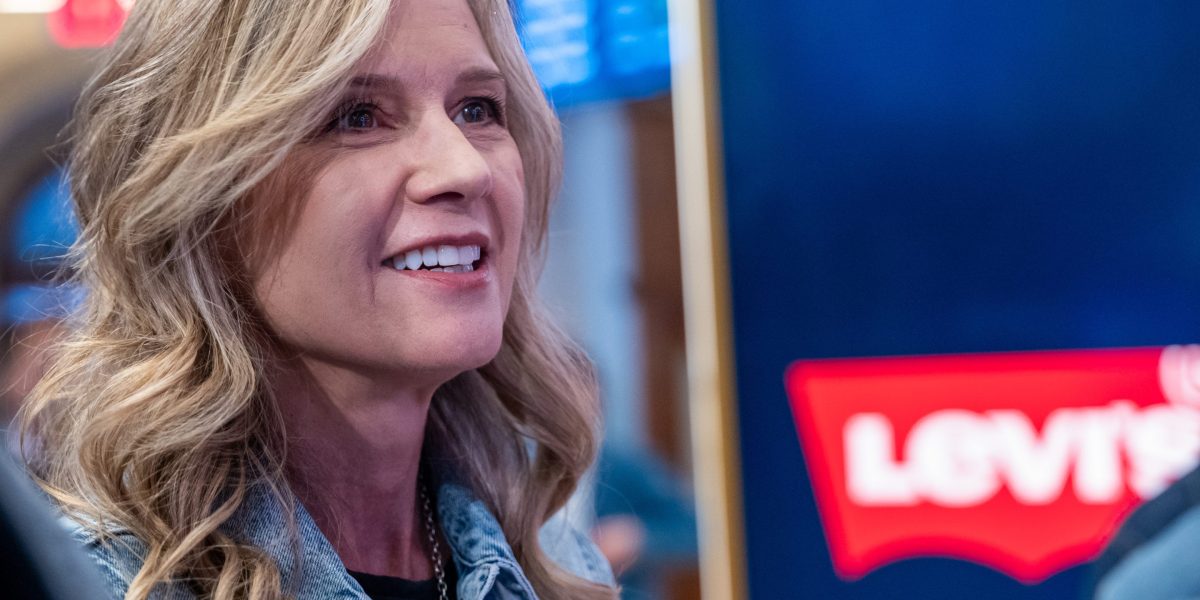
Core Insights - The global fashion industry is facing significant challenges in 2026, primarily due to geopolitical instability, macroeconomic uncertainty, and high U.S. tariffs, which have become the top concern for executives [1][2] Industry Overview - U.S. tariffs on apparel and footwear imports surged from approximately 13% in early 2025 to 54% after government announcements in April, with a mid-October weighted average tariff rate of 36%, significantly above historical norms [2] - 76% of fashion executives believe that responses to trade disruptions and tariffs will be the most critical factor shaping the industry in 2026 [2] Key Trends - The report highlights major issues for 2026, including "tariff turbulence" and emerging shopper preferences such as a focus on resale, wellbeing in purchases, and the influence of artificial intelligence [3] Company Strategies - Brands are adjusting pricing, shifting sourcing, and improving efficiency to mitigate tariff impacts, with larger suppliers optimizing operations and smaller players facing increased pressure [5] - Levi Strauss & Co. has adopted a strategic tariff playbook, leveraging its international business (60% of sales) to reduce tariff burdens compared to domestic competitors [6] - Levi's pricing strategy includes targeted price increases, reduced discounts, and pricing for innovation, with 55% of executives expecting further price hikes in 2026 due to tariffs [6][9] Operational Adjustments - Levi's is focusing on internal operational improvements, streamlining business processes, and reducing inventory complexity, increasing product commonality across global stores from less than 10% to about 40% [9] - The company reported a 7% year-on-year increase in quarterly sales in October 2025, marking its fourth consecutive quarter of high-single-digit growth [9] Sourcing and Supplier Relationships - 35% of executives in the industry plan to shift sourcing to markets with more favorable trade agreements, emphasizing the importance of strategic supplier partnerships for agility in a volatile trade environment [10]
Under Armour, Stephen Curry to end partnership
Youtube· 2025-11-13 23:36
Core Insights - Under Armour and Curry Brand have officially ended their 13-year partnership, which significantly elevated Under Armour's profile in athletic sponsorships [1][2] - Under Armour has faced substantial challenges, with its stock down 40% this year and a total decline of 76%, prompting the company to refocus on its core UA brand [2][4] - Steph Curry retains sole ownership of the Curry Brand and is free to seek new partnerships, while Under Armour will maintain contracts with athletes under the Curry Brand but with the right of first refusal for Curry [2][3] Company Performance - Under Armour's recent struggles are evident in its revenue and branding, leading to a strategic decision to concentrate on its primary brand [2] - The decline in Under Armour's stock price reflects broader issues within the company, necessitating a reevaluation of its partnerships and branding strategies [4] Future Prospects - Steph Curry is expected to remain a prominent figure in the NBA for several more years, making him a valuable asset for potential new partnerships [6] - Curry's brand is characterized by an underdog image, raising questions about how this identity will be maintained with future collaborations, especially considering his previous rejection of Nike in favor of Under Armour [6][7] - There is speculation about Curry's potential transition into golf, which could open new partnership opportunities as he considers future endeavors [5]


Under Armour splits with Steph Curry as it focuses on strengthening core brand
CNBC· 2025-11-13 22:32
Core Insights - Under Armour and Stephen Curry have mutually agreed to end their 13-year partnership, effective immediately [1][2] - Curry Brand will now operate independently, with Curry maintaining sole ownership and the freedom to seek new retail partnerships [2] - Under Armour will release the Curry 13, marking the final shoe collaboration with Curry [2] Company Strategy - Under Armour's CEO emphasized the need for discipline and focus on the core brand during a critical turnaround phase [3] - The breakup is seen as an opportunity for both parties to evolve; Curry aims for aggressive growth while Under Armour seeks to redefine its brand [3] - Under Armour has faced significant challenges, including leadership turnover and declining sales for eight consecutive quarters [3][4] Market Context - The competitive landscape has shifted, with established brands like Nike struggling against emerging competitors such as On and Hoka [4] - Under Armour's strategy includes fixing its product assortment and redefining its brand identity, with changes expected to appear in stores and social media this fall and winter [4] - Under Armour's stock has declined approximately 40% this year, reflecting ongoing challenges in the market [5]

Anticipate further apparel and footwear price increases, says Morgan Stanley's Alex Straton
Youtube· 2025-11-12 19:03
Core Insights - The apparel industry is experiencing a slight price increase of approximately 3%, driven by a mix shift towards higher price point categories, rather than significant changes in MSRP [2][3][6] - Retailers are expected to implement more substantial price increases starting this month, indicating a potential upward trend in pricing [4][10] - The impact of tariffs on pricing is not fully realized yet, with inventory management playing a crucial role in the timing of price adjustments [9][10] Apparel Industry Analysis - The pricing data analyzed includes final selling prices, accounting for discounts and actual consumer payments, rather than just MSRP [5] - Apparel retailers are currently operating at high gross margins, attributed to a strategic shift towards higher-priced products, such as workwear and tailored pants [6][7] - Notable price increases have been observed in brands like Torid and Anthropology, which have shifted towards higher price points as part of their product strategy [14][15] Footwear Industry Analysis - Footwear brands, such as Hey Dude, Macy's, and Kohl's, are also seeing price increases compared to pre-liberation day levels, indicating a similar trend in the footwear sector [16] - The wholesale model in footwear may lead to more visible price increases in the first half of the next year due to locked-in pricing agreements [11][12] - Department stores are actively adjusting their business models to strengthen relationships with premium brands, which may influence pricing strategies [17]

UBS Analyst: Arc’teryx, Salomon Brands Continue to Win
Yahoo Finance· 2025-11-12 15:44
Core Viewpoint - Amer Sports Inc., the parent company of Arc'teryx and Salomon, is experiencing strong sales and earnings momentum, which is expected to positively surprise the market and drive stock outperformance [1][2]. Financial Performance - Amer Sports reported a net income of $18.2 million for Q2, reversing a net loss of $3.7 million from the previous year, with revenue increasing by 23.5% to $1.24 billion from $1.00 billion [4]. - The company is projected to beat expectations for both sales and earnings per share in Q3, supported by strong trends in the footwear category, particularly for Salomon sneakers [2][4]. Market Trends - UBS's analysis indicates broad-based sequential improvement in searches for Arc'teryx and Salomon in both U.S. and international markets during Q3 2025, compared to two years prior [3]. - The Wilson brand is also showing increased momentum in gross merchandise value (GMV) trends in China [3]. Brand Growth Potential - Salomon is identified as the fastest-growing outdoor sneaker brand in China, while Arc'teryx has become the leading outdoor brand in the Chinese market since 2024 [4]. - Arc'teryx aims to achieve $5 billion in top-line sales by 2030, indicating significant growth potential [4]. Strategic Initiatives - Arc'teryx is collaborating with NuOrder to enhance its wholesale business operations, focusing on digitization to improve efficiency and customer experience [5].
Apparel sector urges US to phase in new tariffs, boost predictability
Yahoo Finance· 2025-11-03 12:57
Core Insights - The US apparel sector is advocating for a non-stacking tariff model similar to Japan and the EU, along with the removal of tariffs on manufacturing inputs and machinery [1][2] - The sector emphasizes the need for new measures to be phased in with adequate lead time for enforcement agencies and supply chains to adapt [2] - The submission highlights the significant reliance of the sector on trade, with 97% of clothes and shoes in the US being imported [4] Tariff and Trade Policies - Existing tariff programs create uncertainty for sourcing and planning, including Section 301 tariffs on China and proposed tariffs on Nicaragua and personal protective equipment [3][4] - The domestic tariff policy shows high trade-weighted average tariff rates for various apparel categories, with knit apparel at 14.9% and woven apparel at 14.29% in 2024 [6] - Duties collected on imports of apparel, footwear, textiles, and travel goods exceeded $18.3 billion in 2024, representing 4.78% of all US imports by value [7] Economic Impact - Approximately 70-75% of the value of US imported apparel reflects US value added through design, marketing, compliance, logistics, and retail [5] - The industry is projected to support around 3.6 million US apparel and footwear jobs in 2025, dependent on these value chains [5] - Barriers such as tariffs and quotas are reported to raise costs, reduce sales, cause delays, and lead to job losses in the sector [4]
Fashion’s $7B Club: Morgan Stanley Examines Who Has Scale and Who Doesn’t
Yahoo Finance· 2025-10-30 18:30
Core Insights - The global apparel and footwear market is highly fragmented, with nearly 70% of companies generating less than $1 billion in retail selling value, indicating low barriers to entry and high competitive intensity [2][3] - Only a third of the top apparel and footwear companies have revenues exceeding $7 billion, with many businesses struggling to breach this threshold despite market expectations [3][6] - Nike holds the largest market share at 3.5%, followed by Inditex at 2%, Adidas at 1.8%, and several others, highlighting that even leading brands occupy a small portion of the overall market [4] Market Dynamics - The $7 billion-plus club tends to be concentrated in Western markets, with successful companies often selling a diverse range of products and focusing on direct-to-consumer sales [5] - Companies like Abercrombie & Fitch and On Holding show potential for growth, while others like Amer Sports and Gap Inc. may face overly optimistic revenue expectations [6][7] Strategic Moves - Kering's CEO is focusing on divesting non-core assets, such as selling its beauty business to L'Oréal, while others like Authentic Brands Group aim for aggressive growth through acquisitions, targeting $100 billion in sales [8][9] - Tapestry is looking to expand Coach from $5.6 billion to $10 billion by broadening its target market to include a larger consumer base, currently estimated at 1.9 billion potential customers [10][11]
