
Battery

Search documents
蔚来、宁德时代合资公司再获10亿元融资 引入两家国资 已累计融资超30亿元
Xin Lang Cai Jing· 2026-02-14 14:29
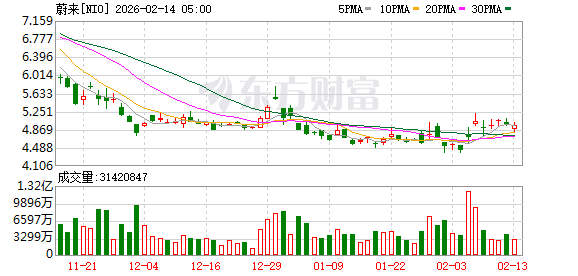
Core Viewpoint - Wuhan Weinen Battery Asset Co., Ltd. has completed its C3 round of equity financing, raising 1 billion yuan, bringing the total financing for the C round to 2 billion yuan and the overall financing amount to over 3 billion yuan across 6 rounds [2][5] Group 1: Financing Details - The C3 round financing included additional investments from founding shareholders and introduced several state-owned capital shareholders, including Hefei Construction Investment and Hefei Economic Development [2][5] - The funds raised will primarily be used for battery asset management, technology research and development, and resource recycling, enhancing the company's service level and accelerating the industrialization of research outcomes [2][5] Group 2: Company Background - Weinen was established in August 2020 as a joint venture between NIO and CATL, focusing on Battery as a Service (BaaS) and responsible for battery asset management, including leasing, recycling, and lifecycle management [2][5] - The chairman of Weinen is the CFO of NIO, and the legal representative and CEO is Lai Xiaoming [3][5] - NIO holds approximately 19.4% of Weinen, while other shareholders include Wuhan Optics Valley Industrial Investment Co., Ltd. (9.47%) and CATL (8.9%) [3][5] Group 3: Operational Metrics - As of February 13, Weinen has applied for 196 patents, with about 60% being invention patents and over 85% related to battery technology [6] - The operational scale of battery assets has exceeded 42 GWh, serving over 550,000 users [6] - Weinen has achieved the securitization of power battery assets, successfully issuing the world's first holding-type power battery REITs with an issuance scale of 501 million yuan [6][7]



科技主线强势,节前结构性分化
Sou Hu Cai Jing· 2026-02-13 06:47
板块上,近期固态电池板块热度持续攀升。行业端,头部电池企业与车企密集推进中试量产与装车验 证,半固态电池批量上车,全固态电池进入关键测试阶段,高安全、高能量密度、快充性能显著提升, 带动新能源汽车、储能、低空经济等场景需求集中释放。核心材料与设备瓶颈持续突破,国产供应链成 本与效率优势显现,优质企业订单与盈利预期持续改善。叠加产业盛会、技术发布与量产节点临近,固 态电池迎来需求放量、估值修复的多重红利,成长空间加速打开。 行情上,央行大额逆回购护航节前流动性,两市成交保持活跃,北向资金持观望态度,主力资金聚焦半 导体、电源设备、算力等科技主线。板块分化明显,科技成长方向领涨,贵金属、能源金属、油气、影 视院线等板块走弱,商品市场同步偏弱,科技主线强势、节前结构性分化格局。 长沙晚报掌上长沙2月13日讯(全媒体记者 周丛笑 通讯员 张昊轩)13日早盘,A股受隔夜美股大跌影响 集体低开,沪指低开0.44%,深成指低开0.66%,创业板指低开0.56%,随后震荡分化,沪指小幅翻红, 深成指震荡上行,创业板指领涨市场。有色金属、黄金概念板块竞价调整,算力租赁板块竞价再度活 跃。 机构观点方面,中泰证券认为,AI驱动电 ...
全固态电池产业化,迈入关键验证期
DT新材料· 2026-02-12 16:04
Core Viewpoint - The solid-state battery industry is advancing rapidly, with multiple companies outlining their technological paths and industrial plans for commercialization by 2026 and beyond [1][2][3]. Group 1: Company Developments - Geely has established three technological routes for solid-state batteries, focusing on polymer, sulfide, and halide composite solutions, with a goal to launch prototype vehicles by 2026 and achieve small-scale production by 2027 [1]. - Chery plans to produce a 0.5GWh pilot line and commence continuous production of 60Ah solid-state battery cells by 2026, with vehicle demonstration work starting in 2027 [2]. - China FAW has successfully developed a prototype of its Hongqi solid-state battery, achieving significant breakthroughs in key performance metrics [2]. - BYD is focusing on sulfide solid-state batteries, aiming for small-scale production by 2027, while Sunwoda has announced plans for mass production of solid-state batteries by the same year [2]. Group 2: Policy and Industry Standards - The development of national standards for solid-state batteries is underway, with a draft expected to be completed by December 2025 and formal publication planned for July 2026 [3]. - The Ministry of Industry and Information Technology emphasizes enhancing the self-controllable capabilities of the supply chain and accelerating breakthroughs in core technologies, including solid-state batteries [3]. Group 3: Industry Challenges and Future Outlook - Despite the promising outlook for solid-state batteries, challenges remain, including unclear material systems and engineering difficulties that could impact safety and lifespan [4]. - The industry is expected to evolve from semi-solid to small-scale and then to mid-to-high-end solid-state battery production between 2026 and 2030, with potential risks related to technology iteration and raw material supply [4].



QuantumScape Stock Tumbles After Earnings. This Could Be a Worry for Investors.
Barrons· 2026-02-12 11:32
Group 1 - The battery maker's shares exhibit volatility, indicating a fluctuating market response [1] - Short interest in the stock has contributed to the overall uncertainty surrounding the company's performance [1]

Solid-State Electrolyte Market Set to Reach USD 1,558.19 Million by 2035, Owing to Rising Solid-State Battery Adoption | Report by SNS Insider
Globenewswire· 2026-02-12 04:00
Market Overview - The solid-state electrolyte market is valued at USD 216.85 million in 2025 and is projected to reach USD 1558.19 million by 2035, growing at a CAGR of 21.91% from 2026 to 2035 [1] Industry Drivers - The increasing use of solid-state batteries in consumer electronics, energy storage systems, and electric vehicles is driving rapid growth in the solid-state electrolyte industry [2] - Advances in sulfide, oxide, and polymer electrolyte chemistries, along with the demand for safer and higher-energy-density batteries, are key factors propelling market demand [2] Regional Insights - The Asia Pacific region holds over 46% market share in 2025 and is expected to grow at a CAGR of about 23.78% from 2026 to 2035, driven by a robust battery manufacturing base and significant EV production [11] - The North American solid-state electrolyte market is also expanding rapidly due to increased investments in advanced battery technology and rising demand for electric vehicles [12] Market Segmentation By Material Type - In 2025, sulfide-based solid electrolytes dominate the market with a 55% share due to their high ionic conductivity and compatibility with lithium metal anodes [5] - Polymer-based electrolytes are the fastest-growing segment from 2026 to 2035, attributed to their flexibility and improved safety characteristics [7] By Battery Type - Lithium-based solid-state batteries hold a 60% market share in 2025, benefiting from mature development and higher energy density [8] - Sodium-based solid-state batteries are expected to be the fastest-growing segment during 2026-2035 due to the abundance and lower cost of sodium resources [8] By Application - Electric vehicles account for 50% of the market share in 2025, as automakers invest in solid-state battery technology for enhanced performance [9] - Energy storage systems are the fastest-growing segment from 2026 to 2035, driven by the need for safer and high-performance storage solutions [9] By End-User Industry - The automotive sector dominates with a 45% share in 2025, reflecting significant investments in solid-state battery development [10] - The energy and utilities sector is rapidly expanding, focusing on grid modernization and renewable energy integration [10] Key Players - Major companies in the solid-state electrolyte market include QuantumScape Corporation, Solid Power Inc., Toyota Motor Corporation, Samsung SDI Co. Ltd., and LG Energy Solution Ltd. [13] Recent Developments - QuantumScape expanded its collaboration with PowerCo SE to accelerate solid-state battery commercialization, aiming for an additional 5 GWh of cell output annually [14] - Solid Power is investing in a multi-year capital expansion to enhance production capacity for sulfide-based solid electrolyte materials [15]

港股异动 | 宁德时代(03750)午前涨超4% 据报计划联合长安汽车于年内快速落地多款纳电车型
智通财经网· 2026-02-12 03:48
Core Viewpoint - CATL (Ningde Times) has seen a stock increase of over 4%, currently trading at 527.5 HKD, with a transaction volume of 8.82 billion HKD, following the announcement of a partnership with Changan Automobile to introduce sodium-ion batteries in passenger vehicles [1] Group 1: Company Developments - CATL's CTO Gao Huan revealed that the energy density of their sodium-ion battery cells can reach up to 175 Wh/kg, enabling pure electric vehicles to achieve a range exceeding 400 kilometers, with future upgrades potentially reaching 500-600 kilometers [1] - The company plans to establish 3,000 battery swap stations across over 140 cities this year, in collaboration with Changan Automobile, aiming to launch multiple sodium-ion models by 2026 [1] Group 2: Market Context - As of February 12, lithium carbonate futures surged to 150,000 CNY/ton, indicating a strong demand for lithium driven by energy storage solutions replacing electric vehicles as the core growth driver [1] - UBS suggests that the industry is approaching a critical point regarding cost, range, and charging time, where declining costs will stimulate end-user consumption, creating a positive cycle of "technological cost reduction—demand expansion—resource value reassessment" [1]

QuantumScape (NYSE:QS) Earnings Call Presentation
2026-02-11 21:00
QuantumScape Corp (NASDAQ: QS) Investor Presentation February 2026 QUANTUMSCAPE CONFIDENTIAL Forward-Looking Statements This presentation contains "forward-looking statements" within the meaning of the federal securities laws based on management's current expectations, assumptions, and available information about future events as of the date of this letter. All statements, other than historical facts, including those about the Company's anticipated commercial and operational milestones, financial outlook, a ...
X @Bloomberg
Bloomberg· 2026-02-11 10:38
Hungary has restored the environmental permit of Samsung SDI’s battery plant https://t.co/yD32xT8SiE ...
未知机构:固态年会干货及中期评审进展更新20260209国联民生电新-20260211
未知机构· 2026-02-11 01:25
Summary of Solid-State Battery Conference and Mid-Term Review Industry Overview - Focus on the solid-state battery industry, particularly the outcomes of the solid-state battery academic and industrial conference held on February 7-8, 2026, and the results of the second mid-term review [1][2] Key Conclusions from the Conference - The conference is seen as a turning point for solid-state batteries transitioning from laboratory to production lines - Four main conclusions were drawn: - Sulfide materials are becoming the mainstream technology - Key industry timelines are set for 2027 for demonstration vehicles and 2030 for mass production - Significant challenges remain in process costs and industry chain collaboration - Clear advancements in lithium metal anodes and composite cathode technologies [1][2] Mid-Term Review Results - The second round of mid-term evaluations showed significant improvements over the first round, with leading manufacturers nearing commercialization thresholds - Key performance metrics include: - Cycle life target of 300 cycles or more, with leading manufacturers achieving close to this threshold with a decay rate of ≤10% - Energy density metrics reached 350-360 Wh/kg, the highest among all tested companies - Fast charging capabilities of 1C and peak performance of 2C, comparable to current ternary power batteries - The "no anode" (self-generating anode) approach is highlighted as a core innovation, offering significant improvements in energy density and potentially extending cycle life [3] Key Information from the Conference - High-profile attendees included the Minister of Industry and Information Technology and various battery and automotive companies - The overall industry pace is set for 2026 to be the year of solid-state batteries, with a ramp-up phase from 2028 to 2030 - The preference for sulfide electrolytes is confirmed, with leading manufacturers opting for the no-anode solution while others choose silicon-based or artificial graphite anodes [4] Catalysts and Industry Progress - The positive results from the mid-term review, combined with manufacturers' goals for near-term production, are boosting confidence in the industry - Rapid advancements in the construction of solid-state battery production lines are underway, with equipment tenders for various processes already initiated - Upcoming tenders for dry dispersion and dry film processes are expected to commence shortly, with further equipment tenders planned for early 2026 [5] Investment Recommendations - Recommendations focus on three main areas: materials, equipment, and electrolytes, aligning with mainstream technologies such as no anode, sulfide electrolytes, and dry processing - Specific investment targets include: - **No Anode Materials**: Top recommendation is Zhongyi Technology, a key supplier benefiting from lithium battery expansion, with expected revenues exceeding 250 million in 2026 - **Equipment**: Recommended companies include Lingge Technology and Huazi Technology, which are positioned to benefit from the expansion of solid-state electrolyte production - **Electrolytes**: Strong recommendation for Xiamen Tungsten New Energy, a core supplier for leading electronic manufacturers, with potential to dominate in the lithium sulfide sector [6][7]
一线汇报!固态年会干货及中期评审进展更新
2026-02-10 03:24
邓永康 民生证券电新首席: 好的,各位投资者大家早上好,我是国联民生电信的邓永康。那在线还有我们组的李孝鹏 和席子义。那今天,就是我们花一点时间,给大家汇报的就有三个,一个就是关于这个固 态电池产学研年会的一些干货。那第二个,就是给大家汇报一下,就是关于中极评审二, 第二次测评的一些情况。那么第三部分,就是给大家汇报一些观点和主要推荐的标的。那 年会是 7 号、8 号,就是周末的这个时间。我觉得周末就是这个年会,是一个很重要的一 个转折点,其实就是代表着就是我们全固态电池,就是从实验室走向产线的一个转折信号。 那当然有一些核心结论,我们大概整理了一下,就是一个就是硫化物,在这个会议上,就 是明确成为主流。第二个就是关于时间点,就是因为很多电池厂和车厂都在。那么最后整 理下来,大家是时间节点差不多,就是 27 年就示范性装车,30 年就是大规模量产。然后 第三个就是大家在过去做的一任一年过程中发现,就是在工艺成本,还有包括产业链协同 方面,其实还是有很多问题需要去突破。然后再一个就是锂金属负极,还有包括复合正极 可能有一些比较明确的进展。 那这是第一个,第二个就是二测,那么二测就是目前反馈的效果,还是非常不错, ...