
全固态电池产业化

Search documents
全固态电池产业化,迈入关键验证期
DT新材料· 2026-02-12 16:04
Core Viewpoint - The solid-state battery industry is advancing rapidly, with multiple companies outlining their technological paths and industrial plans for commercialization by 2026 and beyond [1][2][3]. Group 1: Company Developments - Geely has established three technological routes for solid-state batteries, focusing on polymer, sulfide, and halide composite solutions, with a goal to launch prototype vehicles by 2026 and achieve small-scale production by 2027 [1]. - Chery plans to produce a 0.5GWh pilot line and commence continuous production of 60Ah solid-state battery cells by 2026, with vehicle demonstration work starting in 2027 [2]. - China FAW has successfully developed a prototype of its Hongqi solid-state battery, achieving significant breakthroughs in key performance metrics [2]. - BYD is focusing on sulfide solid-state batteries, aiming for small-scale production by 2027, while Sunwoda has announced plans for mass production of solid-state batteries by the same year [2]. Group 2: Policy and Industry Standards - The development of national standards for solid-state batteries is underway, with a draft expected to be completed by December 2025 and formal publication planned for July 2026 [3]. - The Ministry of Industry and Information Technology emphasizes enhancing the self-controllable capabilities of the supply chain and accelerating breakthroughs in core technologies, including solid-state batteries [3]. Group 3: Industry Challenges and Future Outlook - Despite the promising outlook for solid-state batteries, challenges remain, including unclear material systems and engineering difficulties that could impact safety and lifespan [4]. - The industry is expected to evolve from semi-solid to small-scale and then to mid-to-high-end solid-state battery production between 2026 and 2030, with potential risks related to technology iteration and raw material supply [4].




全固态电池产业化,迈入关键验证期
财联社· 2026-02-12 12:06
Core Viewpoint - The solid-state battery industry is advancing rapidly, with multiple companies outlining their technological paths and industrial plans for commercialization by 2026 and beyond [1][2][3]. Group 1: Company Developments - Geely has established three technological routes for solid-state batteries, focusing on polymer, sulfide, and halide composite solutions, with a goal to launch prototype vehicles by 2026 and achieve small-scale production by 2027 [1]. - Chery plans to produce a 0.5GWh pilot line and commence continuous production of 60Ah solid-state cells by 2026, with vehicle demonstration work starting in 2027 [2]. - FAW's Hongqi brand has successfully developed a solid-state battery prototype, achieving significant breakthroughs in key areas such as sulfide electrolyte performance and cell testing [2]. - BYD is focusing on sulfide solid-state batteries, aiming for small-scale production by 2027, while Sunwoda has already achieved mass production of its first and second-generation semi-solid batteries [2]. Group 2: Policy and Standards - The development of national standards for solid-state batteries is underway, with a draft expected to be completed by December 2025 and formal publication planned for July 2026 [3]. - The Ministry of Industry and Information Technology emphasizes enhancing the self-controllability of the supply chain and accelerating breakthroughs in core technologies, including solid-state batteries [3]. Group 3: Industry Challenges and Future Directions - Despite the recognized potential of solid-state batteries, challenges remain, including unclear material systems and engineering difficulties that could affect safety and lifespan [4]. - The domestic solid-state battery market is expected to evolve from semi-solid scale production to small-scale full solid-state production and then to mid-to-high-end large-scale production between 2026 and 2030 [4].
全固态电池产业化加速 材料和设备端寻求新突破
Zhong Guo Jing Ying Bao· 2026-02-11 06:08
Core Viewpoint - The third China All-Solid-State Battery Innovation Development Summit highlighted that all-solid-state batteries are a crucial development direction for next-generation power battery technology, with an accelerating industrialization process but facing significant challenges in materials, engineering, manufacturing processes, and core equipment [1]. Group 1: Industry Insights - The Chinese battery industry is experiencing rapid growth and technological iteration, expanding application scenarios from automobiles and energy storage to robotics and low-altitude aircraft [1]. - The demand for batteries is surging under the "dual carbon" goals, making all-solid-state batteries an important development direction, yet challenges remain in electrolyte performance, solid-solid interface compatibility, and high specific energy electrode matching [1]. - The penetration rate of all-solid-state batteries is currently low, but increasing collaboration between academia and industry is leading to more battery companies and automakers announcing timelines for all-solid-state battery deployment [4]. Group 2: Technological Developments - Key innovations in materials are being explored, including high-capacity high-voltage positive electrodes, stable negative electrodes, and electrolytes with high ionic conductivity [2]. - Research advancements include microcrystallization of high-nickel ternary materials, lithium-boron framework lithium metal anodes, and interface regulation of iodine ions, which provide new pathways for achieving high energy density and long cycle life in all-solid-state batteries [2]. - The development of solid electrolytes is focusing on sulfide routes and composite routes, with discussions on low-cost production, wide temperature applications, and high energy density cell systems [3]. Group 3: Company Initiatives - Companies like Rongbai Technology are improving the kinetics of high-nickel ternary materials through precursor design and wet coating, achieving a production capacity of 10 tons [2]. - Sichuan Huayi Qing Innovation Materials Technology is addressing silicon-based anode industrialization bottlenecks with new technologies that effectively solve expansion and pressure issues [2]. - Zhejiang Geely Holding Group plans to debut prototype vehicles with solid-state batteries in 2026, with small-scale industrialization by 2027 and mass production of high-end models by 2030 [4].
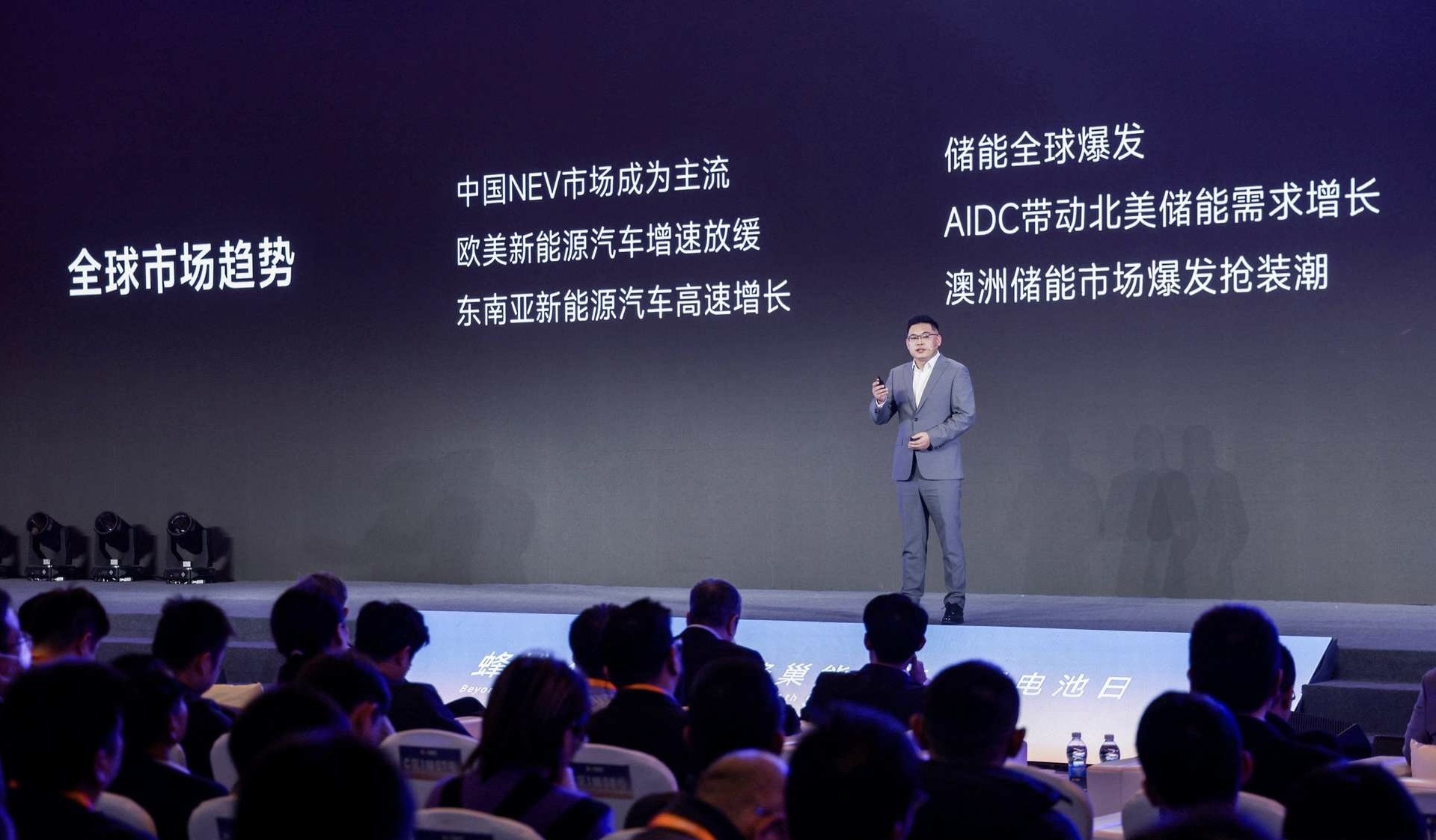
蜂巢能源杨红新:2026,动力电池没有“容易的钱”
Tai Mei Ti A P P· 2026-01-20 01:20
Core Viewpoint - The main uncertainty for achieving profitability in 2026 for battery manufacturers stems from rising upstream raw material costs, which cannot be fully passed on to downstream customers, leading to significant challenges in profit margins [3]. Group 1: Raw Material Price Trends - The price of lithium carbonate has sharply increased from less than 60,000 yuan per ton in mid-2025 to over 130,000 yuan by the end of 2025, continuing to rise into 2026, with a cumulative increase of over 33,000 yuan per ton (over 25%) from early January 2026 [4]. - Phosphate iron lithium prices have experienced a dramatic decline of over 80% from 173,000 yuan per ton at the end of 2022 to 34,000 yuan in August 2025, leading to widespread losses in the industry [4]. Group 2: Cost Transmission Challenges - Battery manufacturers face difficulties in passing on rising costs to customers due to a potential slowdown in demand, with car manufacturers becoming less tolerant of cost increases [5]. - Key raw materials like lithium carbonate, copper, and hexafluorophosphate can be smoothly transmitted to downstream customers due to established price linkage agreements, while costs for non-bulk materials like separators and graphite must be absorbed by battery manufacturers [6]. Group 3: Export Tax Policy Changes - The export tax rebate for battery products will be reduced from 9% to 6% starting April 2026, with a complete cancellation planned for January 2027, significantly impacting profit margins for battery manufacturers relying on cost advantages for exports [7][8]. - Companies must navigate two strategies: negotiating price increases with overseas customers and pursuing localized production to mitigate the impact of reduced export rebates [8]. Group 4: Solid-State Battery Development - Despite being seen as a critical year for solid-state battery commercialization, industry experts express skepticism about the feasibility of large-scale production within the next 5 to 8 years due to significant technical challenges [10][11]. - Current industry focus should prioritize improving existing battery performance and safety rather than chasing the uncertain future of solid-state technology [11]. Group 5: Emerging Market Opportunities - The demand for unmanned delivery logistics vehicles is expected to surge, driven by the need to reduce logistics costs and comply with urban regulations [12]. - Southeast Asia's electric two- and three-wheeler market presents a significant growth opportunity, requiring high-performance batteries tailored to local conditions [12]. - The global electric tool market is projected to grow steadily at around 20% annually, providing a stable supplementary business for battery manufacturers [12]. Group 6: Strategic Industry Outlook - The battery industry in 2026 faces complex challenges, requiring companies to balance cost absorption with finding new revenue streams in international markets [13]. - Future winners in the industry will likely be those who can strategically navigate cost pressures and identify profitable opportunities rather than simply focusing on scale [13].
全固态电池迈向工程化验证关键期
DT新材料· 2026-01-18 16:05
Core Viewpoint - The solid-state battery industry is transitioning from pure technology research to engineering validation, indicating a critical period for industrialization breakthroughs [1]. Group 1: Policy and Market Dynamics - The Ministry of Industry and Information Technology emphasizes enhancing the self-controllability of the supply chain and accelerating breakthroughs in solid-state battery technology as part of its 2026 action plan [1]. - Various companies in the supply chain are actively engaging in substantial developments, from material research to cell manufacturing and assembly [1]. Group 2: Industry Developments and Timelines - Companies like Wanrun New Energy and Tianci Materials are advancing in solid-state electrolyte research and production, with Tianci's pilot line expected to be completed by the second half of 2026 [1]. - The automotive sector, including GAC Group and China FAW Group, is aligning solid-state battery development with their electric vehicle models, aiming for small-scale applications by 2027 and commercial applications by 2030 [2]. Group 3: Equipment and Manufacturing Innovations - The manufacturing process for solid-state batteries now includes new steps such as isostatic pressing, with the market for isostatic pressing equipment projected to reach 6.6 billion yuan by 2030, accounting for 13% of the total equipment value [3]. - Leading equipment providers like Liyuanheng and QianDao Intelligent are establishing comprehensive production processes for solid-state batteries, with Liyuanheng collaborating with Quintus Technologies for innovative equipment development [4]. Group 4: Strategic Partnerships and Future Opportunities - Liyuanheng's strategic partnerships with leading companies are seen as a validation of their technological and engineering capabilities, positioning them as key players in the solid-state battery equipment market [4]. - The focus for equipment manufacturers is shifting from merely selling equipment to becoming collaborative developers and process enablers for clients, addressing new manufacturing demands [4].

全固态电池产业化加速,海目星构筑“技术+工艺”独家壁垒
Zheng Quan Shi Bao Wang· 2026-01-18 12:25
Core Insights - The company Haimuxing is emerging as a key player in the commercialization of all-solid-state batteries, transitioning from equipment empowerment to industry leadership, and is recognized as a core engine driving the shift from laboratory to large-scale production [1] Group 1: Industry Developments - The Ministry of Industry and Information Technology has emphasized the need to accelerate breakthroughs in all-solid-state battery technology, with companies like GAC Group and BYD making significant advancements in pilot production lines and equipment procurement [1] - The industry is moving from laboratory research to engineering validation, with multiple companies initiating pilot line construction, indicating a critical phase in the all-solid-state battery sector [1] Group 2: Technological Innovations - Haimuxing has developed proprietary micro-embossed ultra-thin coating technology, achieving a coating thickness of 0.5-4 micrometers, which is one-tenth of traditional methods, significantly reducing interfacial resistance and enhancing energy density by 5%-8% [2] - The company has introduced ultra-thin multilayer coating technology to address the volume expansion issues of high-silicon anodes, reducing coating thickness by over 80% compared to traditional methods, facilitating the stable application of high-energy-density batteries [2] - Haimuxing's integration of ultra-fast laser non-contact processing and electrode structuring technologies optimizes cutting yield and ion transport efficiency, improving the overall cycle life and rate performance of batteries [2] Group 3: Market Position and Future Outlook - As the pace of all-solid-state battery commercialization accelerates, the demand for equipment is expected to surge, positioning Haimuxing favorably to leverage its technological leadership and global delivery capabilities to secure mainstream customers and sustain order growth [3]

全固态电池迈向工程化验证关键期!设备端企业积极“备战”
Shang Hai Zheng Quan Bao· 2026-01-18 01:49
Core Insights - The development of the all-solid-state battery industry is being catalyzed by both policy support and the strategic initiatives of leading companies [1][2] Group 1: Policy and Industry Trends - The Ministry of Industry and Information Technology has emphasized accelerating breakthroughs in all-solid-state battery technologies [2] - The industry is transitioning from pure research to engineering validation, with companies like GAC Group and BYD making significant progress in pilot production lines [1][2] Group 2: Technological Advancements and Collaborations - Various companies are actively developing solid-state electrolytes and manufacturing processes, with significant advancements reported by Wanrun New Energy and Tianqi Materials [2][4] - GAC Group aims to start small-scale vehicle testing of all-solid-state batteries by 2026, with plans for commercial application by 2030 [3] Group 3: Equipment and Manufacturing Focus - The focus of the all-solid-state battery industry is shifting from material science to production engineering, making equipment a critical factor for success [4] - Companies like Liyuanheng and Qiantai are leading in providing equipment for mass production, with strategic partnerships aimed at overcoming technical barriers [4][5] Group 4: Market Opportunities and Strategic Value - Winning orders from leading clients is seen as a strategic advantage for equipment manufacturers, indicating recognition of their technological capabilities [5] - The next 2-3 years present opportunities for equipment companies to become collaborative developers and solution providers for new manufacturing demands [5]


碳中和50ETF(159861)盘中涨超1%,低轨卫星与储能需求提振新能源板块
Mei Ri Jing Ji Xin Wen· 2026-01-14 06:16
Group 1 - The global expansion of AI data centers is significantly increasing electricity consumption, leading to a surge in demand for gas turbine power generation, which is favored for its flexibility, efficiency, and reliability [1] - In the U.S., the duration of power outages has increased substantially, particularly in areas with a high concentration of data centers, resulting in a year-on-year increase of over 200% in gas turbine orders [1] - In the battery sector, solid-state battery mass production is approaching, with domestic companies expecting to enter small-scale production between 2027 and 2028, focusing on high-nickel ternary + sulfide electrolyte + silicon-carbon anode technology, targeting an energy density of 400Wh/kg [1] Group 2 - Overseas companies plan to mass-produce sulfide route batteries between 2026 and 2030, with increased policy support both domestically and internationally accelerating the industrialization process [1] - The Carbon Neutrality 50 ETF (159861) tracks the Environmental Protection 50 Index (930614), which selects 50 representative listed companies in environmental protection, pollution control, and sustainable development, covering various sub-sectors such as clean energy and environmental governance [1]
华泰证券:全固态电池设备有望在2027—2030年实现放量
Zheng Quan Shi Bao Wang· 2025-12-15 23:58
Core Viewpoint - The report from Huatai Securities highlights the disruptive advantages of all-solid-state batteries over traditional liquid electrolyte batteries, particularly in safety and energy density [1] Industry Focus - The focus of industrialization has shifted from "material science" to "production engineering," with equipment becoming crucial for realizing competitive advantages [1] - Compared to materials, equipment can accommodate different technological routes and offers higher visibility [1] Market Outlook - Domestic and international industrialization goals are converging, with semi-solid-state battery equipment expected to see significant production volume by 2026, while all-solid-state battery equipment is projected to ramp up between 2027 and 2030 [1] - The all-solid-state battery process involves new steps (isostatic pressing, glue frame printing, interface compounding) and significant enhancements in existing steps (dry electrode, stacking, high-pressure formation) [1] Investment Opportunities - The period from 2027 to 2030 is identified as a critical window for industrialization, where related equipment manufacturers are expected to benefit first, leading the industry into a high-growth phase [1]

华泰证券:全固态电池设备有望在2027-2030年实现放量
Di Yi Cai Jing· 2025-12-15 23:52
Core Viewpoint - The transition from liquid electrolytes to solid electrolytes in all-solid-state batteries presents disruptive advantages in safety and energy density, with a shift in industrial focus from "materials science" to "production engineering" [1] Industry Summary - The key to realizing the advantages of all-solid-state batteries lies in equipment compatibility with various technological routes, which offers higher visibility compared to materials [1] - The domestic and international industrialization goals are increasingly focused, with semi-solid-state battery equipment expected to see significant production volume by 2026, while all-solid-state battery equipment is projected to achieve this between 2027 and 2030 [1] - The all-solid-state battery process involves new steps (isostatic pressing, glue frame printing, interface compounding) and significant enhancements in existing steps (dry electrode, stacking, high-pressure formation) [1] - The period from 2027 to 2030 is identified as a critical window for industrialization, where related equipment manufacturers are expected to benefit first, leading the industry into a phase of high growth [1]