Integrated Circuit

Search documents
科创板在敢闯敢试中打通创新资本循环
Zheng Quan Ri Bao· 2025-11-04 16:23
Group 1 - Three unprofitable companies, including Wuhan Heyuan Biotechnology Co., Ltd., Xi'an Yisiwei Material Technology Co., Ltd., and Guangzhou Bibete Pharmaceutical Co., Ltd., have successfully listed on the Sci-Tech Innovation Board, marking a significant milestone for hard-tech enterprises in their R&D phase [1][2] - The Sci-Tech Innovation Board has established a "4+5" evaluation system for innovation attributes to address the challenges faced by technology companies that lack profits but possess technology, thereby broadening growth paths for hard-tech enterprises [1][3] - The board has implemented a 20% price fluctuation limit and no price fluctuation arrangements for the first five days post-listing, enhancing market pricing vitality and aligning with the high volatility characteristics of technology innovation companies [1][2] Group 2 - The Sci-Tech Innovation Board adopts a "trial and error" strategy to balance innovation and stability, gradually constructing a differentiated information disclosure system that emphasizes R&D progress and commercialization risks [2][3] - The introduction of a tiered design for the Sci-Tech Growth Layer in 2025 reflects a "steady progress" approach, maintaining existing profit standards for existing companies while setting new thresholds for new companies [2][3] Group 3 - The fundamental driving force behind the board's institutional innovation is the need to address the financing challenges faced by hard-tech enterprises, which often struggle to meet traditional listing standards due to long R&D cycles and high investment [3][4] - A multi-tiered market ecosystem, involving collaboration among regulators, funding sources, and professional institutions, is crucial for the smooth operation of the board's system [3][4] - The long-term technological accumulation in fields such as integrated circuits, biomedicine, and high-end equipment provides a rich "testing ground" for the Sci-Tech Innovation Board, facilitating a virtuous cycle of innovation, financing, and further innovation [4]
上海累计牵头制定251项国际标准
Zhong Guo Xin Wen Wang· 2025-10-30 01:12
Core Insights - Shanghai has led the formulation of 251 international standards and cultivated 64 "Shanghai Standards" as of now, promoting a coordinated development between standards and industries in fields such as artificial intelligence [1] Group 1: Standard Development - Over the past three years, Shanghai has led and participated in the formulation of 126 national standards in key industries including integrated circuits, artificial intelligence, and biomedicine [1] - The establishment of the first national standardization collaboration platform for foreign-invested enterprises in Shanghai has facilitated participation from over 20 foreign-invested companies in the development of 43 national standards and 3 local Shanghai standards this year [1] Group 2: Future Directions - Shanghai encourages enterprises to develop more international standards in emerging fields such as quantum technology, artificial intelligence, and spatial information, aiming to promote "Shanghai Standards" on the international stage [1]
巴中祺星科技有限公司成立 注册资本1000万人民币
Sou Hu Cai Jing· 2025-10-16 08:12
Core Insights - A new company, Bazhong Qixing Technology Co., Ltd., has been established with a registered capital of 10 million RMB [1] Company Overview - The legal representative of the company is Chen Jinhao [1] - The business scope includes a variety of services and products related to technology and electronics, such as technical services, integrated circuit design, and electronic component sales [1] Business Activities - The company is involved in technology services, development, consulting, and transfer [1] - It also engages in the manufacturing and sales of integrated circuits, electronic components, and power electronic components [1] - Additional activities include domestic trade agency services, conference and exhibition services, and the manufacturing of electronic devices [1]
一串串数字,见证企业对南京的高度认可
Nan Jing Ri Bao· 2025-09-24 00:56
Group 1 - The Nanjing Investment Promotion Conference signed 59 projects with a total planned investment of 891.87 billion yuan, including 51 key industrial projects with an investment of 802.21 billion yuan and 8 fund projects with a scale of 89.66 billion yuan [1][2] - Among the signed industrial projects, 40 are manufacturing projects with an investment of 532.21 billion yuan, accounting for 78.4% of the number of projects and 66.3% of the investment amount, highlighting Nanjing's strong manufacturing foundation and transformation direction [2][3] - The signed projects include significant investments in advanced packaging, intelligent manufacturing, and high-end machine tools, indicating a focus on high-tech and core technology development within the manufacturing sector [3][4] Group 2 - The 8 fund projects, totaling 89.66 billion yuan, focus on new-generation information communication, biomedicine, and intelligent manufacturing, aiming to inject financial support into industrial upgrades [4][6] - The investment strategy emphasizes "招投联动" (investment and project linkage), leveraging financial tools to attract social capital and support promising projects, thereby enhancing the investment ecosystem [6][7] - Existing enterprises are also increasing their investments in Nanjing, with over 20 projects being reinvestments, reflecting confidence in the local business environment and the effectiveness of Nanjing's investment attraction efforts [7][8]

津东(东光)科技有限公司成立 注册资本500万人民币
Sou Hu Cai Jing· 2025-08-25 21:46
Core Viewpoint - Recently, Jindong (Dongguang) Technology Co., Ltd. was established with a registered capital of 5 million RMB, focusing on various technology and manufacturing services in the robotics and AI sectors [1] Company Overview - The legal representative of the company is Jiang Lijun [1] - The registered capital of the company is 5 million RMB [1] Business Scope - The company engages in general projects including technology services, development, consulting, exchange, transfer, and promotion [1] - It manufactures metal cutting and welding equipment, develops intelligent robots, and produces special operation robots [1] - The company is involved in the manufacturing of intelligent basic manufacturing equipment and industrial robots [1] - It provides system integration services for AI industry applications and manufactures integrated circuit chips and products [1]
部省政策“组合拳”激活新型工业化华东样板
Xin Hua Wang· 2025-05-27 07:12
Core Insights - The article highlights the collaborative efforts of various policies in the East China region to promote new industrialization, particularly through the integration of artificial intelligence and high-tech development [1][20]. Group 1: Artificial Intelligence and Industrial Development - Artificial intelligence has become the "intelligent core" of new industrialization in East China, with Shanghai having 60 generative AI service models registered, ranking second nationally [6][20]. - The AI industry in Shanghai is projected to exceed 450 billion yuan by 2024, establishing it as a significant technology innovation center [6]. - Jiangsu province has over 400 specialized "little giant" enterprises in the AI sector, leading the nation in computing power and application of large models [6]. Group 2: Economic Performance and Growth Metrics - In 2024, Shanghai's industrial added value is expected to grow by 2.2% to reach 1.09 trillion yuan, with industrial investment surpassing 200 billion yuan, marking a historical high [11]. - The strategic emerging industries in Shanghai account for 43.6% of the total industrial output, with new generation information technology and high-end equipment industries growing by 7.1% and 5.1%, respectively [11][12]. - Jiangsu's industrial added value increased by 8.1% in the first four months of 2024, indicating robust industrial vitality driven by AI [7]. Group 3: National High-Tech Zones and Innovation - The 178 national high-tech zones have become core drivers of China's technological innovation, contributing 19.3 trillion yuan to GDP in 2024, with a nominal growth of 7.6% [15]. - High-tech industries within these zones account for 24.1% of the national industrial added value, showcasing their significant role in the economy [15]. - Suzhou Industrial Park, recognized as the "fourth pole" of national high-tech zones, achieved a 10.3% increase in industrial added value in 2024, with high-tech industries making up 74% of its output [16]. Group 4: Policy Synergy and Collaborative Framework - The article outlines three main collaborative logics in the new industrialization practices of East China: policy synergy, integration of innovation and industry, and open empowerment [20]. - The Ministry of Industry and Information Technology's top-level design aligns with local policies, such as Shanghai's implementation plan supported by 24 incremental policies [20]. - The establishment of innovation platforms and industrial clusters is crucial, with 70% of national manufacturing innovation centers located in high-tech zones [20].


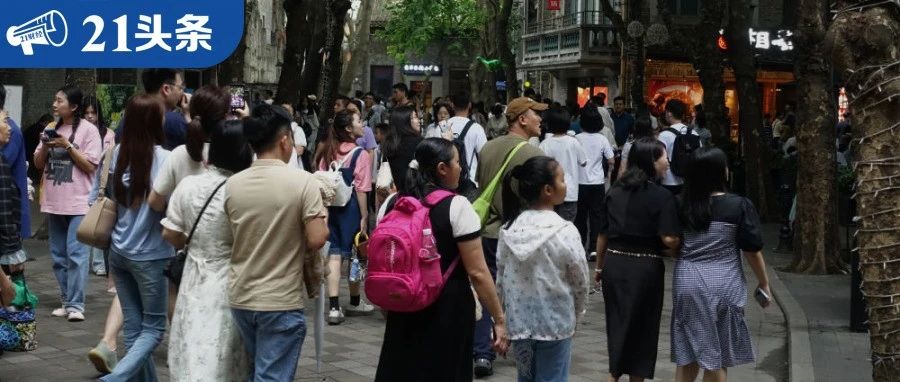
6座城市,冲刺千万人口大市!
21世纪经济报道· 2025-03-25 14:53
Core Viewpoint - The race for cities in China to reach a population of ten million is evolving into a "war of attrition," with increasing challenges and a need for cities to enhance their internal development capabilities [3][6]. Group 1: Population Growth Data - As of the end of 2024, Wenzhou's permanent population reached 985.2 thousand, an increase of 91 thousand from the previous year, just 148 thousand short of the ten million mark [4]. - Hefei officially became the 18th city in China to surpass ten million residents, with a population of 10,002 thousand, growing by 149 thousand from the end of 2023, totaling a cumulative increase of 537 thousand over three years [10]. - Six cities, including Wenzhou, Ningbo, Foshan, Nanjing, Jinan, and Shenyang, have populations exceeding 920 thousand and are still experiencing growth, indicating their potential to reach ten million [5]. Group 2: Challenges in Population Growth - The current pace of population growth suggests that by 2025, it may be difficult to see the emergence of the 19th city with a population of ten million [6]. - Many cities with populations around nine million are experiencing a downward trend in population, indicating a significant increase in the threshold for reaching ten million [7]. - The competition among cities is intensifying, with three of the six cities striving for ten million being ordinary prefecture-level cities, which struggle to compete with the public service resources of municipalities and sub-provincial cities [14]. Group 3: Factors Influencing Population Attraction - Urban population attraction is influenced by multiple factors, including housing subsidies, entrepreneurial support, living costs, public service quality, industrial capacity, and employment opportunities [8]. - Hefei's population growth is attributed to its industrial upgrades, which create job opportunities and higher salary levels, supported by a strong talent base from institutions like the University of Science and Technology of China [10][12]. Group 4: Strategies for Population Growth - Cities aiming for ten million populations should focus on industrial upgrades, as demonstrated by Hefei's industrial output growth of 14.8% in 2024, with significant increases in sectors like new energy vehicles and smart equipment [18][19]. - Optimizing living costs and residency policies is crucial, with cities like Shenyang implementing new policies to facilitate the settlement of newcomers [21]. - Improving infrastructure and enhancing livability are essential, as cities are working to address public service gaps, such as education, to attract and retain residents [22].