
Oil Refining

Search documents
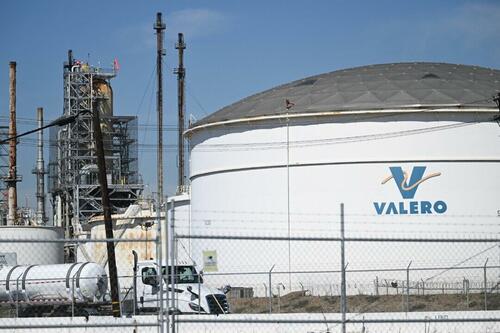
Exclusive-US refiner Valero to import up to 6.5 million barrels of Venezuelan crude in March, sources say
Yahoo Finance· 2026-02-13 23:40
Core Viewpoint - Valero Energy is poised to become the leading foreign refiner of Venezuelan crude oil, planning to purchase up to 6.5 million barrels in March for its Gulf Coast refineries, following the easing of U.S. sanctions on Venezuela [1] Group 1: Valero's Position and Actions - Valero was among the first U.S. refiners to resume Venezuelan crude imports after a $2 billion oil supply deal with Venezuela's interim government and the easing of sanctions [2] - If Valero successfully acquires 10 or more cargoes in March, it could process approximately 210,000 barrels per day, surpassing Chevron as the top U.S. refiner of Venezuelan crude [2] - This would mark the highest volume of Venezuelan crude processed by Valero since U.S. sanctions were imposed on Venezuela's oil industry in January 2019 [3] Group 2: Chevron's Role and Supply Dynamics - Chevron is expected to increase its Venezuelan crude exports to around 300,000 barrels per day in March, up from 220,000 barrels per day in January, with a significant portion likely going to Valero [3] - Valero is anticipated to receive most of its planned import volume from Chevron in March, highlighting the interdependence between the two companies [4] Group 3: Market Context and Future Expectations - Valero has engaged in negotiations with trading houses like Trafigura for additional cargoes, which were among the first authorized by the U.S. government to trade Venezuelan oil [4] - A Valero spokesperson indicated that Venezuelan crude is expected to constitute a significant portion of its heavy-crude purchases in February and March [6] - Valero has a historical long-term supply agreement with PDVSA for crude purchases prior to the sanctions, indicating established ties with Venezuela's state oil company [7]


Valero Ardmore refinery fire results in one death, KXII reports
Reuters· 2026-02-13 08:17
Company Impact - A fire at Valero's Ardmore oil refinery in Oklahoma resulted in one death from injuries sustained during the incident [1] - Valero Energy Corp has not yet provided a comment regarding the situation [1] Industry Context - The incident highlights ongoing safety concerns within the oil refining industry, which may impact operational protocols and regulatory scrutiny [1]


PBF Energy Q4 Earnings Call Highlights
Yahoo Finance· 2026-02-13 07:09
Core Viewpoint - PBF Energy is on the verge of restarting its Martinez refinery, which is expected to benefit from tighter product markets in California and improved infrastructure utilization, with full operations targeted for early March 2026 [3][7][4]. Refinery Operations - The company is nearing completion of construction at the Martinez facility, with a careful and methodical restart planned after a year of inactivity for the cat cracker [2][3][7]. - Senior Vice President Mike Bukowski highlighted the challenges faced during the unplanned rebuild but praised the workforce for achieving top-quartile safety performance [2]. Financial Performance - PBF reported adjusted EPS of $0.49 and adjusted EBITDA of $258 million for Q4 2025, alongside a $394 million insurance recovery related to the Martinez fire, bringing total recoveries for the year to $894 million [6][9][8]. - The company achieved $230 million in annualized run-rate savings through its Refinery Business Improvement (RBI) program in 2025, with a target of $350 million by the end of 2026 [5][19]. Market Dynamics - Management noted that widening sour crude differentials are a significant tailwind for 2026, with every dollar increase in crude differentials equating to a $200 million improvement for the business [12][13]. - Factors contributing to widening differentials include the OPEC+ taper and potential increases in Venezuelan crude supply [14]. Capital and Debt Management - PBF ended the quarter with $528 million in cash and approximately $1.6 billion in net debt, with a net debt to capitalization ratio of 28% [21]. - The company is focused on reducing debt while balancing shareholder returns, emphasizing the cyclical nature of refining [22]. Operational Efficiency - The RBI program has identified over 1,300 initiatives, with more than 500 implemented to date, achieving significant operational efficiencies [19]. - Capital expenditures for Q4 were reported at $124 million, excluding costs related to the Martinez incident, with total capital spending for 2025 at approximately $629 million [18]. Renewable Energy Segment - PBF recorded a $21 million loss related to its equity investment in St. Bernard Renewables, which produced an average of 16,700 barrels per day of renewable diesel in Q4 [20].

Russia's Volgograd oil refinery halts processing after drone attack, sources say
Reuters· 2026-02-12 13:58
Group 1 - Lukoil's Volgograd oil refinery has suspended oil processing due to a fire caused by a Ukrainian drone attack, impacting a key crude distillation unit that accounts for 40% of the plant's capacity [1][1] - The damaged crude distillation unit (CDU-1) has a capacity of approximately 18,600 metric tons per day, equivalent to around 140,000 barrels per day [1][1] - In 2024, the Volgograd refinery processed 13.5 million metric tons of oil, representing about 5% of the total volume processed at Russian refineries, producing 6 million tons of diesel, 1.9 million tons of gasoline, and 700,000 tons of fuel oil [1][1]

PBF Energy Reports Fourth Quarter and Full Year 2025 Results, Declares Dividend of $0.275 per Share
Prnewswire· 2026-02-12 11:30
Core Insights - PBF Energy reported a significant turnaround in its financial performance for the fourth quarter of 2025, achieving an income from operations of $128.0 million compared to a loss of $383.2 million in the same quarter of 2024 [1] - The company declared a quarterly dividend of $0.275 per share, reflecting confidence in its recovery and operational improvements [1] - The Martinez refinery is on track for a full operational restart by March 2026, following a fire incident in February 2025, with insurance expected to cover most restoration costs [1][2] Financial Performance - For the fourth quarter of 2025, PBF Energy's net income was $79.1 million, a stark contrast to a net loss of $292.6 million in Q4 2024 [1] - The full year 2025 loss from operations was $54.3 million, significantly improved from a loss of $699.0 million in 2024 [1] - Adjusted fully-converted net income for Q4 2025 was $57.8 million, compared to an adjusted loss of $324.5 million in Q4 2024 [1][4] Operational Updates - The Martinez refinery, with a capacity of 157,000 barrels per day, is nearing completion of construction activities, expected by February 16, 2026 [1][2] - The company anticipates achieving run-rate cost improvements of $350 million by the end of 2026, building on the $230 million improvements realized in 2025 [2] - PBF's refining system is expected to benefit from a constrained global refining capacity, positioning the company favorably for future demand growth [1] Market and Industry Context - Oil markets are described as dynamic, with recent headwinds turning into tailwinds for refiners, particularly benefiting PBF Energy [1] - The company is focused on safety, reliability, and environmentally responsible operations as it navigates the competitive landscape [1] - PBF Energy's refining margins have improved, with gross refining margin per barrel of throughput at $11.16 in Q4 2025, compared to $4.89 in Q4 2024 [5]

Is Wall Street Bullish or Bearish on Phillips 66 Stock?
Yahoo Finance· 2026-02-11 12:10
Core Insights - Phillips 66 (PSX) is an energy manufacturing and logistics company with a market cap of $63.5 billion, involved in oil refining, marketing, transportation, chemical manufacturing, and power generation [1] Performance Summary - PSX shares have outperformed the broader market, gaining 27.2% over the past year compared to the S&P 500 Index's 14.4% increase [2] - Year-to-date (YTD) performance shows PSX stock up 21.9%, significantly outperforming the S&P 500's 1.4% rise [2] - However, PSX has underperformed compared to the VanEck Oil Refiners ETF (CRAK), which has gained 52.7% over the past year, although PSX's YTD returns of 21.9% exceed CRAK's 17.5% [3] Financial Performance - On February 4, PSX reported Q4 results with an adjusted EPS of $2.47, surpassing Wall Street expectations of $2.11 [6] - Analysts project PSX's EPS to grow by 75% to $11.27 for the current fiscal year ending in December [6] - PSX has a mixed earnings surprise history, beating consensus estimates in three of the last four quarters [6] Analyst Ratings - Among 21 analysts covering PSX, the consensus rating is a "Moderate Buy," consisting of eight "Strong Buy," one "Moderate Buy," 11 "Holds," and one "Strong Sell" [7] - The analyst sentiment has become less bullish compared to the previous month, with nine analysts previously suggesting a "Strong Buy" [8] - Citigroup Inc. maintains a "Neutral" rating on PSX, raising the price target to $159, indicating a potential upside of 1.1% from current levels [8] - The mean price target for PSX is $154.38, while the highest target of $177 suggests a potential upside of 12.5% [8]

California Refinery Closures Spell Trouble For Fuel Prices, Supply: Experts
ZeroHedge· 2026-02-11 02:45
Core Insights - Several energy companies, including Valero and Phillips 66, have announced refinery closures in California due to regulatory challenges and operational losses [1][5][10] Refinery Closures - Valero Energy Corporation will close its Benicia refinery, which had a capacity of 170,000 barrels per day and employed over 400 people, and also evaluated its Wilmington refinery, which produced 15% of Southern California's asphalt supply [3][4] - Phillips 66 ended operations at its Los Angeles refineries, which spanned 650 acres and employed about 600 [5] - Chevron is relocating its headquarters from San Ramon to Houston, Texas, having operated in California since 1879 and employing over 2,000 people [6] Key Factors - Valero reported $1.1 billion in asset write-offs for its Benicia and Wilmington refineries in Q1 2025, while Chevron disclosed after-tax charges of $3.5 billion to $4 billion in Q4 2023, primarily due to asset impairments in California [8][9] - The regulatory environment in California has been cited as a significant factor for these closures, with policies aimed at reducing fossil fuel reliance over the past two decades [9][10] - California Assembly Bill AB X2-1, effective January 2025, allows the California Energy Commission to enforce minimum inventory levels for refiners, impacting profit margins [11][12] Potential Impact - The closure of Valero's Benicia refinery, which produced 4.5 to 4.7 million gallons of gasoline per day, could lead to fuel shortages and price spikes, especially if supply chains are disrupted [14][16] - California has the second-highest average gas prices in the U.S., with gasoline averaging $4.38 per gallon as of January 2025 [18] - Concerns have been raised about the impact of refinery closures on U.S. military installations in California, which may face jet fuel supply challenges [20][21] Legislative and Regulatory Considerations - Calls for legislative changes to support refiners and address the restrictive policies in California have been made, although success is uncertain [23]
Mercuria Nears $1 Billion Deal for Raízen’s Argentine Refining and Retail Assets
Yahoo Finance· 2026-02-10 17:17
Core Insights - Mercuria Energy Group is in advanced negotiations to acquire a refinery and hundreds of fuel retail stations in Argentina from Raízen, a Brazilian biofuels producer facing financial difficulties [1][2][3] Group 1: Acquisition Details - The deal value is expected to exceed $1 billion, although no binding agreement has been signed yet [2] - Negotiations have progressed significantly, with a potential finalization of the transaction soon, but risks remain that it could still fall through [2][3] Group 2: Raízen's Financial Situation - Raízen has been under financial pressure, posting heavy quarterly losses and accumulating high debt levels, leading to a selloff in its bonds and multiple credit downgrades [4][5] - Fitch Ratings downgraded Raízen's rating to "B" and then to "CCC," while S&P Global Ratings rated it "CCC+" due to concerns over liquidity and refinancing risks [5] Group 3: Industry Context - The acquisition would enhance Mercuria's downstream presence in South America, as trading houses are increasingly seeking control over refining and retail assets to secure margins amid volatile energy markets [6]
Exclusive: Rosneft oil refinery in Germany warns of risks from US sanctions
Reuters· 2026-02-10 15:47
Group 1 - Management at a Russian-owned oil refinery in Germany has privately warned that U.S. sanctions are negatively impacting its business operations [1] - The sanctions are threatening the fuel supply for Berlin and the surrounding region [1] - The refinery's management has expressed concerns about the long-term viability of their operations due to these sanctions [1]

石油分析观点-2026 年炼油产品展望:高利润率将持续-Oil Analyst_ 2026 Refined Products Outlook_ High Margins for Longer
2026-02-10 03:24
Summary of the 2026 Refined Products Outlook Industry Overview - The report focuses on the refined products industry, specifically diesel and gasoline margins in the US, Europe, and Asia, as analyzed by Goldman Sachs Global Investment Research [1][6][30]. Key Insights and Arguments 1. **Margin Performance in 2025**: - US diesel margins rose by $5/bbl (+20%) year-over-year despite a 14% decrease in crude prices, driven by disappointing refining capacity additions and solid demand [2][6]. - The average US diesel margin reached $28/bbl, nearly 75% above the 2013-2019 averages [6]. 2. **2026 Margin Forecast**: - Expected margins for 2026 are projected to remain $5-15 above the 2013-2019 averages, with US diesel margins forecasted at $31/bbl and gasoline margins at $18/bbl [2][8][41]. - European diesel and gasoline margins are expected to be slightly above market forwards at $23/bbl and $13/bbl, respectively, due to a ban on products refined from Russian crude [41][42]. 3. **Global Refining Utilization**: - The global refining utilization rate is anticipated to rise above the 70th percentile of historical averages in 2026, driven by limited capacity additions and strong demand growth [2][31]. - A projected increase in global refining utilization rates and freight rates is expected to support a constructive outlook for global products margins [2][30]. 4. **Regional Dynamics**: - Stricter renewable fuels blending requirements in the US are likely to increase Renewable Identification Number (RIN) costs, further supporting margins [41]. - In Asia, expected delays in new refining capacity additions and fiscal pressures on independent refineries are likely to support margins, projected at $19/bbl for diesel and $8/bbl for gasoline in 2026 [43]. 5. **Moderation in 2027**: - A slight decrease in global products margins is expected in 2027 as refining capacity grows in emerging markets and product stocks recover to seasonal norms [2][44]. 6. **Upside Risks**: - Risks to the margin forecast are skewed to the upside, particularly for diesel, due to potential delays in emerging market capacity additions, disruptions in Russian refinery operations, and high freight rates [50][54]. - A hypothetical escalation in geopolitical tensions, such as in Iran, could further boost diesel margins by reducing stocks and increasing freight rates [60]. Additional Important Insights - **Freight Rates**: The average clean tanker freight rate is expected to increase by $1.6 to $6.3/bbl, influenced by high oil on water levels and geopolitical uncertainties [35][36]. - **Refinery Capacity Additions**: The report highlights ongoing challenges in the execution of refinery projects in India, with significant delays expected in capacity additions [69]. - **Geopolitical Factors**: Geopolitical shocks, including drone attacks on Russian refineries, have contributed to a tightening of the refined products market, impacting margins positively [16][52]. This comprehensive analysis provides a detailed outlook on the refined products market, emphasizing the interplay of demand, geopolitical factors, and refining capacity dynamics.