
Virtual Reality

Search documents
Virtuix Expands Omni One to Europe Following 138% Year-over-Year Revenue Growth
Globenewswire· 2026-02-11 12:47
Core Insights - Virtuix Inc. is expanding its Omni One sales to Europe, marking a significant milestone in its international growth strategy with initial shipments scheduled between April 13 and April 24, 2026 [1][6] - The Omni One Core system is designed for SteamVR gaming, offering true 360-degree physical movement and is priced at €2,995 in EU countries and £2,795 in the UK [2] - The expansion is supported by a partnership with Unbound XR, which will handle local fulfillment and logistics across the EU and UK [3] Market Context - Europe is recognized as one of the most active PC gaming markets globally, making the launch of Omni One Core a strategic move for Virtuix [4] - The company reported a remarkable 138% year-over-year growth for the six months ending September 30, 2025, and maintains an average customer rating of 4.8 out of 5 stars [5] Product and Performance - Omni One is often referred to as the "Peloton for Gamers," combining immersive gameplay with physical activity, allowing users to burn up to 700 calories per hour [4] - The company has production capacity for up to 3,000 units per month, translating to approximately $100 million in annual revenue potential [6] Financial and Operational Developments - Virtuix recently secured an $11 million investment following its listing on the Nasdaq stock exchange under the ticker symbol "VTIX," aimed at supporting expanded sales and marketing efforts [6][7]


Meta CTO says cuts to Reality Labs are 'real cause for sadness' — but the company is still 'bullish' on VR
Business Insider· 2026-02-08 10:15
Core Insights - Meta has invested over $70 billion in its VR and metaverse initiatives since 2020, but the growth of the industry has been slower than anticipated, leading to recent cuts in its Reality Labs division [1][2] - The company has acknowledged that its vision for Horizon and VR was overly ambitious, resulting in a need to scale back on several VR products, including virtual workplace and fitness applications [2][3] - Despite the setbacks, Meta remains optimistic about the future of VR, claiming to invest more in content than any competitor [2][3] Investment Strategy - Meta's CTO stated that the current investment exceeds the growth potential of the VR ecosystem, indicating a significant loss and a need for emotional acknowledgment of the situation [2][5] - The company continues to view itself as a net positive investor in the VR ecosystem, even after scaling back its ambitions [3][4] - There is a belief that the challenges faced in VR do not necessarily detract from the potential growth in wearables, as both can be pursued simultaneously [3][4] Future Outlook - The CTO has previously indicated that 2025 will be a critical year for the metaverse, determining whether Meta's efforts will be seen as visionary or a misadventure [4] - There is a cautious tone regarding future investments, with the company emphasizing the need for its investment levels to align with actual growth [5]


Virtuix Brings AI-Generated Terrain to Defense Training and Simulation with Virtual Terrain Walk
Globenewswire· 2026-02-03 12:00
Core Insights - Virtuix Inc. has integrated AI-driven Gaussian splatting technology into its Virtual Terrain Walk (VTW) system, enhancing training and simulation capabilities in the defense sector [3][6] - The VTW system allows warfighters to physically navigate high-fidelity, geo-specific virtual environments, significantly improving mission planning and operational readiness [4][6] - The company aims to leverage this technology for various applications beyond defense, including industrial training, real estate visualization, and law enforcement [9] Company Overview - Virtuix Inc. is a leading manufacturer of full-body virtual reality systems, with a focus on consumer, enterprise, and defense markets [12] - The company's flagship product, the Omni One, is designed for immersive gaming experiences, allowing users to walk and run in 360 degrees [12] Technology and Innovation - The integration of Gaussian splatting reduces the time to create realistic virtual terrain from weeks or months to just hours, facilitating faster deployment of simulations [5][6] - The VTW system supports multi-user collaboration across more than 12 stations, enabling realistic mission planning and leader rehearsals [6] Market Adoption - Early adoption of the VTW system has been noted within defense organizations, with test units purchased by notable military institutions such as Yokota Air Force Base and the U.S. Air Force Academy [8] - The company showcased a proof-of-concept of the VTW system at the I/ITSEC tradeshow, demonstrating its potential in creating large, navigable virtual environments [7] Future Growth Strategy - Virtuix plans to complement high-volume consumer sales of its gaming system with high-margin enterprise and defense opportunities, including recurring revenues from software licensing [9] - The company believes that AI-driven 3D reconstruction is foundational to the future of virtual reality across various sectors [10]

Virtuix to Host Virtual Investor Webinar on Wednesday, February 4, 2026 at 11:30 a.m. Eastern Time
Globenewswire· 2026-02-02 20:30
Core Viewpoint - Virtuix Inc. is set to host a virtual investor webinar on February 4, 2026, to discuss its growth strategies, including a dual-use approach that combines consumer sales with defense contracts, and the role of AI-driven 3D reconstruction technology in enhancing product adoption across various markets [2][3][4]. Company Overview - Virtuix Inc. (NASDAQ: VTIX) is a leading manufacturer of full-body virtual reality systems targeting consumer, enterprise, and defense markets [5]. - The company's flagship product, the "Omni" omni-directional treadmill, allows users to walk and run in 360 degrees within virtual environments [5]. Webinar Details - The webinar will be hosted by Virtuix Founder and CEO Jan Goetgeluk and will include a question-and-answer session [3][4]. - Interested investors can sign up for the webinar and submit questions in advance [4]. Technology and Strategy - The company emphasizes a dual-use strategy that leverages high-volume consumer sales alongside high-margin defense contracts [3]. - AI-driven 3D reconstruction technology is highlighted as a key factor in accelerating product adoption in consumer, enterprise, and defense sectors [3]. Innovation Commitment - Virtuix is committed to innovation in the fields of XR (Extended Reality) and AI, aiming to deliver immersive experiences to users globally [6].
Virtuix CEO talks Nasdaq debut and VR growth plans – ICYMI
Proactiveinvestors NA· 2026-01-31 14:41
Core Insights - Virtuix Holdings Inc has successfully listed on the Nasdaq under the ticker symbol VTIX, marking a significant milestone for the company as it prepares for large-scale growth in both consumer and defense markets [1][8] - The company has launched its flagship home VR system, Omni One, which is designed to enhance user experience in virtual reality applications, including gaming and training [1][2] Company Overview - Virtuix specializes in virtual reality technology, particularly with its Omni system that allows users to walk and run in 360 degrees within virtual environments [2] - The company has sold approximately $20 million worth of systems since its inception, with a reported 138% year-over-year growth in its S-1 filing [4] Product Development - The latest product, Omni One, is specifically geared towards home gaming and has shown strong market traction [4] - The Virtual Terrain Walk system is designed for military training, allowing soldiers to familiarize themselves with mission areas in a hyperrealistic VR environment [5][6] Market Strategy - The company aims to scale its operations with a dual-use strategy that targets high-volume consumer sales alongside potentially high-margin defense contracts [7] - Production capacity is in place to support annual revenues of $100 million, indicating readiness for significant growth [7] Financial Position - The public listing has enabled the company to raise $11 million from Chicago Venture Partners and secure a $50 million equity line of credit, providing necessary capital for growth [8]

Amazon Job Cuts Deliver Another Blow to Seattle Area's Tech Workforce
PYMNTS.com· 2026-01-30 21:45
Amazon’s job cuts announced this week delivered another blow to the tech labor force in the company’s headquarters city of Seattle, which was already losing jobs, Bloomberg reported Friday (Jan. 30).By completing this form, you agree to receive marketing communications from PYMNTS and to the sharing of your information with our sponsor, if applicable, in accordance with our Privacy Policy and Terms and Conditions .Complete the form to unlock this article and enjoy unlimited free access to all PYMNTS content ...


Meta首席财务官:仍在打造头显产品,对VR未来依然保持乐观
Sou Hu Cai Jing· 2026-01-30 12:52
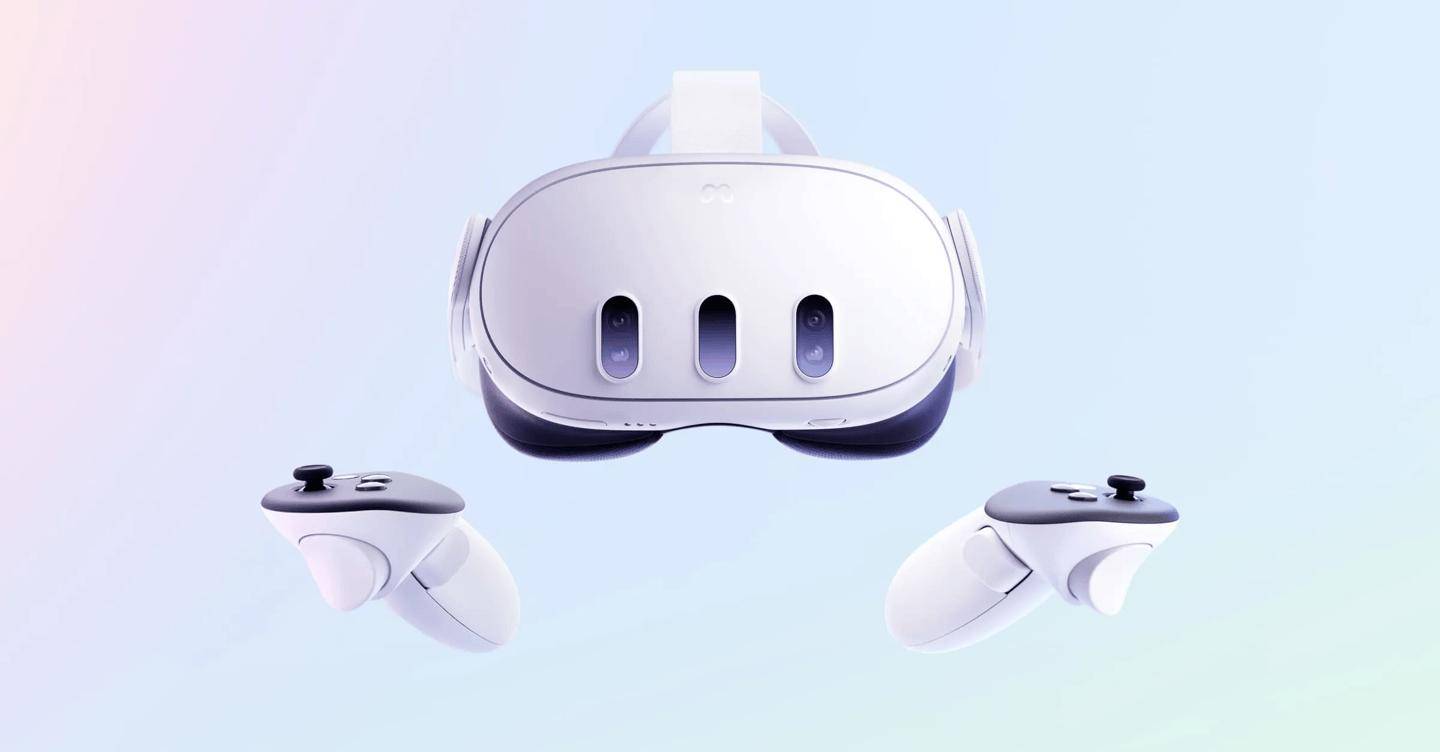
▲ Meta Quest 3 头显 参考IT之家先前报道,Meta 旗下 Reality Labs 部门在 2025 年第四季度录得 60.2 亿美元(IT之家注:现汇率约合 418.54 亿元人民币)经营亏损,全年累计亏 损接近 192 亿美元(现汇率约合 1335.57 亿元人民币),显示出其尖端技术研发仍处于高投入、低回报的阵痛期。尽管该部门第四季度实现销售额 9.55 亿美 元(现汇率约合 66.43 亿元人民币),但持续亏损态势未改。 IT之家 1 月 30 日消息,在 Meta 本周举行的 2025 年第四季度财报电话会议中,有德意志银行分析师提问,Meta 旗下 Reality Labs 部门未来是否会把重心收 窄,对此 Meta 首席财务官 Susan Li 表示,公司对 VR 的未来"依然保持乐观",并确认仍在"打造未来的头显产品"。 Susan Li 称,尽管消费者对 VR 的整体接受度增长速度确实慢于可穿戴设备,不过 Meta 仍然着眼于相应产业,当下公司正在重新平衡 Reality Labs 的业务布 局,对 Horizon"元宇宙"生态内容进行削减,同步加大对智能眼镜等可穿戴设备投资 ...
Virtuix lists shares after triple-digit growth, advancing physical movement in AI worlds
Proactiveinvestors NA· 2026-01-29 14:30
Core Insights - Virtuix Holdings Inc has made its Nasdaq debut, marking a significant milestone for the company as it aims to expand in both consumer and defense markets [1] Company Overview - Founded in 2013, Virtuix has developed technology that allows users to move naturally in virtual environments, addressing a long-standing challenge in VR development [2] - The company's flagship product, Omni One, has driven a 138% year-over-year revenue increase for the six months ending September 30, with over $20 million in sales across three product generations [2] Technology and Product Development - The Omni platform features an omnidirectional treadmill, overshoes, and a low-friction base, enabling 360-degree movement while remaining stationary [3] - The development of the Omni system took 10 years and $50 million, resulting in a complex hardware solution that integrates various materials and technologies [5] Market Strategy - Virtuix is pursuing a dual-use strategy, targeting both high-volume consumer sales and higher-margin defense contracts [5] - The Virtual Terrain Walk system utilizes AI for rapid 3D reconstruction of VR environments, significantly reducing preparation time for military applications [5] Financial Position - The Nasdaq listing has provided Virtuix with increased visibility and fresh capital, raising $11 million and securing a $50 million equity line of credit for scaling operations [6] - The company has the capacity to produce up to 3,000 units per month, translating to approximately $100 million in potential annual revenue [6] Historical Context and Market Evolution - Virtuix originated from a successful Kickstarter campaign in 2013, raising over $1.1 million, and has since attracted investments from notable figures and firms [7] - The company has adapted its strategy in response to the VR market's evolution, shifting focus from consumer markets to commercial applications and back to consumers with Omni One [9] Consumer Engagement and Health Benefits - The Omni One is designed for easy setup, promoting immersive fitness experiences, with users reporting significant health benefits [10] - With over 500,000 registered players in commercial entertainment, Virtuix aims to scale its consumer business while expanding its defense offerings [11] Vision for the Future - The company's ambition is to have a VR treadmill in every household, integrating entertainment, physical activity, and AI-generated environments [11] - The focus on promoting active lifestyles through immersive technology addresses public health concerns related to sedentary behavior [12]

Virtualware strengthens nuclear industry push with appointment of former CANDU Energy Chief Nuclear Engineer Stephanie Smith to its International Advisory Board
Globenewswire· 2026-01-29 07:05
Core Insights - Virtualware has appointed Stephanie Smith, a Canadian nuclear engineer with over 35 years of experience, to its international advisory board, effective immediately for the 2026 fiscal year [1][2]. Company Strategy - Smith's appointment is part of Virtualware's strategy to enhance its leadership in Virtual Reality applications within the nuclear energy sector [4]. - The company has been developing advanced training systems for nuclear plant operators in collaboration with GE Vernova Hitachi Nuclear Energy for eight years [5]. Industry Context - The nuclear energy industry is experiencing increased demand for clean, reliable baseload power, with major economies investing in new builds and life extensions of existing plants [7][8]. - According to the International Energy Agency, nuclear capacity is expected to reach record levels by 2025 [8]. Company Achievements - Virtualware's Fuel Movement Simulator, built on its proprietary platform VIROO, has received a Brandon Hall Group Gold award for Best Advance in Augmented and Virtual Reality [6]. - The company has achieved B Corp certification, highlighting its commitment to sustainable innovation and responsible growth [9]. Company Background - Founded in 2004, Virtualware serves various global organizations and institutions, including GE Vernova, Petronas, and the Spanish Ministry of Defense [10]. - The company acquired Swedish firm Simumatik in October 2024, expanding its capabilities in digital twin and simulation technologies [11]. - Virtualware is listed on Euronext Growth Paris and had a market capitalization of €32 million as of the last trading session [12].

Meta burned $19 billion on VR last year, and 2026 won’t be any better
Yahoo Finance· 2026-01-29 00:20
Earlier this month, Meta laid off 10% of the staff for Reality Labs, its virtual reality unit, reportedly cutting as many as 1,000 employees. Now, in a development that seems directly related, the company has revealed that the unit lost many billions of dollars last year. On Wednesday, Meta’s earnings report showed that its embattled virtual reality business had lost some $19.1 billion in 2025, which is slightly more than it lost in 2024 (that year, the losses hovered around $17.7 billion). In its fourth ...