Battery

Search documents
固态电池迎关键突破,多股年内涨超100%
21世纪经济报道· 2025-10-12 00:52
Core Viewpoint - The recent advancements in solid-state battery technology, particularly the development of an anion regulation technique by a research team led by Huang Xuejie, are crucial for practical applications and have garnered significant attention in the industry [1][4]. Group 1: Technological Breakthroughs - A research team from Dongguan Songshan Lake Materials Laboratory and other institutions has published significant findings in Nature Sustainability, addressing the challenge of electrolyte and lithium electrode contact in all-solid-state lithium batteries [1]. - The innovative anion regulation technique developed by the team is expected to facilitate the practical application of solid-state batteries, marking a key step forward in the industry [1][4]. Group 2: Market Performance - The solid-state battery index has seen a remarkable increase of 54.2% year-to-date as of October 10, significantly outperforming other major A-share indices [6]. - Six solid-state battery concept stocks have doubled in value this year, reflecting strong market interest and investment [8][12]. Group 3: Investment Opportunities - Sixteen solid-state battery concept stocks are projected to have a net profit growth rate exceeding 20% over the next two years, with some stocks recently receiving substantial financing [12]. - Notable companies in the solid-state battery sector include CATL (宁德时代), which has a market capitalization of 1683.23 billion and a predicted net profit growth rate of 24.7% [13]. Group 4: Industry Trends - The solid-state battery industry is entering a critical phase for mass production, with expectations for small-scale production to begin in 2027 and large-scale production to exceed 100 GWh by 2030 [15]. - Several companies, including Xinwanda and Puli Technology, are actively disclosing their progress in solid-state battery research and commercialization [14].



可弯折超20000次 我国锂电池领域再获重要突破
Ke Ji Ri Bao· 2025-10-11 03:14
在该研究中,团队制备的新型聚合物材料兼具快离子传输能力与高效的离子存储功能。材料通过共价 键,将快速的"离子传输通道"和具有储能功能的"硫链结构"集成在同一聚合物结构中。更重要的是,基 于该材料构建的一体化柔性电池展现出极佳的机械稳定性,可弯折20000次以上而不影响性能。此外, 将该材料作为传统磷酸铁锂正极的聚合物电解质时,电解质中"隐藏"的储能能力可在特定电位下被激 活,将复合正极能量密度提升86%。(陆成宽) 责任编辑:闫弘旭 记者10月6日从中国科学院金属研究所获悉,该所科研人员成功制备出一类新型聚合物材料,其能够在 分子尺度上同时实现离子的快速传输与高效存储,为提升固态锂电池性能提供了全新解决方案。相关研 究成果发表于《先进材料》杂志。 固态锂电池因安全性高、能量密度大,被认为是下一代储能技术的重要方向。然而,在传统的固态电池 里,"离子传导"和"离子存储"这两个关键功能,分别由固态电解质和电极材料来承担。这种"分工明 确"的模式,却导致电极和固态电解质之间的界面阻抗很大、离子传输效率低,严重影响了固态电池的 整体性能。 ...
Microvast Skyrockets 119% YTD: Is It a Must-Have Stock Now?
ZACKS· 2025-10-10 17:11
Core Insights - Microvast Holdings (MVST) shares have surged 119.4% year-to-date, significantly outperforming its industry growth of 44.3% and the Zacks S&P 500 Composite's 15.7% increase [1][6] - The company's True All-Solid-State Battery (ASSB) technology has enhanced its financial performance, contributing to a 9.2% year-over-year revenue growth and a positive adjusted EBITDA of $25.9 million [3][4][6] - The expansion of production capacity in Huzhou by 2 GWh is expected to strengthen Microvast's market share in the nickel manganese cobalt (NMC) battery sector, which is projected to grow significantly [8][9] Financial Performance - MVST's revenue for the June-end quarter increased by 9.2% year-over-year, with gross margins expanding by 220 basis points [3][6] - The adjusted EBITDA improved from a negative $78.4 million in the previous year to $25.9 million, indicating a strong turnaround in profitability [4][6] - The Zacks Consensus Estimate projects revenues of $462.3 million for 2025, reflecting a 21.7% year-over-year growth, and $563.5 million for 2026, suggesting a 21.9% increase [13] Market Position and Valuation - The global NMC battery market was valued at $31.1 billion in 2024, with a projected CAGR of 15.1% from 2025 to 2034, indicating a robust growth environment for Microvast [9] - MVST's stock is currently priced at 17 times forward 12-month EPS, significantly lower than the industry average of 30.9 times, suggesting a potential undervaluation [10] - Analysts have revised the EPS estimates upward for both 2025 and 2026, with a 46.2% increase for 2025 and a 20.8% increase for 2026, reflecting growing confidence in the company's future performance [14]

午评:创业板指半日跌3.4%,半导体、固态电池等热门赛道股集体调整
Xin Lang Cai Jing· 2025-10-10 03:31
Market Overview - The three major indices experienced a collective decline in early trading, with the Shanghai Composite Index down by 0.51%, the Shenzhen Component Index down by 1.85%, and the ChiNext Index down by 3.4% [1] - The total trading volume in the Shanghai, Shenzhen, and Beijing markets reached 165.61 billion yuan, a decrease of 70.8 billion yuan compared to the previous day [1] - Over 2,300 stocks in the market saw declines [1] Sector Performance - The gas, textile manufacturing, electric grid equipment, coal, cement, and dairy sectors showed the highest gains [1] - Conversely, sectors such as precious metals, semiconductors, solid-state batteries, photovoltaic equipment, and computing hardware experienced significant declines [1] Semiconductor Sector - The semiconductor sector faced substantial adjustments, with stocks like Dongxin Co., Huahong Semiconductor, and Jinghe Integrated falling over 10% [1] - Other notable declines included Baiwei Storage, SMIC, and Chipone [1] Battery Sector - The battery sector also saw a pullback, with stocks such as Liyuanheng and Yinghe Technology dropping over 10% during trading [1] - Other companies like Yiwei Lithium Energy, Tianji Co., and Honggong Technology followed suit with declines [1] Gold Sector - Following a surge in gold stocks the previous day, most experienced a pullback today, with Western Gold, Xiaocheng Technology, and Chifeng Gold leading the declines [1] Gas and Electric Grid Equipment Sectors - The gas sector collectively rose, with Dazhong Public Utilities and Hongtong Gas both hitting the daily limit [1] - The electric grid equipment sector also saw gains, with New Special Electric hitting the daily limit, alongside Guodian Nanzi, Sifang Co., and Shenneng Power [1] Other Active Sectors - The cement, coal, oil and gas, and dairy sectors showed active performance during the trading session [1]

X @Bloomberg
Bloomberg· 2025-10-10 03:16
China’s new export controls over parts of the battery supply chain are the latest sign Beijing is willing to leverage its dominance over an industry vital to the energy transition https://t.co/oWldm2eSAU ...
全球电池材料 - 储能系统需求热潮开启新周期-Global Battery Materials-ESS Demand Boom Marks the Start of a New Cycle
2025-10-09 02:00
Summary of Global Battery Materials Conference Call Industry Overview - The conference call focused on the **Global Battery Materials** industry, particularly the **Energy Storage System (ESS)** segment, which is experiencing a demand boom despite policy challenges [2][3][14]. Key Insights 1. **Demand Growth**: - ESS demand is projected to grow at a **33% CAGR from 2024 to 2030**, driven by an increasing share of renewable energy generation and improved project returns [3][16]. - ESS could surpass New Energy Vehicles (NEVs) as the largest demand driver for batteries in the long term [3][16]. 2. **Supply and Demand Rebalancing**: - The battery supply chain is expected to see improved utilization rates from **2025 to 2027**, leading to price increases and margin recovery [4][15]. - Price hikes for ESS cells have already been observed in **Q2 2025**, with expectations for continued increases into **Q3 2025** [4][16]. 3. **Competitive Landscape**: - Chinese battery manufacturers are gaining market share in the EU, while Korean companies, particularly **LG Energy Solution (LGES)**, are expected to benefit from US restrictions on Chinese supply chains [5][16]. - The early ramp-up of US-based capacity may allow Korean firms to reclaim market share in the US ESS market over time [5][16]. 4. **Investment Strategy**: - The investment strategy favors Chinese companies with higher ESS exposure and margin recovery potential over Korean players [6][20]. - Top investment picks include **CATL**, **EVE**, **CALB**, and **LGES**, while **EcoPro BM** and **Liontown Resources** are recommended as sells due to declining market positions [6][23][31][32]. 5. **Price Normalization**: - The normalization of battery prices is anticipated, with selective price hikes expected in materials such as cathodes, separators, and LiPF6 [4][16]. - The overall expectation is for modest price increases in battery materials during the upcoming upcycle [4][16]. Financial Projections - **CATL**: Target price raised to **Rmb 571/share** from **Rmb 404/share**, with expected sales volume growth of **31% in 2026** and **26% in 2027** [23]. - **EVE Energy**: Anticipated sales volume growth of **36% in 2026** and **27% in 2027**, with a significant portion of sales coming from ESS [24]. - **Hunan Yuneng**: Target price increased to **Rmb 57.90/share**, benefiting from strong LFP cathode demand and expected margin improvements [27]. Risks and Challenges - The industry faces risks from potential supply chain disruptions and the impact of US-China trade relations on market dynamics [5][41]. - Companies like **Samsung SDI** are rated neutral due to limited ESS capacity and near-term EV demand headwinds [41]. Conclusion - The global battery materials industry is poised for a recovery phase, with strong demand for ESS driving growth. Investment strategies are shifting towards companies with robust ESS exposure, while careful monitoring of competitive dynamics and market conditions is essential for navigating potential risks.

This Secret AI and Battery Stock Has Soared 148% in Just 5 Weeks
Yahoo Finance· 2025-10-08 13:23
Core Insights - SES AI shares have surged significantly, with a 53.2% increase in September and a 62.3% increase in October, totaling a 148% rise in five weeks [1][2] - The company specializes in using AI to discover electrolyte materials for lithium-metal and lithium-ion batteries, targeting applications in electric vehicles, drones, and energy storage systems [2][5] Company Developments - SES AI acquired Shenzen UZ Energy for $25.5 million, aiming to expand its market share in the $300 billion global energy storage systems market [5][6] - The acquisition is expected to enhance SES AI's presence in North America and other regions, capitalizing on the growing demand for electricity from AI data centers [5][6] Financial Performance - SES AI generated its first revenue of $2 million last year and projects revenue to increase to between $15 million and $25 million by 2025, with a gross margin of 74% in the last quarter [8][9] - The company has no debt, positioning it favorably for future growth [9]

Why SES AI Stock Climbed Today
Yahoo Finance· 2025-10-07 20:50
Group 1 - SES AI, a next-generation electric vehicle battery developer, launched a new product, the Molecular Universe 1.0 (MU-1), which is a battery material discovery software and service platform, leading to a share price increase of over 12% [1][2] - MU-1 offers end-to-end assistance in material discovery, including access to a library of research materials and search capabilities by attributes such as molecule and cell performance [3] - The software will be commercially available starting October 20, and SES AI is already generating revenue from two enterprise customers, although specific revenue figures were not disclosed [4] Group 2 - MU-1 will be available as a subscription service, which is expected to create a stream of recurring revenue for SES AI, enhancing its go-to-market strategy in the battery industry and potential entry into other molecule-dependent industries [5]
QuantumScape (QS) Hits All-Time High on Govt Support to Lithium Sector
Yahoo Finance· 2025-10-04 14:34
Group 1: Company Performance - QuantumScape Corporation reached a new 52-week high, with shares climbing to $16.49 before closing at $15.92, reflecting an increase of 11.33 percent [1] - The surge in QuantumScape's stock is attributed to increased investor interest in battery companies following US government initiatives to support the lithium industry [1] Group 2: Government Initiatives - The US government announced plans to acquire a 5 percent stake in Lithium Americas and its Thacker Pass mine in Nevada to enhance domestic lithium supply and reduce reliance on imports [2] - This initiative is expected to benefit companies like QuantumScape by potentially lowering raw material costs and minimizing supply chain disruptions, particularly in light of trade tensions with China [3] Group 3: Strategic Partnerships - QuantumScape has formed a partnership with Corning Inc. to develop ceramic separator manufacturing capabilities for solid-state batteries, aiming to increase production for commercial applications [4]

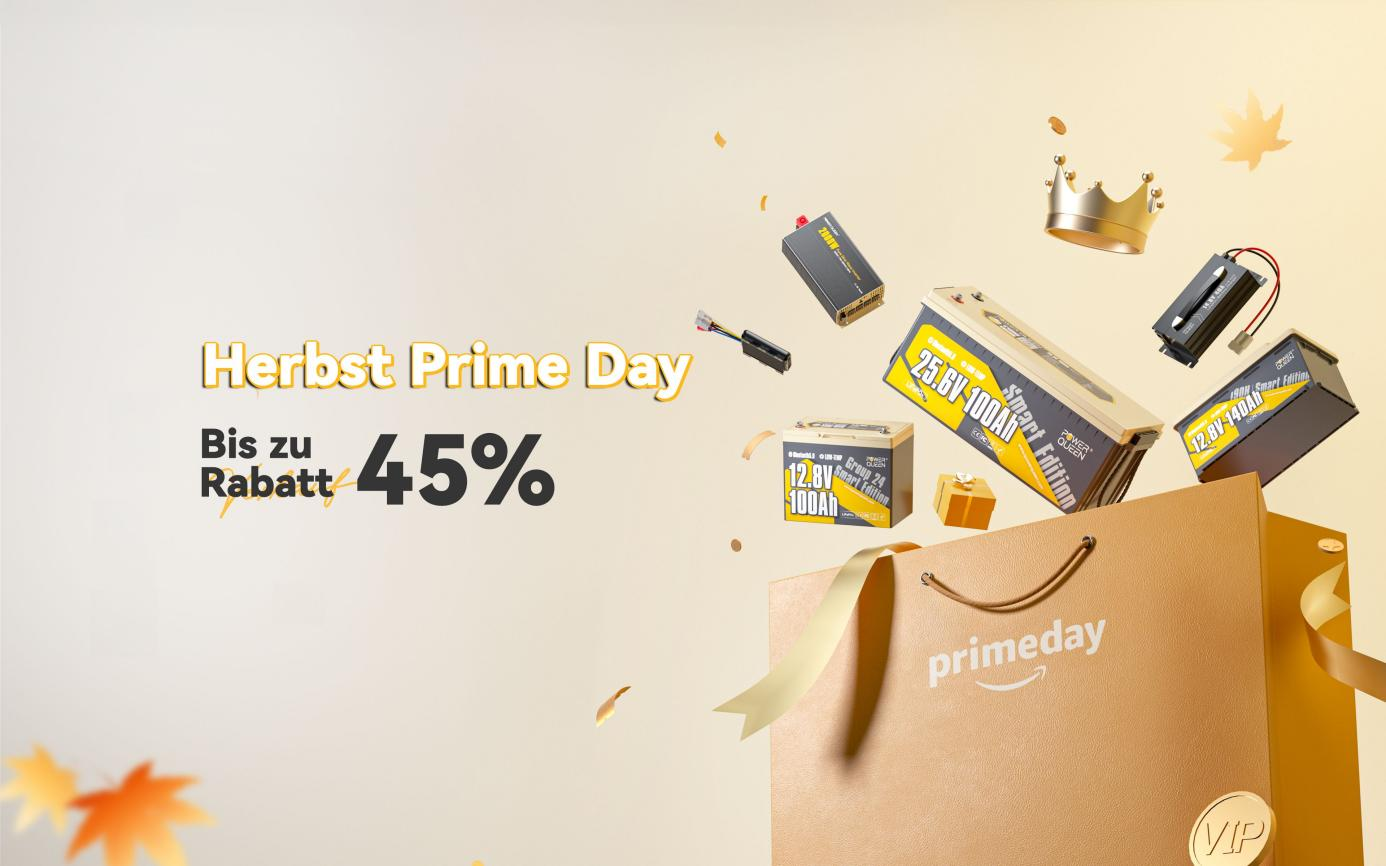
Power Queen LiFePO4 Battery Autumn Promotion: 10 Years of Reliable Energy and Over €800 in Savings
Globenewswire· 2025-10-04 08:00
Core Insights - Energy security is a growing concern in Germany as colder months approach, leading to increased demand for reliable and cost-effective energy solutions [1] - Power Queen is launching an autumn campaign offering discounts of up to 45% on its LiFePO4 batteries during the Prime Big Deal Days [1][4] Company Overview - Power Queen specializes in LiFePO4 batteries, which have a lifespan exceeding 10 years or over 4,000 charge cycles, making them a long-term investment compared to traditional lead-acid batteries [3][8] - The company emphasizes innovative energy storage solutions that provide economic benefits and reliable energy for various applications, including households, campers, and boat owners [8] Product Offerings - The autumn promotion includes tiered discounts for orders, with additional savings for battery and charger bundles [4][6] - Key products on sale include: - 12V 140Ah Smart RV Battery priced at €339.99 [4][7] - 24V 100Ah Solar Battery priced at €459.99 [7] - 12V 280Ah Low-Temperature Battery priced at €479.99 [7] - 12V 410Ah LiFePO4 Battery priced at €999.99 [7] Promotional Strategy - The campaign aims to attract consumers and investors looking for long-term energy savings, highlighting the economic advantages of switching to LiFePO4 batteries [4][9] - Customers can enjoy a 5-year warranty on their purchases, reinforcing the value proposition of Power Queen's products [9]