医疗保险

Search documents
机构美股调仓动态曝光 抄底科技黄金坑 中概股投资有亮点
Zhong Guo Zheng Quan Bao· 2025-08-17 21:51
□本报记者 王雪青 有观点认为,上述新买入标的属于防御性配置,具备低估值修复空间,并且6家公司均为细分行业龙 头,符合巴菲特"护城河"投资理念。 资料显示,伯克希尔在增持阶段对持仓保密是其一贯的策略。当连续多个季度买入某只股票时,公司通 常会申请保密,以避免过早暴露投资标的,增加自身建仓成本。 其中,医疗保险巨头联合健康目前属于困境阶段。从今年4月1日至8月14日,公司股价已下跌超45%。 值得注意的是,二季度出手联合健康的不止伯克希尔,买家还包括多家知名对冲基金,例如大卫·泰珀 旗下Appaloosa、"大空头"原型迈克尔·伯瑞旗下Scion以及被称为"量化之王"的文艺复兴科技,还有索罗 斯基金等。相关机构买入的消息披露后,联合健康8月15日涨超10%。 截至北京时间8月15日,美股机构投资者2025年二季度持仓报告基本披露完毕。 中国证券报记者梳理了包括巴菲特旗下伯克希尔·哈撒韦、李录旗下喜马拉雅资本、高瓴旗下HHLR、高 毅、景林、桥水、橡树资本、老虎环球基金、柏基投资、著名对冲基金经理大卫·泰珀旗下的 Appaloosa、"大空头"原型迈克尔·伯瑞的Scion,以及先锋领航、贝莱德、摩根大通等知名投资 ...
抄底科技黄金坑 中概股投资有亮点
Zhong Guo Zheng Quan Bao· 2025-08-17 20:07
Group 1: Berkshire Hathaway's Holdings - Berkshire Hathaway revealed its "mysterious holdings" for Q2 2025, with significant investments in healthcare, steel, and real estate sectors [1][2] - In Q2, Berkshire purchased six new stocks, including over 5 million shares of UnitedHealth valued at approximately $1.57 billion, over 6.6 million shares of Nucor Steel valued at about $860 million, and over 700,000 shares of Lennar valued at around $780 million, totaling over $3.6 billion in new positions [2][3] - Berkshire reduced its stake in Apple by 20 million shares, a decrease of about 6.67%, while also cutting its holdings in Bank of America by over 26.3 million shares, a reduction of approximately 4.17% [3] Group 2: Li Lu and Pinduoduo - Li Lu's Himalaya Capital bought over 4.6 million shares of Pinduoduo, making it the second-largest holding with a market value of $480 million, representing 17.93% of the portfolio [3][4] - Himalaya Capital previously held Pinduoduo but sold its position in Q4 2021, indicating a renewed confidence in the Chinese e-commerce sector [4] Group 3: Institutional Investment in Technology Stocks - Major institutions like Hillhouse, Bridgewater, JPMorgan, Vanguard, BlackRock, and Tiger Global increased their positions in technology stocks, capitalizing on the market downturn [5] - Notably, JPMorgan's top five holdings are all technology companies, and Vanguard's holdings reached $6.18 trillion, with significant investments in Nvidia, Microsoft, Apple, Amazon, and META [5] - Renaissance Technologies and Tiger Global also made substantial investments in Nvidia and other tech stocks, reflecting a bullish outlook on the technology sector's future [5]
山东省日照市五莲县:政策搭上“文艺车” 医保宣传“到家门”
Ren Min Wang· 2025-08-17 01:24
Group 1 - The core viewpoint of the articles highlights the innovative approaches taken by the Wulian County Medical Insurance Bureau to enhance public understanding and accessibility of medical insurance policies through community engagement and creative outreach methods [1][2][3] Group 2 - Wulian County has implemented a "Double Hundred" initiative, integrating medical insurance matters into daily life through entertaining and easily understandable cultural programs, such as public screenings of films and traditional performances [2] - The county has conducted 53 public summer activities, reaching over 100,000 people, to promote medical insurance policies and ensure they are well understood by the community [2] - As a pilot county for medical insurance policy promotion on Douyin (TikTok), Wulian County has launched a "Live Streaming Policy" service model, hosting 196 live sessions since 2022, engaging 350,000 participants and addressing over 5,600 inquiries [3]
两年一次!医保“打包付费”将实行动态调整
Xin Hua She· 2025-08-16 08:28
Core Viewpoint - The new regulations from the National Medical Insurance Administration (NMIA) establish a dynamic adjustment mechanism for disease-based payment schemes, which will be adjusted every two years to align with clinical developments [1][2]. Group 1: Payment Mechanism - The disease-based payment system includes two forms: Diagnosis-Related Group (DRG) payment and Disease Indicator Point (DIP) payment [1]. - The DRG grouping will focus on adjusting core and detailed groups while maintaining stability in major diagnostic categories [1]. - The DIP disease library adjustments will emphasize core and comprehensive disease types [1]. Group 2: Special Case Mechanism - The new regulations introduce a separate section for the "special case single negotiation" mechanism, allowing for cases that are not suitable for standard disease payment, such as long hospital stays or complex critical conditions [2]. - The NMIA aims to streamline the reporting process for special cases, enhancing efficiency and reducing the complexity of required documentation [2]. - This reflects the NMIA's commitment to support medical institutions in the rational use of new drugs and technologies for treating complex patients [2]. Group 3: Historical Context - The pilot reform of the disease-based payment system was initiated by the NMIA in 2019 and has since covered all coordinated areas [3].
美股异动|联合健康股价狂飙11.98%巴菲特重拾医疗保险板块引领投资风潮
Xin Lang Cai Jing· 2025-08-15 23:18
Core Viewpoint - The significant rise in UnitedHealth Group's stock price, driven by Berkshire Hathaway's substantial investment, reflects market confidence in the company's long-term potential despite recent challenges [1][2]. Group 1: Stock Performance - On August 15, UnitedHealth's stock surged by 11.98%, reaching its highest point since July 2025 [1]. - Berkshire Hathaway purchased 5.04 million shares of UnitedHealth, valued at approximately $1.572 billion, marking its first investment in the healthcare insurance sector since 2010 [1]. Group 2: Market Context - UnitedHealth faced several challenges, including lowered profit expectations, the resignation of its CEO, and an investigation by the U.S. Department of Justice regarding its billing practices [1]. - The company experienced a nearly 50% stock price drop in the second quarter due to these issues, including a violent incident involving an executive [1]. Group 3: Investment Strategy - Berkshire Hathaway's investment is seen as a classic example of value investing, where the firm identifies long-term potential during periods of market pessimism [2]. - The ongoing focus on healthcare costs and adjustments in UnitedHealth's business model suggest potential for future growth, despite short-term challenges [2]. - Investors are encouraged to consider the company's long-term stability and competitive advantages in the U.S. healthcare insurance market [2].

赋能医疗机构高质量发展医保按病种付费新规出台
Zhong Guo Zheng Quan Bao· 2025-08-15 20:11
Core Viewpoint - The National Healthcare Security Administration (NHSA) has released the "Interim Measures for Medical Insurance Payment by Disease" aimed at reforming the medical insurance payment system to establish a unified, efficient, and standardized mechanism that supports the high-quality development of medical institutions [1] Summary by Relevant Sections Payment System Reform - The new measures focus on payment by disease, emphasizing the need for a comprehensive reform of the medical insurance payment methods [1] - The goal is to create a nationwide unified payment mechanism that is effective and collaborative [1] Budget Management - The measures stipulate strict total budget management, requiring reasonable expenditure budgeting to determine the total payment amount by disease [1] - It emphasizes the rigidity of the total budget [1] Grouping Scheme - The measures clarify the responsibilities for formulating and adjusting grouping schemes, including the framework, data support, and adjustment content [1] - Grouping schemes are to be adjusted every two years [1] Core Elements and Supporting Measures - The measures define key elements such as weight, rate, and payment standards, requiring collaboration between the NHSA and medical institutions to reach consensus [1] - It also standardizes supporting measures related to medical insurance payments, including special negotiations, advance payments, opinion collection, and data publication to enhance the scientific level of medical insurance payments [1]
赋能医疗机构高质量发展 医保按病种付费新规出台
Zhong Guo Zheng Quan Bao· 2025-08-15 20:09
Core Viewpoint - The National Healthcare Security Administration (NHSA) has released the "Interim Measures for Disease-Specific Payment Management," aiming to reform the medical insurance payment system to establish a unified, efficient, and standardized mechanism that supports the high-quality development of medical institutions [1] Summary by Relevant Sections Payment System Reform - The new measures focus on disease-specific payment as a key aspect of the medical insurance payment reform [1] - The goal is to create a nationwide unified payment mechanism that is effective and collaborative [1] Budget Management - The measures emphasize the importance of total budget management, requiring reasonable expenditure budget preparation and establishing a rigid total for disease-specific payments [1] Grouping Scheme - The measures specify the formulation and adjustment of grouping schemes, detailing the responsible parties, framework, supporting data, and adjustment content, with a principle of biennial adjustments [1] Core Elements and Supporting Measures - The measures clarify the definitions of key elements such as weight, rate, and payment standards, mandating that the NHSA collaborates with medical institutions to reach consensus [1] - It also standardizes supporting measures related to medical insurance payments, including special case negotiations, advance payments, opinion collection, negotiation, and data publication to enhance the scientific level of medical insurance payments [1]
伯克希尔披露新持股信息后,联合健康股价创五年来最大涨幅
Xin Lang Cai Jing· 2025-08-15 14:28
Group 1 - Berkshire Hathaway disclosed its substantial stake in UnitedHealth, holding 5 million shares valued at approximately $1.6 billion, leading to a 12% surge in UnitedHealth's stock price, potentially marking its best single-day gain in five years [2] - Prior to Berkshire's filing, UnitedHealth's stock had declined nearly 50%, facing scrutiny from the public regarding rising healthcare costs and an investigation by the U.S. Department of Justice into its Medicare billing practices [2] - UnitedHealth's CEO Andrew Witty announced his resignation, and the company retracted its annual profit forecast earlier this year, further impacting its stock performance [2] Group 2 - Deutsche Bank healthcare analyst George Hill noted that Berkshire's investment signifies strong confidence in UnitedHealth and may provide a short-term trading platform for the Managed Care Organization (MCO) sector, potentially indicating a market bottom and encouraging other investors to consider the sector safe for investment again [3]

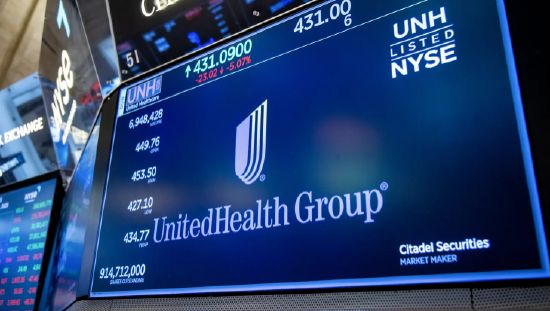
大涨!巴菲特“抄底”保险巨头 二季度建仓6只股票
Zheng Quan Shi Bao Wang· 2025-08-15 11:47
Core Viewpoint - Despite nearing retirement, Buffett's ability to identify valuable investments remains strong, as evidenced by significant stock purchases in the second quarter by Berkshire Hathaway, particularly in UnitedHealth Group, which saw a notable pre-market surge [2][3]. Group 1: UnitedHealth Group - UnitedHealth's stock price surged over 12% in pre-market trading after Buffett's investment, following a period where the stock had dropped more than 50% over the past year, resulting in a market cap loss of nearly $270 billion [3][4]. - The company is under investigation by the U.S. Department of Justice for potential billing misconduct related to its Medicare Advantage plans, raising concerns about inflated risk scores for higher reimbursements [4]. - The recent murder of the former CEO of the insurance division, Brian Thompson, has led to public outcry regarding the U.S. healthcare system, compounding the company's challenges [5]. Group 2: Berkshire Hathaway's Investments - In the second quarter, Berkshire Hathaway acquired over 5 million shares of UnitedHealth, with a market value of approximately $1.57 billion at the end of the quarter [5]. - Other stocks purchased by Berkshire include Nucor Steel (over 6.6 million shares, $860 million), Lennar (over 7 million shares, $780 million), D.R. Horton (1.485 million shares, $190 million), Lamar Advertising (about 1.17 million shares, $140 million), and Allegion (780,000 shares, $110 million), totaling a market value of approximately $3.65 billion for these new positions [7]. - In addition to new purchases, Berkshire reduced its stake in Apple by 20 million shares (approximately 6.67%) while still maintaining it as the largest holding [9].
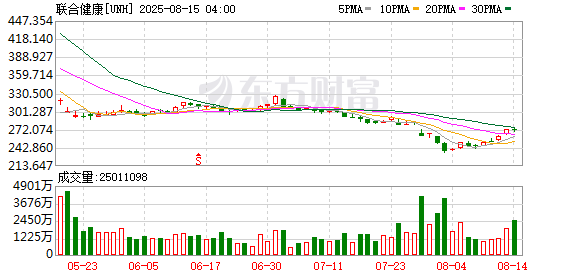
果然财经|“股神”巴菲特减持苹果,16亿美元重仓新进联合健康
Qi Lu Wan Bao· 2025-08-15 11:33
大众报业·齐鲁壹点30分钟前 果然财经|"股神"巴菲特减持苹果,16亿美元重仓新进联合健康 当地时间8月14日,"股神"巴菲特麾下的伯克希尔-哈撒韦公司披露持股情况,于第二季度进一步减持了 苹果公司的股票,并将美国医疗保险巨头联合健康加入投资组合。据中新网,这是伯克希尔-哈撒韦自 2024年第三季度以来再次减持苹果股票,其最大持股量降至2.8亿股。不过,目前苹果仍是伯克希尔-哈 撒韦持仓最重的股票。消息公布后苹果股价几乎没有变化。 果然财经|"股神"巴菲特减持苹果,16亿美元重仓新进联合健康 热门评论我要评论 微信扫码 移动端评论 暂无评论 鲁ICP备15022957号-13 鲁公网安备 37010202002220号 鲁新网备案号201000101 电信增值业务许可证: 鲁B2-20120085 齐鲁晚报·齐鲁壹点 版权所有(C) All Rights Reserved 联系电话:0531-82625462邮箱: 1790179766@qq.com ...