科技巨头

Search documents
AI“电荒”催命,科技巨头被迫自供电!板块批量涨停
Ge Long Hui· 2026-02-27 08:23
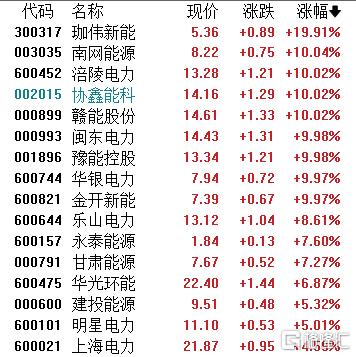
Group 1 - The A-share power sector experienced a significant surge, with multiple stocks hitting the daily limit up, indicating a strong market sentiment [1] - Key stocks that saw substantial gains include Jiawei New Energy (+19.91%), Nanguo Energy (+10.04%), and Fuling Power (+10.02%) [2] - The surge is attributed to increasing demand for AI computing power and the rising electricity consumption pressures from data centers [1][3] Group 2 - The U.S. government is planning to require major tech companies to bear the electricity costs for their high-energy data centers, aiming to alleviate pressure on the public power grid [3] - The International Energy Agency (IEA) predicts that from 2024 to 2030, the electricity consumption growth from data centers will account for nearly 50% of the total increase in U.S. electricity demand [3] - Goldman Sachs has raised its forecast for global data center electricity demand growth from 175% to 220% by 2030, with a projected increase of 905 terawatt-hours [4] Group 3 - China is projected to surpass 10 trillion kilowatt-hours in total electricity consumption by 2025, maintaining its position as the world's largest electricity consumer [5] - The Chinese government is accelerating reforms in the electricity market, aiming for a unified national electricity market system by 2030 [5] - The increasing electricity demand driven by AI and data centers presents significant opportunities for domestic power equipment exports and ongoing high demand in the industry [6]


美银Hartnett:小盘股比科技股更值得押注,科技巨头不再是赢家
美股IPO· 2026-02-08 11:49
Core Viewpoint - The period of 2025-2026 marks the end of the "American exceptionalism" and the beginning of "global rebalancing," where the winners will shift from U.S. tech giants to international stocks, Chinese consumer stocks, and commodity producers in emerging markets [1][16]. Group 1: Market Indicators and Trends - A "sell" signal was issued by Michael Hartnett's redesigned indicator, which has reached an extreme reading of 9.6, the highest since March 2006 [2]. - The current market conditions are characterized by a combination of "position peak, liquidity peak, and inequality peak" [3]. - The "Bull & Bear Indicator" has reached its highest level since 2006, indicating heightened market risks [5]. Group 2: Asset Allocation and Investment Strategy - Hartnett's conclusion for 2026 asset allocation is straightforward: "long Main St, short Wall St," suggesting a focus on Main Street over Wall Street [4]. - The market's recent downturn aligns with Hartnett's warnings, as evidenced by significant drops in software stocks and cryptocurrencies, leading to a broader market panic [7]. - The shift in capital expenditures for tech giants is alarming, with projected AI-related capital expenditures reaching $670 billion in 2026, consuming 96% of their combined cash reserves, compared to just 40% in 2023 [8]. Group 3: Economic Implications and Observations - The Trump administration's policies aimed at reducing inflation through intervention in energy, healthcare, and credit prices may lead to unexpected declines in inflation by 2026, benefiting small and mid-cap stocks [9]. - Recent data shows a significant style shift in the market, with investment-grade bonds experiencing 41 consecutive weeks of net inflows [11]. - There has been a notable outflow from safe-haven assets, with gold funds seeing an $800 million outflow and cryptocurrency funds losing $1.5 billion, indicating a shift away from perceived bubbles [13]. Group 4: Future Outlook - Hartnett suggests that the current market downturn should be viewed as a "huge, healthy, and overdue bubble deflation," unless a systemic event occurs [15]. - The investment strategy moving forward should focus on undervalued assets closely tied to the real economy, as the market undergoes significant changes [17].
消费大爆发!“老登”ETF大合集来了
Sou Hu Cai Jing· 2026-02-06 08:41
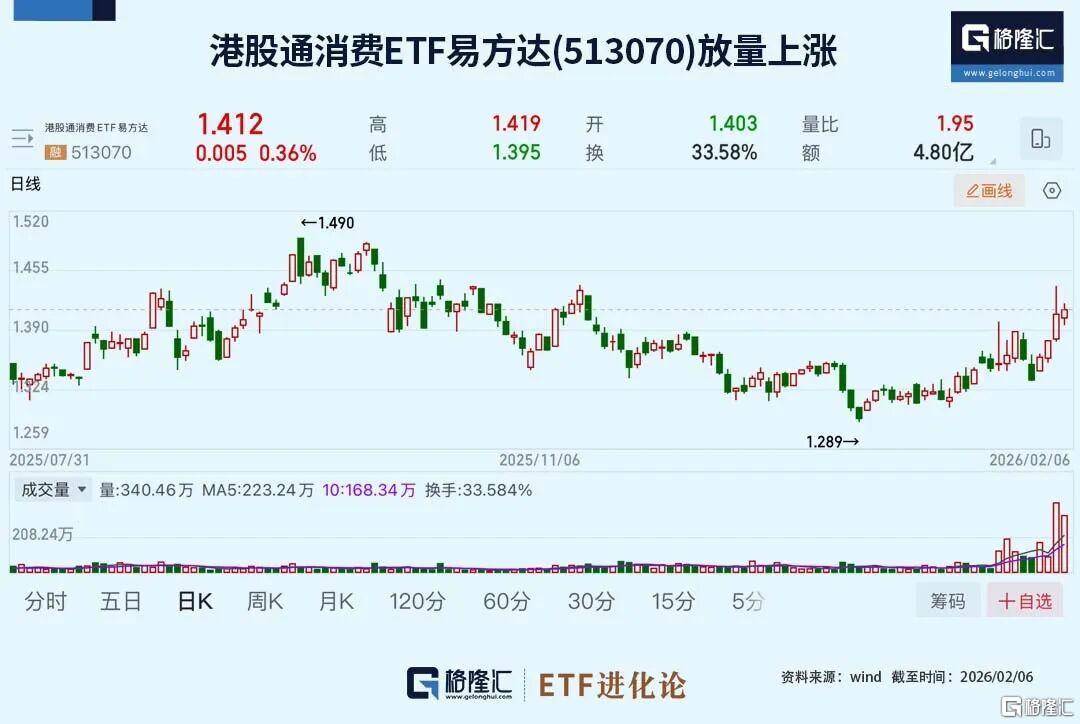
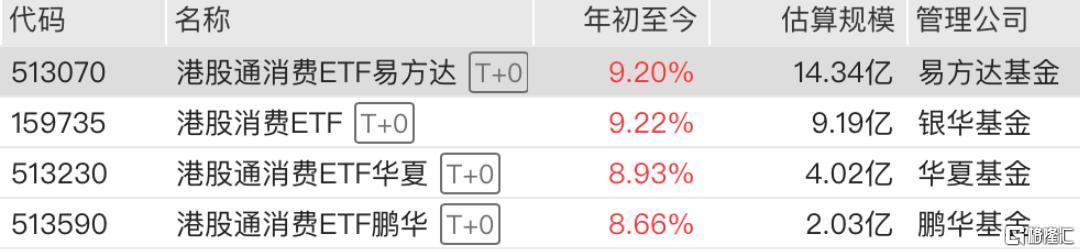
Market Trends - The global market has experienced a significant style switch since the beginning of the year, with traditional value assets, referred to as "old Deng assets," making a comeback [1] - In the US stock market, the Dow Jones index, dominated by traditional blue-chip stocks, has reached a historical high, while tech giants like Nvidia and Microsoft have shown volatility [1] - The A-share market's consumer sector has emerged from a low point, with the liquor index rising significantly, and leading companies like Kweichow Moutai seeing stock price surges of over 14% in just six trading days [1] Hong Kong and A-share Market Performance - In the Hong Kong stock market, certain consumer stocks have also shown recovery, with the tea beverage sector experiencing strong performance, including a notable rise in stocks like Gu Ming and Cha Bai Dao [1] - The Hong Kong Stock Connect consumer ETF, E Fund (513070), has seen a cumulative increase of 5.77% over the past five trading days, driven by the performance of these consumer stocks [1] Investment Opportunities - The E Fund consumer ETF has attracted a net inflow of 504 million yuan over the past ten days, bringing its total size to 1.434 billion yuan, making it the largest in its category [5] - The ETF covers a range of traditional service consumer leaders as well as growth-oriented consumer assets, with an overall PE ratio of approximately 18.25 times and a dividend yield of about 3.56% [7] Key Holdings in Consumer ETFs - The top holdings in the E Fund consumer ETF include Pop Mart (12.11% weight), Yum China (9.36%), Anta Sports (7.36%), and Nongfu Spring (6.49%) [8] - The ETF's portfolio reflects a diverse range of sectors, including entertainment, dining, sports apparel, and beverages, indicating a broad investment strategy within the consumer space [8]

“史上最长春节假期”临近,港股通消费ETF易方达、港股消费ETF、港股通消费ETF华夏年内上涨
Xin Lang Cai Jing· 2026-02-06 08:35
Core Viewpoint - The global market has experienced a significant style switch since the beginning of the year, with traditional value assets, referred to as "old Deng stocks," making a comeback while tech giants like Nvidia and Microsoft face high volatility [1]. Group 1: Market Trends - The Dow Jones index, dominated by traditional blue-chip stocks, has reached a historical high, contrasting with the Nasdaq's tech giants [1]. - In the A-share market, the consumer sector has shown signs of recovery, with the liquor index rising significantly, and Kweichow Moutai's stock price increasing over 14% in just six trading days [1]. Group 2: ETF Performance - The E Fund Hong Kong Stock Connect Consumer ETF has seen a net inflow of 504 million yuan in the last 10 days, bringing its total size to 1.434 billion yuan, making it the largest among similar products [3]. - The ETF supports T+0 trading with a comprehensive fee rate of 0.2%, the lowest among all Hong Kong consumer ETFs [3]. Group 3: Consumer Sector Insights - The upcoming "longest Spring Festival holiday" is expected to boost retail consumption in sectors like gold, travel, and dining [2]. - New consumption trends are performing well, with expectations for continued policy support for service consumption through 2026, while optional consumption sectors may show mixed performance [3].
【招银研究】黄金短跌不改长牛,A股二月胜率占优——宏观与策略周度前瞻(2026.2.2-2.6)
招商银行研究· 2026-02-02 11:46
Core Viewpoint - The article discusses the recent market fluctuations influenced by geopolitical tensions and monetary policy changes, particularly focusing on the implications for gold, U.S. Treasury bonds, and the stock market [2][3][4]. Group 1: Market Reactions - The market experienced significant volatility last week, with the dollar dropping sharply due to rumors of potential intervention by Japan and the U.S., leading to a surge in gold prices, which approached $5,600 per ounce [2]. - Following the denial of intervention rumors and the nomination of Waller as the next Fed Chair, the dollar rebounded, causing gold to drop sharply, with a single-day decline exceeding 9% [2]. - The U.S. Treasury market remains stable, with the 10-year Treasury yield rebounding to 4.2-4.3%, highlighting the value of mid-term bonds over long-term ones [2]. Group 2: U.S. Stock Market Outlook - The U.S. stock market saw a slight increase, with the S&P 500 rising by 0.3% while the Nasdaq fell by 0.2%, influenced by tech giants facing challenges due to high AI investment and supply chain constraints [3]. - The article suggests that the U.S. stock market is consolidating its fundamentals, preparing for the next upward movement, supported by strong corporate earnings across various sectors [3]. - Despite high valuation levels limiting expansion, robust corporate earnings are expected to drive the market back into a bullish trend [3]. Group 3: Currency and Gold Analysis - The Chinese yuan is expected to maintain a gradual appreciation due to the divergence in monetary policies between China and the U.S., alongside a significant trade surplus projected to exceed $1 trillion by 2025 [4]. - Short-term adjustments in gold prices are anticipated, but the long-term bullish trend remains intact due to ongoing geopolitical tensions and expectations of continued monetary easing by the Fed [5]. - The article emphasizes that gold will likely remain a preferred safe-haven asset amid global uncertainties and that institutional demand for gold is still not at peak levels [5].

黄金单日蒸发 4 万亿美元,科技股被迫陪葬!抄底窗口何时开启?
RockFlow Universe· 2026-02-02 03:47
Core Viewpoint - The recent plunge in precious metals is not due to a fundamental collapse but rather a result of high-leverage long positions being liquidated, triggered by expectations surrounding Kevin Warsh's nomination to the Federal Reserve [3][5]. Group 1: Market Dynamics - The gold market experienced a dramatic drop, with nearly $4 trillion evaporating in market value, and silver, platinum, and palladium also saw significant declines [5][8]. - The surge in gold prices to over $5,600 per ounce was followed by a rapid decline due to a precarious position structure, with the RSI exceeding 90, indicating extreme overbought conditions [8][9]. - The announcement of Kevin Warsh's nomination led to a strong rebound in the dollar index, causing leveraged positions in gold to face severe losses, triggering a chain reaction that affected major tech stocks [9][10]. Group 2: Historical Context - Historical patterns from 2008 and 2020 suggest that precious metals often lead declines in the stock market during liquidity crises, indicating that the recent drop may be a cleansing of speculative excess rather than the end of a bull market [12][14]. - The current situation is likened to a "hard landing test" for the over-inflated precious metals market, suggesting that the market is undergoing a necessary correction [14]. Group 3: Investment Strategy - Investors are advised to focus on three key indicators for identifying potential bottoming in the gold market: the slope of the dollar index, the progress of CME margin adjustments, and the financial health of mining companies [19][21][23]. - A significant signal for market recovery would be a decline in the dollar index and a stabilization of gold prices, alongside a reduction in margin requirements by CME [20][22]. - Mining companies with strong cash flow and low all-in sustaining costs (AISC) are highlighted as potential investment opportunities, especially when their stock prices fall to more reasonable valuation multiples [23][24].

133家私募持9号牌照“出海”掘金!但斌持仓:谷歌成第一重仓股;李蓓深度剖析地产投资机会|私募透视镜
Sou Hu Cai Jing· 2026-02-01 15:23
Group 1 - The core viewpoint of the articles highlights the increasing internationalization of Chinese private equity funds, with Hong Kong emerging as the preferred destination for overseas investments, facilitated by the 9th license from the Hong Kong Securities and Futures Commission [1] - As of December 31, 2025, 133 private equity firms hold the 9th license, with 39 of them managing over 10 billion yuan, and Shanghai being a significant hub for these firms [1] - The private equity firm Rido Investment executed an unusual dividend distribution, resetting the net asset value of one of its products to 1.0000, which is uncommon in the industry for newly established products [2] Group 2 - Dongfang Harbor, managed by Dan Bin, reported a significant increase in its holdings in Google, which has become its largest position, reflecting a strategic shift towards technology stocks [3] - Li Bei from Banxia Investment believes that the real estate sector is approaching a turning point, suggesting that opportunities lie in real estate stocks rather than direct property purchases [4] - The white liquor sector, particularly Kweichow Moutai, has seen a strong rebound, with its stock price rising significantly, drawing attention from investors [5][6] Group 3 - Goldman Sachs CEO David Solomon emphasized the firm's commitment to the Chinese market, noting increased opportunities in investment banking and wealth management as international interest in China grows [7] - The Norwegian Government Pension Fund reported a 15.1% return for 2025, with equity investments being the main driver, particularly in technology, finance, and basic materials sectors [8] - Cathie Wood of ARK Invest predicts a new entrepreneurial era driven by AI, likening current investment trends to a major infrastructure cycle [9] Group 4 - Jinghua Asset's strategy meeting highlighted four key investment opportunities for 2026, including new economy sectors, high-end manufacturing, consumer essentials, and anti-involution themes [10][11] - Three securities firms, Northeast Securities, Kaiyuan Securities, and Shanghai Securities, received full exemption from transaction fees based on their performance evaluations [12] - Zhongtai Securities announced a significant organizational restructuring, establishing separate subsidiaries for underwriting, proprietary trading, and research [13]


AI颠覆游戏业?谷歌(GOOGL.US)“Project Genie”上线引美股游戏板块全线重挫
智通财经网· 2026-01-31 01:27
Core Viewpoint - The announcement of Google's "Project Genie," an experimental AI prototype capable of generating interactive virtual worlds, has led to significant declines in the stock prices of major gaming companies, raising concerns about potential disruptions in the gaming development industry [1][2]. Group 1: Market Reaction - Major gaming companies experienced substantial stock price drops, with Unity Software falling over 24%, Roblox down approximately 13%, and Take-Two Interactive decreasing nearly 8% [1]. - International gaming companies, including Nexon, CD Projekt, Ubisoft, Nintendo, and Konami, also saw their stock prices affected by the news [1]. Group 2: Project Genie Overview - "Project Genie" allows users to create virtual worlds through descriptions of scenes, characters, and perspectives, and it can simulate physics and interactions in real-time [2]. - The technology is currently available to AI Ultra subscription users in the U.S. and is expected to change the game development landscape, compelling developers to adapt to rapidly evolving technologies [2]. Group 3: Industry Implications - Concerns exist that if AI can significantly simplify world-building, it may reduce the demand for professional game engines like Unreal Engine and Unity Engine [2]. - Platforms like Roblox, which rely on user-generated content (UGC), may see diminished attractiveness if users can easily create worlds using AI [2]. - The potential for AI to shorten development cycles and reduce costs is notable, as some AAA games currently take five to seven years and cost hundreds of millions to produce [2]. Group 4: Analyst Perspectives - Wells Fargo analysts maintain that the introduction of AI tools will accelerate development in the gaming industry, viewing it as a long-term positive [3]. - Unity's CEO expressed that advancements in "world models" will serve as a powerful accelerator for video game creation rather than a threat [3]. - The application of AI in game development is seen as an inevitable trend, with nearly 90% of game developers reportedly using AI tools in their work [3].



美股“精神分裂”?道指大跌400点,为何标普竟创新高?
Sou Hu Cai Jing· 2026-01-27 23:07
Core Viewpoint - The market is experiencing a significant divergence, with the Dow Jones index dropping over 400 points while the S&P 500 index reaches a historical high, indicating a shift in investment dynamics and asset revaluation driven by the AI revolution and macroeconomic factors [1][3]. Group 1: Market Dynamics - The divergence in market performance suggests a separation between traditional economic indicators and technology-driven growth, with investors focusing on major tech companies like Apple, Microsoft, and Meta, particularly regarding their investments in AI [3][4]. - The current market environment reflects a consensus among investors that the productivity revolution and capital expenditure driven by AI are the most certain growth narratives, leading to premium valuations for core companies in this sector [3][4]. Group 2: Interest Rate Expectations - A significant "expectation gap" exists regarding the Federal Reserve's interest rate decisions, with Wall Street anticipating a maximum of two more rate cuts this year, while political pressures suggest a push for much lower rates [4][5]. - The potential for interest rates to be pushed down to 1% raises concerns about the long-term credibility of the dollar, especially in a context of rising inflation, which could lead to negative real interest rates [4][5]. Group 3: Gold Market Insights - The surge in gold prices, surpassing $5,140, reflects deep-seated anxieties regarding the credibility of sovereign currencies, particularly the US dollar, and ongoing geopolitical instability [5][6]. - Central banks are increasingly replacing portions of their US debt holdings with gold, indicating a strategic shift in asset allocation amidst concerns over currency stability [5][6]. Group 4: Investment Strategy Recommendations - Investors are advised to conduct a thorough assessment of their asset allocations, determining whether they are aligned with traditional economic cycles or the emerging AI-driven productivity revolution [6]. - Acknowledgment of high volatility as the new norm is essential, necessitating robust position management and emotional resilience rather than frequent trading [6]. - Gold should be viewed as a strategic hedge against extreme risks rather than a primary speculative asset, balancing its long-term de-dollarization narrative with short-term emotional market risks [6].

“欧洲衰落论”翻车?数据显示西欧生产率超美国,差距在科技巨头
Sou Hu Cai Jing· 2026-01-18 13:38
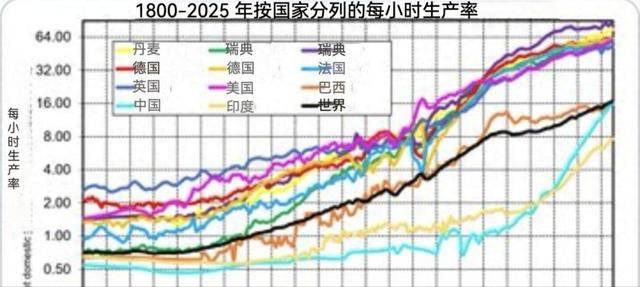
Core Viewpoint - The narrative of "European decline" is challenged by data suggesting that Western European workers may have higher productivity per hour compared to their American counterparts, raising questions about the validity of the decline argument [1][3]. Group 1: Labor Productivity Comparison - Labor productivity, measured as GDP produced per hour worked, shows conflicting data: the International Labour Organization reports Western Europe's productivity at approximately $83 per hour, slightly higher than the U.S. at $81.8 [3]. - Other authoritative sources, such as the OECD, indicate that the U.S. still leads in labor productivity, albeit with a smaller margin than commonly perceived [3]. Group 2: Statistical Methodology and Labor Participation - Differences in how "labor input" is measured may account for discrepancies in productivity statistics, as varying work hours and participation rates can skew average calculations [7]. - A simplistic average comparison does not definitively establish which region is superior, and productivity gaps cannot be equated to a narrative of decline [7]. Group 3: Societal Choices and Work-Life Balance - Even with data showing U.S. productivity advantages, labeling Europe as "declining" oversimplifies the situation; productivity differences have stabilized over the past fifteen years, rather than showing a continuous downward trend for Europe [8]. - The U.S. benefits from longer average work hours and higher labor participation rates, while Europe emphasizes work-life balance, resulting in shorter work weeks and more vacation time [8][10]. Group 4: Economic Structure and Technology - The productivity gap between the U.S. and Europe is largely driven by a small number of high-performing technology companies in the U.S., which significantly boost overall economic performance through substantial R&D investments and innovation [14]. - Europe lacks comparable global tech giants, leading to a more uniform but less dynamic economic model, which reflects in different policy responses during the pandemic [16]. Group 5: Conclusion on European Economic Narrative - The "European decline" narrative may oversimplify complex realities; data indicates that Western Europe's foundational productivity is not low and may even be superior under certain metrics [19]. - The challenge for Europe lies not in emulating the U.S. but in nurturing new engines of growth while maintaining its social consensus [19].