
燃气供应

Search documents
电能实业(00006):多个资产迎来回报率上调窗口期
HTSC· 2026-03-19 09:39
Investment Rating - The report maintains a "Buy" rating for the company with a target price of HKD 77.60 [6]. Core Views - The company reported a revenue of HKD 7.71 billion for 2025, a decrease of 16.1% year-on-year, primarily due to a reduction in interest income from loans to associated companies. However, the net profit attributable to shareholders was HKD 6.236 billion, reflecting a year-on-year increase of 1.9%, which is in line with expectations [1][4]. - The company is expected to benefit from an increase in return rates for several regulated assets entering new regulatory periods in 2026, which supports future earnings growth. The sale of UK Power Networks (UKPN) is anticipated to significantly enhance cash reserves and improve the company's capacity for global expansion and acquisitions [3][4]. - The Australian business contributed a profit of HKD 1.461 billion in 2025, up 4% year-on-year, driven by regulatory changes allowing for a return rate increase. The Hong Kong business remained stable, contributing HKD 1.051 billion, while the UK business's profit contribution was flat due to high base effects from the previous year [2][3]. Summary by Sections Financial Performance - The company achieved a revenue of HKD 7.71 billion in 2025, down 16.1% year-on-year. The net profit attributable to shareholders was HKD 6.236 billion, up 1.9% year-on-year. The dividend per share (DPS) for 2025 is HKD 2.82, maintaining a dividend payout ratio of 96% [1][4]. - The projected net profits for 2026-2028 are HKD 7.159 billion, HKD 7.264 billion, and HKD 7.561 billion, respectively, indicating a growth trajectory [4][9]. Regulatory Changes and Future Outlook - Several regulated assets are entering new regulatory periods in 2026, which is expected to lead to increased return rates. For instance, Northumbrian Water's return rate is set to increase by 0.83 percentage points to 4.03% [3]. - The company anticipates that the UKPN equity sale will be completed by the end of June 2026, potentially generating a profit contribution of approximately HKD 3 billion [2][4]. Valuation Metrics - The report estimates the company's price-to-book (PB) ratio at 1.80x for 2026, with a target price of HKD 77.60, reflecting a positive outlook based on historical averages and expected performance improvements [4][9].

油价上涨的影响:从行业成本到整体物价
East Money Securities· 2026-03-13 06:10
Impact of Rising Oil Prices - Since the outbreak of the Middle East conflict, international oil prices have surged, with both New York and Brent crude futures rising over 35% as of March 10, 2026[9][10] - Oil price increases may transmit through the industrial chain, affecting various sectors such as industry, agriculture, and services, leading to higher PPI and CPI indices[4][9] Industry Cost Impact Analysis - In the input-output table, 16 out of 42 industries are directly affected by rising oil prices, with the highest direct consumption coefficients in the petroleum refining and gas supply sectors[18] - For a 30% increase in oil prices, the cost impact exceeds 5% for gas supply (18%) and petroleum refining (17%)[22] - If oil prices rise by 50%, the cost impact exceeds 5% for gas supply (30%), petroleum refining (28%), and chemical products (6%)[22] Overall Price Level Effects - Under three scenarios of oil price increases (30%, 50%, and 100%), the PPI may rise by approximately 1.9%, 3.2%, and 6.3% respectively, potentially elevating the annual PPI growth rate to ranges of 0.9%-1.4%, 2.2%-2.7%, and 5.3%-5.8%[26] - Similarly, the CPI may increase by about 1.1%, 1.9%, and 3.7% under the same scenarios, raising the annual CPI growth rate to ranges of 1.1%-2.1%, 1.9%-2.9%, and 3.7%-4.7%[28]
油价上涨如何传导-从行业成本到总体物价
2026-03-12 09:08
Summary of Key Points from Conference Call Records Industry Overview - The records focus on the impact of rising oil prices on various industries, particularly the oil refining and gas supply sectors, which are most directly affected by oil price fluctuations [1][2]. Core Insights and Arguments - **Direct Consumption Coefficients**: The oil refining industry has a direct consumption coefficient of 0.54, while the gas supply industry has a coefficient of 0.38, indicating they are the most impacted by rising oil prices [2]. - **Cost Impact on Industries**: A 30% increase in oil prices is expected to raise costs in the gas, refining, chemical, transportation, and metal smelting industries by over 2 percentage points [1][2]. - **PPI Projections**: - A 30% rise in oil prices could lead to a 2.3% increase in the Producer Price Index (PPI). - A 50% increase could raise the PPI by 3.9%. - A 100% increase (to $135 per barrel) could push the PPI increase to over 7% [3][4]. - **2026 PPI Growth Forecast**: - With a 30% oil price increase, the PPI growth rate is projected to recover from a baseline of -0.8% to approximately 1.2%. - A 50% increase could result in a PPI growth of about 2.5%. - A 100% increase could lead to a PPI growth exceeding 5% [4]. Additional Important Insights - **Correlation Analysis**: The correlation between oil prices and PPI is significant, with a coefficient of 0.04 indicating that oil price changes have a measurable impact on PPI [3][5]. - **Model Validation**: Multiple regression models were constructed to validate the impact of oil prices on PPI, showing a high degree of fit (over 80%) and consistent historical predictions [5]. - **Sectoral Impact**: Besides oil refining and gas supply, other sectors such as chemical products, transportation, and metal smelting also exhibit high complete consumption coefficients, indicating substantial indirect impacts from rising oil prices [2]. This summary encapsulates the critical findings and projections regarding the effects of rising oil prices on various industries and overall price levels, highlighting the interconnectedness of oil prices with broader economic indicators like the PPI.
从涨价加剧到滞胀风险-传导的两个阶段-受益的几类资产
2026-03-11 08:11
Summary of Conference Call Notes Industry Overview - The discussion revolves around the impact of rising oil prices on various industries and the potential for stagflation risks in the economy [1][2]. Key Points and Arguments Price Transmission Mechanism - The transmission of rising oil prices to stagflation can be divided into two stages: 1. **Direct Price Transmission**: Oil price increases directly affect downstream industries such as petroleum refining and petrochemicals, leading to cost increases of approximately 16% and 11% respectively for these sectors when oil prices rise by 30% [2][3]. 2. **Economic Downturn Pressure**: Sustained high oil prices can suppress end demand, posing challenges to economic growth and leading to stagflation, where inflationary pressures conflict with the need for economic support [2][3]. Cost Impact on Industries - A 30% increase in oil prices results in significant cost impacts across various sectors: - Directly affected industries like petroleum refining and gas supply see costs rise by 16% and 11% respectively. - Broader industries such as chemicals, metals, and electricity experience cost pressures exceeding 2% due to indirect effects [3][4]. Financial Market Implications - Stagflation expectations can lead to a systemic suppression of risk assets, particularly impacting technology stocks, which have previously benefited from liquidity [3][4]. - The anticipated rise in interest rates to combat inflation may hinder capital expenditures in tech-related sectors, affecting their valuations and growth prospects [3][4]. Sectoral Risk Exposure - Industries with high export dependence, such as home appliances, electronics, and automotive, face greater risks during global demand contractions, with overseas revenue exceeding 20% [4]. - Conversely, sectors reliant on domestic demand, like real estate, public utilities, and food and beverage, show resilience with overseas revenue below 5% [4]. Investment Opportunities and Risk Mitigation Strategies - **Initial Phase**: Investment opportunities focus on sectors benefiting from price increases, including oil, chemicals, and metals, with potential spillover effects into agricultural products [5][6]. - **Subsequent Phase**: As stagflation risks intensify, strategies should shift towards risk aversion, reducing equity exposure and increasing allocations to safe-haven assets like gold and bonds [5][6]. - Defensive sectors such as utilities, food and beverage, and non-bank financials are recommended due to their lower exposure to cost pressures and stronger resilience against demand contractions [6].
中信证券:毛差收窄风险增加 但城燃仍具吸引力
智通财经网· 2026-03-10 01:57
城燃售气毛差在高气价环境下通常不佳,2022年,高气价使得全国性城燃龙头公司的毛差普遍收缩至 0.40~0.45元/方区间,绝对降幅在0.15元/方附近。受气价上行影响,2026年,该行预计龙头城燃综合售 气毛差收缩至0.50元/方附近,城燃毛差的表现将明显好于前一轮涨价周期。居民顺价机制已基本落实 和冲突爆发前的气价基数较高,是该行认为本轮城燃毛差降幅相对温和的关键因素。 投资建议 2026年,该行预计龙头城燃业绩受气价冲击但利润降幅较温和,考虑气价冲击后龙头城燃的2026年PE 均接近多年历史PE均值,同时仍能提供具备吸引力的股息率,全国性城燃龙头企业仍然具有较强的防 御配置价值。拥有中游管网或者已锁定低价气源的接收站业务有望受益上游气价走高,拥有此类业务的 区域性城燃有望受益并对冲其下游城燃业务。 风险因素 中信证券发布研报称,地缘冲突的强度和持续时间决定中东LNG的供应挤出程度,2026年,该行预计 国内进口气成本有望上移7%~25%。考虑到居民顺价机制已基本落实和美伊冲突前天然气价基数较高, 2026年,该行预计龙头城燃毛差将收窄在0.03~0.04元/方附近,业绩同比下降2%~11%,降幅均较为温 ...

深圳燃气20260305
2026-03-06 02:02
Summary of Conference Call for Shenzhen Gas Company Overview - **Company**: Shenzhen Gas - **Industry**: Natural Gas Distribution Key Points Sales and Revenue Projections - **2025 Pipeline Gas Sales**: Expected to reach 5.1 billion cubic meters, a 3% increase, outperforming the industry average growth of 0.1% [2] - **Greater Bay Area Sales**: Projected at 2.94 billion cubic meters, reflecting a 5.4% growth [2] - **Electricity Plant Gas Usage**: Anticipated at 1.53 billion cubic meters, an 8.2% increase [2] - **2025 Revenue**: Expected to be 29.8 billion yuan, a 5% year-on-year growth, primarily driven by gas resource business revenue [3] Gas Supply Structure - **Supply Sources**: 70% from "Three Barrel Oil" companies, 30% from long-term contracts and spot markets [2][4] - **Long-term Contract Pricing**: Contracts signed in 2020 link prices to Brent/JKM, with procurement costs expected to be around $8-9 per million BTU, significantly lower than the $12 spot price [2][4] Margin and Pricing Insights - **Gross Margin**: Expected to increase by approximately 0.02-0.03 yuan due to falling spot prices and a decrease in contract linkage ratios [2][6] - **Gate Station Pricing**: Uncertainty exists for 2026 pricing due to geopolitical factors, with previous expectations of a 1-2 jiao decrease [5] Gas Power Sector Developments - **New Gas Turbine Unit**: The 9F unit is set to be operational by June 2025, expected to contribute an additional 100 million cubic meters of gas in 2026 [2][7] - **Capacity Pricing**: Current capacity price in Guangdong is 264 yuan per kWh, with limited short-term upward adjustment potential [9] Dividend Policy - **Dividend Strategy**: Aiming for a stable dividend payout of around 30% until 2027, constrained by capital expenditures and cash flow [11] Market and Consumption Trends - **Natural Gas Consumption Growth**: Anticipated growth rate of 3%-5% in Shenzhen, transitioning from a high-growth phase to a stable development phase [20] - **Residential Gas Pricing**: Current residential gas price is 3.41 yuan per cubic meter, with a recognized cost gap of 0.4-0.5 yuan per cubic meter [21] Future Outlook and Strategic Considerations - **Investment in New Projects**: Future investments in gas power units will depend on market opportunities and the availability of competitively priced gas sources [18] - **Government Storage Requirements**: Shenzhen government has increased gas storage requirements from 7 days to 30 days, with the company expected to provide leasing/purchase services [14] Additional Insights - **SOFC Project**: The solid oxide fuel cell project has a power generation efficiency exceeding 60%, with a potential breakeven point when government subsidies are considered [22][23] - **Market Competition**: The company is focusing on enhancing its competitive edge in the resource pool and gas pricing to attract electricity plant customers [13] This summary encapsulates the essential insights from the conference call, highlighting the company's performance, market dynamics, and strategic direction in the natural gas industry.

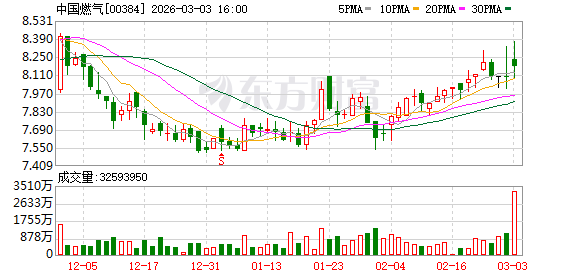
中国燃气董事会主席、总裁刘明辉:推动公用事业价格机制优化 赋能能源企业高质量出海
Mei Ri Jing Ji Xin Wen· 2026-03-03 15:19
Core Viewpoint - China Gas, as one of the largest cross-regional comprehensive energy supply and service enterprises in China, is committed to ensuring national and public welfare while promoting industry progress [2] Group 1: Sustainable Development - The company suggests improving the public utility pricing mechanism to promote sustainable development, focusing on a more flexible and sustainable dynamic pricing adjustment mechanism for urban gas and other public utilities [2] - The aim is to guide enterprises to continuously invest in long-term infrastructure construction, such as gas storage and peak-shaving facilities, and pipeline updates [2] Group 2: Integration of AI Technology - The company recommends that the government enhance policy guidance to encourage energy enterprises to deeply integrate artificial intelligence and big data technologies in various operational scenarios, including pipeline operation and maintenance, load forecasting, customer service, and risk warning [2] Group 3: International Expansion - The company advocates for the support of advanced energy technologies and management models to steadily expand overseas, suggesting that the national level should build platforms to support Chinese enterprises in "going global" collectively [2]


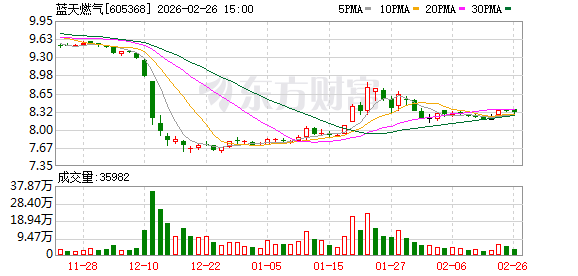
蓝天燃气:公司积极推动居民气的顺价工作
Zheng Quan Ri Bao· 2026-02-26 10:44
Group 1 - The company is actively promoting the pricing adjustment for residential gas, particularly in its core operational area of Zhumadian [2] - The pricing adjustment application has been submitted to the local government of Zhumadian and is awaiting approval for implementation [2]

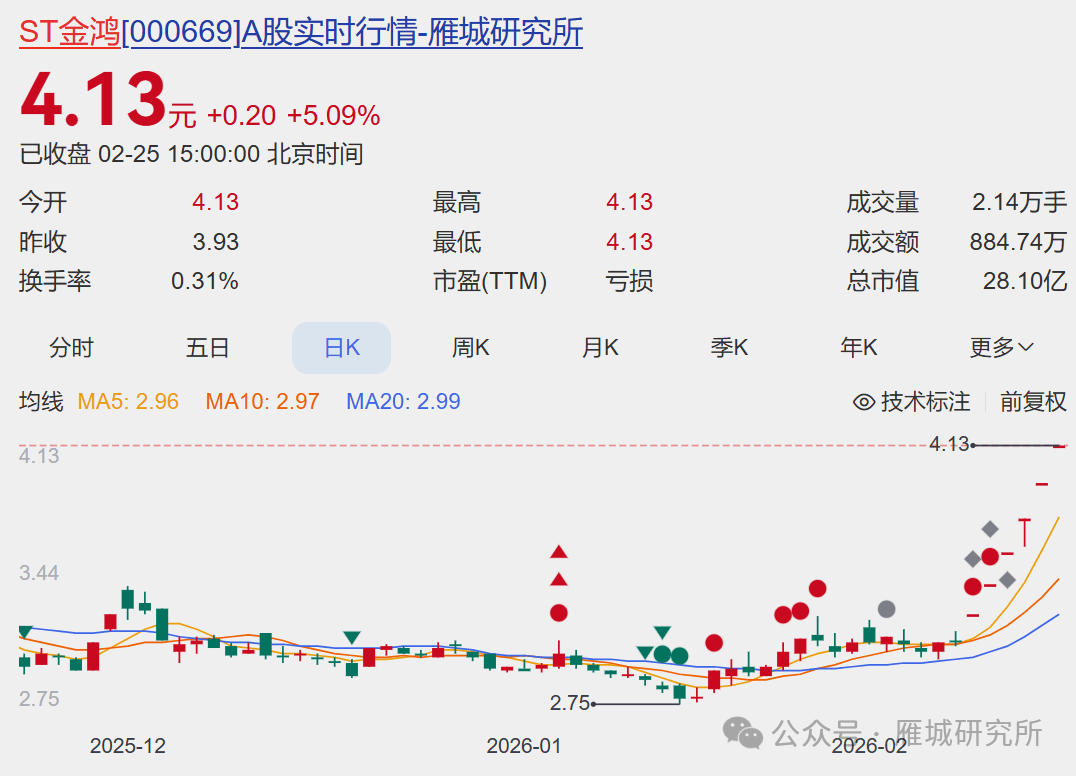
衡阳这家上市企业六连板!重组或迎来曙光
Sou Hu Cai Jing· 2026-02-26 05:24
这家1985年成立、1996年上市的企业,曾借"煤改气"东风迎来发展高峰,却因激进扩张陷入业绩亏损、债务高企的困境。 近日,衡阳本土上市企业ST金鸿迎来六连板的股价走势,从2月9日3.08元/股攀升至2月24日4.13元/股,涨幅超30%,成为资本市场焦点。 这波行情的背后,是2月24日衡阳中院同意公司开展庭外重组的公告,为这家扎根衡阳的天然气企业重整发展带来了新契机,也让市场对其"摘星脱帽"充 满期待。 ST金鸿虽2025年7月才将注册地迁至衡阳,但湖南一直是其核心市场。自2012年转型天然气业务后,衡阳及湖南区域的业务便成为公司主要收入来源。 在衡阳,本土企业的良性发展是地方经济活力的重要体现,此前湘股多家企业通过聚焦主业、引入资本、培育新增长点实现成功"脱帽",这也为ST金鸿 提供了借鉴。 对于扎根衡阳的ST金鸿而言,"燃气+科技"的转型方向契合行业发展趋势,但其落地仍需实打实的投入与执行,庭外重组能否妥善解决债务问题、能否引 入优质资源赋能主业,都是其破局的关键。 六连板的股价表现,反映了市场对其重整的期待,但庭外重组的开启,才是ST金鸿真正考验的开始。 作为衡阳本土上市企业,其重整发展不仅关乎自身命 ...
重庆燃气2月25日获融资买入865.07万元,融资余额1.07亿元
Xin Lang Cai Jing· 2026-02-26 01:33
Group 1 - The core viewpoint of the news is that Chongqing Gas has shown a mixed performance in terms of financing activities and financial results, with a notable increase in financing buy-ins but a significant decline in net profit [1][2]. - As of February 25, Chongqing Gas's financing buy-in amounted to 8.65 million yuan, with a net financing buy of 5.97 million yuan, indicating strong investor interest [1]. - The total financing and securities balance for Chongqing Gas reached 107 million yuan, accounting for 1.20% of its market capitalization, which is at a high level compared to the past year [1]. Group 2 - For the period from January to September 2025, Chongqing Gas reported an operating income of 7.384 billion yuan, reflecting a year-on-year growth of 2.97% [2]. - The net profit attributable to the parent company for the same period was 140 million yuan, showing a significant year-on-year decrease of 47.14% [2]. - Since its A-share listing, Chongqing Gas has distributed a total of 1.971 billion yuan in dividends, with 508 million yuan distributed over the past three years [3].
