
矿山生态修复

Search documents
贵州已治理历史遗留矿山6万余亩
Xin Hua Cai Jing· 2025-08-14 08:41
Core Viewpoint - Guizhou province has made significant progress in the ecological restoration of historical abandoned mines, having restored over 60,000 acres out of more than 80,000 acres identified as unremediated [1] Group 1: Restoration Efforts - Guizhou has implemented a comprehensive plan for the ecological restoration of historical abandoned mines, including the issuance of the "Guizhou Province Land Space Ecological Restoration Plan" and the "14th Five-Year Plan for the Ecological Restoration of Historical Abandoned Mines" [1] - The province has secured approximately 900 million yuan in special funds from central and provincial sources to support the restoration efforts [1] Group 2: Project Progress - The restoration progress has reached 80%, with specific projects such as the Miao Ling Mountain ecological restoration demonstration project covering an area of 19,400 acres [1] - The Nanbei Panjiang River Basin historical abandoned mine ecological restoration demonstration project has been recognized as a national demonstration project, marking it as the second national-level ecological restoration project in Guizhou [1]
湖北武穴严把矿山修复工程质量关
Zhong Guo Zi Ran Zi Yuan Bao· 2025-08-06 06:50
Core Points - The performance evaluation of the PPP project for ecological restoration and comprehensive management of mines in Wuxue City, Hubei Province, is being conducted for the year 2024 [1] - Experts from geology, environmental, landscaping, finance, and legal fields are involved in the evaluation process [1] - The evaluation focuses on construction output, effectiveness, management during the construction phase, and operational output, effectiveness, and management during the operation phase [1] - The results of the evaluation are directly linked to the project's service fees [1] Evaluation Process - The evaluation team follows a strict process that includes on-site inspections, discussions, and document reviews [1] - A total of 13 mines, 2 green corridors, and 3 node parks from the first batch, along with 9 mines from the second batch, are objectively assessed [1] - The evaluation aims to support the standardized implementation of the project [1]

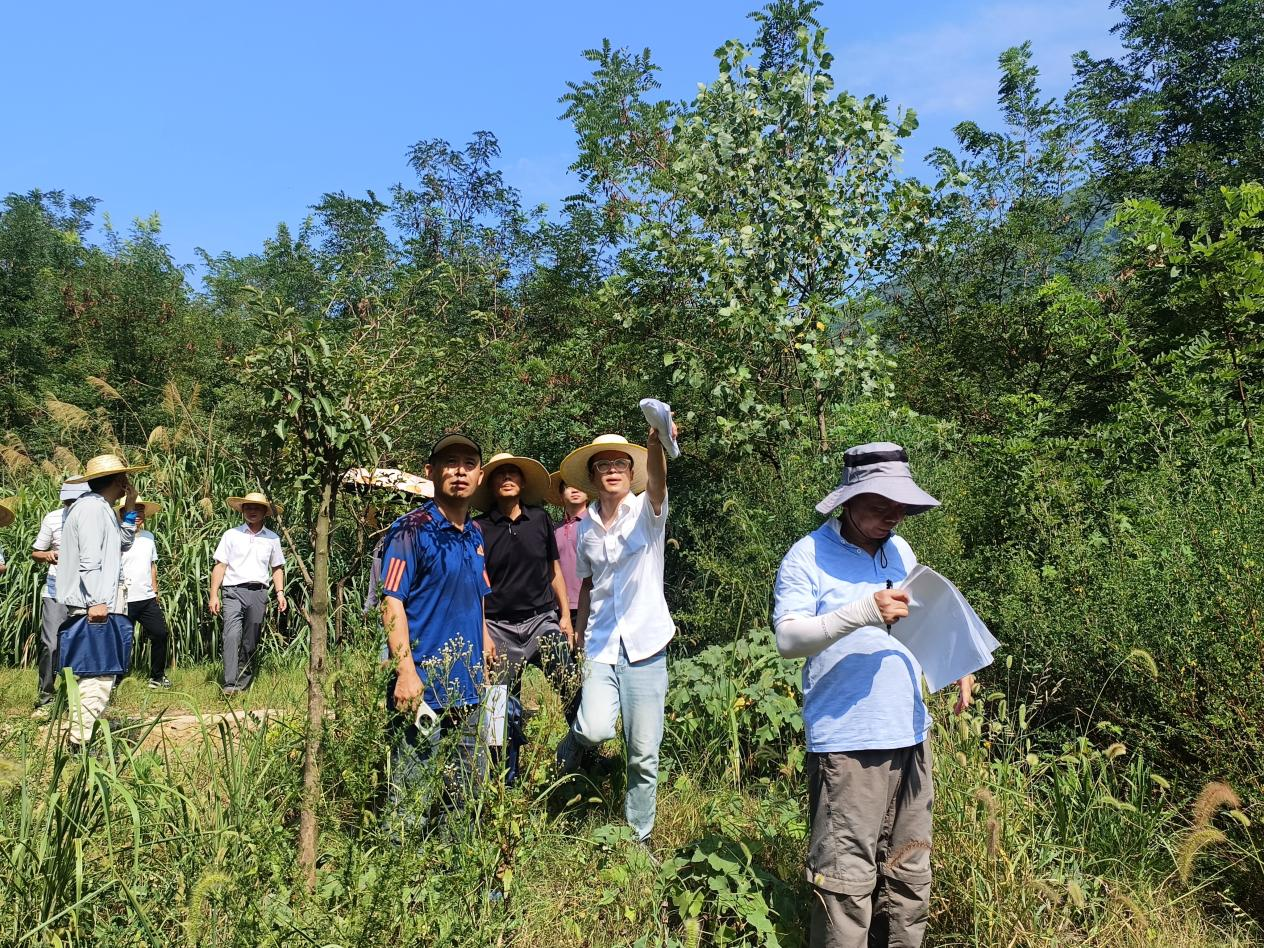
蒲城县以矿山生态修复助力乡村振兴
Zhong Guo Huan Jing Bao· 2025-07-22 01:25
Core Viewpoint - The article highlights the sustainable development approach taken by Pucheng County in Shaanxi Province, focusing on ecological restoration of mining areas while integrating rural revitalization and green development. Group 1: Ecological Restoration Efforts - Pucheng County has implemented a comprehensive ecological restoration strategy, repairing 240 sites, increasing arable land by 76.78 hectares, and adding 214.2 hectares of forest and 246.6 hectares of grassland [1] - A thorough investigation identified over 260 mining sites needing restoration, leading to the establishment of detailed ecological environment archives [2] - Specific measures for different mining conditions include slope reduction, wall construction, and water drainage systems to mitigate geological hazards [3] Group 2: Financial and Regulatory Framework - The county has allocated approximately 196.86 million yuan for ecological restoration projects, integrating various agricultural and environmental funds [2] - Pucheng County emphasizes the responsibility of mining companies to contribute to ecological restoration funds, ensuring adequate financial resources for projects [2] Group 3: Integration with Economic Development - The ecological restoration efforts have been linked with local economic activities, promoting the cultivation of medicinal herbs and economic crops, thus transforming the local economy [4] - The improved ecological environment has attracted community engagement in recreational activities, enhancing the quality of life for residents [4] Group 4: Governance and Community Involvement - A comprehensive regulatory mechanism has been established to oversee the entire process of ecological restoration, ensuring compliance with design and construction standards [5] - The county has fostered a collaborative governance model that combines community participation, legal frameworks, and ecological restoration efforts [6]
综合施策持续推进稀土废弃矿山生态修复
Zhong Guo Huan Jing Bao· 2025-07-14 01:42
Core Viewpoint - Jiangxi Province's Ganzhou City has made significant progress in the ecological restoration of abandoned rare earth mines, but further improvements are needed due to historical mining practices and complex environmental issues [1] Group 1: Governance Mechanism - A multi-departmental collaborative governance mechanism is essential to address the complex ecological issues of abandoned rare earth mines, breaking down barriers between various sectors such as water resources, environmental protection, and mining management [2] - The integration of four major projects—water protection, mine remediation, land rehabilitation, and vegetation restoration—should be prioritized for comprehensive management [2] Group 2: Funding Challenges - Local governments are encouraged to apply for national demonstration projects for the ecological restoration of historical abandoned mines, leveraging central financial support to establish a multi-tiered funding system [2] - Collaboration with financial institutions, such as commercial banks, is recommended to secure loans for restoration projects, alongside incentives for private investment in ecological restoration [2] Group 3: Assessment Standards - Establishing unified assessment standards for post-restoration management is necessary, focusing on water quality, soil erosion, vegetation coverage, and soil properties [2] Group 4: Restoration Models - The "Three Simultaneous Governance" model includes: - Coordinated treatment of both surface and underground environments to prevent geological hazards and improve soil quality [3] - Upstream and downstream collaboration to control soil erosion and enhance water quality through comprehensive watershed management [3] Group 5: Integrated Development - The approach emphasizes synchronized development in ecological restoration, industrial integration, and spatial optimization, aiming to transform environmental challenges into ecological and economic opportunities [4] - The "Ecology+" construction concept seeks to align agricultural, industrial, and ecological interests for sustainable development [4]
连云港市自然资源和规划局连云分局推动生态修复让矿山换新颜
Xin Hua Ri Bao· 2025-07-02 21:48
Core Insights - The article highlights the successful ecological restoration of abandoned mines in Lianyungang City, transforming 1,072 acres of previously damaged land into vibrant green spaces, achieving a balance of economic, ecological, and social benefits [1][2]. Group 1: Ecological Restoration Efforts - The Lianyungang Natural Resources and Planning Bureau implemented a tailored restoration strategy for each mine, focusing on disaster elimination, slope greening, tree selection, and maintenance standards [1]. - A comprehensive management system was established, involving professional design, departmental review, state-owned enterprise implementation, and local support, ensuring effective supervision throughout the restoration process [1][2]. Group 2: Innovative Techniques and Local Adaptation - The bureau explored new techniques for steep rocky slopes, including embedding reinforced mats into rock seams and using high-pressure spraying for vegetation, which effectively addressed the challenges posed by the area's natural conditions [2]. - Local tree species such as Wisteria, Platycladus orientalis, and Broussonetia papyrifera were selected to enhance soil retention and water conservation, with a total of 50,000 seedlings planted to create diverse plant communities [2]. Group 3: Sustainable Management and Community Involvement - A three-tiered management system was developed for long-term maintenance, involving construction units for a two-year care period, local street teams for professional management, and community participation through an "ecological points" system [2]. - The restored areas have become popular recreational spots for residents, facilitating the development of green industries such as "mining + cultural tourism" and "mining + health care" [2].
