Residential Real Estate

Search documents
Sub-$1,000 apartments still available in select markets despite rent prices surging nationwide
Fox Business· 2025-10-17 11:30
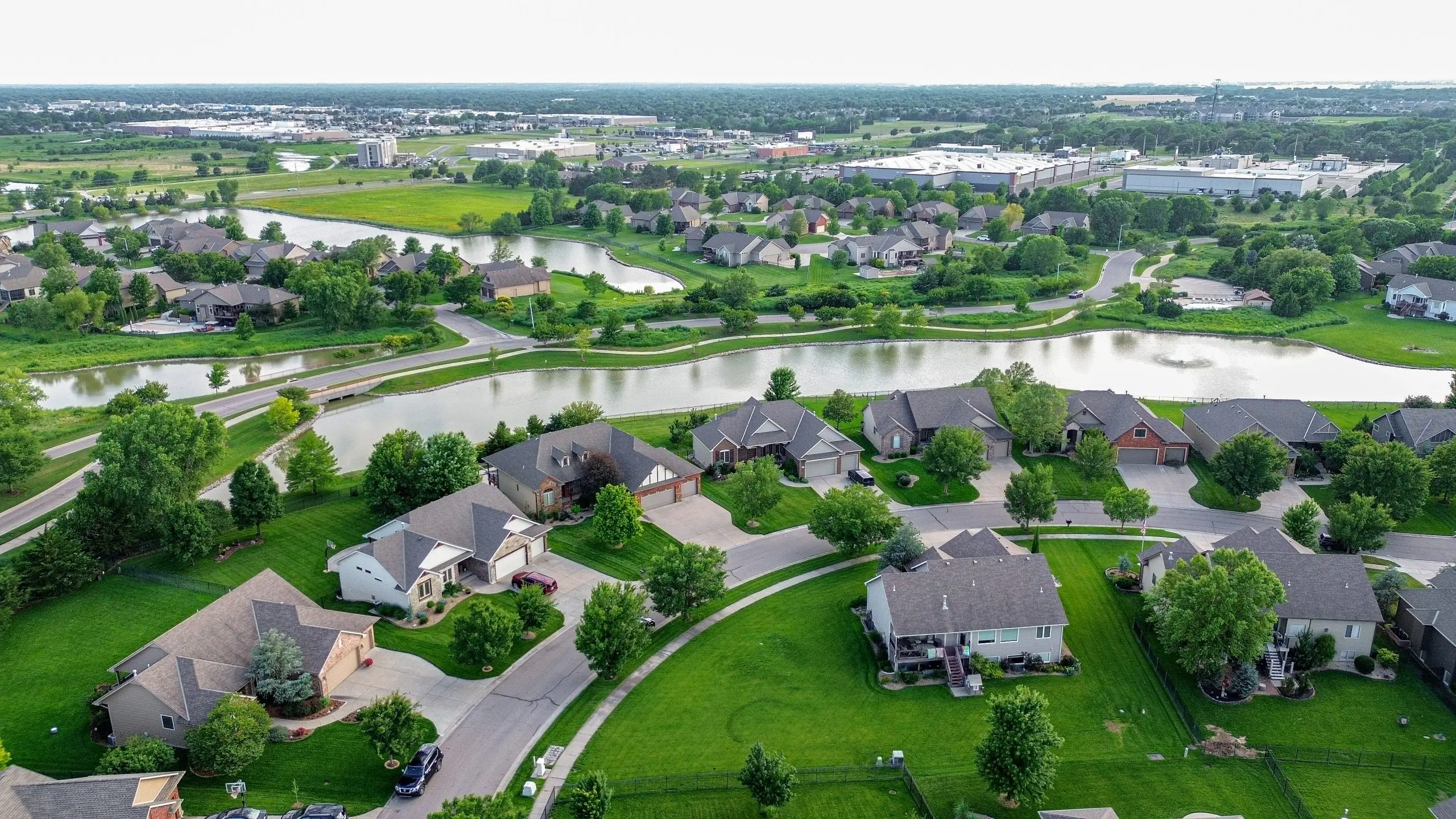
Core Insights - Rent prices are increasing in various markets, but affordable options are still available in certain regions, particularly in the South and Midwest, with some apartments listed for under $1,000 [1][2] - Zillow's analysis indicates that 13 out of 100 tracked metros, or approximately 13%, have more than one-third of their apartments renting for less than $1,000 [2] - The housing market is experiencing a shift, with nearly 20% of American homes reducing prices, providing some relief to homeowners facing affordability challenges [3] Rent Affordability - Rent on a typical apartment has risen nearly 40% since 2019, creating financial pressure for both renters and homeowners [3] - Today's renters would need to allocate 5% of their income for almost nine years to afford a 10% down payment on a typical home, an increase from 7.4% since 2019 [5] - Moving to more affordable areas can significantly enhance long-term financial health and assist in saving for a future home [6] Affordable Rental Markets - Wichita, Kansas, has the highest percentage of apartments listed for under $1,000, with 54% of listings in this price range [8][11] - McAllen, Texas, follows closely with just over 50% of apartments priced below $1,000 [8][11] - Other notable metros with affordable options include Little Rock, Arkansas (49%), Toledo, Ohio (46%), and Oklahoma City, Oklahoma (42%) [11] - In contrast, cities like Boston, Miami, and Washington, D.C., have less than 1.8% of listings renting for under $1,000, indicating a scarcity of affordable options in these markets [12]

每栋楼的这几层可谓是炙手可热,内行都争先入手,我家下手太迟
Sou Hu Cai Jing· 2025-10-17 07:50
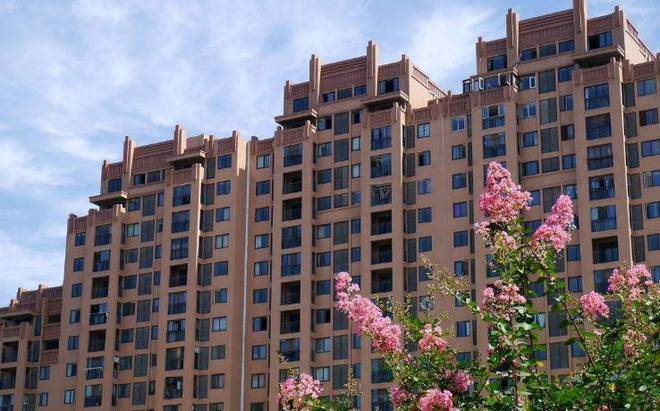
Group 1 - The core viewpoint emphasizes the importance of owning urban housing for workers, as it represents a sense of belonging and convenience in their lives [1] - Infrastructure in rural areas has improved significantly, but urban workers still prioritize having their own homes in cities [1] Group 2 - Choosing the right floor in a high-rise building is crucial, as it impacts the quality of life for decades [3] - Lower floors may be dark and damp, while higher floors offer better light and ventilation but come with challenges like reliance on elevators and potential water pressure issues [5] Group 3 - The concept of "golden floors" is introduced, which are typically located two-thirds up a building, combining the advantages of both high and low floors [7] - Golden floors provide excellent lighting, ventilation, and views, while avoiding common issues like low water pressure and humidity [7] Group 4 - Golden floors are highly sought after, leading to quick sales and rental opportunities, making them a lucrative investment [9] - It is advised to conduct thorough consultations before purchasing, as relying solely on sales personnel can lead to poor decisions [9]
30年房龄以上的老房子,未来可能会有这4种方式找到归宿
Sou Hu Cai Jing· 2025-10-17 07:14
Core Viewpoint - The preference for older homes has shifted significantly, with current buyers, especially first-time homebuyers, favoring newer homes due to various drawbacks associated with older properties [3]. Group 1: Advantages of Older Homes - Older homes were once favored for their significant price advantages, typically priced 20% to 30% lower than new properties in the vicinity [1]. - They were often located in prime areas with well-developed living facilities, making shopping and commuting convenient [1]. - Some older homes were surrounded by prestigious schools, enhancing their value as "school district homes" with considerable appreciation potential [1]. - Speculators hoped for windfall profits from potential redevelopment or demolition [1]. Group 2: Disadvantages of Older Homes - Current buyers are deterred by poor property management in older communities, leading to deteriorating public facilities and a negative living experience [3]. - Obtaining loans for older homes is challenging due to strict bank approvals, placing a heavy financial burden on buyers who must often pay in full [3]. - The advantages of being in a desirable school district have diminished due to changes in educational policies and increased randomness in school zoning [3]. Group 3: Future Solutions for Older Homes - Large-scale renovation projects for old communities are expected, with government funding aimed at comprehensive repairs and upgrades to improve living conditions [8]. - The "original demolition and reconstruction" model is gaining popularity, allowing residents to temporarily relocate while new buildings are constructed on the same site, significantly enhancing living quality [10]. - Government buyouts of older homes at slightly below market prices are proposed to provide affordable housing for low-income families, stabilizing local housing prices [13]. - Severely damaged homes or those on planned municipal land will be fully demolished [13].

REMAX NATIONAL HOUSING REPORT FOR SEPTEMBER 2025
Prnewswire· 2025-10-16 20:24
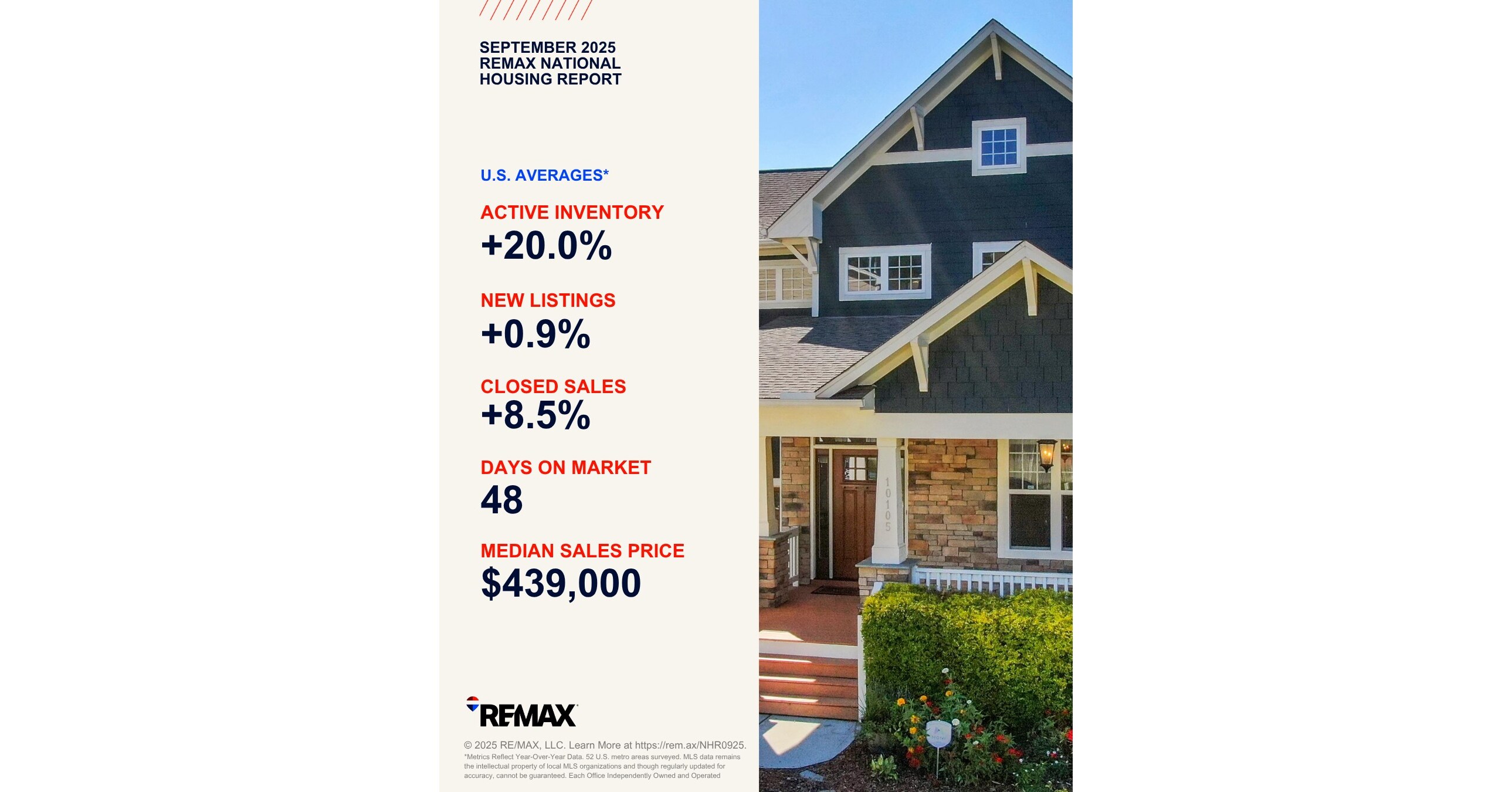
Core Insights - Inventory levels in the housing market are 20% higher year-over-year, marking the 21st consecutive month of annual growth [1][2] - Home sales in September increased by 8.5% compared to the previous year, although there was a 4.6% decline from August [1][6] - The median sales price in September was $439,000, reflecting a decrease of $6,000 (1.3%) from August but an increase of $9,000 (2.1%) from September 2024 [3][8] Inventory and Sales Trends - Active inventory rose by 20.0% year-over-year across 52 metro areas surveyed [2] - The months' supply of inventory increased to 3.0 months, up from 2.6 in September 2024 and 2.8 in August 2025 [6][13] - New listings saw a 0.9% increase compared to September 2024 and a 4.5% increase from August 2025 [6][7] Pricing Dynamics - Sellers accepted 98% of the asking price in September, down from 99% in August 2025 and September 2024 [3][10] - The average close-to-list price ratio across the 52 metro areas was 98%, indicating homes sold for less than the list price [10][11] - Milwaukee, WI experienced the largest year-over-year increase in median sales price at +11.5% [4][9] Market Performance - Days on market averaged 48 days, which is an increase of one day from August and seven days from September 2024 [6][12] - The markets with the lowest days on market included Manchester, NH at 20 days and Milwaukee, WI at 23 days [5][12] - The highest year-over-year sales increases were observed in Honolulu, HI (+55.2%), Omaha, NE (+20.9%), and Raleigh, NC (+20.3%) [8]

Equity Residential: Buy High Quality At A Discount (NYSE:EQR)
Seeking Alpha· 2025-10-16 16:43
Core Insights - The market is currently near all-time highs, driven primarily by AI-led stocks, indicating a strong performance in the technology sector [2] Group 1: Market Overview - The S&P 500 index is market cap weighted, meaning that larger companies have a more significant impact on the index's performance [2] Group 2: Investment Focus - iREIT+HOYA Capital emphasizes income-producing asset classes that provide sustainable portfolio income, diversification, and inflation hedging opportunities [1]


Equity Residential: Buy High Quality At A Discount
Seeking Alpha· 2025-10-16 16:43
Core Insights - The market is currently near all-time highs, driven primarily by AI-led stocks, indicating a strong performance in the technology sector [2] Group 1: Market Overview - The S&P 500 index is market cap weighted, meaning that larger companies have a more significant impact on the index's performance [2] Group 2: Investment Focus - iREIT+HOYA Capital emphasizes income-producing asset classes that provide sustainable portfolio income, diversification, and inflation hedging opportunities [1]

Anywhere to Release Third Quarter 2025 Financial Results and Host Webcast on November 4, 2025
Prnewswire· 2025-10-16 11:00
Core Insights - Anywhere Real Estate Inc. will release its financial results for Q3 2025 on November 4, 2025, and will host a conference call at 8:00 a.m. ET to discuss the results and provide a business update [1]. Company Overview - Anywhere Real Estate Inc. is a global leader in residential real estate services, offering integrated services including franchise, brokerage, relocation, and title and settlement businesses, as well as mortgage and title insurance underwriter minority-owned joint ventures [3]. - The company operates under several well-known brands such as Better Homes and Gardens Real Estate, CENTURY 21, Coldwell Banker®, Coldwell Banker Commercial, Corcoran, ERA, and Sotheby's International Realty, supporting over 300,000 affiliated agents globally [3].


NYC Rents Up 5.4%: Enough for the Typical Renter to Buy a Home in Yonkers, Philly or Orlando
Prnewswire· 2025-10-16 10:00
Core Insights - The median asking rent in New York City reached $3,599 in Q3 2025, marking a 5.4% increase year-over-year and a 20.2% rise compared to pre-pandemic levels [1][3] Rent Trends - Rents increased across all boroughs, with Brooklyn experiencing the highest growth at 6.8%, followed by Manhattan (6.0%), the Bronx (4.9%), and Queens (2.2%) [2] - Smaller apartments (up to two bedrooms) saw a median rent increase of 6.0% year-over-year, while larger units only grew by 1.0% [2] Affordability Challenges - Rent affordability remains a significant issue for New Yorkers, especially with the upcoming mayoral election [3] - Renters could afford to buy homes in nearby markets like Yonkers or Toms River with the same monthly payment as their rent, or even in more affordable cities like Philadelphia or Orlando [3][4] Home Buying Potential - Renters paying the median NYC rent could afford homes priced between $400,000 and $690,000 in various markets nationwide, assuming a 20% down payment and a 30-year fixed mortgage rate of 6.35% [4] - In Yonkers, NY, renters could afford the monthly cost of a typical home priced around $421,000, making it a viable option for transitioning to homeownership [5] Nearby Suburbs - New Jersey suburbs such as Toms River, Brick, Freehold, and Jersey City offer homes typically ranging from the mid-$400,000s to the upper $600,000s, which are affordable for renters with a Manhattan-level budget [6] Out-of-Metro Options - Renters could afford homes in out-of-metro markets like Philadelphia ($286,000), Pittsburgh ($276,000), Orlando ($391,000), and Myrtle Beach ($289,000) [8] - Naples, FL, is noted as the only popular out-of-metro destination that is generally out of reach for most renters due to higher home prices [8] Income Requirements - To afford typical NYC rentals under the "30% income rule," renters would need a gross monthly household income ranging from approximately $10,517 in the Bronx to $15,823 in Manhattan, translating to annual incomes between $126,000 and nearly $190,000 [8][9]


X @Joe Consorti ⚡️
Joe Consorti ⚡️· 2025-10-14 22:28
RT Horizon (@JoinHorizon_)US residential real estate is now $55.1T in value—the most inflated level in history.@JoeConsorti breaks down the potential for Bitcoin to correct this mispricing, growing exponentially in the process 👇 https://t.co/MyPXLVpesY ...
宁可买4楼、18楼,也不要买的5个楼层,住着不舒服,缺点还多!
Sou Hu Cai Jing· 2025-10-14 19:40
Core Viewpoint - The article discusses the current favorable policies in the real estate market that encourage first-time homebuyers to enter the market, while highlighting the importance of various factors such as location, floor level, and layout in the decision-making process [1] Group 1: Unfavorable Floor Types - Industry experts suggest avoiding certain floor types despite common superstitions about specific floors like the 4th and 18th floors, which are often considered unlucky [3] - The five types of floors to avoid include: 1. Ground floor without a private yard 2. Second floor prone to plumbing issues 3. Floors adjacent to street-level shops 4. Top floor without an attic 5. Waistline floor [3] Group 2: Ground Floor Issues - Living on the ground floor without a private yard can lead to poor lighting and ventilation, requiring artificial lighting during the day and potentially causing dampness [6][8] - Ground floor residents may face security concerns due to lower privacy and increased noise from the street [10][11] Group 3: Second Floor Concerns - The second floor is particularly susceptible to plumbing issues, such as sewage backflow, which can create unpleasant living conditions [12] Group 4: Proximity to Commercial Spaces - Floors located above busy street-level shops can be disruptive due to noise and foot traffic, especially if the shops are restaurants, which can also lead to unpleasant odors infiltrating the living space [13] Group 5: Top Floor Drawbacks - Top floors without an attic may have poor insulation, leading to high energy consumption for heating and cooling [14] - These floors are also at risk of water damage during heavy rains, which can compromise interior finishes [15] Group 6: Waistline Floor Challenges - Living on a waistline floor can result in increased maintenance due to debris from higher floors and reduced natural light and ventilation for the units below [16][17]