Private Equity

Search documents
KKR's Peter Stavros on employee ownership: An opportunity to give workers a chance to build wealth
Youtube· 2025-11-12 13:40
Core Idea - The concept of employee ownership is being promoted as a means to enhance worker engagement and retention while allowing employees to build wealth, addressing issues such as high quit rates and low job satisfaction in the workforce [3][4][15]. Employee Ownership Model - Employee ownership is structured to provide workers with stock or options without requiring them to invest out of pocket, aiming to offer a year’s worth of income as a benefit [5][8]. - The model involves placing a block of ownership in a trust, which is liquidated upon a company sale or IPO, allowing employees to receive cash or tradable stock [6][11]. Case Study: Ingersoll Rand - Ingersoll Rand serves as a case study where employee ownership transformed the company culture, increasing stock ownership from 86 senior executives to 20,000 employees, resulting in workers earning approximately $1 billion and reducing the quit rate by 90% [7][19]. Challenges and Transparency - Implementing employee ownership is complex, requiring education on business operations and financial transparency to ensure employees understand their contributions and the value of their ownership [16][12]. - Regular updates on company performance and valuations are provided to employees to maintain transparency and engagement [12][13]. Policy and Future Aspirations - The initiative aims to modernize existing policies like the Employee Stock Ownership Plan (ESOP) to encourage broader participation in employee ownership, with aspirations to expand this model to more companies and workers [20][21]. - There is bipartisan support for the idea of employee ownership, indicating a potential for policy changes that could incentivize companies to adopt this model [19][20].


Clearlake to Double Assets With Nearly $1 Billion Deal
Yahoo Finance· 2025-11-12 13:00
Core Insights - Clearlake Capital Group is acquiring Pathway Capital Management for nearly $1 billion, which will approximately double its assets under management to $185 billion, positioning it among the largest private-equity firms [2][3][6] Group 1: Acquisition Details - The acquisition will bring Clearlake's assets under management to $185 billion, establishing it just below the top 10 firms by assets [3] - Pathway Capital Management has about $95 billion in assets under management, with a portion generating lower fees than traditional private equity or credit [3] - The deal will allow Clearlake to enter new business areas, including secondaries and infrastructure, and potentially reach the private-wealth market [4] Group 2: Market Context - Institutional investors are slowing allocations to private equity, prompting firms to either scale up or remain focused to compete effectively [5] - Clearlake's strategy to grow is aimed at catering to large sovereign-wealth funds that prefer to invest across various asset classes [6] Group 3: Company Background - Clearlake Capital Group, founded in 2006, focuses on investments in technology, industrial, and consumer sectors, and has returned over $20 billion to investors since 2021 [7] - Pathway Capital Management, established in 1991, provides customized portfolios for institutional investors and wealth advisers, and operates funds for co-investing and secondary market private-equity stakes [8]
Industrial M&A ramps up as tariffs settle in, interest rates drop and funds are flush
Yahoo Finance· 2025-11-12 09:18
“They've gotten comfortable enough that this is an environment that they can operate in and do deals in. I don't know that they're fully comfortable that they can really forecast everything,” said Todd Dubner, a principal and deal advisory and strategy leader for industrial manufacturing at KPMG US. “But that's not dissuading them from starting down the deal path.”KPMG’s report noted that aerospace and defense deals were notably down earlier in the year, while sectors such as automotive continued to be acti ...
ORIX(IX) - 2026 Q2 - Earnings Call Transcript
2025-11-12 08:32
Financial Data and Key Metrics Changes - The company raised its net profit forecast from JPY 380 billion to JPY 440 billion, reflecting strong performance across all business categories [4][14] - Net income for the first half reached JPY 271.1 billion, a record high and an increase of 48% year-on-year [13][14] - ROE for the first half was annualized at 12.7%, up from 8.8% in the previous fiscal year [20][14] - The four-year ROE forecast was increased to 10.3%, up by 1.3% compared to the previous year [16][14] Business Line Data and Key Metrics Changes - Finance segment profit increased by 8% year-on-year to JPY 99.6 billion, driven by strong gross investment income [18][14] - Operation segment profit rose by 9% year-on-year to JPY 114.9 billion, benefiting from inbound tourism demand [18][14] - Investment segment profit surged by 117% year-on-year to JPY 194.9 billion, largely due to the sale of Greenko Energy and other assets [19][14] Market Data and Key Metrics Changes - Total group AUM reached JPY 88 trillion, moving closer to the medium-term target of JPY 100 trillion [10][16] - The company reported a significant increase in financial income from leases and loans in Asia and Australia [18][14] Company Strategy and Development Direction - The company aims to achieve a long-term vision of 15% ROE and JPY 1 trillion in net profit by March 2035 [3][4] - A new PE fund was established in collaboration with the Qatar Investment Authority, targeting investments in Japanese companies [5][4] - The Osaka Integrated Resort project is set to open around fall 2030, with construction costs revised upwards due to inflation [8][4] Management's Comments on Operating Environment and Future Outlook - Management expressed confidence in achieving midterm business plans and long-term vision through disciplined portfolio management and capital recycling [11][4] - The company is closely monitoring the impact of rising interest rates and inflation on its operations and asset management [52][14] Other Important Information - The share buyback program was expanded from JPY 100 billion to JPY 150 billion, with JPY 78 billion already repurchased [15][14] - The company is transitioning to an asset-light portfolio to enhance corporate value and improve capital efficiency [10][14] Q&A Session Summary Question: Inquiry about joint investment with QIA - Management explained that the joint PE fund with QIA was established after two years of negotiation, aiming to leverage third-party funds for larger projects without significantly bloating the balance sheet [40][42][44] Question: ROE target and initiatives to achieve it - Management acknowledged the need for initiatives to achieve the 11% ROE target, emphasizing the importance of monitoring interest rates and capital management [49][52] Question: Outlook for next year's profit forecast - Management indicated that while the current year has seen significant one-off gains, they expect to maintain a steady profit growth trajectory moving forward [56][60][75] Question: Capital recycling forecast and segment profit balance - Management clarified that the capital gain forecast for the year is on track, with expectations for solid performance in the real estate market and private equity portfolio [64][66] Question: Concerns about potential impairments and next year's business plan - Management reassured that while there may be fluctuations in profit, they do not foresee significant impairments and are optimistic about next year's performance [70][72][75]

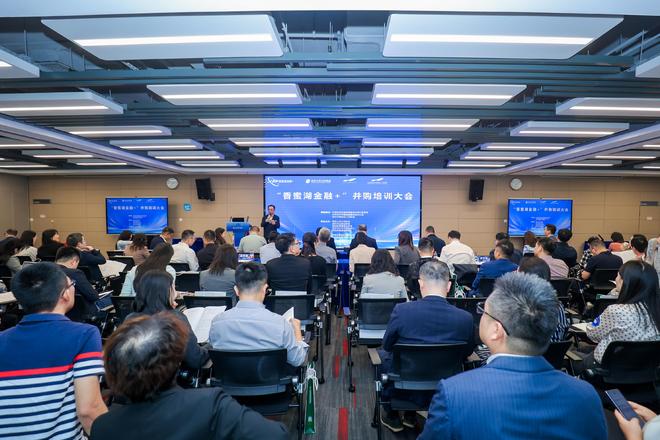
“香蜜湖金融+”系列活动之并购培训大会在深圳举行
Nan Fang Du Shi Bao· 2025-11-11 15:59
Group 1 - The event "Xiangmi Lake Finance+" focused on discussing the policy benefits and practical paths of mergers and acquisitions, attended by over 180 representatives from listed companies, brokerage investment banks, private equity institutions, and regulatory bodies in Shenzhen [1][3] - The Shenzhen Municipal Financial Office provided an in-depth interpretation of the "Shenzhen Action Plan for Promoting High-Quality Development of Mergers and Acquisitions (2025-2027)" [3] - Experts from the Shenzhen Securities Regulatory Bureau and Shenzhen Stock Exchange analyzed the regulatory policies, latest cases, and review points since the implementation of the "Six Guidelines for Mergers and Acquisitions" [3] Group 2 - The Shenzhen Financial Regulatory Bureau explained the arrangements for merger loan systems, while招商证券 and Postal Savings Bank shared key points on designing merger transaction plans and financial service solutions [3] - A "Xiangmi Lake Merger Service Workstation" was inaugurated, and a comprehensive merger financial service product system was launched, providing full-process, multi-level financial services to support strategic integration and industrial upgrading for real enterprises [3][5] - This event marks the beginning of a series of merger service activities organized by the Shenzhen Listed Companies Association, which will include various salons, small matchmaking meetings, and specialized lectures to meet the merger needs of Shenzhen enterprises [5]
X @Bloomberg
Bloomberg· 2025-11-11 01:48
Qatar’s sovereign wealth fund is teaming up with Orix to start a $2.5 billion private equity fund targeting Japanese companies, sources say https://t.co/cUjThvKPZB ...
Top 15 Fintech Events to Attend in Hong Kong in Q4 2025 until Q3 2026
Fintech Hong Kong· 2025-11-11 01:46
Core Insights - Hong Kong is recognized as a leading fintech hub with over 1,200 fintech companies and a supportive government focused on innovation and technology adoption [1][2] - The government has introduced new initiatives to modernize the financial system, enhance AI adoption, and promote tokenization [2] - A series of significant fintech events are scheduled in Hong Kong, attracting global leaders to discuss opportunities and challenges in the sector [3] Fintech Events in Hong Kong - The AVCJ Private Equity Forum 2025 will take place from November 17-20, 2025, featuring over 3,400 senior professionals and discussions on macroeconomic trends and private equity strategies [5][6] - The NEXX CFO Forum 2025 on November 19 will focus on leveraging AI for enterprise impact and governance, with participation from senior financial executives [9][10] - Insurtech Insights Asia 2025, scheduled for December 3-4, 2025, will connect over 5,000 industry leaders to discuss AI and emerging technologies in insurance [15][16] Upcoming Events in 2026 - The Digital Asset Innovators Summit Asia 2026 on January 22-23 will explore growth opportunities in the digital asset market with over 500 participants [19][20] - The Asian Financial Forum 2026 on January 26-27 will gather more than 3,600 participants to discuss fintech, investment, and economic policy [23][24] - Digital Assets Week on February 4-5 will focus on tokenization and digitalization of financial assets, bridging institutional finance and regulatory bodies [27] Key Themes and Discussions - The Banking Summit Asia on September 22, 2026, will address the evolving landscape of Asian banking amid geopolitical volatility and digital transformation [65][66] - Key themes across various events include AI's role in financial markets, regulatory developments, and strategies for risk management in a multi-asset environment [6][34][66] - The focus on ESG standards and sustainable finance will be prominent in discussions, particularly at the NEXX CFO Forum and other related events [10][12]

First Citizens Bank Provides $38 Million to Stockdale Capital Partners
Prnewswire· 2025-11-10 14:00
Core Insights - First Citizens Bank's Healthcare Finance division provided $38 million in first-mortgage debt to Stockdale Capital Partners for the acquisition of Willow Oaks Corporate Center, a 401,000-square-foot medical outpatient campus in Fairfax, VA [1][2] Company Overview - Stockdale Capital Partners is a private equity real estate firm with over 30 years of experience and $2.8 billion in assets, focusing on healthcare, office, retail, and mixed-use properties in key Western U.S. markets [3] - First Citizens Bank, headquartered in Raleigh, N.C., is a top 20 U.S. financial institution with more than $200 billion in assets, offering a range of banking services including commercial banking and healthcare finance [5] Strategic Goals - Stockdale aims to leverage the tech-forward and amenity-rich environment of Willow Oaks to attract complementary healthcare providers and enhance community access to high-quality care [2] - First Citizens Bank's Healthcare Finance division provides tailored capital solutions to support healthcare owners and operators, emphasizing a client-focused and industry-centric model [4]



X @Bloomberg
Bloomberg· 2025-11-10 13:20
Investment & Acquisition - Apollo acquired a majority stake in Atlético de Madrid [1] - Private equity funds are increasingly taking control of famous football teams [1]
KKR sells aerospace parts firm Novaria Group to Arcline for $2.2 billion
Reuters· 2025-11-10 11:07
Core Viewpoint - KKR has agreed to sell Novaria Group, a manufacturer in the aerospace and defense sector, to Arcline Investment Management for a total of $2.2 billion [1] Group 1: Transaction Details - The sale price for Novaria Group is set at $2.2 billion, indicating a significant valuation for the aerospace and defense hardware maker [1] - The buyer, Arcline Investment Management, is noted for its focus on industrials, suggesting a strategic alignment with Novaria's operations [1] Group 2: Market Implications - This transaction reflects ongoing consolidation trends within the aerospace and defense industry, as private equity firms seek to capitalize on growth opportunities in this sector [1] - The deal may enhance Arcline's portfolio by adding a key player in the aerospace and defense hardware market, potentially leading to increased market competitiveness [1]