公共文化服务

Search documents
两家24小时城市书房落座吴中
Su Zhou Ri Bao· 2025-12-02 07:01
Core Insights - The Wu Zhong District has made significant progress in building a public cultural service system, with two city reading rooms completed and operational 24/7 [1] Group 1: City Reading Rooms - The first completed city reading room, located in the Lake Yi Community, has an area of 110 square meters and includes a reading area, borrowing area, and smart service area, housing 3,100 books [1] - The reading room operates as a 24-hour unmanned space, featuring smart access control with facial recognition and QR code scanning for entry [1] - The facility is equipped with self-service borrowing and returning machines, as well as electronic reading devices, ensuring continuous operation [1] Group 2: Online Borrowing and Delivery Service - The Lake Yi Community reading room has introduced an online borrowing and community delivery service, allowing readers to order books online and pick them up from a smart borrowing cabinet [2] - This reading room complements existing services from the Wu Zhong District Library and a 24-hour self-service library, creating a network of reading services in the Guo Xiang Street area [2] Group 3: Additional Facilities - The second city reading room, located in the "Du+" Talent Apartment, has been upgraded to 126 square meters with optimized space for 60 fixed reading seats, accommodating up to 80 people [2] - The collection of 1,900 books in this reading room is sourced through a combination of delivery from the Wu Zhong District Library and donations from the Chunfeng Library [2] - The facility includes full monitoring, a self-service borrowing system, and an energy-efficient lighting and air conditioning system [2] Group 4: Future Developments - Two additional city reading rooms, located in Longxiang Community and Suzhou Tai Mei·Xue Lv Inn, are expected to be completed by the end of the year [3]
辽宁省公共图书馆网络通借通还平台上线
Liao Ning Ri Bao· 2025-11-19 00:49
Core Insights - The "Wanjuanfu Di" platform for online borrowing and returning of books was launched in Liaoning Province, marking a significant advancement in public cultural service systems [1] - The platform addresses issues such as limited coverage of public libraries and difficulties faced by rural and disadvantaged groups in accessing library services [1] - The initial phase of the platform integrates 500,000 books from Liaoning Provincial Library and 14 city-level libraries, catering to diverse reading needs [1] Summary by Categories - **Platform Launch and Purpose** - The platform aims to create a new model for book circulation that emphasizes resource sharing and convenience for the public [1] - It allows users to order books via an app, with home delivery and pickup services for returns [1] - **Integration and Resources** - The platform has successfully integrated resources from multiple libraries, enhancing accessibility for various demographics [1] - Future plans include connecting 127 public libraries across the province and incorporating resources from university libraries and urban reading rooms [1] - **Cultural Impact and Development** - The launch signifies a breakthrough in the construction of public cultural service systems in Liaoning, setting a precedent for provincial-level online borrowing in China [1] - The initiative is part of a broader strategy to strengthen cultural services and promote a culturally rich province [1]
我省优质公共文化资源真正下沉到田间地头
Xin Hua Ri Bao· 2025-10-26 23:43
Core Insights - The article emphasizes the importance of grassroots cultural engagement, highlighting how local communities become vibrant participants in cultural activities rather than mere spectators [1][3][7] Group 1: Cultural Participation - The cultural center in Jurong City is thriving, with various classes such as Chinese dance experiencing high demand, indicating a strong community interest in cultural activities [2][3] - Individuals like 65-year-old Zeng Shanfeng and 58-year-old Wang Huifen have reported significant personal transformations through dance, showcasing the positive impact of cultural participation on mental and physical well-being [2][3] - The phenomenon of local residents performing on stage has fostered a sense of pride and recognition, contributing to a shift in the cultural landscape [3][6] Group 2: Infrastructure and Community Engagement - The establishment of cultural venues, such as the cultural leisure square in Ersheng Village, has provided a platform for residents to showcase their talents, leading to increased community interaction and improved local governance [5][6] - The "Moli Flower Blooming" initiative has brought provincial-level performances directly to rural areas, enhancing access to quality cultural resources [6][8] - The article notes that cultural activities have become a central part of community life, with increased participation leading to a more vibrant local culture [5][6] Group 3: Innovative Cultural Delivery - Innovative formats like "pocket stages" have made cultural performances more accessible, allowing for spontaneous and engaging community events [7][8] - The use of mobile stage vehicles has facilitated the delivery of cultural services to remote areas, ensuring that even small communities can enjoy cultural events [8] - The article highlights the emotional connection that local performances create, reinforcing the idea that cultural engagement can leave lasting memories for participants [8]
拿起手机就能免费听讲座、看展览 “十四五”期间多彩文化点亮生活
Yang Shi Xin Wen Ke Hu Duan· 2025-10-18 14:03
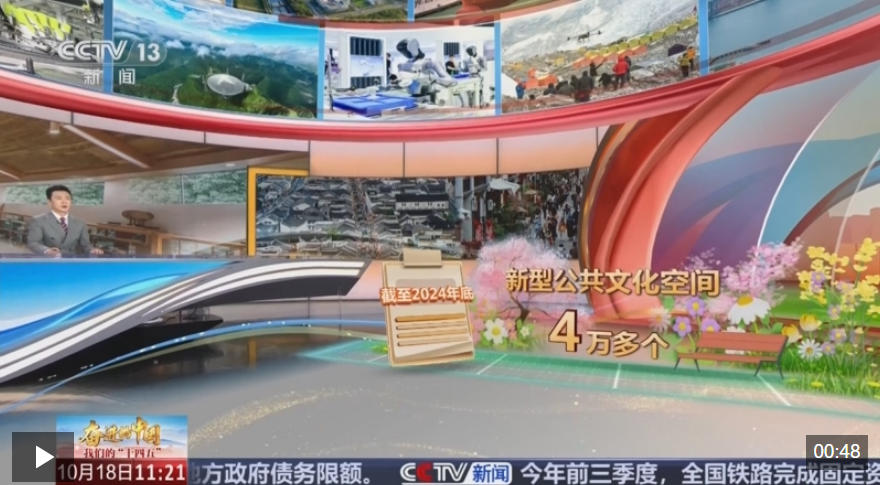
Group 1 - The core viewpoint highlights the continuous improvement of China's public cultural service system during the 14th Five-Year Plan period, enhancing access to quality cultural resources for the public [3] - By the end of 2024, there will be a total of 3,248 public libraries, nearly 44,000 community cultural institutions, and over 40,000 new public cultural spaces across the country, allowing citizens to access free lectures, art learning, and exhibitions via their mobile phones [2] Group 2 - The tourism product supply is becoming more diverse, with a focus on upgrading the product types and service quality of tourist attractions [5] - During the 14th Five-Year Plan period, 58 new 5A-level tourist attractions have been launched, bringing the total number of A-level attractions to 16,500, with a county coverage rate of 97% [5]

文旅部:2024年全国举办“村晚”8.17万场
Zhong Guo Jing Ji Wang· 2025-09-30 12:10
Core Insights - The press conference held on September 29 highlighted the achievements in cultural and tourism development during the "14th Five-Year Plan" period, emphasizing increased public participation in cultural activities and a richer cultural atmosphere [1] Group 1: Public Participation and Cultural Activities - In 2024, approximately 81,700 "Village New Year" events are scheduled nationwide, attracting around 262 million participants, indicating a shift towards more community-driven cultural engagement [1] - The number of self-organized cultural groups has exceeded 470,000, reflecting a significant increase in grassroots cultural activities [1] Group 2: Public Cultural Services Development - The Ministry of Culture and Tourism has focused on enhancing the convenience, quality, and equity of public cultural services, aiming to improve the overall public cultural service system [1] - By the end of 2024, there will be 3,248 public libraries, nearly 44,000 community cultural institutions, and over 40,000 new public cultural spaces, providing more accessible cultural services to the public [1]
科技点染文化底色 智慧启迪城市新风
Bei Jing Ri Bao Ke Hu Duan· 2025-09-26 04:10
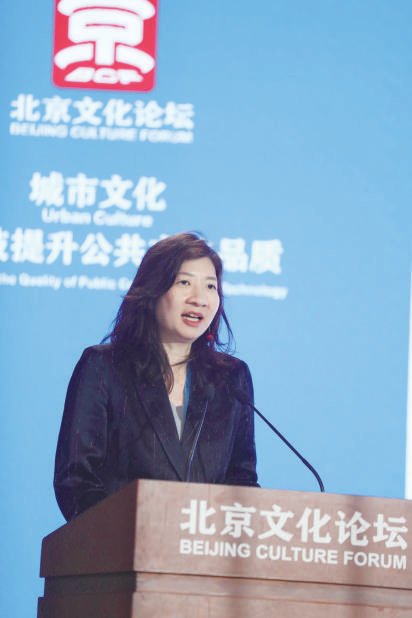
Core Insights - The 2025 Beijing Cultural Forum focuses on how new technologies can enhance public cultural quality, serving as a platform for dialogue among international representatives, scholars, and industry leaders [1] Group 1: Technological Integration in Public Culture - The forum highlighted the intelligent transformation of traditional public cultural spaces, emphasizing the role of artificial intelligence in creating new reading and learning experiences [19][20] - Experts discussed how technology can help museums and cultural institutions tell broader stories and enhance public engagement with art [20][21] - The integration of digital technology is seen as a catalyst for innovation in public cultural services, enabling better accessibility and interaction with cultural heritage [21][22] Group 2: Digital Cultural Services and Platforms - The launch of the "Chinese Ancient Books Intelligent Service Platform" aims to provide open access to over 12,000 digitized ancient books, enhancing public knowledge and cultural resources [22][23] - The platform is designed to transform ancient texts from academic study into accessible public knowledge, contributing to the development of cultural centers [23] Group 3: Cultural Exchange and Global Narratives - The forum included discussions on the global narrative of traditional theater, emphasizing the need for contemporary practices to engage in deeper dialogues with the world [24][25] - Experts advocated for the use of digital technology and immersive experiences to connect traditional art forms with modern audiences [25] Group 4: AI and Library Services - A professional salon focused on the opportunities and challenges libraries face in the age of AI, exploring how new technologies can reshape library services and enhance public engagement [27][28] - The integration of AI in libraries is seen as a way to improve service efficiency and address societal changes brought about by technological advancements [28] Group 5: Digital Art and Museum Development - The salon on digital art and museum trends discussed how museums can innovate in the digital age, blending traditional and modern practices to enhance public engagement [30][31] - The event showcased significant exhibitions that highlight the enduring appeal of traditional Chinese art in contemporary contexts [31] Group 6: International Cooperation in Cultural Heritage - A salon on the international dissemination of intangible cultural heritage emphasized the importance of global cooperation and the role of digital technology in enhancing visibility and understanding of cultural practices [32] - Experts called for a collaborative approach to heritage protection that respects cultural diversity and engages youth in innovative practices [32]
吴桂英调研深化文化体制机制改革工作
Chang Sha Wan Bao· 2025-08-22 03:13
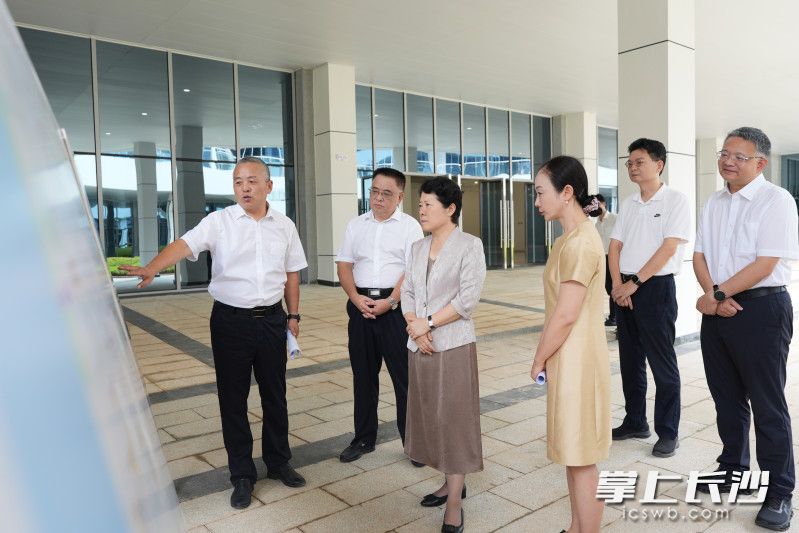
Group 1 - The core viewpoint emphasizes the need for reform and innovation in cultural systems to overcome development bottlenecks and stimulate vitality, aligning with Xi Jinping's cultural thoughts and directives [1][3] - The construction of the Changsha Workers' Cultural Palace is nearing completion, with plans for delivery within the year, highlighting the importance of optimizing public cultural facility layouts and enhancing service effectiveness to meet new cultural demands [3] - The focus on integrating culture with technology and tourism aims to promote high-quality development in Changsha's cultural sector, fulfilling the cultural mission of the new era [1][3] Group 2 - The establishment of the New Era Civilization Practice Center in the Dongtang Street community is aimed at deepening community engagement and promoting innovative practices in cultural education [6] - The archaeological work in Changsha is encouraged to preserve and interpret cultural relics, emphasizing the need for a strong professional talent pool and the integration of technology in cultural heritage [6] - The Changsha Art Museum is recognized as a vital channel for meeting cultural needs and enhancing social civilization, with a call for innovative exhibition models and improved management to boost public participation [9] Group 3 - The encouragement for performing arts venues like the Xiaoma Comedy Theater to maintain a positive creative direction and promote popular art forms reflects a commitment to cultural vitality and community engagement [9]
赵一德在调研文化建设工作时强调坚持守正创新 狠抓工作落实 奋力推动文化强省建设迈上新台阶
Shan Xi Ri Bao· 2025-08-19 00:40
Group 1: Cultural Development - The provincial government emphasizes the importance of deeply studying and implementing Xi Jinping's cultural thoughts and directives to promote cultural development in Shaanxi [1] - The Long'an Academy, a public cultural space, integrates library, art gallery, and cultural center functions, showcasing innovative "Reading+" service models [1] - The government aims to optimize cultural infrastructure by creating more "urban and rural reading rooms" and "cultural living rooms" to provide diverse and high-quality public cultural services [1] Group 2: Industrial Heritage and Economic Development - The old steel plant design creative industry park is being developed on the site of a former steel factory, focusing on the integration of industrial heritage with urban renewal [2] - The government encourages the commercialization and digital expression of industrial heritage while maintaining its original structure and characteristics [2] - There is a push to stimulate consumption through targeted actions and policies, leveraging rich cultural and tourism resources to create unique consumer experiences [2] Group 3: Tourism and Cultural Integration - The provincial cultural and tourism system is urged to enhance responsibility and mission awareness, ensuring effective implementation of cultural development goals [3] - The government plans to strengthen the integration of culture and tourism, focusing on the development layout and nurturing both large and small tourism enterprises [3] - There is an emphasis on improving service quality and safety in the tourism industry, aiming to build a trillion-level cultural tourism industry cluster [3]
打造公共文化服务苏州样本
Su Zhou Ri Bao· 2025-08-11 00:07
Group 1 - The core idea of the articles revolves around the development and impact of public cultural services in Suzhou, particularly through the establishment of citizen centers that cater to diverse community needs [1][2][6] - The citizen centers have organized a total of 852 cultural and sports events this year, attracting over 1.2 million visitors, showcasing their role as a benchmark for high-quality public cultural service development [1][2] - The "Citizen Culture Fair" launched in May aims to provide a comprehensive cultural service matrix covering all age groups, with activities designed to resonate with community needs [2][3] Group 2 - The citizen centers have implemented a differentiated service system to meet the diverse needs of various demographic groups, including night schools for workers and summer camps for children of migrant workers [4][5] - Over 300 public welfare films have been screened in the first half of the year, attracting more than 10,000 viewers, demonstrating the centers' commitment to cultural enrichment for all age groups [5] - The centers have established a multi-dimensional cultural ecosystem by linking government, community, enterprises, and schools, enhancing the quality of public cultural services [6][7] Group 3 - The centers have successfully integrated traditional culture into educational settings, promoting non-heritage courses in schools and creating a collaborative educational environment [7] - The introduction of smart technology in management and service delivery has improved efficiency and service quality across the citizen centers [7] - The operational model of the citizen centers has been recognized with multiple awards, indicating a successful transition from basic service provision to high-quality cultural offerings [9][10] Group 4 - The establishment of a subsidiary by the operating group aims to standardize and professionalize the management of the citizen centers, ensuring a balanced and high-quality cultural service delivery [11] - The upcoming East Citizen Center, set to open in January 2026, will further extend the reach of public cultural services in Suzhou, enhancing the cultural landscape of the region [11]
“新空间”让文化服务实现“多元共生”
Zhong Guo Jing Ji Wang· 2025-08-07 08:47
Core Viewpoint - The development of new public cultural spaces is essential for enhancing the quality of public cultural services and enriching urban cultural life [3][4]. Group 1: Characteristics of New Public Cultural Spaces - New public cultural spaces are generally "small and beautiful," with flexible operational methods that allow for resource integration into various life scenarios [3][4]. - As of now, there are over 40,000 new public cultural spaces across the country, innovating the supply methods and channels of public cultural services [3]. Group 2: Functional Diversity and Community Integration - The new public cultural spaces are evolving from single-function facilities to multi-functional entities, integrating community reading, live training, and cultural product displays [4]. - These spaces not only serve public welfare but also embed consumption scenarios, transforming cultural services from "static displays" to "multi-dimensional coexistence" [4]. Group 3: Challenges in Management and Operation - The management and operational methods of new public cultural spaces vary significantly, leading to issues such as severe homogenization and insufficient cultural empowerment [4][5]. - The government has encouraged the revitalization of existing spaces and the utilization of idle properties to create new public cultural spaces [4]. Group 4: Future Development Strategies - Future development should focus on leveraging regional cultural characteristics and resources, introducing market-oriented operational mechanisms, and fostering professional operational entities [5]. - A multi-governance ecosystem should be established, including policy formulation and digital management innovations to enhance the management and operational efficiency of these spaces [5].