水产养殖业

Search documents
从盐碱荒滩到塞外粮仓:河套灌区探寻耕地保护“密码”
Xin Hua She· 2025-06-04 11:31
Core Viewpoint - The article highlights the transformation and modernization of the Hetao Irrigation District in Inner Mongolia, focusing on water management, salinization issues, and agricultural innovations to enhance productivity and sustainability [1][2][3][4] Group 1: Water Management Innovations - The Hetao Irrigation District has implemented a real-time monitoring system with 1,284 communication stations and 2,141 data monitoring points, allowing for 24-hour dynamic monitoring of water levels and flow [2] - Water usage is now charged based on actual consumption rather than a flat rate per acre, leading to an estimated annual water savings of approximately 160 cubic meters per acre [2] Group 2: Agricultural Practices and Salinization Issues - Nearly half of the 13.7 million acres of arable land in Bayannur City is affected by salinization, making it the region with the largest area of saline-alkali land in Inner Mongolia [1] - The district has shifted from traditional irrigation methods to a more efficient "water-saving" approach, integrating high-standard farmland construction with saline-alkali land utilization and technological innovation [1][3] Group 3: Saline-Alkali Land Management - The management strategy for saline-alkali land has evolved to include ecological conservation areas, allowing for the natural movement of salts and improving land quality [3] - After comprehensive management, the quality of saline-alkali land has improved, with salt content reduced by 0.2-0.3 percentage points and crop yields increased by over 15% [3] Group 4: Future Development Plans - The future strategy for the Hetao Irrigation District emphasizes water conservation, balanced spatial development, and systematic governance, with a target of improving 302,000 acres of saline-alkali land this year [4]
未来天气趋势如何?对农业生产有何影响?一文了解
Yang Shi Wang· 2025-06-03 10:31
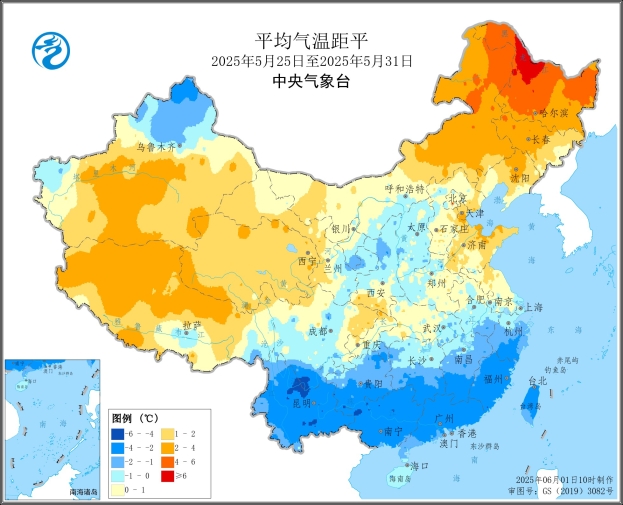
Core Viewpoint - The recent weather conditions have significantly impacted agricultural production across various regions in China, with varying temperature and precipitation patterns affecting crop growth and management strategies [1][7]. Weather Characteristics - In the past week, temperatures in most northern agricultural areas were close to or 1 to 2°C higher than the same period in previous years, with some regions experiencing increases of 2 to 4°C, and even over 4°C in parts of Heilongjiang and Inner Mongolia [2][4]. - Southern agricultural areas generally saw temperatures close to or 1 to 2°C lower than normal, with specific regions like southern Jiangnan and southern Guizhou experiencing drops of 2 to 4°C [2]. Precipitation Patterns - Significant rainfall was recorded in various regions, with amounts ranging from 10 to 50 mm in areas like southern Inner Mongolia and most of Sichuan, while parts of Yunnan and Hainan experienced 100 to 250 mm, which is 3 to 4 times higher than normal [4]. - Other agricultural areas received less than 10 mm of rainfall or no precipitation at all [4]. Sunshine Duration - Most agricultural areas experienced sunshine hours close to normal, but regions like northeastern Jiangnan and parts of Heilongjiang saw increases of 30% to 80%, while areas in southern Xinjiang and southwestern regions experienced decreases of 30% to 80% [5]. Future Weather Trends - The next 10 days forecast suitable light and temperature conditions for crops like corn and soybeans in the northeast, while heavy rainfall is expected in northeastern Heilongjiang, potentially leading to short-term flooding in dry farmland [6]. - High temperatures of 35 to 38°C are anticipated in parts of North China and Huanghuai from June 5 to 7, which may disrupt the maturation of wheat and exacerbate soil moisture loss [6]. - From June 6 to 9, significant rainfall is expected in regions including Jianghan and Jiangnan, which could benefit agricultural water reserves but also pose risks of flooding and adverse effects on rice cultivation [6]. Agricultural Production Recommendations - In the northeast, farmers should manage fields based on conditions, ensuring timely seedling checks and water management in rice paddies [8]. - In northern winter wheat areas, irrigation should be applied where moisture levels are low to aid wheat maturation, and harvesting should be expedited in mature areas [8]. - Southern regions should focus on maintaining agricultural water infrastructure and managing low-lying fields to mitigate flooding risks, while also monitoring for pests and diseases [8].

未来十天北方多晴少雨利于推进夏收夏种 长江中下游降雨偏多及时清沟理渠
Yang Shi Wang· 2025-06-02 03:40
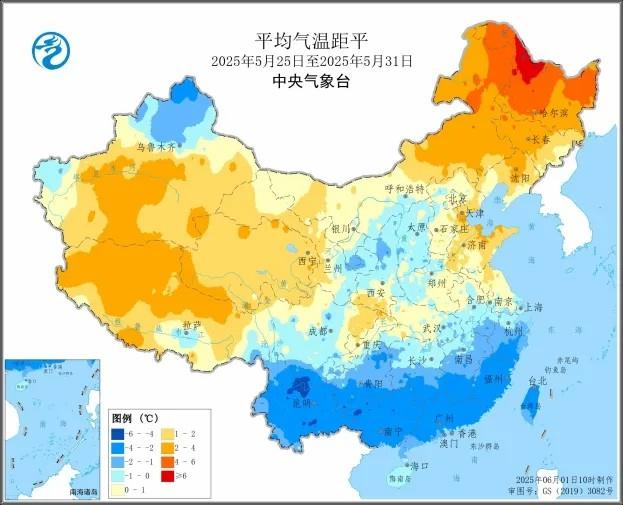
Weather Characteristics and Agricultural Impact Analysis - This week (May 25-31, 2025), northern agricultural regions experienced temperatures close to or 1-2°C higher than the historical average, with some areas in the northeast and northwest exceeding 4°C above average [2] - Southern agricultural regions saw temperatures near or 1-2°C below the historical average, with certain areas in Jiangnan, South China, Yunnan, and southern Guizhou being 2-4°C lower [2] - Precipitation in northern regions ranged from 10-50 mm, while parts of Jiangnan, North China, and Yunnan experienced 50-100 mm, and some areas received 100-250 mm, significantly above the historical average [2] - Sunshine hours were generally close to historical averages, with some areas in northeastern Jiangnan and eastern Heilongjiang seeing increases of 30-80% [2][7] Agricultural Production Impact Analysis - In the northeast, favorable light and heat conditions benefited the growth of dryland crops and rice transplanting [8] - The northern winter wheat region had predominantly sunny weather, facilitating the harvesting of mature winter wheat, although rain from May 30 to June 1 may temporarily hinder harvesting in some areas [8] - In the southern regions, heavy rainfall led to flooding in low-lying fields, affecting crops like lychee and mango, while persistent rain hindered crop growth and pest monitoring [9] Future Weather Impact Forecast and Recommendations - The next ten days are expected to have suitable conditions for the growth of corn and soybeans in the northeast, while heavy rainfall in parts of Heilongjiang may cause temporary flooding [10] - Northern regions will experience mostly sunny weather, which is beneficial for harvesting winter wheat and planting summer corn, but high temperatures (35-38°C) from June 5-7 may disrupt wheat maturation [10] - Recommendations include managing dryland crops and water levels in rice fields, ensuring timely harvesting and planting, and maintaining agricultural water infrastructure in southern regions to mitigate flooding risks [11]
三夏时节迎丰收 小麦、稻虾、西瓜解锁农田增收“密码”
Yang Shi Xin Wen Ke Hu Duan· 2025-05-21 01:24
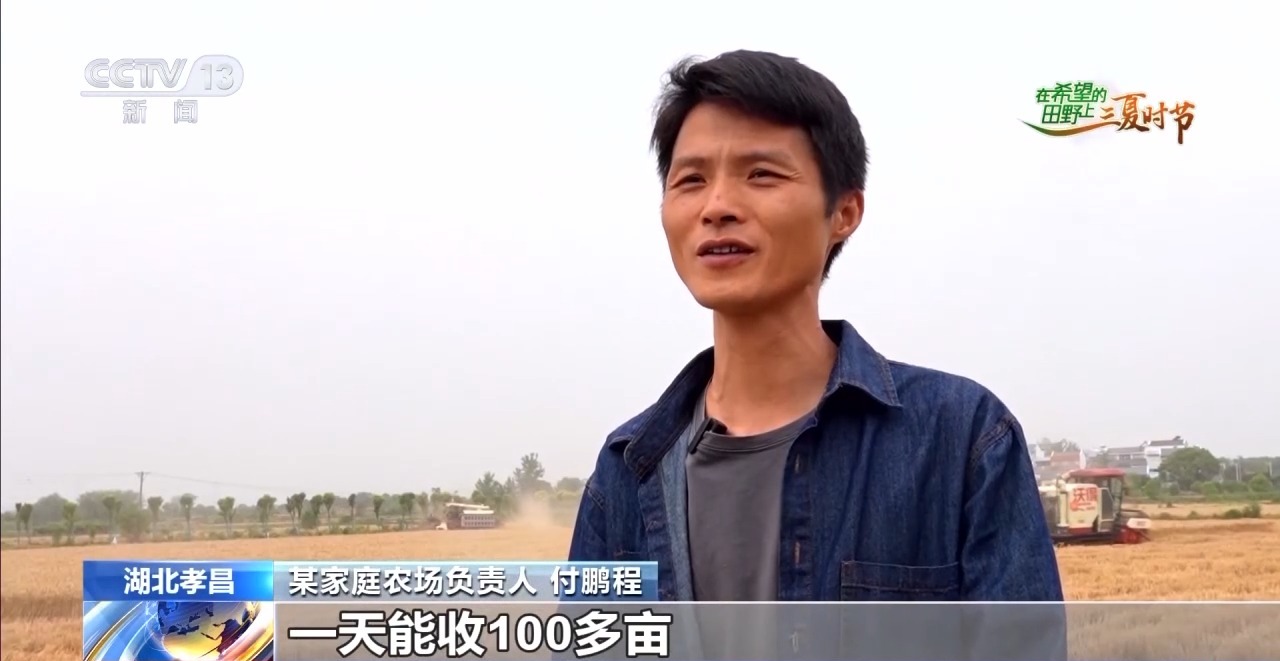
Group 1: Wheat Production in Xiaochang County - Xiaochang County in Hubei Province has successfully harvested 138,000 acres of wheat, with farmers utilizing favorable weather to ensure full collection of the crop [1] - The average yield for wheat is reported to be over 1,000 pounds per acre, with total production estimated at over 800,000 pounds for a farmer managing 800 acres [3] - The county has implemented extensive mechanization in wheat harvesting, with over 2,100 machines deployed, leading to an expected mechanization rate of over 98% [6] Group 2: Integrated Rice and Shrimp Farming in Yecheng - Yecheng County in Xinjiang has adopted a "rice-shrimp co-culture" model, enhancing land productivity and supporting rural revitalization [6] - The new farming method allows for simultaneous rice planting and shrimp harvesting, with one farmer reporting a yield of 100 to 150 kilograms of shrimp and 500 to 600 kilograms of rice per acre, generating an income of 8,000 to 9,000 yuan per acre [9] - The area dedicated to this co-culture has exceeded 5,000 acres, with plans to expand further [8] Group 3: Watermelon Cultivation in Gaoqing - Gaoqing County in Shandong has over 10,000 acres of watermelons maturing, utilizing a combination planting model of large and small watermelons to boost farmer income [7] - The total planting area for watermelons in Gaoqing is reported to be 14,000 acres, with an expected yield of 57,000 tons [13] - The combination planting method has extended the sales period of watermelons, increasing economic benefits by 10% to 20% for farmers [15]