
稻虾共生

Search documents
稻虾田里的致富经
Ren Min Wang· 2026-02-16 13:20
Core Insights - The article highlights the successful transformation of idle farmland into a profitable small crayfish farming venture led by Long Changjiang in Chongqing, China, demonstrating the potential of innovative agricultural practices [1][2][3] Group 1: Business Model and Impact - Long Changjiang established the Aolei Crayfish Farming Cooperative, which has expanded to cover 1,500 acres of rice paddies and has increased the income of over 800 local households, with an average income increase of over 10,000 yuan per household [1][2] - The cooperative introduced a "capital advance for seed supply and post-sale settlement" model, alleviating financial concerns for farmers and facilitating the purchase of over 3,000 pounds of seed crayfish for more than 20 farmers [2] Group 2: Revenue and Production - By 2025, the cooperative is projected to achieve an annual income of 5 million yuan, with approximately 1 million yuan from rice production and 4 million yuan from crayfish sales [3] - The cooperative employs off-season breeding techniques to bring crayfish to market before the Spring Festival, allowing prices to double compared to summer prices, with daily outputs expected to reach 10,000 pounds [3] Group 3: Market Strategy and Competition - The cooperative has established long-term supply agreements with purchasing companies, ensuring a steady market for their products, and has received orders from regions including Zhejiang, Shanghai, and Jiangsu [3] - To address increasing market competition, the cooperative promotes an "ecological model" of rice-crayfish co-cultivation, enhancing the overall yield per unit area and creating two profitable brands: "ecological crayfish" and "crayfish rice" [3] Group 4: Future Plans - Long Changjiang aims to focus on encouraging more villagers to join the rice-crayfish industry rather than expanding the farming scale, with the goal of transforming more farmland into profitable ventures [4]
长江经济带生产总值占全国比重升至47.3%,如何做到的?
Bei Jing Ri Bao Ke Hu Duan· 2026-02-03 02:30
Group 1: Innovation and Technology in Traditional Chinese Medicine - The Jiangsu Kangyuan Pharmaceutical Co., Ltd. has implemented an intelligent cleaning system in its traditional Chinese medicine extraction workshop, achieving automated and intelligent cleaning processes, which reduces energy consumption and costs [5][6] - The Long Triangle Innovation Consortium, which includes leading technology enterprises and research institutions, is set to establish 24 innovation consortia focusing on key areas such as artificial intelligence and biomedicine starting in 2024 [5][6] - The consortium aims to address high energy consumption issues in traditional Chinese medicine extraction through collaborative efforts among various stakeholders, including universities and technology companies [5][6] Group 2: Development of Logistics and Transportation - Wuhan Yangluo Port has become the largest water-rail intermodal hub in central China, with a container throughput capacity of 3.79 million TEUs and 35 container routes connecting globally [7][8] - The port has significantly improved logistics efficiency, reducing costs by approximately 15% compared to single land transport, and has expanded its international logistics network since opening direct routes to Japan in 2019 [7][8] - In 2025, Yangluo Port is projected to handle over 600,000 TEUs, marking a year-on-year increase of 3.8%, with total cargo throughput reaching 8.83 million tons, a 4.8% increase [8] Group 3: Agricultural and Ecological Development - The Ma Tiwan Agricultural Park in Sichuan Ziyang has integrated ecological and agricultural practices, achieving a balance between water conservation and agricultural productivity [9][10] - The park has received 224 million yuan in funding to enhance agricultural infrastructure and has adopted eco-friendly farming methods, resulting in significant yields of shrimp and rice [9][10] - The region has established a development model that links river and lake protection with industrial upgrades and improved livelihoods, generating over 3 billion yuan in regional GDP from the aquaculture industry [10]

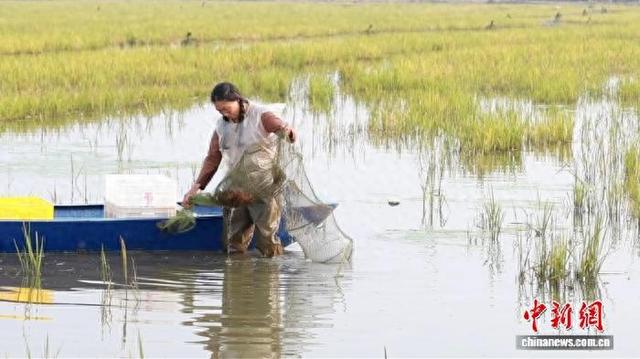
(乡村行·看振兴)“一田双收” 广西桂平小龙虾产业铺就乡村致富路
Xin Lang Cai Jing· 2026-01-20 13:43
Core Viewpoint - The "two rice and one shrimp" ecological farming model in Guangxi Guiping is revitalizing rural economies by increasing farmers' income and encouraging youth to return to their hometowns for shrimp farming [1][9]. Group 1: Industry Development - The shrimp farming industry in Guiping has expanded significantly, with over 661 seasonal rice-shrimp production bases established, covering approximately 110,000 acres [8]. - The local cooperative has successfully developed a "flat farming model," increasing shrimp farming scale to over 300 acres and attracting surrounding farmers to join [3]. - The projected shrimp production in Guiping is expected to reach 15,300 tons by 2026, with an estimated output value exceeding 900 million RMB [8]. Group 2: Economic Impact - The ecological transformation from single rice cultivation to rice-shrimp co-cultivation has activated the potential of previously idle winter fields, creating a positive cycle of entrepreneurship and job creation [9]. - The rise of the shrimp industry has not only provided income opportunities for local farmers but has also attracted young workers returning from cities, contributing to rural revitalization [8]. - The brand recognition and market influence of Guiping's shrimp are steadily increasing through various channels, including e-commerce platforms, enhancing its role as a driving force for rural economic development [9].
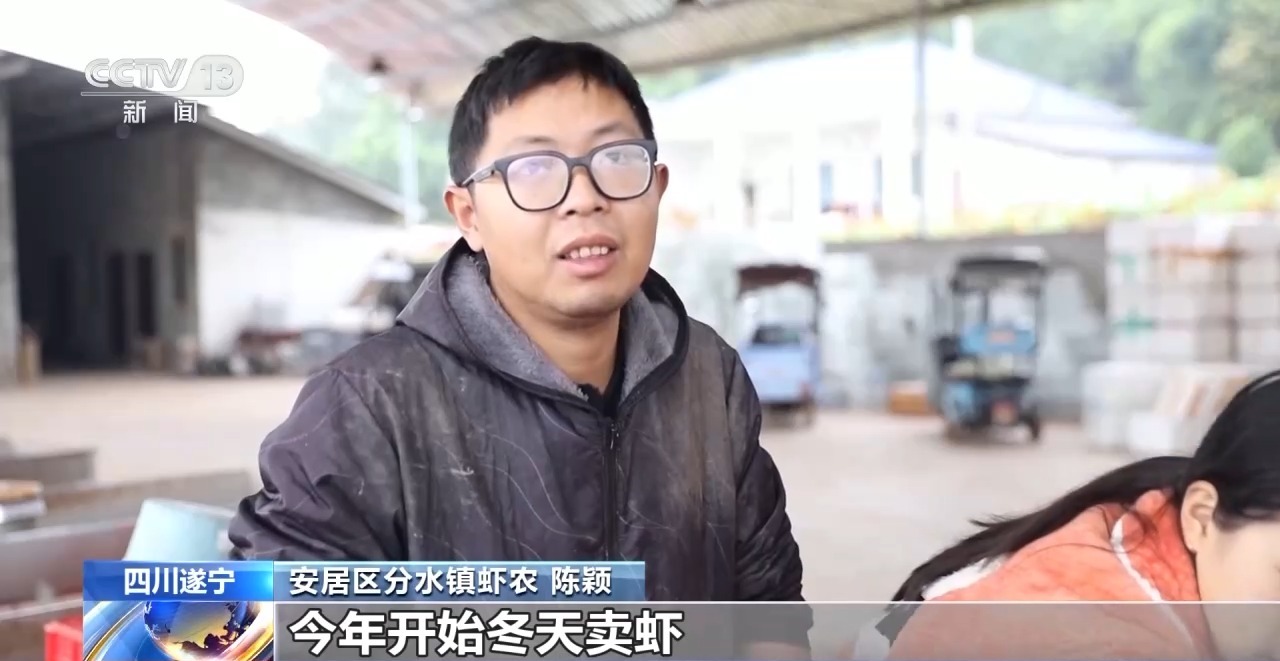
视频丨小龙虾错峰上市带动农民增收 四川遂宁实现“四季有虾”
Yang Shi Xin Wen Ke Hu Duan· 2025-11-24 05:47
Core Insights - The article highlights the successful off-season production and sale of crayfish in Suining, Sichuan, which has become a significant source of income for local farmers [1][5]. Group 1: Market Dynamics - Crayfish are typically harvested in summer, but Suining has been shipping an average of 4,000 pounds daily to various regions across the country during this period [1]. - Off-season crayfish prices are higher than during peak season, contributing to increased local income [1]. Group 2: Farming Practices - Farmers in Suining are adapting to winter sales, expecting a revenue increase of approximately 50% compared to the previous year [5]. - The region benefits from a natural advantage for off-season crayfish farming due to winter temperatures typically ranging from 5 to 10 degrees Celsius [5]. - Local farmers are implementing techniques such as planting low-temperature aquatic plants to purify water and adjusting water levels to maintain suitable temperatures for crayfish growth, achieving year-round production [5]. Group 3: Integrated Farming Model - The area has developed a rice-crayfish co-culture model, where crayfish are raised after the first rice harvest, utilizing fallen rice as a food source [7]. - The integrated rice-crayfish industry spans over 24,000 acres, with a comprehensive yield of 10,000 yuan per acre, which is more than four times the income from traditional rice farming [7]. - This year, the total crayfish transaction volume reached 1 million pounds, generating a revenue of over 60 million yuan [7].
“天目粮仓”一田双收全国出圈
Mei Ri Shang Bao· 2025-10-16 23:20
Core Insights - The "Tianmu Granary" project in Lin'an is successfully implementing an ecological agriculture model through the integration of rice and shrimp farming, enhancing economic benefits and promoting rural prosperity [1][5]. Group 1: Agricultural Practices - The "Tianmu Granary" is a collaborative effort between Hangzhou Supply and Marketing Cooperative and local government, focusing on a "rice-shrimp symbiosis" model to improve agricultural efficiency [1]. - The project has seen a significant increase in shrimp yield, with over 2,000 pounds harvested by mid-October, representing a nearly 30% increase compared to the previous year [2]. - The ecological rice variety "Peach Liangyou 67" yielded a total of 20,000 pounds, with sales showing a notable increase [2]. Group 2: Product Quality and Market Expansion - The quality of the shrimp and rice has garnered positive feedback, with customers noting the unique flavor and texture, leading to repeat purchases [3]. - The products have expanded from local sales to national markets, with shrimp being shipped to cities like Guizhou and Beijing, and receiving long-term orders from restaurants in Shanghai and Guangzhou [4]. Group 3: Community and Economic Impact - The project includes a profit-sharing mechanism where 25% of the earnings are distributed to local villagers, promoting community wealth [5]. - The overall goal of the "Tianmu Granary" is to revitalize the land and increase the income of local farmers, aligning with the broader objectives of rural revitalization [5].
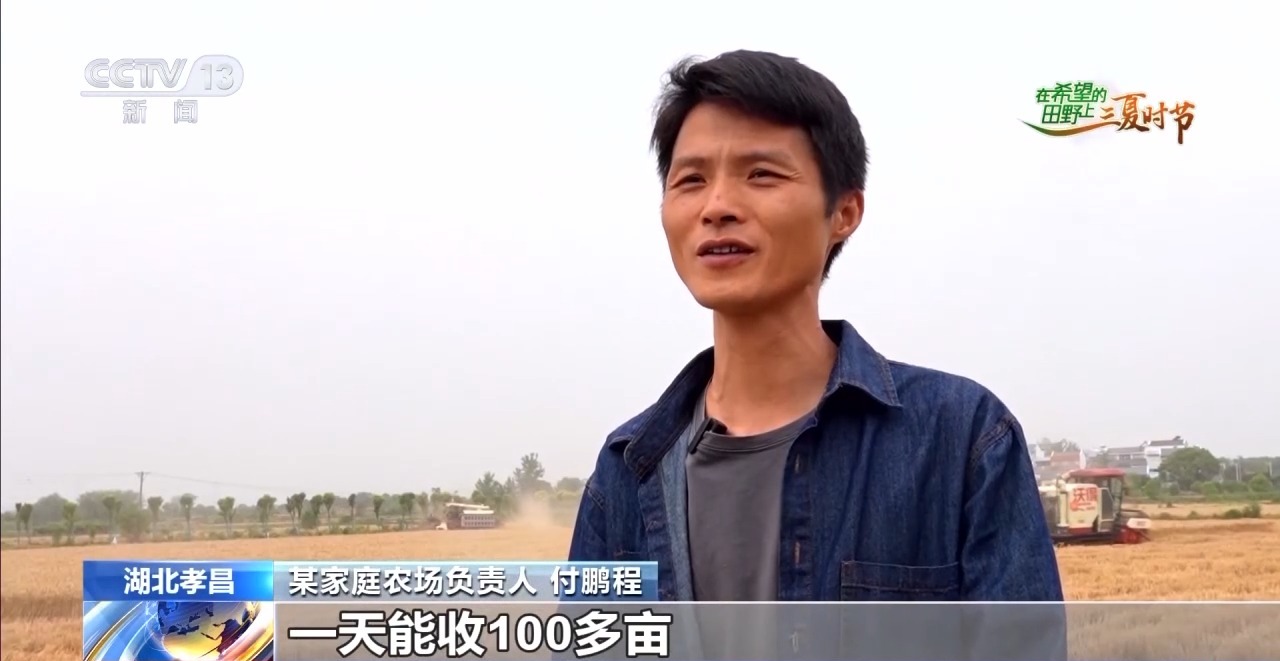
三夏时节迎丰收 小麦、稻虾、西瓜解锁农田增收“密码”
Yang Shi Xin Wen Ke Hu Duan· 2025-05-21 01:24
Group 1: Wheat Production in Xiaochang County - Xiaochang County in Hubei Province has successfully harvested 138,000 acres of wheat, with farmers utilizing favorable weather to ensure full collection of the crop [1] - The average yield for wheat is reported to be over 1,000 pounds per acre, with total production estimated at over 800,000 pounds for a farmer managing 800 acres [3] - The county has implemented extensive mechanization in wheat harvesting, with over 2,100 machines deployed, leading to an expected mechanization rate of over 98% [6] Group 2: Integrated Rice and Shrimp Farming in Yecheng - Yecheng County in Xinjiang has adopted a "rice-shrimp co-culture" model, enhancing land productivity and supporting rural revitalization [6] - The new farming method allows for simultaneous rice planting and shrimp harvesting, with one farmer reporting a yield of 100 to 150 kilograms of shrimp and 500 to 600 kilograms of rice per acre, generating an income of 8,000 to 9,000 yuan per acre [9] - The area dedicated to this co-culture has exceeded 5,000 acres, with plans to expand further [8] Group 3: Watermelon Cultivation in Gaoqing - Gaoqing County in Shandong has over 10,000 acres of watermelons maturing, utilizing a combination planting model of large and small watermelons to boost farmer income [7] - The total planting area for watermelons in Gaoqing is reported to be 14,000 acres, with an expected yield of 57,000 tons [13] - The combination planting method has extended the sales period of watermelons, increasing economic benefits by 10% to 20% for farmers [15]
四川泸县“稻虾共生”模式实现“粮渔双赢”
Zhong Guo Chan Ye Jing Ji Xin Xi Wang· 2025-05-18 22:23
Group 1 - The small lobster harvesting season has begun in Luzhou, Sichuan Province, with prices reaching 28 yuan per pound [1] - In Shiqiao Town, the ecological model of "rice and shrimp symbiosis" is implemented, with a core base of 500 acres and a total cultivation area of over 6,000 acres [1] - In Pilu Town, the family farm can harvest 1,500 to 2,000 pounds of small lobsters daily, generating a gross income of 20,000 yuan [1] Group 2 - Luzhou County aims for a comprehensive rice-shrimp cultivation area of 170,000 acres by 2024, with a projected output of 13,800 tons and a value of 600 million yuan [2] - The "rice-shrimp symbiosis" model promotes sustainable agricultural development and enhances rural revitalization [2] - Future plans include advancing the rice-shrimp industry towards scale, branding, and standardization to support farmer income and high-quality agricultural development [2]