
水利工程

Search documents
大禹节水:对公司而言,及时修订制度是确保合规经营的必然要求
Zheng Quan Ri Bao Wang· 2026-02-11 08:40
Core Viewpoint - Dayu Water-saving (300021) is actively responding to the revised regulatory rules set by the national and exchange authorities for 2025, aiming to enhance the overall quality of listed companies and better protect investor rights [1] Group 1: Regulatory Compliance - The company has revised a series of internal systems to comply with the new regulations, including the Shenzhen Stock Exchange's revised listing rules and self-regulatory guidelines [1] - The core objective of these new regulations is to strengthen corporate governance and ensure compliance in operations [1] Group 2: Operational Improvement - Timely revision of internal systems is essential for the company to ensure compliant operations and improve transparency in information disclosure [1] - These efforts are expected to promote more stable and sustainable development for the company, ultimately safeguarding the long-term interests of all shareholders [1]

大禹节水:精准跟踪水利项目招投标动态,全力推进重点项目建设
Zheng Quan Ri Bao· 2026-02-11 08:37
Core Viewpoint - The company emphasizes the importance of seizing policy opportunities in the water conservancy sector, particularly in light of the 2026 Central Document No. 1, which focuses on agricultural modernization and water resource management [2] Company Strategy - The company plans to accelerate the integration and collaboration of the Huai'an Water Conservancy Survey and Design Institute, leveraging its Class A qualification to enhance project capabilities across the entire industry chain from planning to operation [2] - The company aims to track water conservancy project bidding dynamics closely and push forward key project construction, converting policy benefits into operational performance [2] Industry Outlook - The 2026 Central Document No. 1 highlights modernization of large and medium-sized irrigation areas, high-standard farmland connections, water-saving irrigation, and rural water conservancy facility construction as key focus areas, presenting clear policy benefits and development opportunities for the water conservancy industry [2]

兼顾幸福河湖建设与内河航运发展,济宁全力做好结合文章
Qi Lu Wan Bao· 2026-02-11 05:14
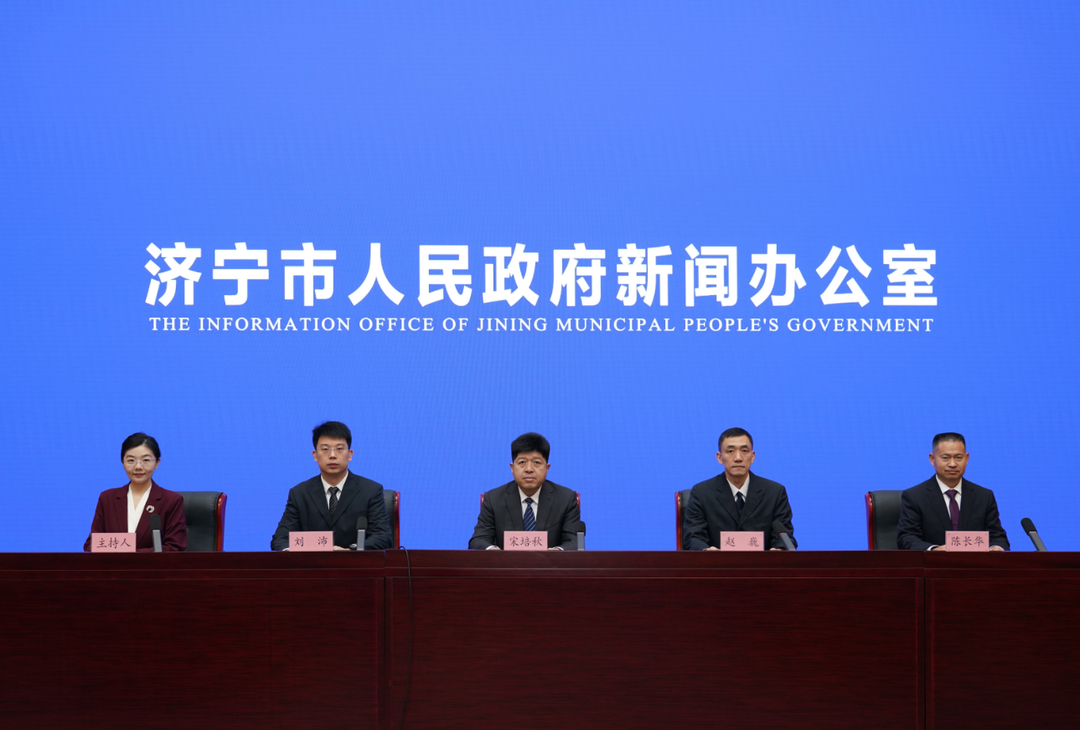
Core Viewpoint - The Jining government is focusing on the integration of building happy rivers and lakes with the development of inland waterway transportation, aiming to enhance logistics hub capabilities and ensure flood safety while promoting economic growth [1][3]. Group 1: Infrastructure Development - The Liangshan Port has been planned and constructed on the upper section of the Liangji Canal, while Longgong Port and Hanzhuang Port are being developed around the South Four Lakes area, significantly enhancing the efficiency of inland waterway transportation and the protection of river and lake shorelines [3]. - The Jining section of the Grand Canal is undergoing a "three modifications to two" project to improve navigation safety and capacity, supported by the provincial water resources department [3]. Group 2: Water Resource Management - In response to the anticipated low rainfall during the dry season in June and July 2025, measures are being coordinated to ensure water supply for navigation by transferring water from Dongping Lake to the Grand Canal [3]. - The river chief office is overseeing the management of ship pollutants from "ship" to "port," ensuring that 100% of the river sections entering the lake in Jining maintain good water quality [3]. Group 3: Environmental Protection - The South-to-North Water Diversion Project's mainline water quality has been consistently stable and up to standard, ensuring the continuous flow of clean water northward [3].
珠江委珠江水利科学研究院支撑香港首个数字孪生水利工程建设
Xin Lang Cai Jing· 2026-02-10 11:51
Core Viewpoint - The article highlights the implementation of a digital twin water management project in Hong Kong, aimed at enhancing flood control and water ecological environment governance through advanced technology [1] Group 1: Project Overview - The project, named "Yuen Long Flood Control Dam and Channel Improvement Plan," is Hong Kong's first large-scale urban flood control and water ecological environment governance initiative [1] - The project team utilizes digital twin technology to address the complexities of facility control, rapid flow in open channels, and diverse data sources [1] Group 2: Technological Advancements - A "Four Pre" digital twin engineering decision-making system has been established, significantly improving the scientific, timely, and precise management of engineering scheduling [1] - The system maximizes the flood control and drainage benefits of the Yuen Long drainage pumping station and tidal barrier [1] Group 3: Future Developments - The Pearl River Water Resources Research Institute plans to deepen technical exchanges and cooperation with Hong Kong in the field of smart water management [1] - There is an emphasis on exploring innovative applications of digital twin technology in cross-border water governance to contribute to the water security system of the Guangdong-Hong Kong-Macao Greater Bay Area [1]
投运半年,累计供水1.85亿立方米
中国能源报· 2026-02-10 10:52
Core Viewpoint - The "Yin-Da Ji-Huang" project, the largest inter-basin water diversion project in the upper reaches of the Yellow River, has supplied 185 million cubic meters of water in its first six months of operation, demonstrating significant benefits for irrigation and ecological restoration [1][2]. Group 1 - The project has provided 76 million cubic meters of ecological water replenishment, benefiting the main stream of the Huangshui River [1]. - The Huangshui River basin, which accounts for 65% of Qinghai's population and 71% of its arable land, faces a severe water resource mismatch, with only 3.4% of the province's water resources available [1]. - The total investment in the project is 14.634 billion RMB, with an annual water supply capacity of 526 million cubic meters and a controlled irrigation area of 1,004,900 acres [1]. Group 2 - The project supports irrigation for one million acres of agriculture and forestry, as well as two industrial clusters worth over 100 billion RMB each, benefiting approximately 3 million people [2]. - Advanced technologies such as digitalization, networking, and intelligence have been integrated into the project, creating a modern water management model characterized by precise scheduling and comprehensive perception [2].

构建海岛管护新体系 平潭筑牢水安全屏障
Xin Lang Cai Jing· 2026-02-09 23:28
安全生产方面,实验区以韩厝水库为试点,打造水利安全风险管控"六项机制"样板工程,形成可推广经 验。通过筹措专项资金、以点带面,推动"六项机制"在全区水利工程全覆盖,构建具有海岛特色的安全 生产风险管控体系,全面提升水利工程安全管理标准化、精细化、现代化水平。 此外,实验区创新采用"打包委托、整体推进"创新模式,加快水利工程管理与保护范围划定。截至目 前,全区20座水库、10座水闸、5条海堤的划界成果已获批复,进度达92.11%,位列全省第一。 近日,福建省水利厅对年度重点工作成效明显的市级水利行政主管部门予以通报表扬,平潭综合实验区 农业农村局榜上有名。近年来,实验区全面强化水利工程运行管理,在专业化管护、管理与保护范围划 定、安全生产等方面取得显著成效。 在管护模式上,实验区构建集中统管新格局,全区20座小型水库、11座在册水闸由区农业农村发展服务 中心统一实施专业化、集约化管理,破解过去乡镇、村居分散管理的技术、资金、标准难题;在此基础 上,创新社会化管养模式,实现小型水库社会化管养全覆盖,率先推进六桥水闸等4座中型关键水闸市 场化运维,引入专业市场主体承接全链条管理服务,有效弥补基层人员与技术短板,推动 ...
青海:2026年将建设239处水旱灾害防御站点
Zhong Guo Xin Wen Wang· 2026-02-09 13:31
来源:中国新闻网 青海:2026年将建设239处水旱灾害防御站点 中新网西宁2月9日电 (李隽)9日,记者从青海省水利厅获悉,2026年,该省将因地制宜建设"天空地水 工"一体化监测感知系统,在黄河沿岸、湟水谷地、柴达木盆地等暴雨洪水高风险区和山洪灾害易发 区,加密建设雨量站、水文站、水位站239处,改进监测方式,进一步扩大巡测覆盖面。 2025年,青海实施53条河道治理和23座病险淤地坝除险加固,新改建雨量站等监测设施135处。提级调 度水库水电站67座次,预泄腾库约2.3亿立方米,成功应对9轮强降水过程。统筹调水1.9亿立方米,有效 缓解东部农业区显著气象干旱。 今年起,青海省将立足单元最小、全面覆盖、严密有效,推进基层群测群防标准化建设,修订完善县乡 村三级预案,切实增强极端情况下应急避险能力。完善流域洪水防御预案、会商研判、预警发布、工程 调度等措施,有效防范极端天气频发、融雪性洪水、高原湖泊水位上涨等风险。加大水工程抗旱及应急 水量调度,有效应对局部地区干旱风险。 同时,承接国家加紧补齐北方地区防洪排涝抗灾基础设施短板政策,统筹推进流域干支流、上下游、左 右岸系统治理,进一步健全以水库、河道、堤防为 ...
江西省水利厅召开部分片区水利项目谋划前期工作推进座谈会
Shui Li Bu Wang Zhan· 2026-02-09 06:48
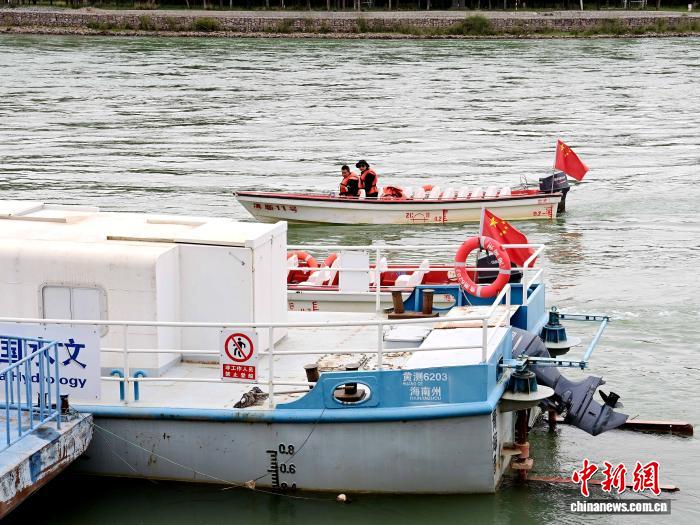
会议听取了部分片区"十五五"重点水利项目谋划前期工作推进情况,并就项目下步推进进行充分交流讨 论。 会议强调,当前正值"十五五"规划项目谋划和落地的重要时间节点,项目单位要充分发挥主观能动性, 主动协调、攻坚克难;要紧盯国家政策导向与投资重点,优化方案设计,充分挖掘项目综合效益;要保 持战略定力,对于看准的项目要久久为功加以推进;要制定推进工作方案,理顺工作机制,细化任务, 倒排工期,及时解决关键问题,确保前期工作取得扎实成果,为争取项目落地奠定坚实基础。 本站讯 为加快推进"十五五"重点水利项目谋划前期工作,1月26日,江西省水利厅召开部分片区"十五 五"重点项目谋划前期工作推进座谈会,厅党组成员、副厅长陈何铠出席会议。 ...
把江河湖泊搬进数字世界
Jing Ji Ri Bao· 2026-02-09 05:23
Core Insights - The construction of a digital twin water conservancy system is a key measure for achieving modernization in water management and ensuring national water security [2][3] - The digital twin water conservancy system consists of three core components: digital twin river basins, digital twin water networks, and digital twin water conservancy projects, which are interconnected and share information [2][3] Group 1: Implementation and Achievements - The framework for the digital twin water conservancy system in China has been largely established, with significant progress made in various pilot projects [2] - As of now, 94 pilot tasks have been completed in the construction of digital twin river basins, and 11 key projects, including the Three Gorges and South-to-North Water Diversion projects, have been put into practical application [2][4] - The digital twin technology has improved flood forecasting, with the forecast lead time for major rivers extended from 3 days to 10 days, achieving a 90% accuracy rate during critical flood periods [4] Group 2: Future Directions and Innovations - The digital twin water conservancy system is characterized by continuous iteration in technology breakthroughs, application innovations, and demand upgrades, indicating an ongoing development process [7] - Future efforts will focus on enhancing monitoring capabilities and accelerating the research and application of new technologies and equipment to support comprehensive and accurate data collection [7][8] - The development of mathematical models is crucial for precise simulation and scientific forecasting within the digital twin water conservancy system, with ongoing efforts to optimize and integrate various specialized models [8]
把江河湖泊搬进数字世界 我国数字孪生水利体系框架基本形成
Jing Ji Ri Bao· 2026-02-09 02:52
Core Viewpoint - The construction of a digital twin water conservancy system is a key measure for achieving water conservancy modernization and promoting high-quality development in water management, ensuring national water security [2][3] Group 1: Digital Twin Water Conservancy System Components - The digital twin water conservancy system consists of three core parts: digital twin watershed, digital twin water network, and digital twin water conservancy projects, which are interconnected and share information [2] - The framework for the digital twin water conservancy system in China has been largely established, with ongoing efforts to enhance water management benefits for the public [2] Group 2: Achievements and Applications - As of now, 94 pilot tasks for digital twin watersheds have been completed, creating replicable and promotable case studies [2] - The digital twin technology has been applied in 11 key projects, including the Three Gorges and South-to-North Water Diversion projects, with significant progress in 49 pilot irrigation areas and 230 rural water supply projects [2] Group 3: Importance of Digital Twin Technology - The digital twin water conservancy system plays a crucial role in flood forecasting, water transfer scheduling, and water resource management, effectively addressing risks in water security [4] - The integration of a comprehensive monitoring system has improved flood forecasting accuracy, extending the forecast period from 3 days to 10 days, with a 90% accuracy rate for key river flood forecasts [4] Group 4: Future Development and Goals - The construction of the digital twin water conservancy system is an ongoing process, with plans to enhance capabilities and functionalities, focusing on integrated development of watersheds, water networks, and water conservancy projects [7] - Future efforts will include improving monitoring capabilities and accelerating the research and application of new technologies and equipment to support accurate data collection [7][8]