
生物医学研究

Search documents
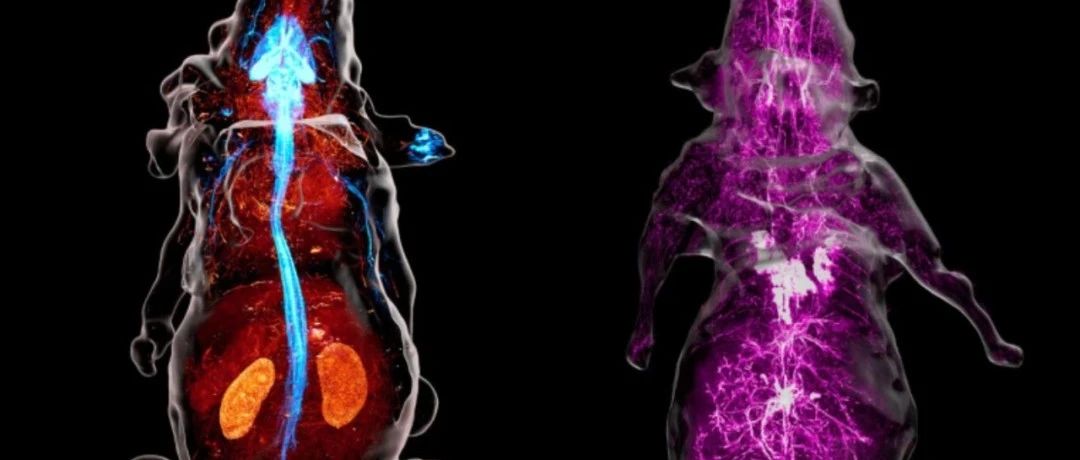
中国科学技术大学最新Cell论文,登上Nature头条,首次实现小鼠全身神经系统微米级高清成像
生物世界· 2025-07-11 03:41
Core Viewpoint - The article discusses a groundbreaking study that developed a high-speed 3D imaging technology for mapping the peripheral nervous system (PNS) in mice, significantly enhancing the understanding of its complex structure and functions [4][10]. Group 1: Technological Advancements - The research team from the University of Science and Technology of China introduced a novel imaging technique called blockface-VISoR, achieving subcellular resolution in whole-mouse imaging within 40 hours, which is several times faster than existing methods [4][10]. - This technology allows for the visualization of nerve pathways and connections in the PNS, which has been challenging due to the complexity and size of the mammalian body [3][10]. Group 2: Research Findings - The study successfully created a detailed peripheral nerve map, revealing intricate structures such as spinal motor and sensory nerves, visceral sympathetic nerves, and their interactions with various non-neural tissues and organs [13][21]. - The research utilized multiple labeling techniques, including fluorescent, immuno, and viral markers, to visualize different types of nerves, providing unprecedented insights into the PNS [12][19]. Group 3: Implications and Future Directions - The findings from this research are expected to facilitate a better understanding of the regulatory networks of the peripheral nervous system and the mechanisms of related diseases [4][10]. - The research team plans to share the image datasets online and is working on a platform for researchers to explore these data, which may offer new insights even to professional anatomists [22].

Science子刊:2024年的生物医学论文,至少有14%利用了AI辅助写作
生物世界· 2025-07-04 06:47
Core Viewpoint - The emergence of large language models (LLMs) like ChatGPT has significantly transformed academic writing, particularly in the biomedical field, raising concerns about research integrity and the accuracy of generated content [2][5]. Group 1: Impact of LLMs on Academic Writing - A study published in July 2025 revealed that approximately 200,000 out of 1.5 million biomedical papers indexed by PubMed in 2024 showed signs of LLM-generated text, accounting for about 1/7 of the abstracts [3][4]. - The use of LLM-assisted writing in biomedical publications is accelerating, with an earlier assessment indicating that about 1/9 of abstracts in the first half of 2024 exhibited similar signs [4]. - The study found that at least 13.5% of abstracts in 2024 were processed using LLMs, with some sub-corpora reaching as high as 40%, indicating a profound impact on scientific writing [5][10]. Group 2: Methodology and Findings - Researchers analyzed over 15 million abstracts from PubMed between 2010 and 2024, identifying 454 words that appeared significantly more frequently in 2024 compared to previous years, many of which were stylistic rather than content-related [7][9]. - The study highlighted that the vocabulary changes were more pronounced following the rise of LLMs than during significant events like the COVID-19 pandemic, with a notable increase in the use of adjectives and verbs [9][10]. - The proportion of LLM-assisted writing varies across disciplines, countries, and journals, with over 20% of abstracts in certain regions and fields utilizing LLMs [10]. Group 3: Challenges and Adaptations - Previous attempts to assess the impact of LLMs on academic writing faced challenges due to the lack of disclosure from users, making it difficult to evaluate the true extent of LLM usage [6]. - As authors become aware of specific vocabulary associated with AI-generated text, such as "delves," its usage may decline, complicating the assessment of AI's influence on academic writing [12]. - While using AI for text refinement or translation is deemed reasonable, generating large volumes of text without oversight raises concerns regarding research integrity [13].

FDA紧急叫停涉“细胞流至敌对国家”临床试验,对华生物技术限制或再升级
仪器信息网· 2025-06-24 07:02
Core Viewpoint - The FDA has announced an immediate review of clinical trials involving the transfer of live human cells from American citizens to laboratories in China and other "hostile countries" for genetic engineering, indicating a shift towards stricter biotechnology restrictions against China [4][5]. Group 1 - The FDA's review is prompted by concerns that international transfers and genetic engineering operations may occur without patient knowledge or consent, potentially leading to the misuse of sensitive genetic data by foreign governments, including those of hostile nations [5]. - The Biden administration's data security rules set in December 2024 included export controls but allowed a "comprehensive exemption" for clinical trial biological samples, creating regulatory loopholes that permitted participation from Chinese-funded enterprises [5]. - FDA Commissioner Marty Makary emphasized the importance of the integrity of the biomedical research system and stated that actions are being taken to protect patients, rebuild public trust, and defend America's biomedical leadership [5].

Cell Stem Cell:北京大学王凯团队等开发快速生成功能性血管类器官的新方法
生物世界· 2025-06-15 06:56
Core Viewpoint - The article discusses the development of a new method for rapidly generating functional vascular organoids from induced pluripotent stem cells (iPSCs) through the orthogonal activation of transcription factors ETV2 and NKX3.1, which significantly improves the efficiency and potential applications of vascular organoids in research and clinical settings [4][12][14]. Group 1: Vascular Organoids Overview - Vascular organoids (VO) are important models in cardiovascular research, capable of simulating dynamic interactions between endothelial cells and vascular wall cells, and replicating organ-specific vascular microenvironments [2][6]. - Current differentiation protocols for vascular organoids face challenges such as high heterogeneity, long time requirements, dependency on matrix gels and growth factors, high costs, and low in vivo vascularization capabilities [2][4]. Group 2: Research Development - A collaborative research team from Peking University and Harvard Medical School published a study in Cell Stem Cell detailing a new method for generating vascular organoids [3]. - The new method allows for the generation of uniform vascular organoids within 5 days from iPSCs, establishing a controllable vascular lineage differentiation model [4][10]. Group 3: Methodology and Findings - The method employs orthogonal activation of transcription factors ETV2 and NKX3.1 to induce iPSCs into endothelial cells (iEC) and mural cells (iMC), respectively, without the need for extracellular matrix [10][12]. - The vascular organoids formed have a diameter of approximately 250 μm and can mature further when embedded in extracellular matrix, leading to larger and more structured vessels [10][11]. - Single-cell RNA sequencing revealed that the duration of transcription factor activation influences the identity and heterogeneity of vascular cells, allowing for the potential to create specific types of vascular networks on demand [10][12]. Group 4: Applications and Implications - The vascular organoids demonstrated the ability to form perfused vessels when implanted in immunodeficient mice, promoting vascular reconstruction in ischemia and transplantation models [11][12]. - This research establishes a new platform for rapid and versatile vascular organoid generation, enhancing the potential for applications in vascular modeling, disease research, and regenerative cell therapies [14].

华人学者本周发表了4篇Cell论文:强制线粒体自噬;多模态遗传筛选平台;抗衰老间充质祖细胞疗法;补体蛋白攻击的开关
生物世界· 2025-06-15 01:12
Core Insights - This week, four research papers authored by Chinese scholars were published in the prestigious journal Cell, covering topics such as mitochondrial influence on pluripotency, a multimodal genetic screening platform, anti-aging mesenchymal progenitor cell therapy, and a key switch in complement protein attack [1][2][3][4]. Group 1: Mitochondrial Influence on Pluripotency - A study led by Professor Wu Jun from the University of Texas Southwestern Medical Center developed a new technique for enforced mitophagy, revealing the impact of mitochondria on cell pluripotency and demonstrating that reduced mitochondrial numbers delay pre-implantation mouse embryo development [3]. Group 2: Perturb-Multi Genetic Screening Platform - Professor Zhuang Xiaowei from Harvard University introduced Perturb-Multi, a novel platform that combines imaging and sequencing technologies to enable parallel perturbation of hundreds of genes in intact mammalian tissues, facilitating the discovery of genetic bases for complex cellular and tissue physiology [7]. Group 3: Anti-Aging Mesenchymal Progenitor Cell Therapy - Researchers Liu Guanghui, Wang Si, and Qu Jing from the Chinese Academy of Sciences and Capital Medical University developed engineered human anti-aging mesenchymal progenitor cells (SRC) that exhibit resistance to aging, stress, and malignant transformation, significantly delaying multi-organ aging in primate models [11]. Group 4: Key Switch in Complement Protein Attack - A study by Zhicheng Wang from the University of Pennsylvania focused on the complement system, identifying a critical parameter—the surface density of potential complement attachment sites—that triggers a significant increase in complement activation, providing insights for the design of long-lasting drug carriers and biocompatible implants [15][17].

南京农业大学发表最新Nature论文
生物世界· 2025-05-01 00:37
Core Viewpoint - The article discusses the potential role of fur animals in the transmission of coronaviruses to humans, highlighting a recent study that identifies a mink coronavirus (MRCoV) that uses the ACE2 receptor for cell entry, similar to SARS-CoV-2 [1][2][5]. Group 1: Research Findings - A new type of mink respiratory coronavirus (MRCoV) was isolated from farmed minks suffering from pneumonia, which uses the ACE2 receptor to infect mink, bats, monkeys, and human cells [2][5]. - The study revealed that despite structural differences in the receptor binding domain (RBD) of MRCoV compared to SARS-CoV-2, they share the same binding site on the ACE2 receptor [5]. - The research identified key determinants on ACE2 and MRCoV RBD that confer efficient binding capabilities, indicating a potential for cross-species transmission [5]. Group 2: Implications and Urgency - The findings underscore the need for enhanced monitoring of fur animal farms as reservoirs for emerging pathogens, emphasizing the urgency to mitigate future coronavirus outbreaks [5]. - The study suggests that protease inhibitors and polymerase inhibitors effective against SARS-CoV-2 can also block MRCoV infection, revealing a potential therapeutic strategy [5].